
Tandem Babywearing, or Carrying Multiples
So you've got more than one baby! Twins, triplets or more? Wondering about tandem babywearing (carrying multiple children at once)?“Is carrying them in a sling possible?” “Is it safe?”
“What sling do I need or want?”
“Where do I start with babywearing twins, or with carrying a toddler and a baby?”
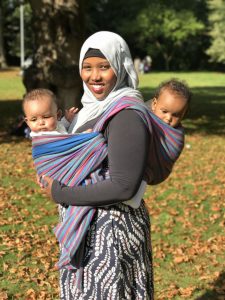
There is no doubt that carrying more than one child is one of the things that can baffle and inspire people at the same time, from the practicalities of it to the beauty of two babies in one sling.
Why carry more than one child?
When people think of carrying multiple children they often think of carrying both babies at once, this is called “tandem carrying” or “tandeming”, however, it is not necessary to tandem carry every time, or even at all! Being able to carry one at a time will free up your arms, meaning you are able to look after both babies at the same time, keeping one soothed while meeting the other’s needs.
This goes along with all the other many benefits to babywearing that applies to one child and their caregivers. More in depth information about all of these can be found in these articles here and here.
Babywearing can also be an amazing tool to use if you also have older children, to help engage in play with them whilst the younger babies are happily in the sling. There can be some limitations with this as it can be difficult to keep older children in check when tandem carrying, due to some of the movement /speed restrictions!
How does it work?
For new parents the idea of learning to use a sling can be daunting and especially for new parents of multiples due to the huge range in choice and the practical logistics of it. The best thing to do is to learn to carry one baby safely and with confidence first, then move on to tandem carrying when needed.
But how do I learn to use a sling?
There are so many ways to learn now from one-to-one support (if you are local to us in Sheffield, the Sheffield Sling Surgery bookings are here) to self-learning from online videos (do choose channels made by experienced and reputable teachers!)
One of the main benefits of choosing professional support and learning one-to-one is the hands-on and emotional support this service offers. This can range from learning your very first ins and outs of carrying your children, getting a fit check and some tweaks, to expanding your carrying knowledge as you begin to learn your preferences, all with a listening ear and an experienced guiding hand.
The most important thing is to ensure that you are carrying safely. Feeling safe and confident with professional support can be one of the most helpful inputs for beginning to develop that amazing bond with your child/ren.
Booking a consultation will help you to gain these skills. Consultants train with various schools of babywearing and they have a wealth of knowledge and experience in carrying children as well as teaching you the practical skills, they may call themselves babywearing or carrying consultants. They have a passion for carrying children and the technical knowledge to know how to carry in a variety of ways, and will support you in however you want to carry.
Laura; “I carried my first baby everywhere and anywhere so I knew I wanted the same when the twins came along but the idea filled me with all the anxiety! I booked onto a couple of consults and turned up at the drop in sessions at the library to nosey at and try out the styles.
When I first carried both babies I used the stretchy wrap which I was taught to use at a consult. We went through the basics first and got one baby secure then onto adjustments for twins. Each step was explained and I was helped to iron out the niggles to get them and me comfy. The consultation was invaluable! It made getting out and about so easy. Now they’re bigger I’m using all the slings and wraps thanks to more consults and guidance. I love babywearing!”
So what are the options when carrying multiple children?
There are a vast number of ways to be able to carry multiple children. Some carriers are designed to carry two children at the same time, others can be adapted to suit the needs of your family.
We will first look at the individual carriers that can be used in different ways to carry single or multiple children, then we will look at carriers that have been made specifically to carry twins. We’ll explore using two similar carriers to carry multiple children, and then lastly we will consider the mix and match approach of using different types of slings at the same time!
Individual carriers that can be used to carry one or both children
Stretchy Wrap
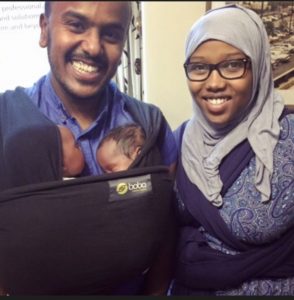
A stretchy wrap is a length of fabric, usually made of soft and stretchy machine knitted cotton, that is usually between 4 and 5m long and about half a metre wide. Some have bamboo blended in with the cotton, which adds to the softness and comfort, and some have a small proportion of spandex, which adds to their elasticity and stretch.
When choosing a stretchy wrap it is best to get your hands on a few different brands as they vary in stretchiness and therefore give a different level of support and comfort when two babies are being carried, due to the increased weight.
The best thing to do when preparing to carry twin is to get to grips with using the sling for one baby, usually the pocket wrap cross carry. Our photo tutorial for putting on a two way stretchy wrap in a pocket wrap cross carry (PWCC) with a single baby can be found here. Once you have mastered this, then you can learn to get both in at the same time (you will need to allow more space for both babies!)
However, when it comes to putting both babies into a stretchy wrap, it can be challenging to learn all of it from a video (many videos are best used as aide memoires once the skill has been learned). Furthermore, some twins may be under the recommended weight limits for the wrap, so it would be beneficial to get in contact with your local babywearing team and book some in person support with them to make sure that everyone is safe.
This is a beautiful video done by LeKeta Kemp from Tandem Trouble, it shows her demonstrating a pocket wrap cross carry for twins with a sturdy stretchy wrap.
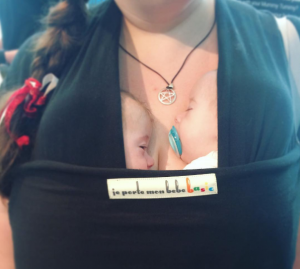
Pros and cons of using a stretchy wrap for twins
Pros
- Once tied, a stretchy is a poppable carrier so can be put on at the start of the day and babies can be taken in and out of the wrap without needing to retie each time.
- It can be used for one or both babies.
- It can feel more affordable than other options.
Cons
- It can be hard to get the hang of it when you are first starting out, as there is when learning any new skill. However with practice it will soon become manageable.
- It can be harder for people with smaller frames and as babies get bigger.
- Some people can start to run out of space on their front with two babies!
Close Caboo
The Close Caboo is a hybrid stretchy carrier, the fabric is sewn into a pre-arranged shape (similar to a PWCC), which can be slipped on over arms and head, to offer two ready made hammocks for baby to rest in.
A Close Caboo can also be used with twins in the same way as a stretchy wrap. It has some of the structure sewn in, so is already partially set up for use. It has two pockets, both adjustable by tightening the fabric through the rings at the side, and then a third layer to tie over the top for security.
The advantage of the Caboo is that it can be adjusted to size, then popped on. With a few minor adjustments it can be used for either one or both babies, each pocket can be adapted to fit their different sizes. It is also really easy to adjust when the babies are in the Caboo, as the rings can be used to pull the fabric tighter if needed.
You can find our photo tutorial for getting one baby into a Close Caboo here. With two, each baby sits in separate pockets and they are placed in one by one, with the third layer tied on around both at the end.

Pros and cons of using a Close Caboo for twins
Pros
- The fabric is a one-way stretch – this can mean less of a slumping risk as babies get bigger and can feel sturdier.
- It is really easy to adjust when the babies are in.
- It offers a quick and easy front carry.
- It is easy to use and learn for one baby as well as two.
Cons
- The panels are thinner when compared to a stretchy wrap, this means it can be harder to get the position just right to avoid red marks at the knee.
- It is a little more expensive than a stretchy wrap.
Woven Wraps
A woven wrap is a fantastic tool for babywearing, it can be used in so many ways for one or two children of the same or different ages as well as being used alongside a different carrier. Essentially a woven wrap is one long piece of fabric that has been woven specifically to carry children, they vary in length, known as their size (most commonly from 1 to 8), and what length is used comes down to personal preference and what you are going to use the wrap for. You can find more information about woven wraps here.
A woven wrap can be used from the very start of your carrying journey with twins, either having both on the front (a front tandem carry) or one on the back and one on the front. If you are planning to do this then a consultation is needed to learn these skills. Back wrapping a small baby is a skill that takes a lot of practice in itself and requires professional support and guidance, and it is best to get to grips with front carries with the woven wrap first.
Front tandem carries
There are many options with woven wraps for front carrying two babies of a similar size until you run out of room! One of these options is the Jasmine’s Hip Carry which is usually done with sling rings.


What makes it so special? The Jasmine’s Hip Carry is done using one woven wrap with either one or two rings. Once prepared the wrap can be left threaded through the rings so it is pre-tied and removed for wear at a later time, each side of the carry can also adjusted to suit the size of each baby. This can be tricky to master but lots of practice will help!
This video by LaKeta from Tandem Trouble is a great video to see the logistics of a Jasmine’s Hip Carry with two rings.
Other options are the Amanda’s Tandem Hip Carry,(from Tandem Trouble), which is a ringless carry that knots round the back. There is also a twin version of the popular Front Wrap Cross Carry (from Little but Once), this has no ring and is tied at the front or back depending on what size wrap is used.
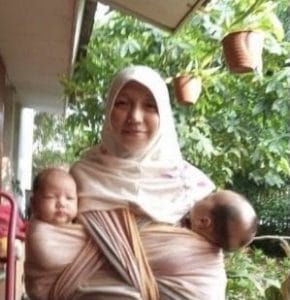
Front and Back Tandem Carries
A front and back tandem carry can be used for children of the same or of different ages.
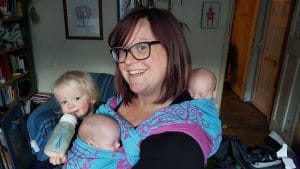
This is because woven wraps are a collection of individual strands meaning they can be carefully tightened section by section to ensure your baby is fully supported from neck to knee pit, with the airway open, respecting the natural gentle curved J and M shaped position. As these back carries tend to be done high up on the parent’s back, caregivers are able to see their baby’s face and feel their breathing on the back of their neck.
When back carrying a newborn, most people will choose a simple rucksack carry, which is just a single layer across the baby, ensuring there is less pressure for tiny bodies. However, getting your baby up on your back can be a challenge and is something that is best learned with the help of a professional. This video from Wrap you in Love will give you an idea of the safe way to do this if you would like to see how it works.
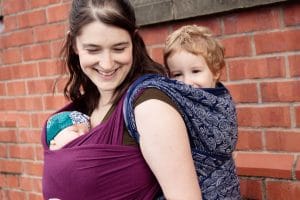
Once you have one child up on your back, you can use the rest of the long wrap, tied in a crossed across the chest ‘Tibetan’ finish, to pop your little one into the cross passes. This can also be done with two different wraps, mostly done when a toddler is on the back in a carry with multiple passes and a short wrap is used as a simple sling pass, passed through the wrap and tied under their bum, as seen below.

Doing a front and back tandem carry can be a lifeline for some parents. Life with small children can often feel very hectic and being able to keep both children close at the same time can be a fantastic parenting tool.
Anna Nham; “Solo parenting with a toddler and a baby and the older one refuses to walk home, or tiredness hits and everyone wants a cuddle at the same time. These are the moments I am grateful to be able to tandem carry my kids. There’s 19 months between my two and while I can’t say a tandem is an everyday occurrence, when both of them need some close time or both need to nap at the same time I am always grateful to be able to pop them both up and at least create a moment of peace for me. It was especially important when the baby was smaller and needed more contact. Allowing me to give the older one something familiar and make him feel like he wasn’t pushed out. Now he finds it hilarious when his brother is put on the front and he is on the back and loves to share that space with him. I definitely can’t get far with 24kg of kid attached to me but I can provide comfort and that’s an invaluable tool to have.”
Pros and cons for woven wraps
Pros
- They are very versatile for carrying one or two children.
- They can be used for front carrying both children, or for carrying one on the back and one on the front.
- They can be used with children of different ages.
- They can be used from birth to the end of your carrying days.
Cons
- They can be difficult to learn, but once you have gained the knowledge of how the fabric like to move then it is an invaluable tool .
- They can be hard to get the right fit every time due to the way they are tightened and deal with a feisty child, but with patience and practice you will get it.
Carriers designed specifically to carry twins
These carriers have been made with the needs of twin parents in mind and are focused on easy carrying of both children at the same time. They can be expensive, due to the complexity of the engineering (even if they are simple to use!)
TwinGo
This is a fantastic buckle carrier and one of the best known twin carriers around. It gives caregivers the option to carry two children at once, either twins or children that are close in age as it is designed to have one child on the back and one on the front.


It can also be split into two individual carriers meaning that you don’t always have to tandem carry. Here is a demonstration video showing how to use the TwinGo with two children.
One limitation of the TwinGo is that the panels aren’t adjustable in height or width. This means that it is best used when both children are big enough to fit in the panel knee pit to knee pit (normally around 5-6 months). There are newborn inserts, but inserts can be fiddly when used and cannot be used for a back carry. We recommend trying the TwinGo out before you buy, as the whole bundle can end up being expensive.
Pros and cons of the TwinGo
Pros
-
- It is ideal for carrying two children of the same/similar age with one on the front and back.
- It is designed specifically to do this, so it works very well.
- The padded straps and waistband add comfort even with heavy children.
-
- It can be used as two separate carriers for different caregivers if needed.
Cons
- It can be fiddly using inserts until babies are big enough.
- It cannot be used for front tandem carries, only front and back.
- It can only be used as a front and back tandem carry for babies four months and over, when they have reached the 3 milestones defined by TwinGo. More details about these can be found here.
- It is expensive.
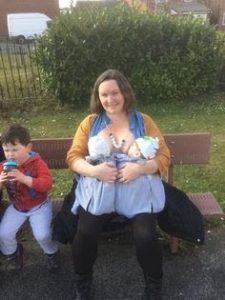
The Weego
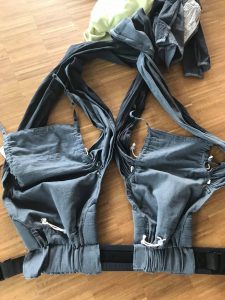
This buckled carrier is designed to carry two babies of the same age on the front only. It has two pouches that are adjustable with poppers on the inside to give the correct panel height (size) which means it can be used from newborn till around 6 months (or 15kg combined weight.)
Below you can see images of the popper system in the Weego, followed by images of the configuration of the pouches.
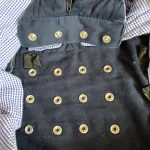
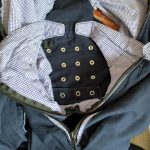
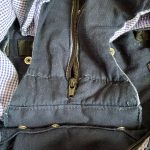
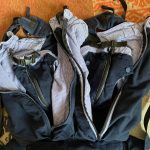
Here you can see the inside of The Weego with all the possible placements for the poppers (A&B). You can also see the zips used to close each individual pouch (C), as well as the zips to secure the final layer of the sling around each baby (D).
An amazing article going into full detail about the Weego can be found here. It was written in 2019 by Joe Rawlinson, a dad of twin girls. It is a detailed and honest review about the Weego and how it helped them as a family with newborn twins.
Pros and Cons of the Weego
Pros
-
-
- Each compartment can be sized for each individual child.
- Both children can be carried on the front at the same time.
- Can be left already prepped so no need to re-do the internal poppers until babies have grown considerably.
- One baby be left in while the other is removed. This can be very useful for nappy changes/feeds etc.
-
Cons
-
-
- It can be fiddly to get right.
- It can feel bulky when on the front with both babies in it.
- It can feel heavy due to the narrow, flatter shoulder straps with no waistband.
- It is expensive.
-

The MiniMonkey Twin Carrier
This carrier is designed to carry two children of the same age, on the front only. It is made up of two pouches for carrying babies in an upright position, mimicking a Jasmine’s Hip Carry in a woven wrap, but with the added support of a waistband. The ability to move the position of the pouches along the waistband can be very helpful to get an optimised and more comfortable position for both the wearer and the children.
The MiniMonkey Twin tends to fit babies best when they are about 4-5 months old, as the pouch height can be more challenging to adjust for smaller, newborn babies. This can be done with support from a consultant. Many people find that the Mesh MiniMonkey is easier to use with smaller babies as the material is thinner and easier to tuck for adjustments. Still others find that using two individual MiniMonkey carriers together on either shoulder across the body can be a more comfortable (and cheaper!) way to carry two babies together.
Here is the instruction video.
Pros and Cons of the MiniMonkey Twin
Pros
-
-
- It is a carrier that is prepared in advance, making it simple to put on each time.
- Each pouch can be adjusted for each individual child.
- The spreadable shoulder straps offer more comfort.
-
Cons
-
- It can be more challenging to use for newborns.
- The height of each pouch cannot be adjusted so if babies are too small then they may get ‘lost’ in the pouch. This can be overcome with support, or using the mesh version.
- It is expensive.
Using Two Matching Carriers
There are many ways of using two individual carriers to carry multiple children, either the same or different types of carrier. A lot of these combinations are learned through trial and error to find out what suits your family best.
Two Meh Dais and Half Buckles – A Meh Dai (also known as a bei dai, formerly known as mei tai) is the common name given to a type of Asian carrier that originated in China many years ago. It consists of a fabric panel with long straps that are wound around the parent’s body, to be tied or twisted or tucked away securely. Different cultures have their own variants of these cloth carriers. A half buckle is the same style with the panel and woven wrap straps, however instead of being tied at the waist there is a buckle fastening.
Front Tandem Carries
There are two main ways of using Meh Dais to tandem front carry. This first is that both are used in a standard front carry but both children are held off centre (this can be seen demonstrated below) by Drew Joseph or by doing two hip carries. These can be tricky to master, but practice helps!
With two half buckles the same methods can be applied, however there are also a few brands (such as Didymos Didyclick and Mamaruga Padma) that can have two panels attached to the same waist band. The advantage of this is that there is only one waistband being used, reducing bulk, but you still have control of placement of the panels.
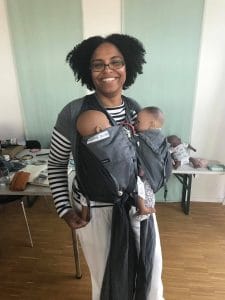
Images from Rosie Knowles (of LaKeta Kemp using two DidyClicks)
Front and Back Tandem Carries
Meh Dais and Half Buckles can also be used to carry two children, one on the front and one on the back. It is possible to tandem carry this way from a few weeks old. However, it can be scary and challenging to get a small baby safely on your back alone, just as with a woven wrap, so it is best to get professional support and guidance with this.
Pros and Cons of Meh Dais and Half Buckles
Pros
- They give the comfort and feel of woven wraps but with the convenience of a pre-made panel and the comfort and security of a waistband.
- Two carriers can be used for both front tandem carrying or front and back tandem carries. Each carrier can then be used individually as needed or by two caregivers.
- Meh Dais and Half Buckles can be used for a front and back tandem carry from newborn, with professional support.
Cons
- It can feel like a lot of fabric in one place with 4 straps being wrapped around you and two waistbands.
- There can feel like a lot of knots if using two carriers at once.
Two Ring Slings / Two MiniMonkey MiniSlings
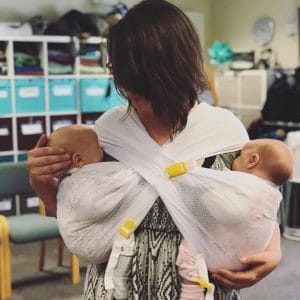
This is a nice option for when you would like to have two individual carriers that can also be used at the same time. Two ring slings offer a front tandem carry like a Jasmine’s Hip Carry, however with two pairs of rings pressing against you it can dig in a bit. Some caregivers deal with this by placing the rings on the back with a flip in the fabric on the front, this can work well with practice but often involves a learning curve. Using two individual MiniMonkey MiniSlings can be a lot easier, it mimics the double front carrying option of the Twin MiniMonkey and works well for small babies. With heavier and older babies, the waistband of the Twin MiniMonkey can be useful for better weight distribution.
Pros and Cons of two ring slings or two MiniSlings
Pros
- Using two separate carriers means there is always the option of carrying one child at a time (or each if there is another caregiver).
- Two MiniSlings is a great hot weather option.
- Ring slings can give more adjustability than two MiniSlings.
Cons
- Two sets of rings can be hard work to adjust easily and be uncomfortable.
- The first baby can end up sliding under your armpit when putting the second baby in, but this does get easier with practice.
Two Buckle Carriers
There is a wide variety of buckle carriers that can be used when doing a front and back tandem carry when one baby fits well into the panel and is almost able to sit unaided. It always helps to explore all the different types of buckle carriers and see what would work for your family, as one type does not suit everyone. You may even choose to use different brands together.
Front tandem carries
There are a few buckle carries that can be used together for a tandem front carry, either off centre or hip carry. These are the Integra, the Ergo Embrace and the Izmi, as these have unpadded waistbands so there will be less of a large bulk around the caregivers middle. However, this can become very fiddly with all of the buckles and the straps across the shoulders. We would recommend booking an appointment with a consultant to make sure everyone is safe.
Front and Back tandem carries

Most brands of buckle carriers can be used for front and back tandem carrying, however it may be more comfortable to choose two with unpadded waist bands, for (example the Integra or the Izmi) as they will sit flat against the waist without too much bulk. Another option would be to use one unpadded and one padded waistband (for example a Tula or Lenny Lamb). This still keeps bulk to a minimum while increasing the feeling of support. There are so many variations you could use, so it is best to have a good look around and see what types of buckle carriers you think would suit you. Most sling libraries will stock a good range for you to try out.
Pros and Cons of two buckle carriers
Pros
- Two carriers offer a lot of adjustability.
- Each carrier can be used to carry children separately (sharing the load between caregivers, or if one child is in the buggy/walking!)
- Some carriers work well in combination.
Cons
- Two carriers can feel very fiddly with lots of buckles and straps.
- Carriers that have fixed position panels can be hard to move around the waist for two hip carries.

Mix and match options
Sometimes the best option is just to choose the things that work well for you on their own and see how it goes! The possibilities are endless when it comes to the mix and match approach, from a woven and a buckle together, to a Meh Dai on the back and a ring sling on the front.
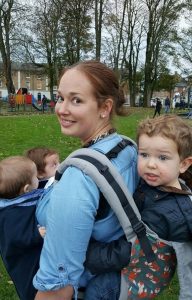
Mix and match is often the easiest option when carrying children of different ages, making the most of the slings you already have. For example, a stretchy wrap or a close caboo is a fantastic option to use alongside another type of carrier when caring for a newborn baby and a toddler. The stretchy/Caboo should be put on first of all, and adjusted to fit the newborn snugly and safely. Baby is then taken out, leaving the stretchy/Caboo in place. This frees you up to then get your toddler safely onto your back in your chosen carrier (eg a woven or a buckle) without worrying about your baby during the process. As the stretchy/Caboo is “poppable” and has already been set up for your baby, once toddler is in place, baby can be quickly and easily popped back in (or out again, as needed, eg for a feed, or if your toddler has fallen asleep and baby needs a change or some play time).

Pros and Cons of mix and match tandem babywearing
Pros
- There are many possibilities and a chance to be creative.
- This mix and match method can be very useful for using the slings you already have, rather than needing to buy more.
Cons
- It can feel like an overwhelming amount of choice; this is where sling libraries and consultants can offer guidance and get you off to a flying start.
Many families will opt for a sling and buggy combination with two or three children, but it is in fact possible to carry three children at once, as this hero mother demonstrates!
Summary
The most important thing to remember if you are considering using slings with your children, is to do what is best for your family. This will vary. It could be carrying children individually, one in a sling and one in a pushchair, or it could be tandem carrying. Every family is different, so what works for you might not be the best option for the next family, and what works for your friend might not be best for you.
In conclusion, we recommend becoming familiar with carrying one baby first and then progress to tandem carrying in whichever way you feel most comfortable with. If you are unsure about anything, get support from a trained professional, they will be more than happy to give you all the information they can (we love to do it!) and do their utmost to make sure that you are utilizing all the resources that you can.
Authors Jess Yarborough and Rosie Knowles

Top FAQS
These are the most common questions about babywearing I am asked, in a single helpful list!
Just click on the links to read the relevant blog posts, some are kindly shared from others
Firstly; some of my most popular articles:
Do the babywearing “rules” really matter?
Babywearing and infant mental health
Secondly, I get this query daily. “Can I use your infographics to support families?” ABSOLUTELY! Everything on this website was created to help families with children to feel close and connected. Please credit me appropriately and link back to my website/social media (facebook, instagram)
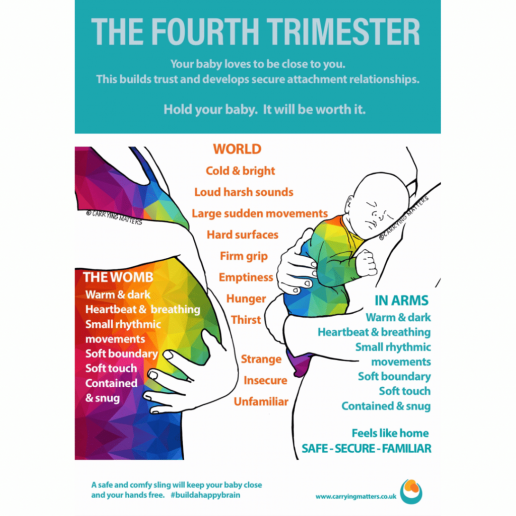
Here is the link to the infographics (eg the Fourth Trimester/Build a Happy Brain/Why Carrying Matters/Skin to Skin posters, safe carrying images and much more)
Here is a search box to help you find what you’re looking for.
Getting started, and learning the basics
What kinds of sling are there and how do I use them? (links to the major types with useful guides, videos and troubleshooting)
How do I keep my baby safe in the sling?
Babywearing with a Newborn
What are the benefits of babywearing for my baby?
Are there any benefits for me too?
What are the best newborn sling options? (Coming soon)
How soon after birth can I carry my baby and what if I have had a Caesarean Section?
My baby’s head is so wobbly in the sling!
How high should my carrier be?
Can I carry my premature baby?
How do I protect my postnatal pelvic floor and babywear?
What about if I have a prolapse? (Thanks to Forest of Dean Slings)
Help! My child cries in the sling!
Does babywearing help my mental health?
Are slings useful if I have a perinatal mental health challenge?
Carrying in different circumstances
Can I sleep while my baby sleeps in their carrier?
How do I carry more than one child at a time?
How can I carry safely in hot weather?
How do I keep my baby warm while carrying in the cold? (ie can I put them in a snowsuit?)
How do I keep myself and baby dry when babywearing in the rain? (Coming soon)
Carrying adopted or foster children
What if my child has a disability? See this link for a stories from families living with a range of specific conditions.
Common safety queries
Will my sling hurt my baby’s hips?
What if I fall while babywearing? (Coming soon)
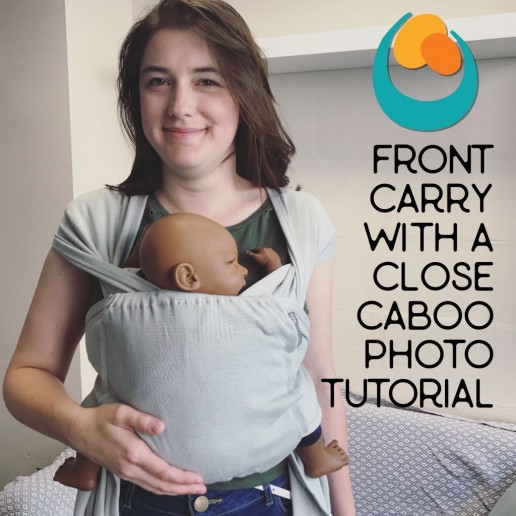
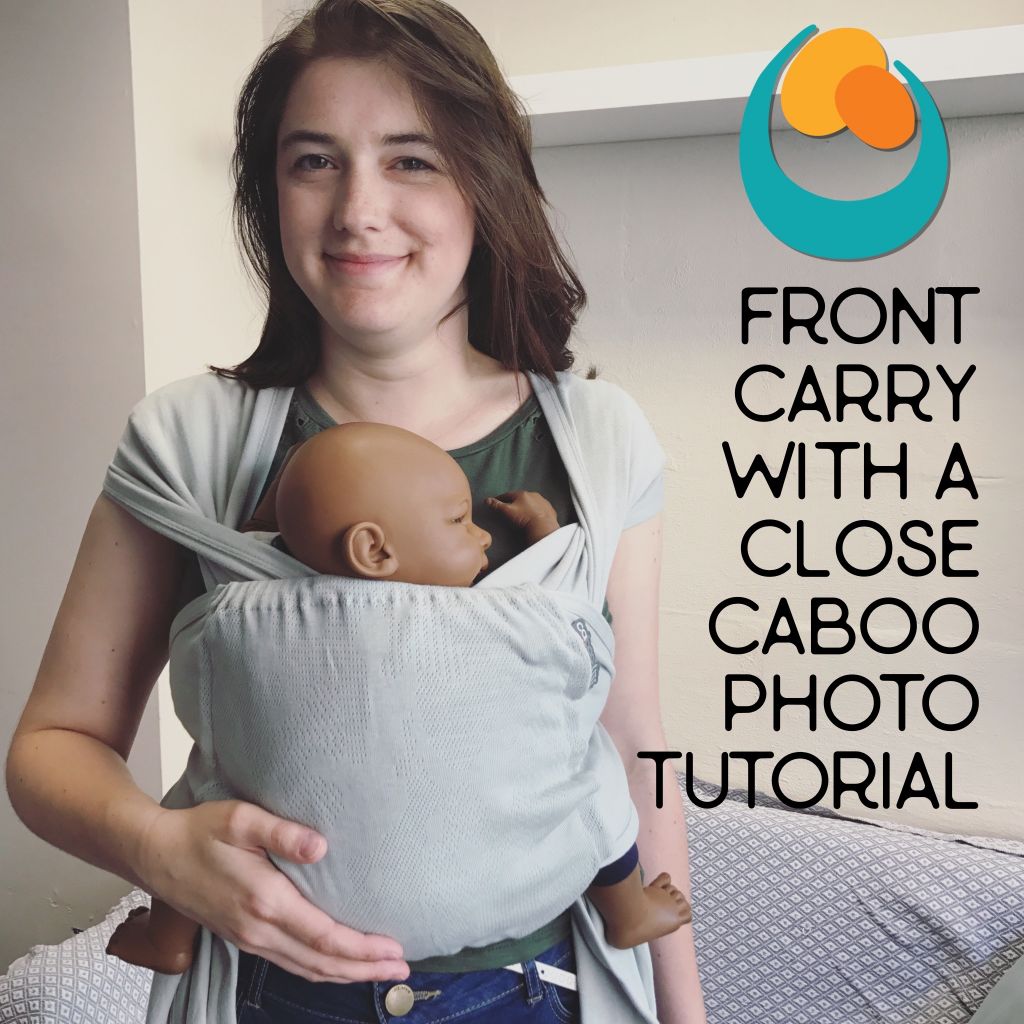
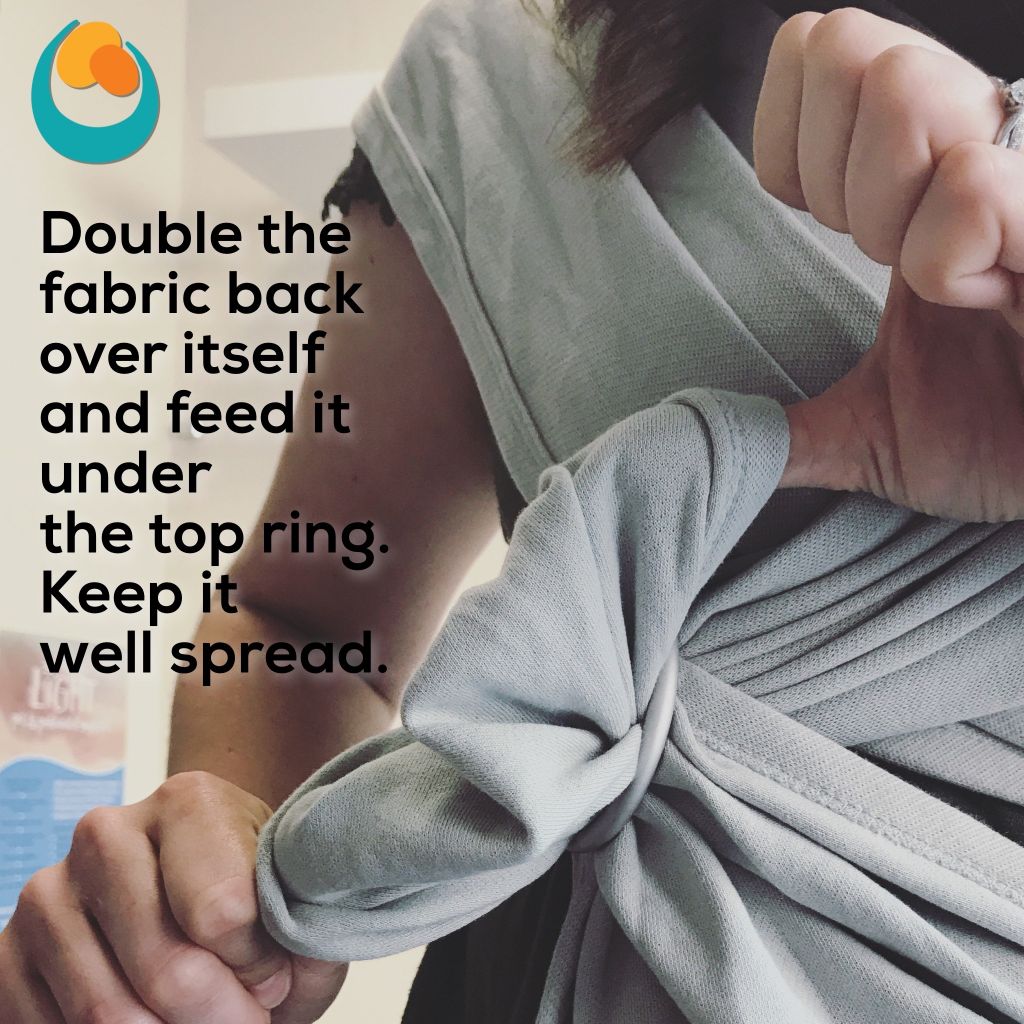
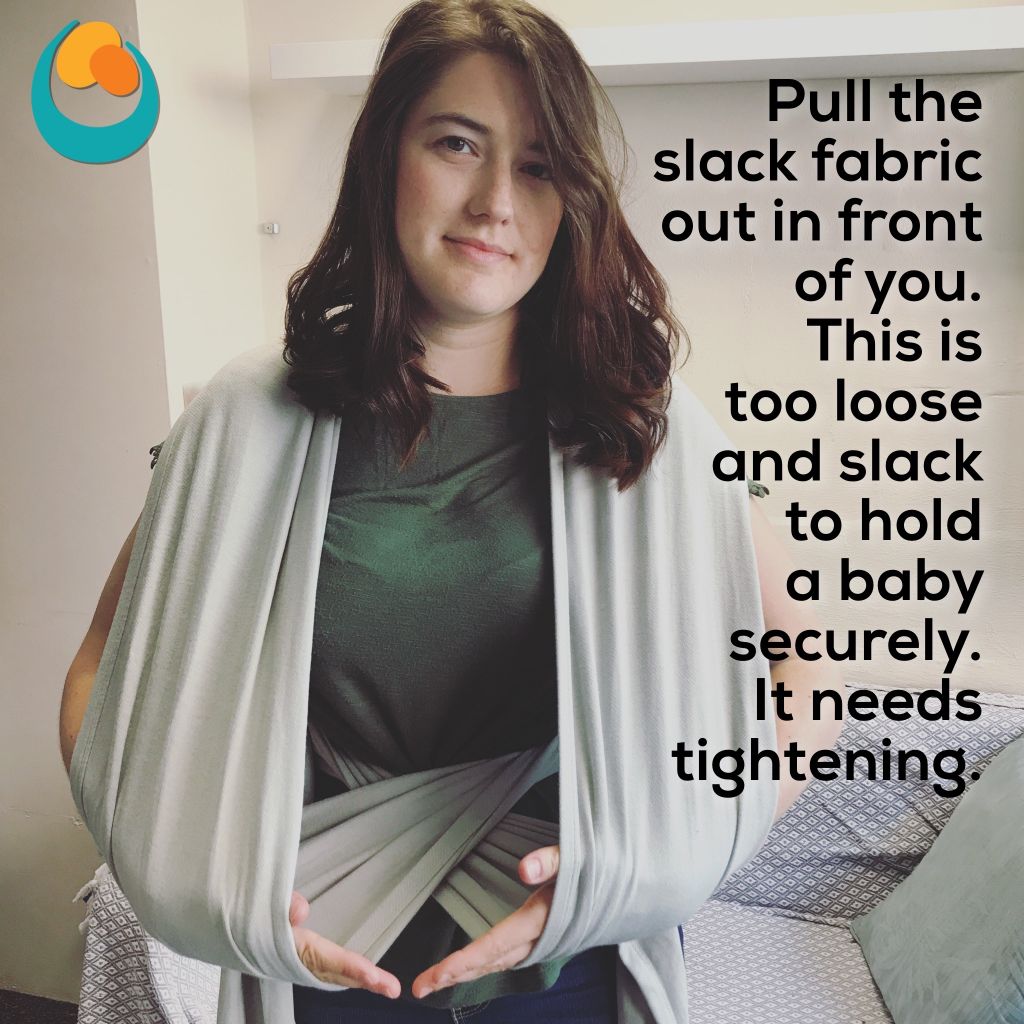
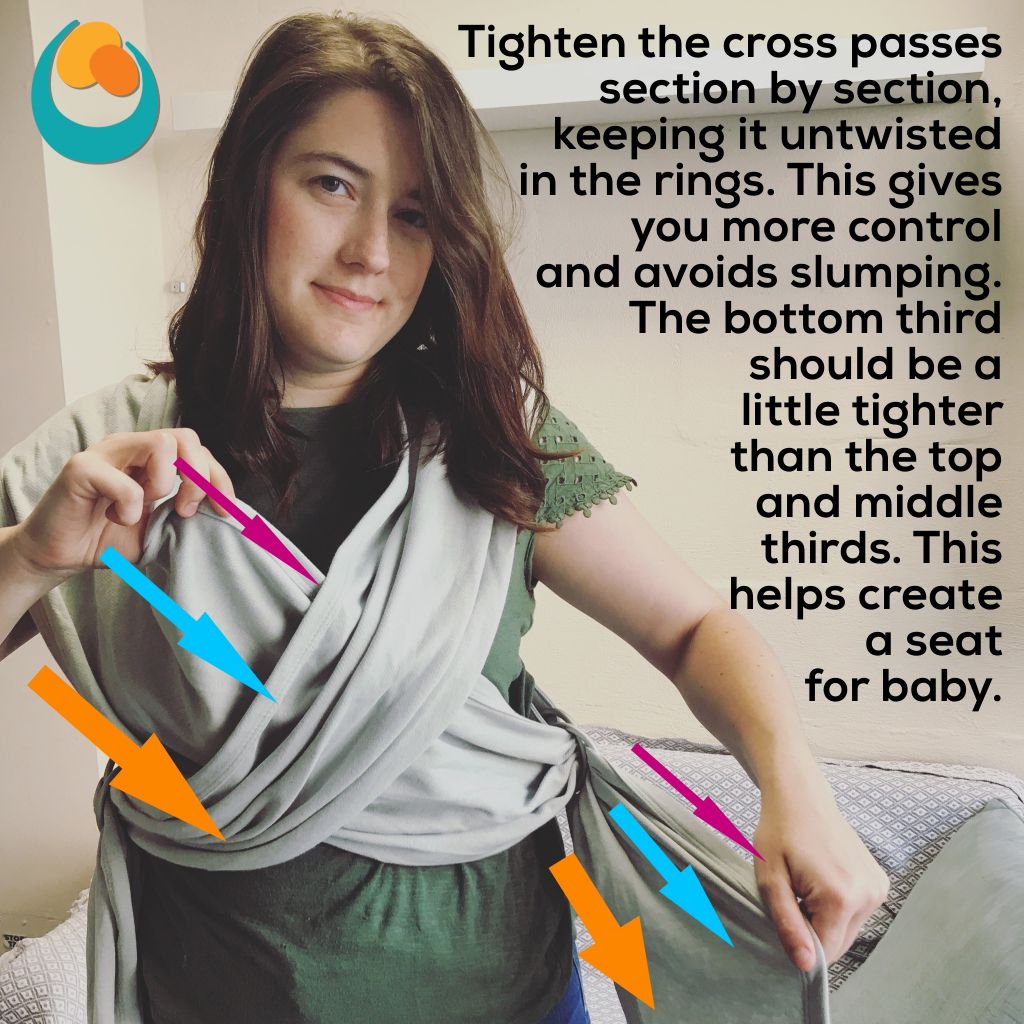
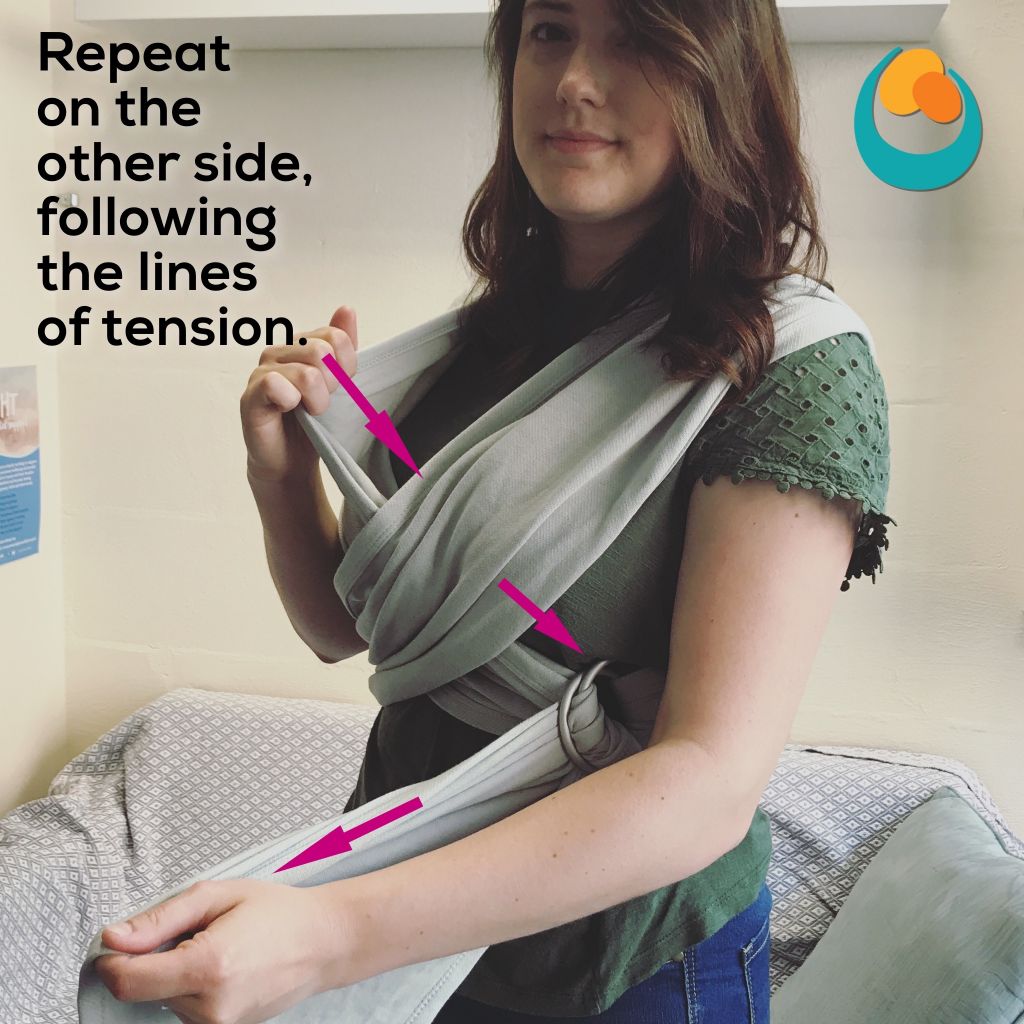
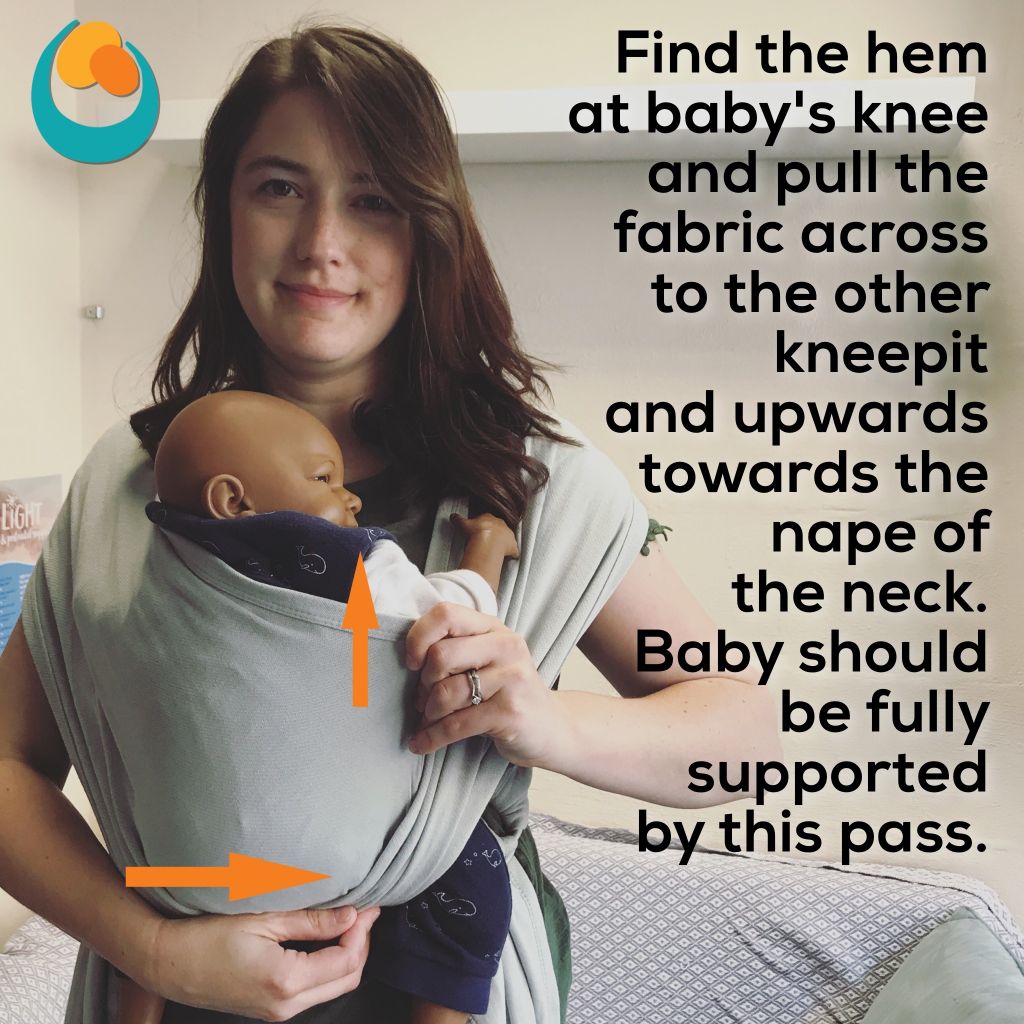
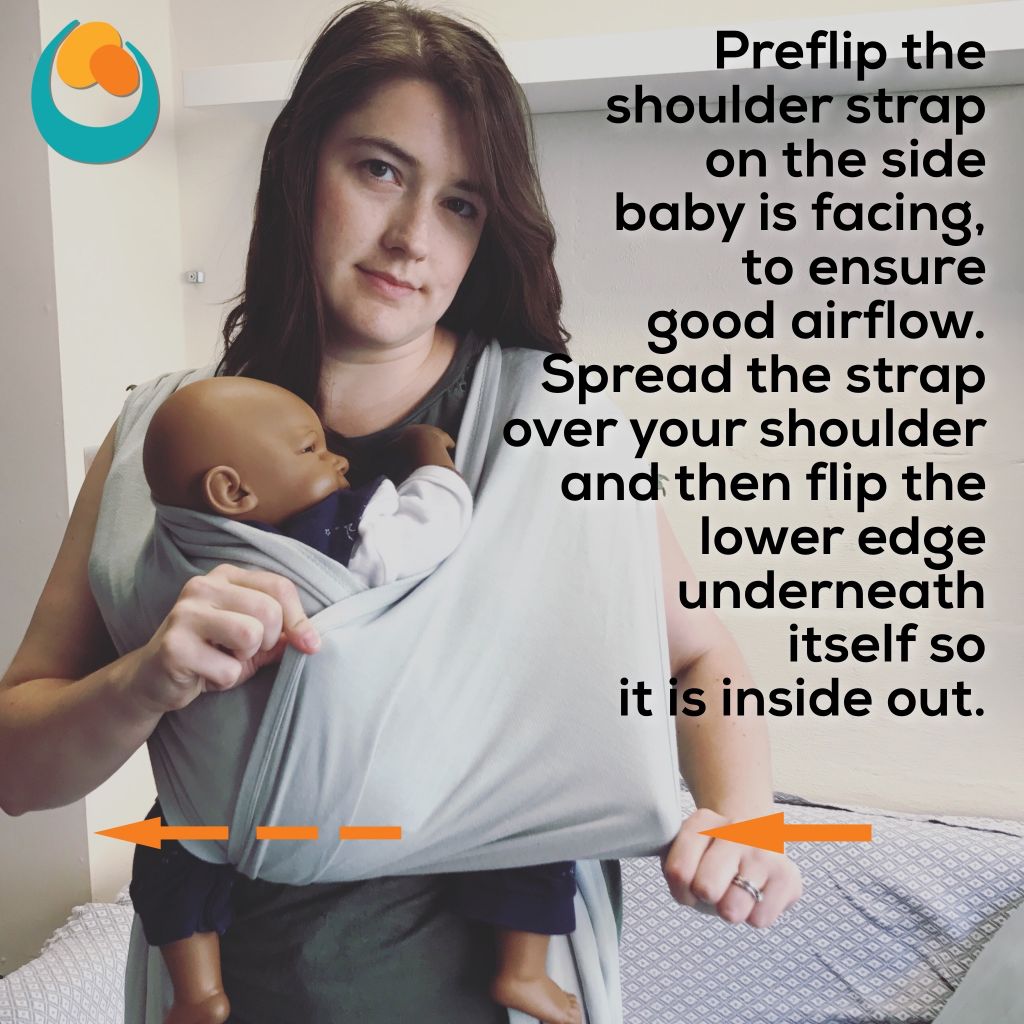
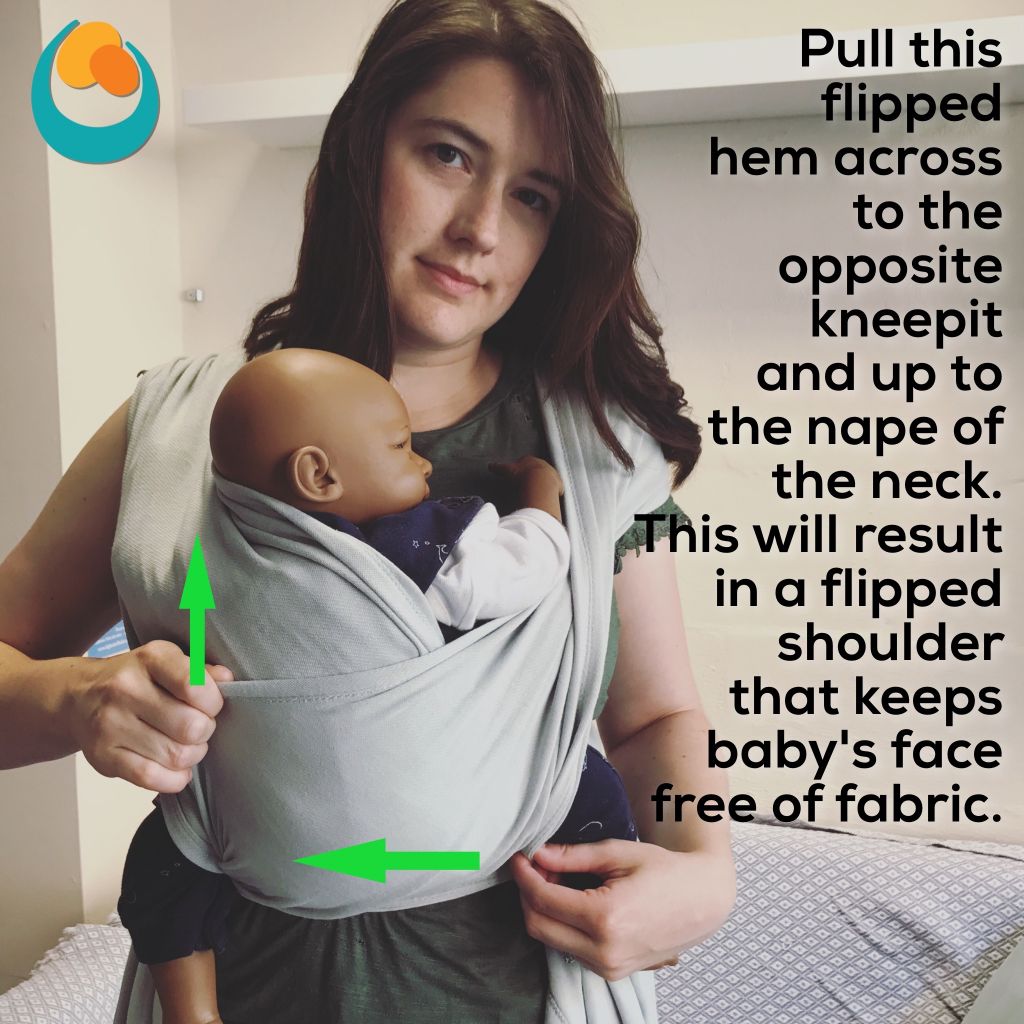
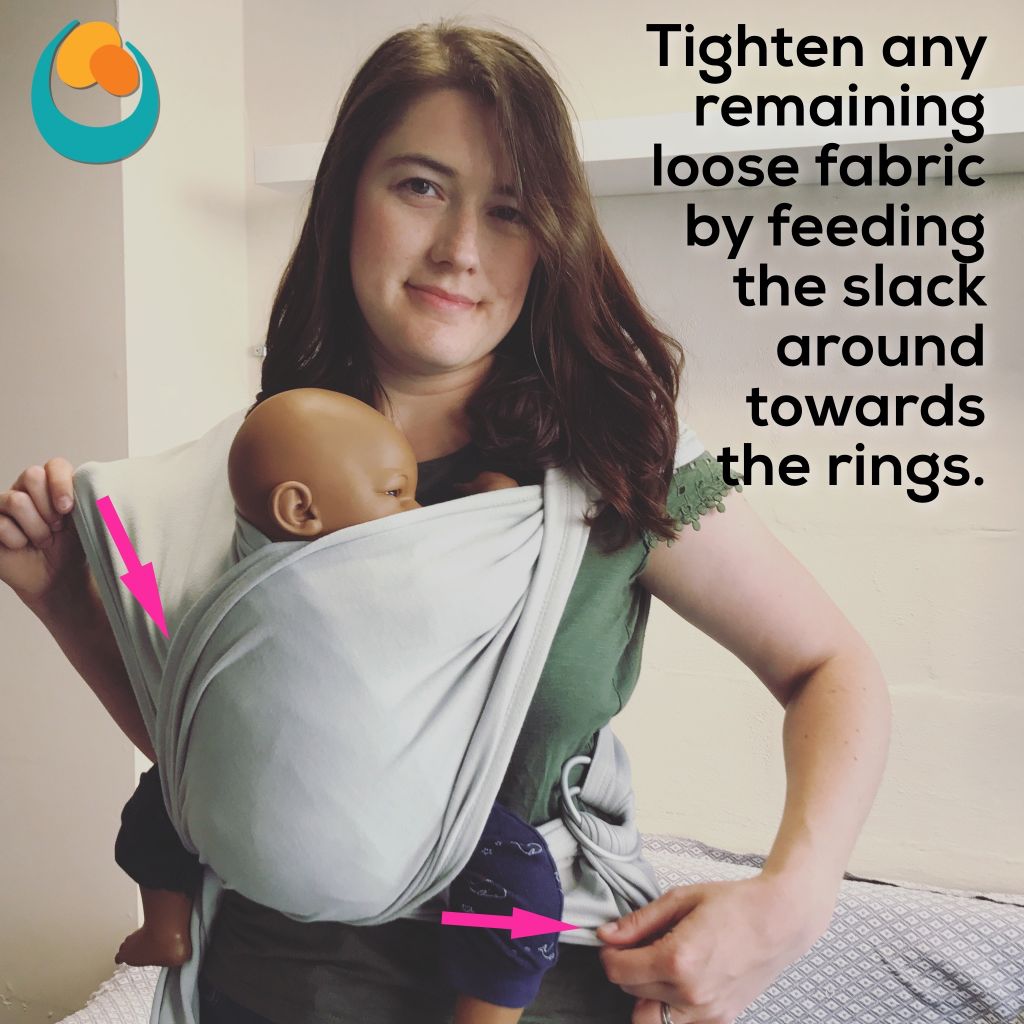
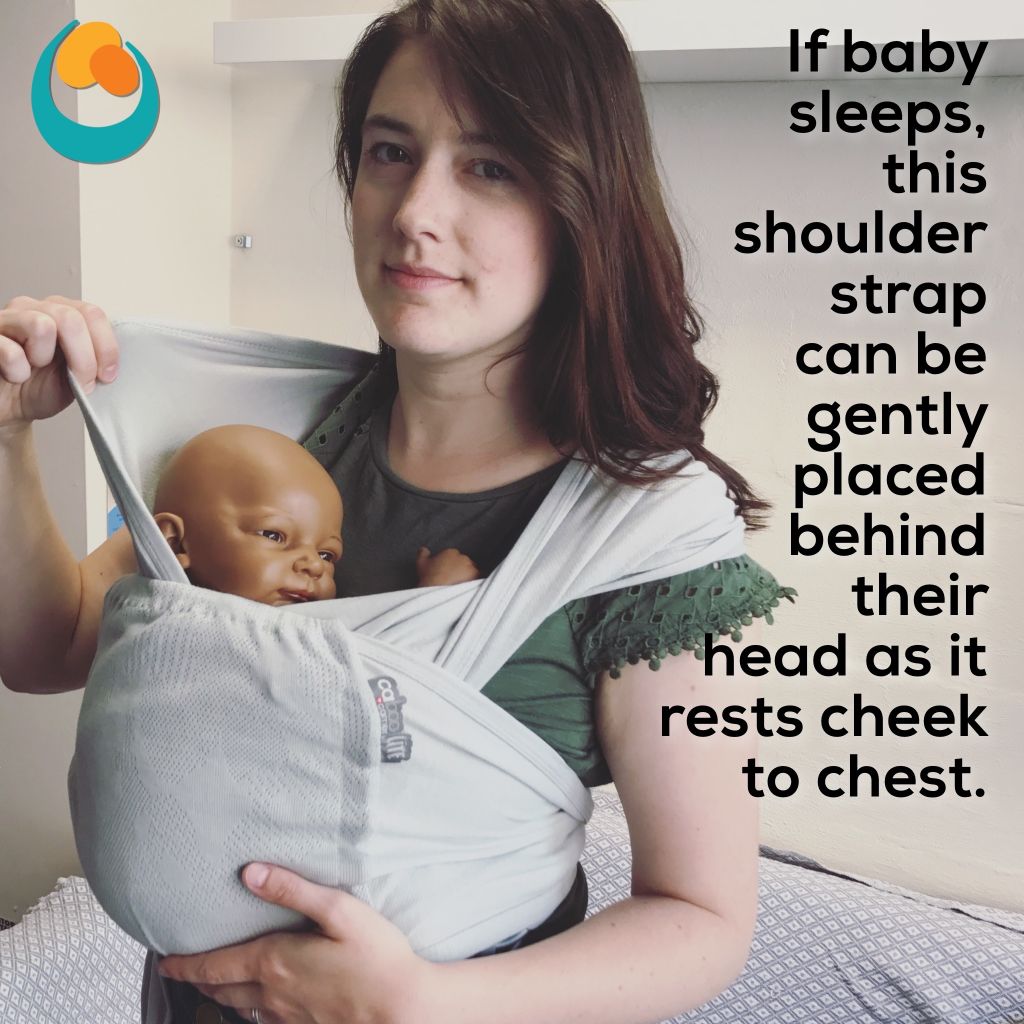
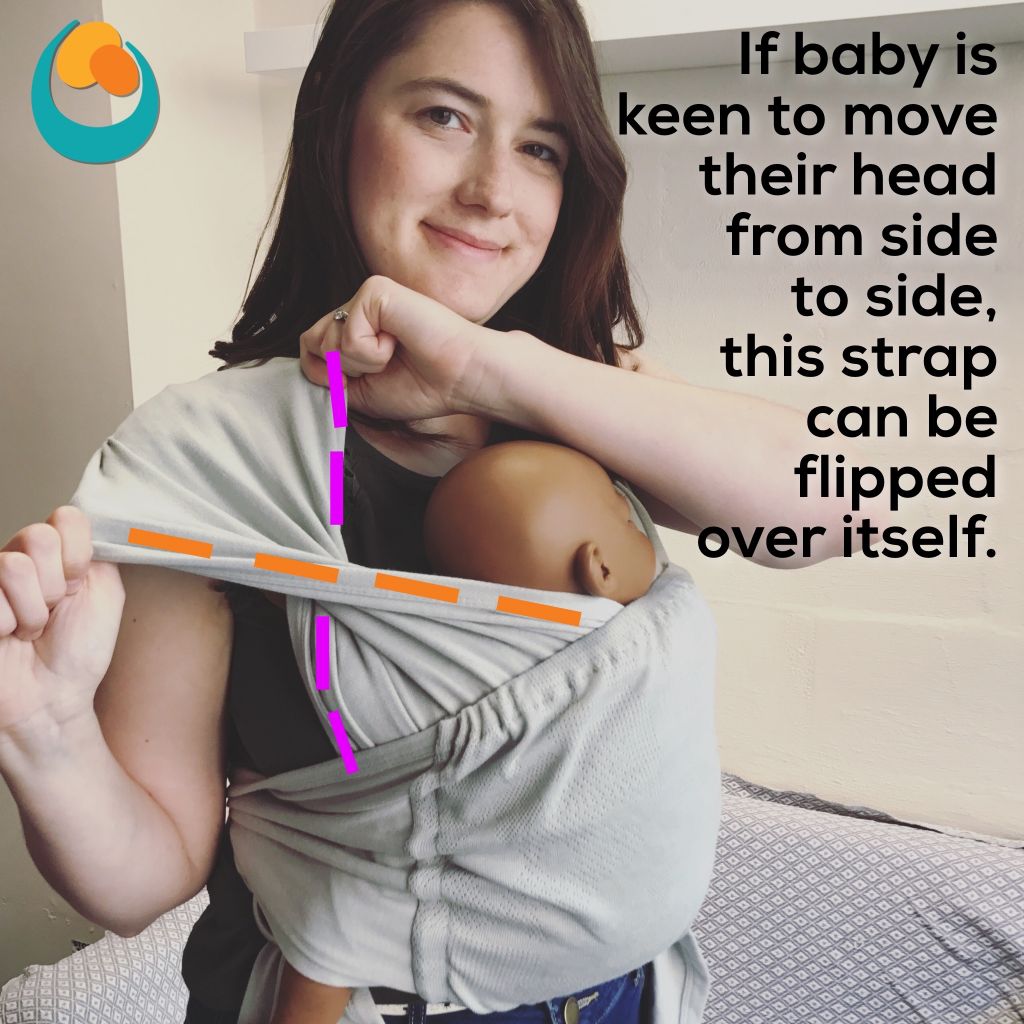
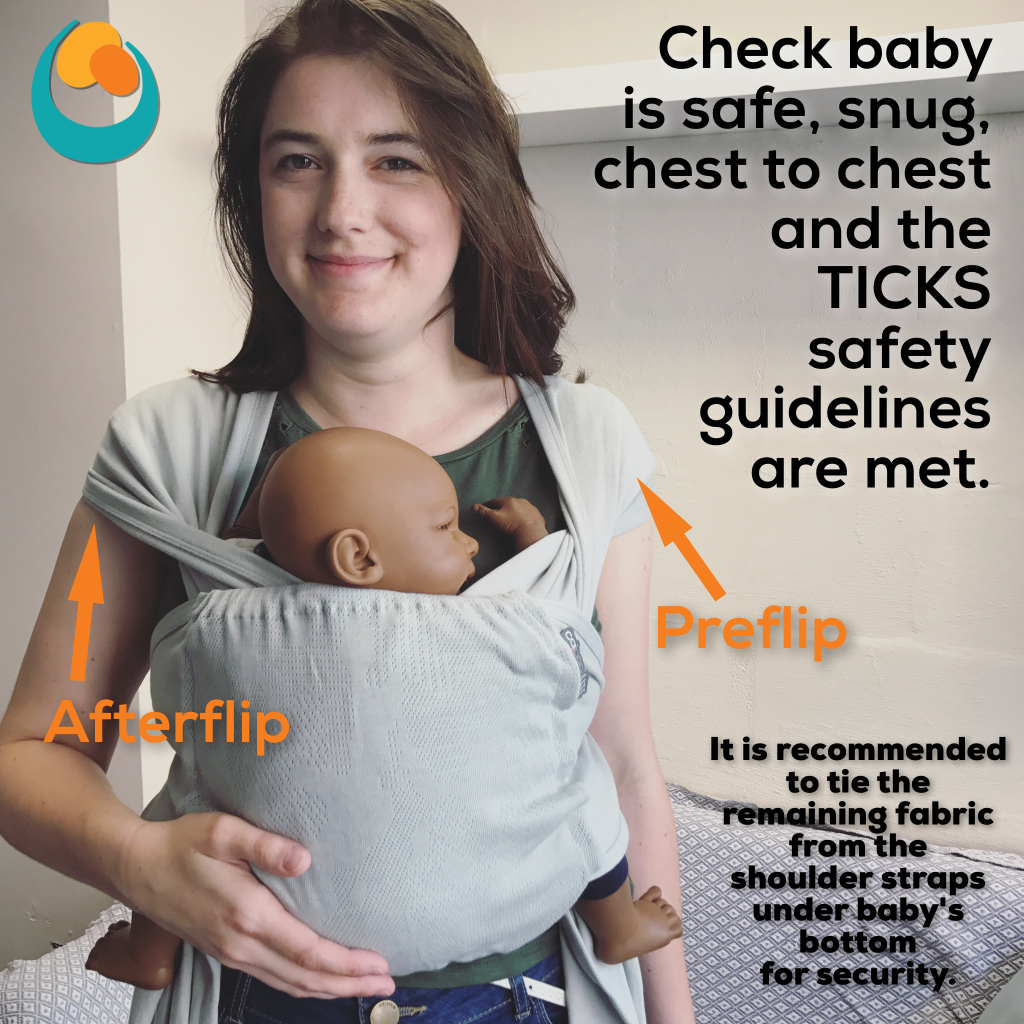
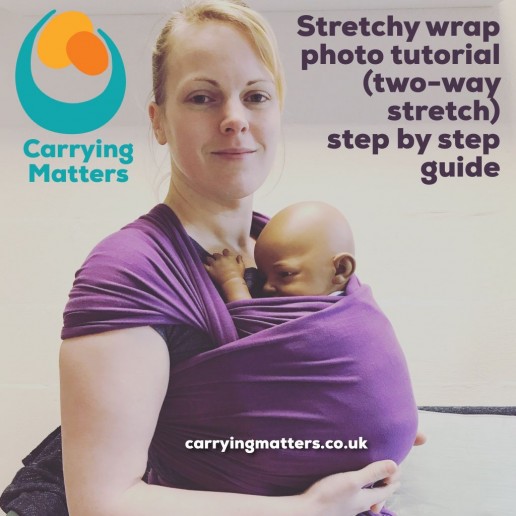
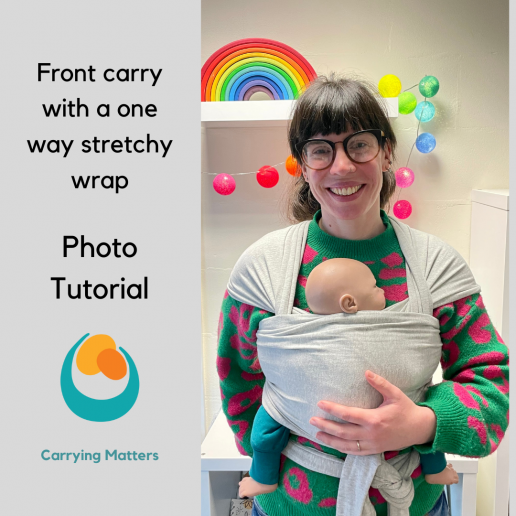
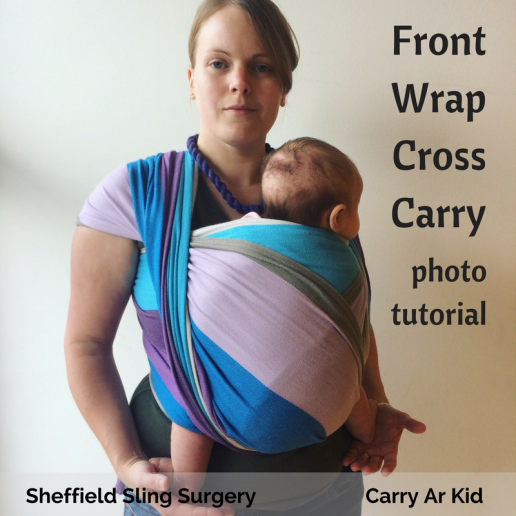
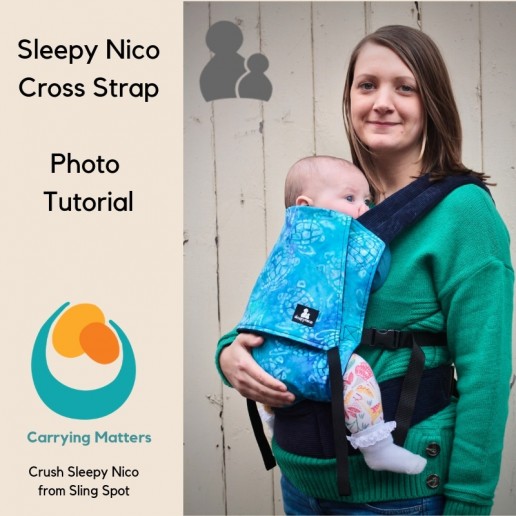
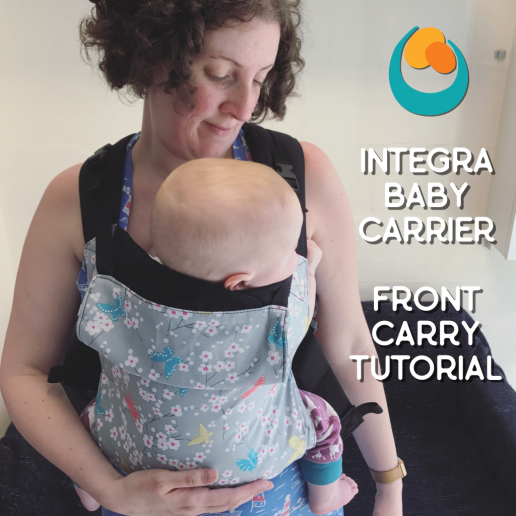
Front carry with a Close Caboo photo tutorial
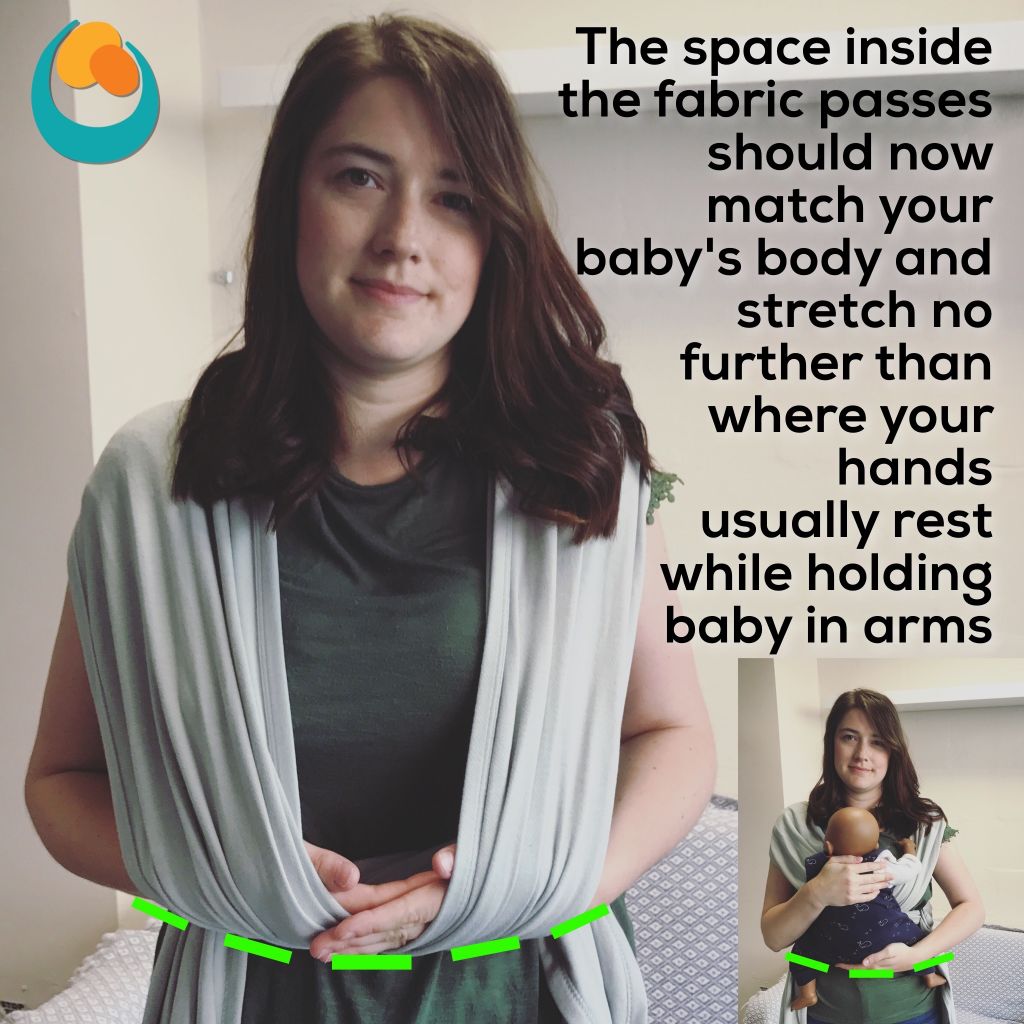
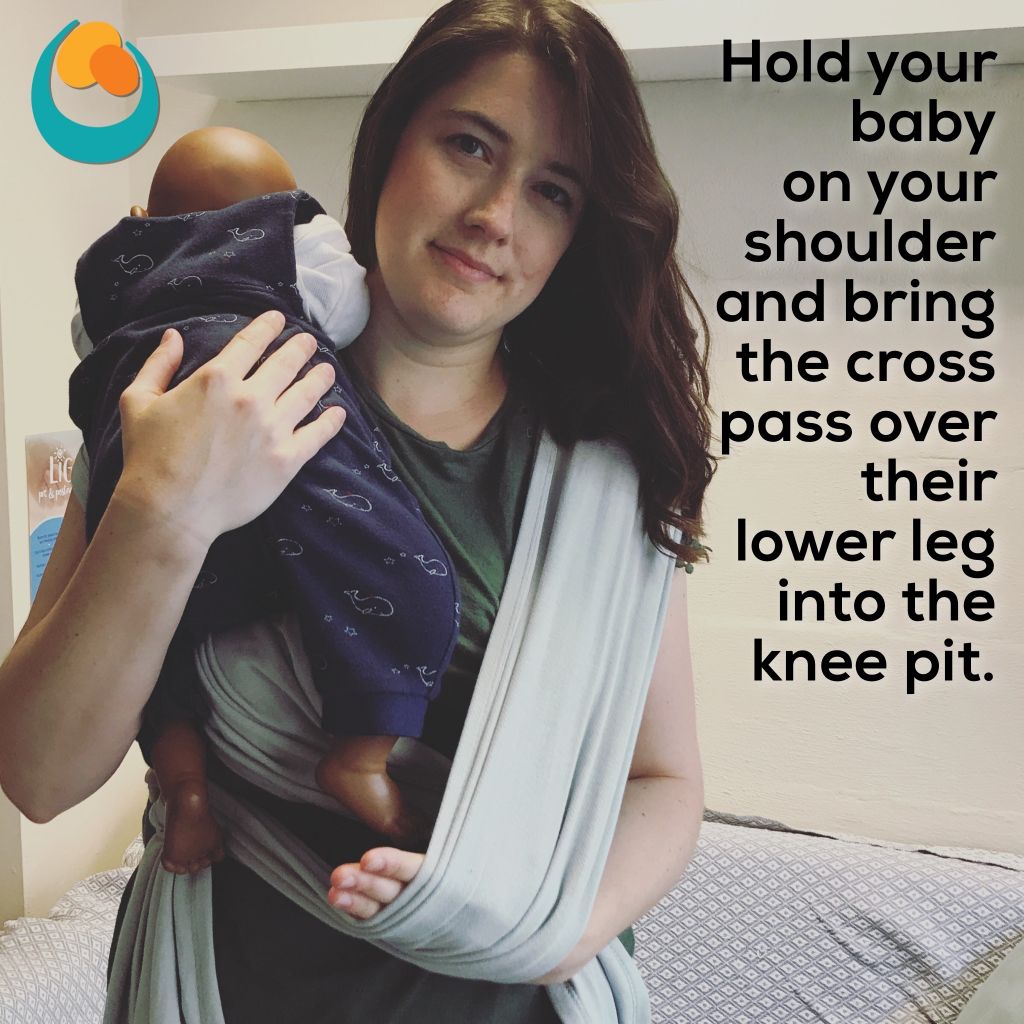
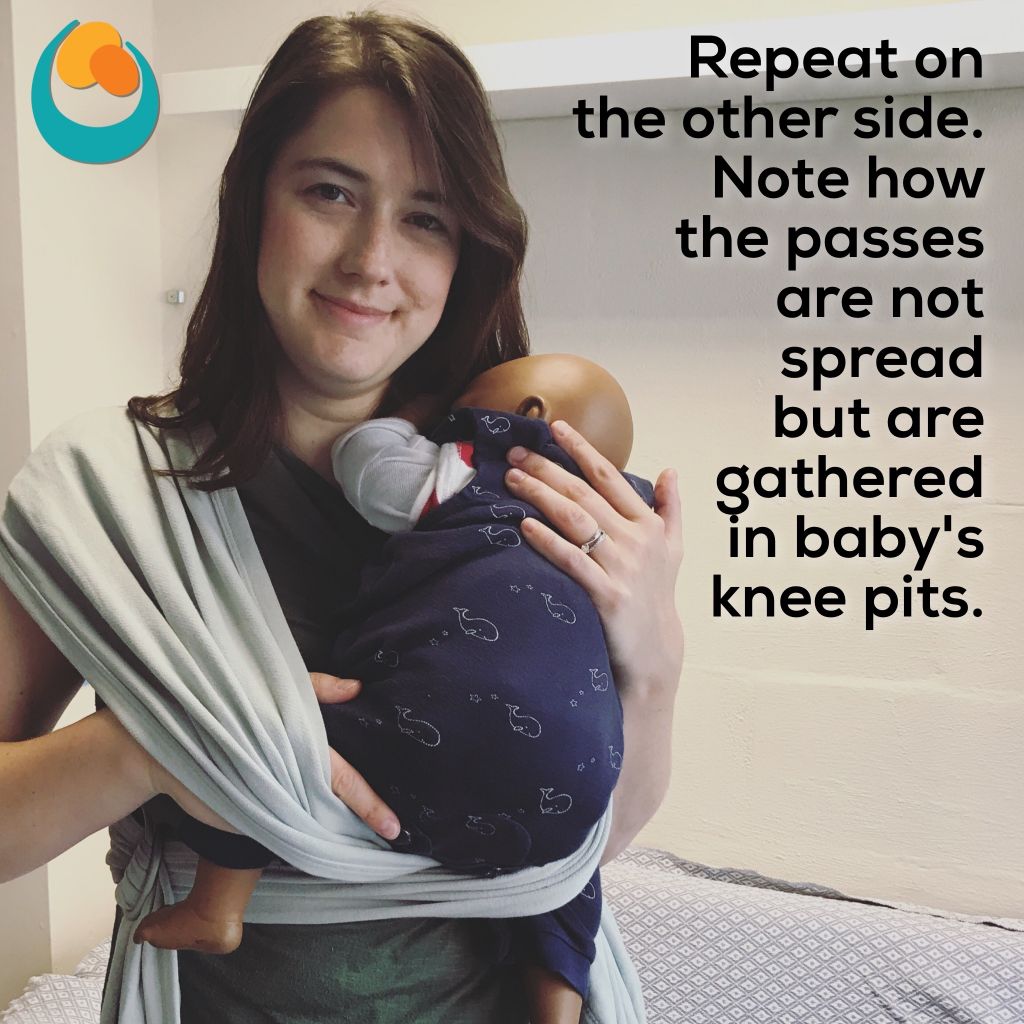
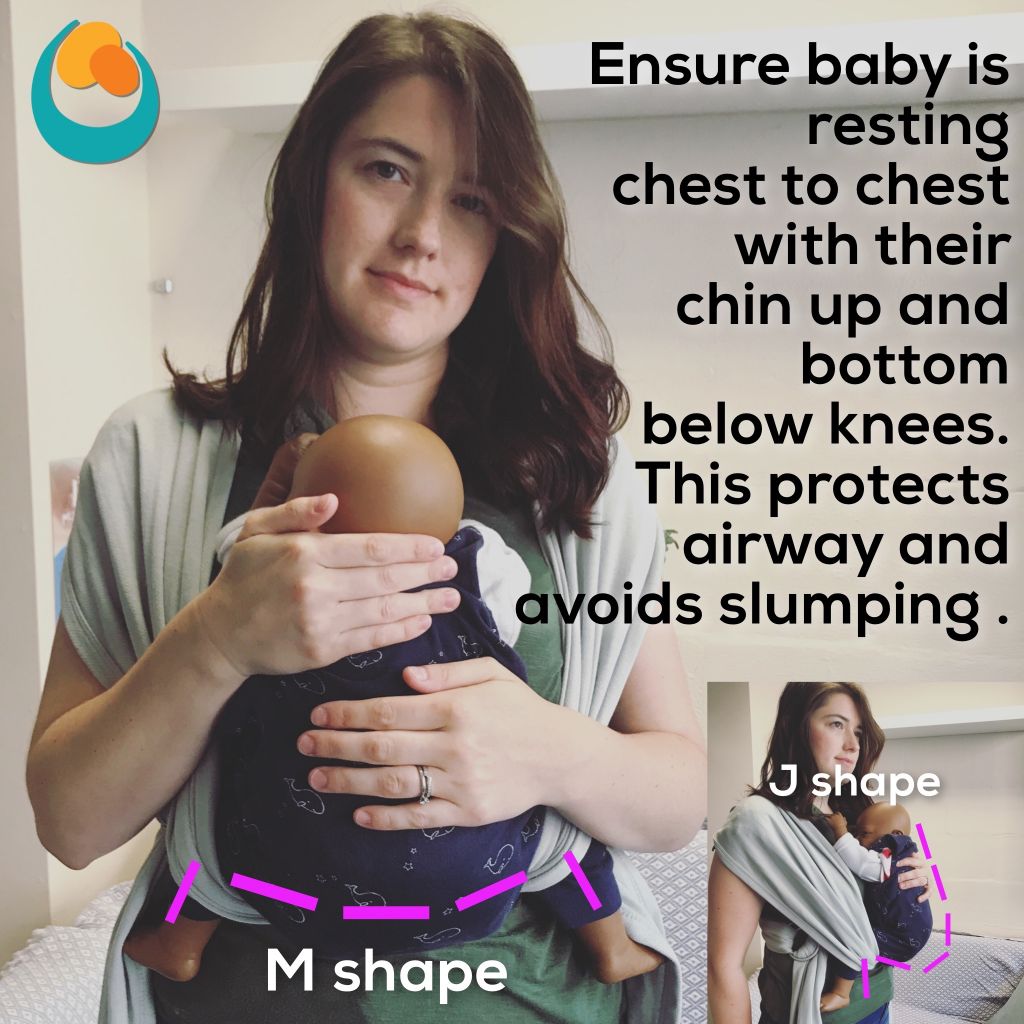
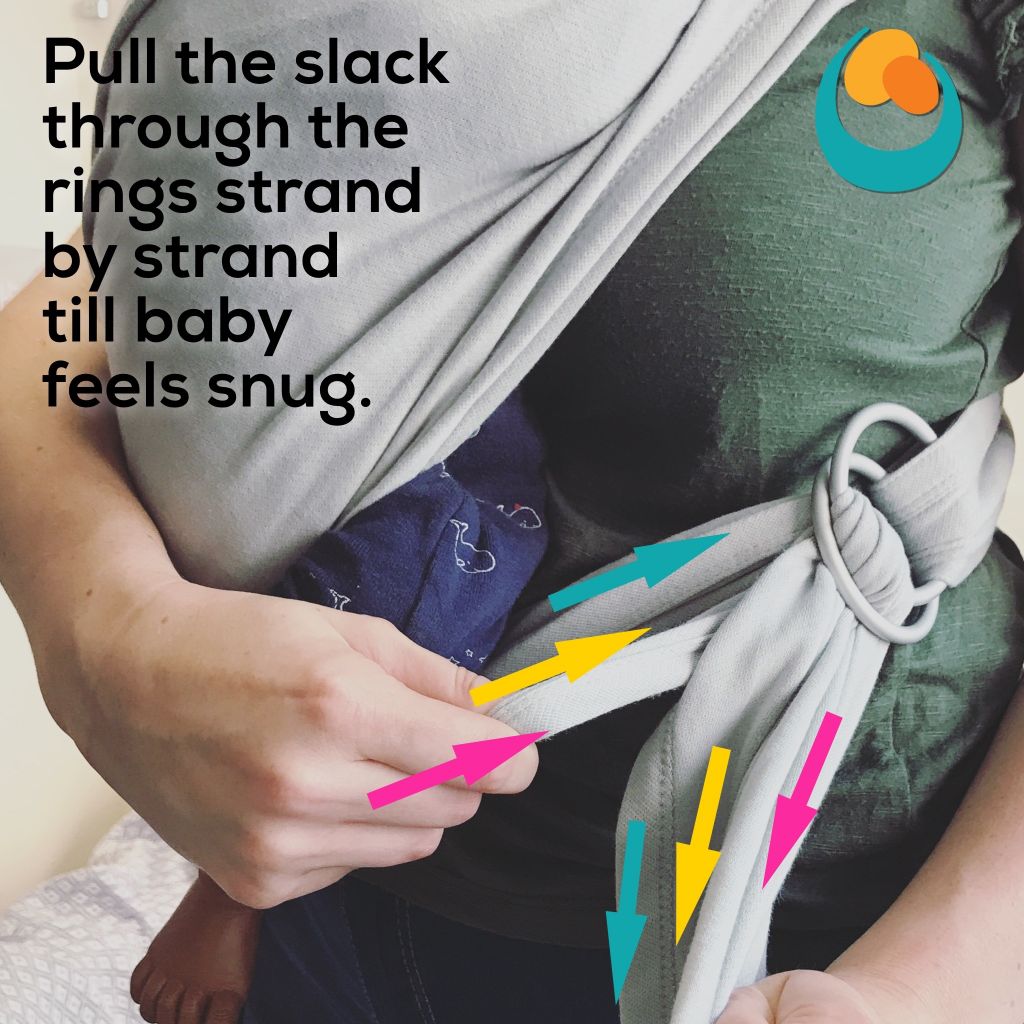
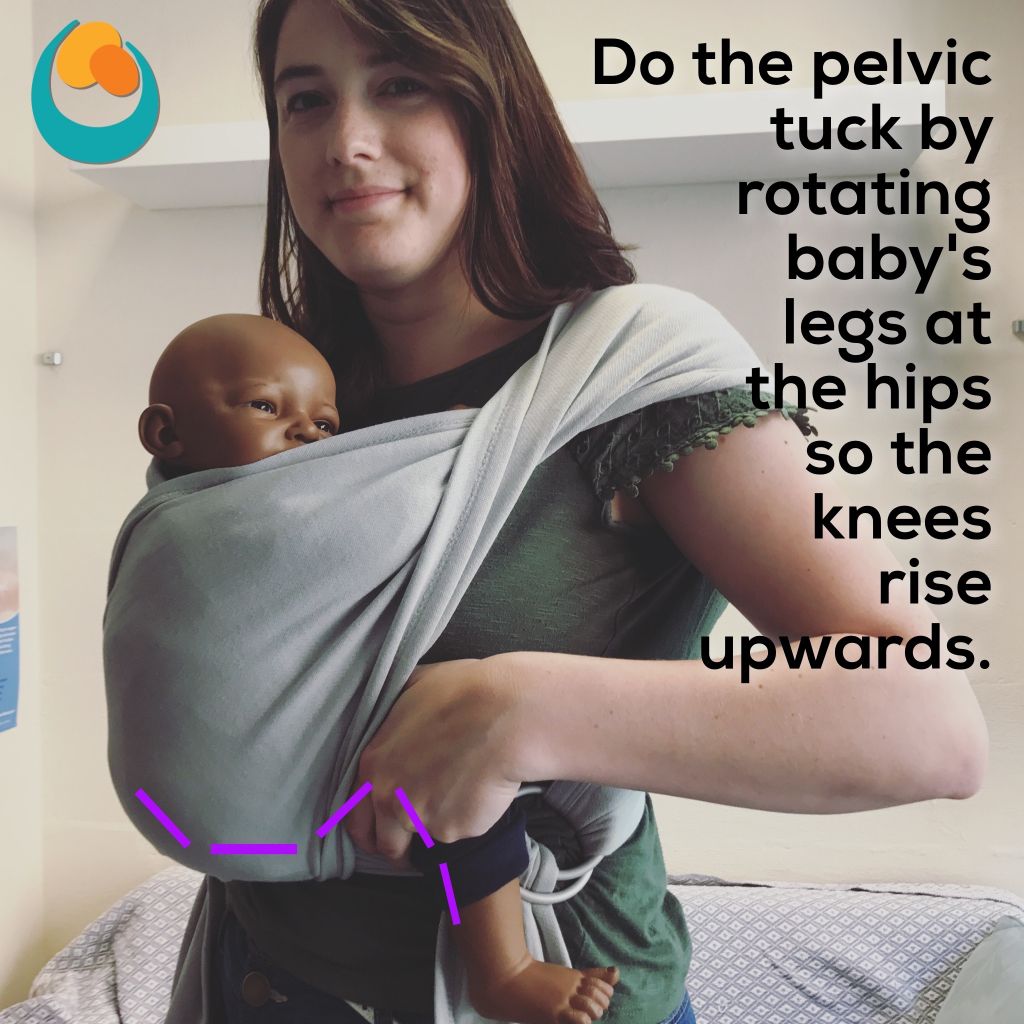
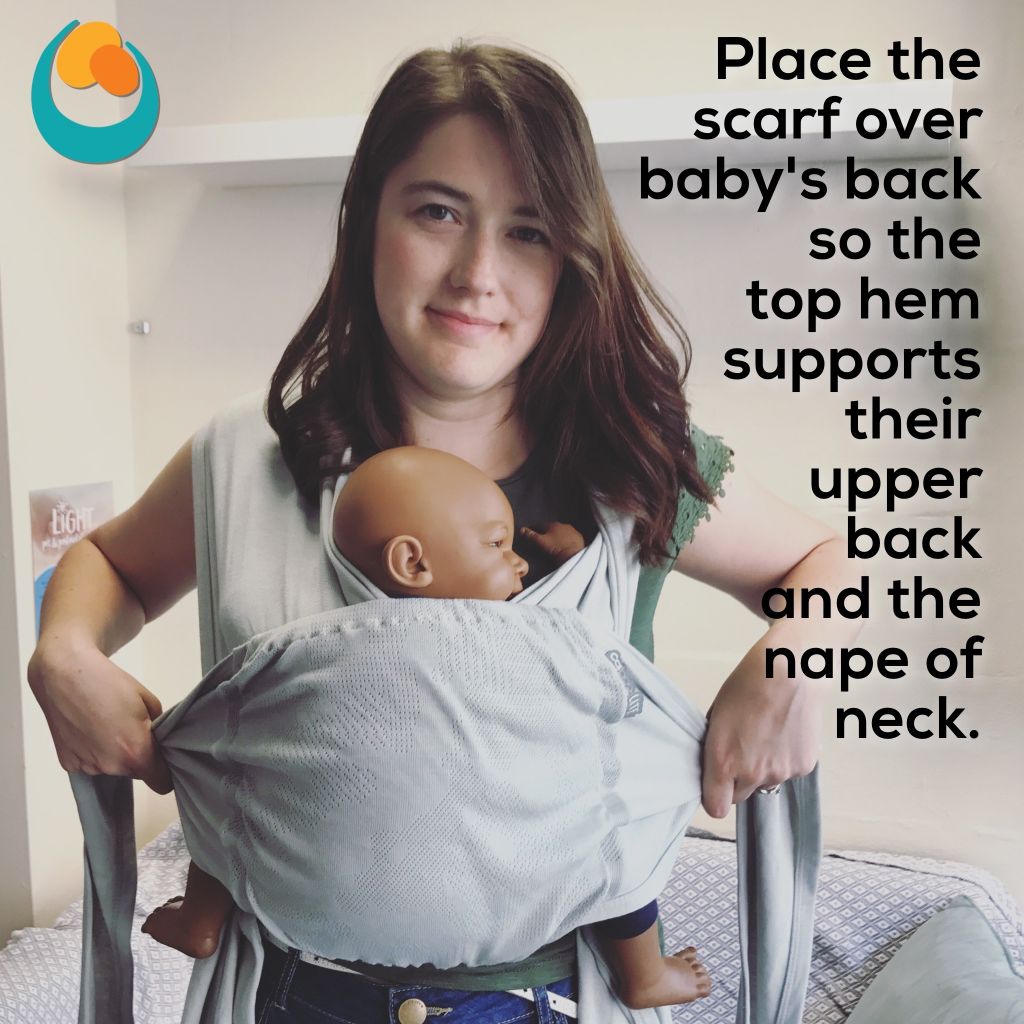
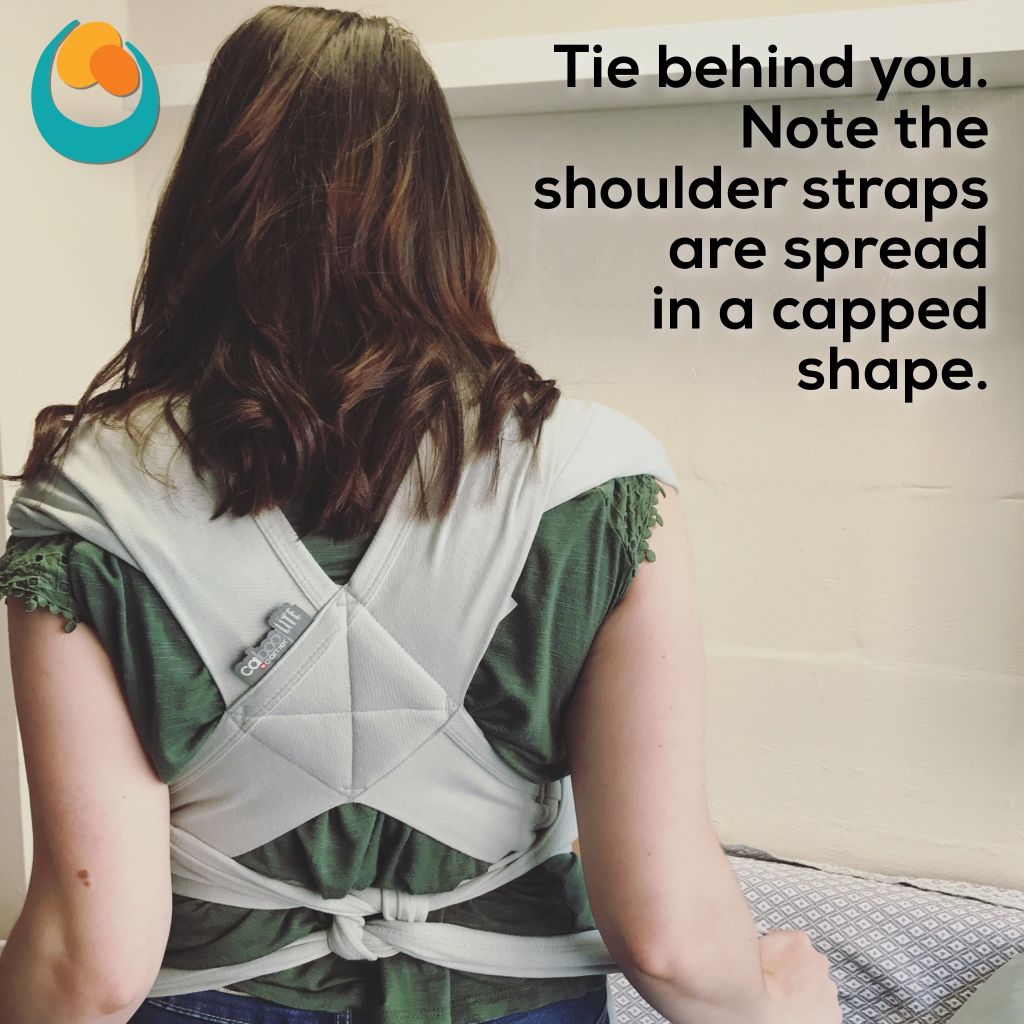
The Caboo is a great option for those who enjoy the snuggly feel of a stretchy wrap but prefer a little pre-structure. This front carry with a Close Caboo photo tutorial will get you off to a flying start.
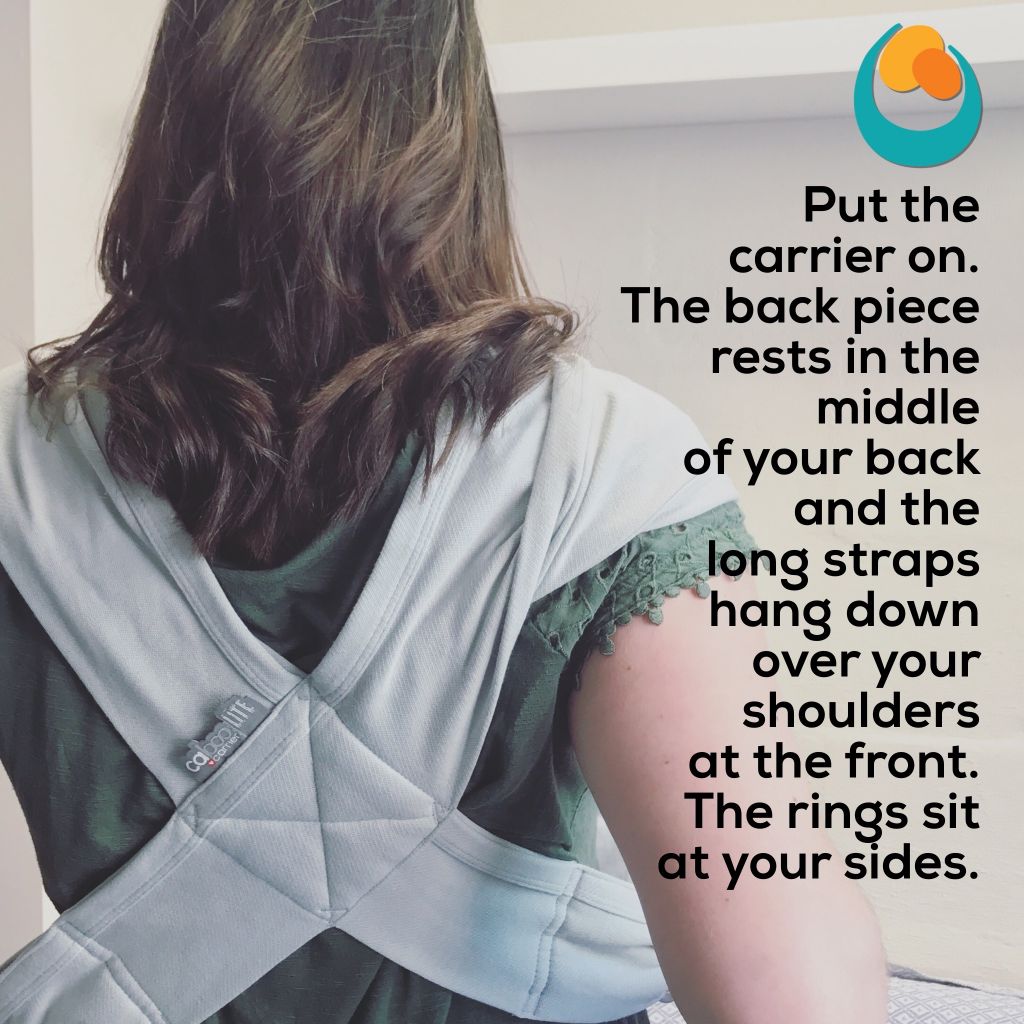
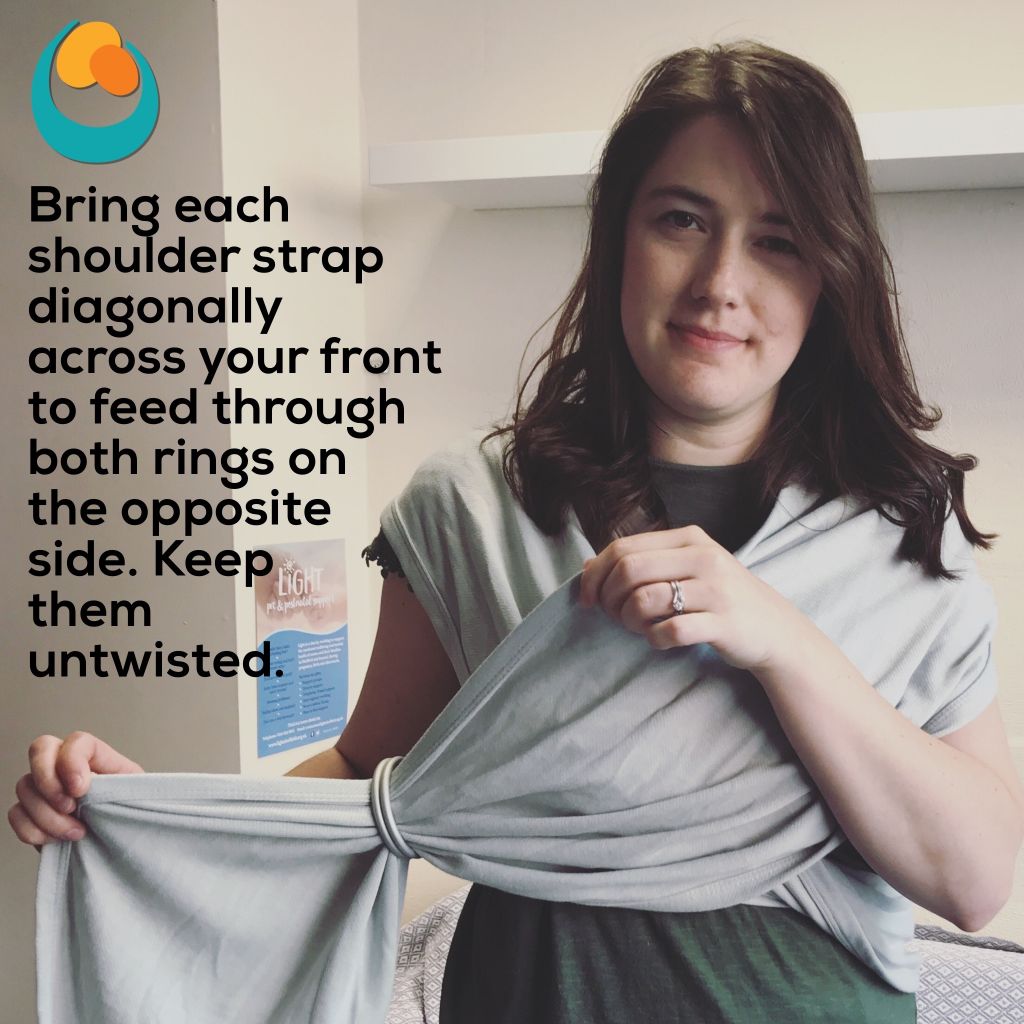
Follow the steps to ensure a safe and snug carry; the time spent preparing really pays off when baby is put in, far less fiddling and adjustments!
Read more about carrying newborns in stretchy wraps or Close Carriers here.
Babywearing Training
Do you love babywearing and want to know more about it, or be able to support others with their sling use? Then a training course could be just what you need!
Available Training
I believe that all parents should have access to information about safe and comfortable babywearing as part of the standard antenatal and postnatal care offered to them by statutory bodies. There are different types of training, here is a helpful summary,
Online Theory Course
This is like the MCQ part of learning to drive - covers basic theory of why babywearing is important and the basics of safety (based on national guidance). It is all online, no practical element. This is a good option for those wanting to know more but will not have any active role in advising families. More below.
Safety and Signposting Course
This is like the hazard awareness course of learning to drive. It includes the basic theory of babywearing benefits and the basics of safety (based on national guidance), and has a short (2-3hr) practical element learning how to spot common issues with slings/carriers (the hazards) and how to support parents/caregivers to keep their children safe and signpost to local/further resources for hands on support/fitting etc. This is focused for those working with new parents, particularly in the health and social care sectors, who do not plan to fit carriers to parents/caregivers directly. More below.
Peer Supporter Course
This course is will teach you how to drive! It is the course you need if you will be working with families, showing them how slings work, helping them to put their own carriers on safely (as well as any you have in your collection/library etc), helping them to use them in different ways, troubleshooting common issues and offering guidance about alternatives/lending carriers. This course includes the theory of babywearing benefits, and an in depth (6hr) practical section working with a range of carriers
I am willing to consider occasional commissioned face-to-face peer supporter courses within a reasonable radius from Sheffield, please get in touch to enquire.
I am unfortunately no longer offering regular in-depth remote peer supporter training courses due to my own increasing NHS workload and other responsibilities, as well as my belief that as more public bodies begin to consider offering babywearing support, this training must be face-to-face to ensure high quality and effective transference of skills at a time of vulnerability for new families.
I am training one of my colleagues to offer a high quality face to face Peer Supporter course in Sheffield from Summer 2026. Please do get in touch if you wish to register interest.
Please see the list of affiliated Carrying Matters trainers for other options in alternative parts of the UK.
Consultancy course
This would be the equivalent of the advanced driving course. My consultancy courses have always involved face to face, hands-on training, which has always been of paramount importance to me. Unfortunately I am no longer offering this course due to limitations on my time and my own NHS workload.
Building Bonds Project
The Building Bonds Project is going strong with the recent grant from the National Lottery (providing access to babywearing support and high quality carriers to families in need) - I remain very involved with this, and I am always happy to offer advice and guidance from my experience - please feel free to contact the Project with queries.
Group Courses
Courses can be commissioned for groups, and purchase orders for the NHS/councils etc can be raised, please get in touch to enquire about booking and prices.
Babywearing theory and sling/carrier safety - online course, £49
 This online course is a comprehensive introduction to babywearing theory and safety, which will give an excellent grounding for becoming an advocate for carrying behaviour and how slings can help promote health and wellbeing. It is a deep exploration of the science around connection, child development, infant mental health, anatomy, physiology, psychology, sociology, neuroscience, anthropology and more! It also provides a brief introduction to the major types of carrier.
This is open to everyone, and can be completed at your leisure. There are short tests of your knowledge as you proceed through the course and a final assessment to complete the course for a certificate of online learning.
- This will suit many people who wish to enhance their knowledge and understanding, become evidence-based babywearing advocates, be able to signpost to local libraries with more confidence, and are not planning to offer in-person support to families on a regular basis.
- This course is not timed, and can be done at your own schedule and to your own pace.
- Please be aware that this course is not a Peer Supporter or Consultancy course and the certificate cannot be presented as such.
- This course is not sufficient on its own for anyone planning to offer any form of movement classes with babies in slings.
[/vc_column_text]Enrol onto the Theory and Safety Course (£49)
Sling and Carrier safety and signposting course for organisations working with parents – hybrid online and practical course, will be available late spring/early summer – £75
 This hybrid course is a combination of an adapted introduction to babywearing theory and safety course, exploring how slings can help promote health and wellbeing, alongside a thorough look at the key features of keeping babies safe in slings and carriers and how to recognise and avoid risks. It also provides a brief introduction to the major types of carrier via video, and there are quizzes to assess understanding. This is followed by a practical session (in person or remote) to see good carrying in action, discuss how to check carriers for use, practice identifying suboptimal positioning and learning how to engage families in conversation. You will learn how to give general advice, answer common questions from parents (eg feeding, sleeping, temperature, facing out, duration of sling use etc) and how to signpost to appropriate services who can offer in-person support and fitting.
This course is particularly suitable for organisations who work with antenatal and postnatal families, wishing to be able to offer basic safety advice and are not planning to offer in-person one to one support to families with their own slings.
- Please be aware that this course is not a Peer Supporter or Consultancy course and the certificate cannot be presented as such.
- This course is not sufficient on its own for anyone planning to offer any form of movement classes with babies in slings.
Structure of the hybrid course
- Online – Why Carrying Matters – the science about why using slings is so beneficial for families
- Online – Basic Babywearing Safety
- Online – The Different Types of Slings
- Online – Assessment Module (to confirm learning)
- Half day (2-3 hrs) in person training with a Carrying Matters trainer to consolidate learning
- Assessment MCQ to assess competence, if passed, will be issued with a certificate of learning.
Feedback
“I really enjoyed trying different carriers. I found the trouble shooting sections particularly interesting and fun. I learnt a lot and feel more confident with all carriers and especially with how to wrap a new born.
I really loved it and now want to do the consultant training even more. Rosie was clearly very enthusiastic and dedicated and made everything so interesting. She was pretty inspiring.”
“Everything I had hoped for was met, I feel like a peer supporter now, not just someone who loves slings!”
“Rosie was born to teach people. Simply fantastic in the way information was relayed. Would highly recommend.”
“The whole day was so good! A key element was the ability to see and try so many different types of slings and to have time to go through basic principles regarding how to use them all. The role play aspects where we were able to troubleshoot carrier problems was also very useful.”
“Hi Rosie, I couldn’t go to bed without sending you a note to say a huge thank you for the course today. I’ve never felt more included and welcome and I’m so thrilled I came along. Thank you for your hospitality and brilliant teaching, I’m raving about babywearing to my husband and cannot wait to volunteer at a meet soon.”
“I loved the content of the day, the discussions, playing with different slings, learning new ways of slinging, wrapping etc. The course was well run, well organised and I felt empowered to speak, share and question.”
“I feel much more confident in my knowledge of both the benefits of babywearing, and how to go about enabling parents.”
“I really enjoyed meeting other like minded people. I liked the theory of babywearing as it related closely to the work I do as Breastfeeding Lead in the NHS. I enjoyed trying all the different slings and carriers and understanding in what situations they would be used.”
“My personal learning aims were met, it exceeded my expectations. I found the course was extremely enjoyable and covered so much subject matter but was not overwhelming. My aims were well and truly met. I now believe I could give a new babywearer good/correct advice and help in ways I was unsure about prior to the course.”
“Having someone with your experience and knowledge available all day to ask questions and watch demo was incredible. I really enjoyed the contextual and historical information about Babywearing and what led us all into that room that day. It put everything into the ‘bigger picture’ and made me feel such a part of the huge Babywearing community. Having such a massive amount of slings in the room to try and compare was utterly invaluable – such a rare opportunity. I thought the balance between practical and theory was absolutely spot on. As someone who’s very interested in the sociopolitical aspects of Babywearing I was really pleased to see this covered in the course and really appreciated that you placed Babywearing so firmly in this context during the day.”
“The course really opened my eyes to consider the needs of individuals and how essential it is to be inclusive and approachable and gave me the tools to do this confidently (especially regarding narrow base carriers). It was useful to be shown how to exaggerate movements and words when teaching and to have the opportunity to practice this. Rosie’s enthusiasm was infectious and made the whole day very engaging. The size of the group worked well and I especially enjoyed how well we all got on.”
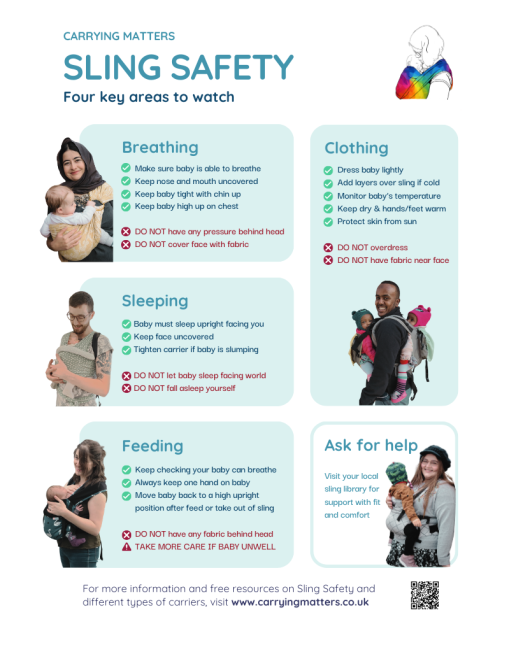
Educational Resources
This page contains various resources that may be useful for education and supporting others. Leaflets, posters and postcard packs can be purchased. Images and PDFs can be downloaded free of charge by clicking on the photos. Please ensure you credit me (Dr Rosie Knowles) if you use them.
Safety Resources
- The 4 Key areas webpage can be found here – this has links to translations into other languages.
- The Carrier Height webpage is here – the image can be found lower down on the page.
Click on the image to download a PDF, or order a pack of high quality printed leaflets using the button below.
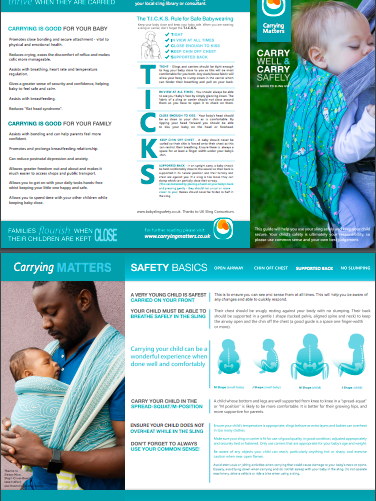
Click on the image to download a PDF, or order a pack of high quality printed leaflets using the button below.
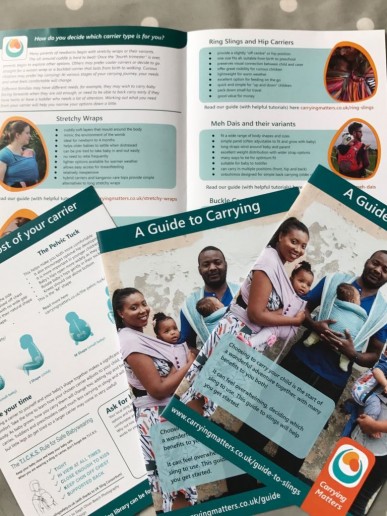
Click on the image to download a PDF, or order a pack of glossy postcards or posters using the button below.
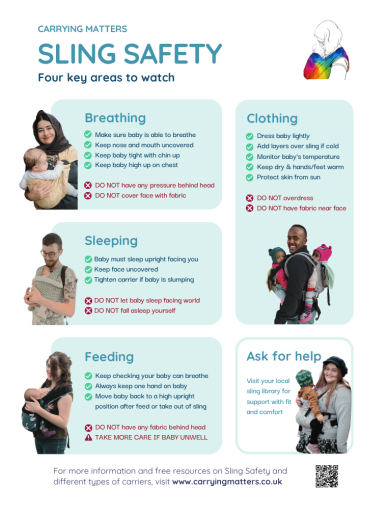
Click on the image to download a PDF, or order a pack of glossy postcards or posters using the button below.
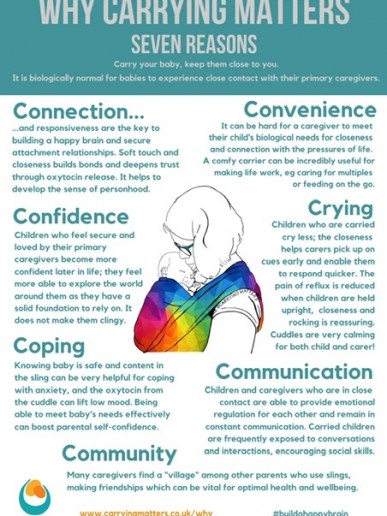
Click on the image to download a PDF, or order a pack of glossy postcards or posters using the button below.
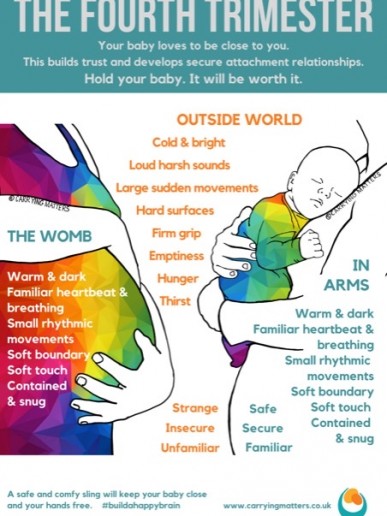
Click on the image to download a PDF, or order a pack of glossy postcards or posters using the button below.
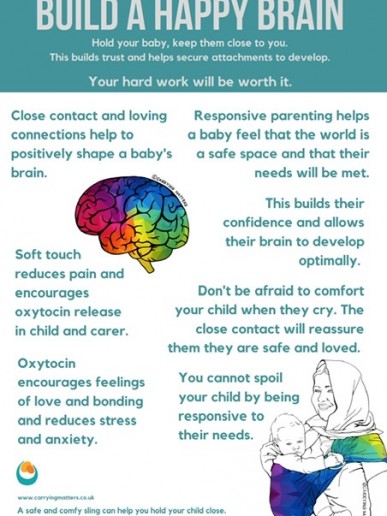
Click on the image below to download a PDF, or order A3 posters using the button below.
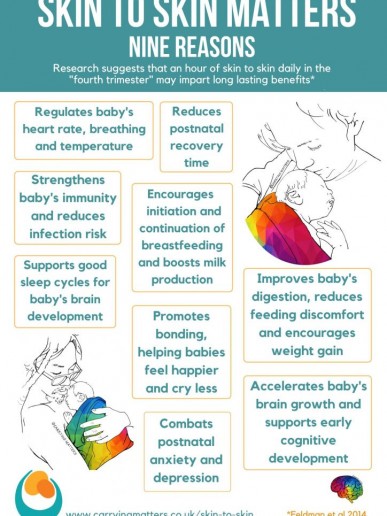
Click on the image to download a PDF, or order A3 posters using the button below.
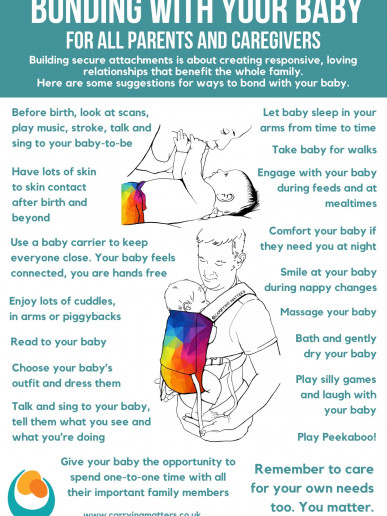
Click on the image to download a PDF, or order A3 posters using the button below.
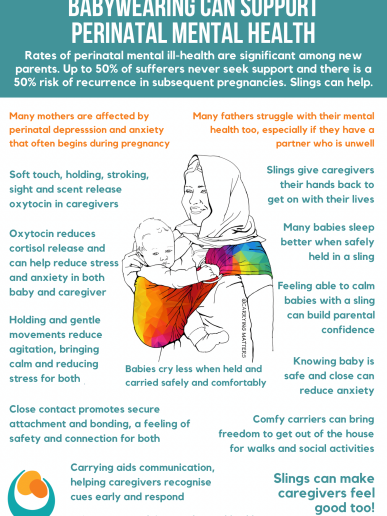
Click on the image to download a PDF, or order A3 posters using the button below.
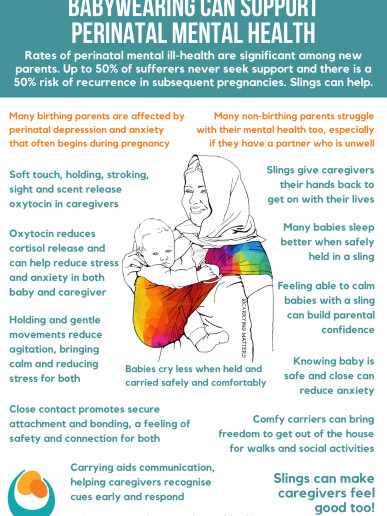
Click on the image to download a PDF, or order a pack of posters using the button below.
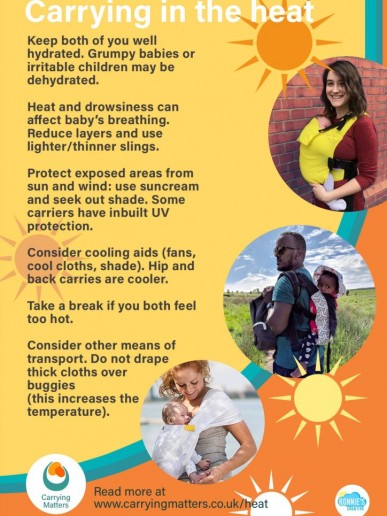
Click on the image to download a PDF, or order a pack of posters using the button below.
Read Rosie’s well loved Why Babywearing Matters book here, published by Pinter and Martin.
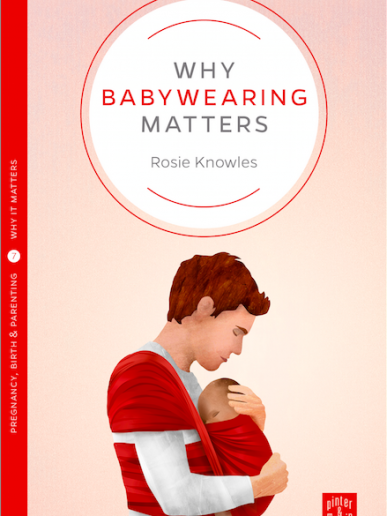
Read Rosie’s well loved Why Babywearing Matters book here, translated into Polish by Lenny Lamb.

Buckle Carriers
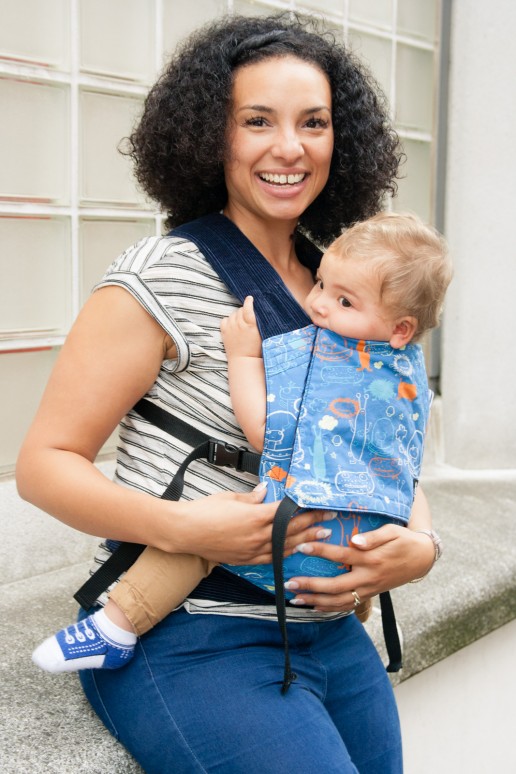
Buckle carriers are perhaps the most well-known type of carriers in our Western society. They are popular for their perceived simplicity and ease of use, as well as their convenience in bad weather! There are many types of buckled carrier. The most useful ones are designed to be respectful to baby and parent’s anatomy as well as comfortable for long periods of time.
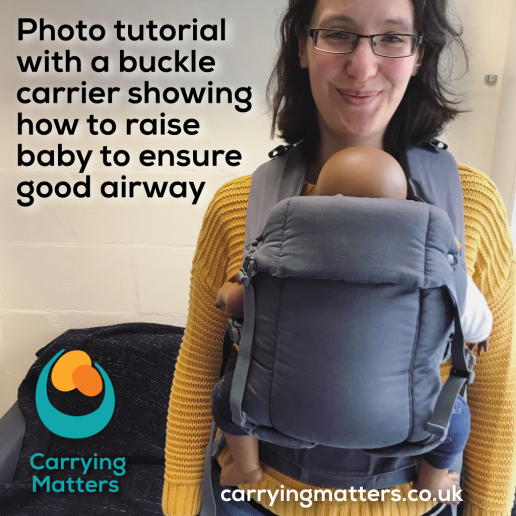
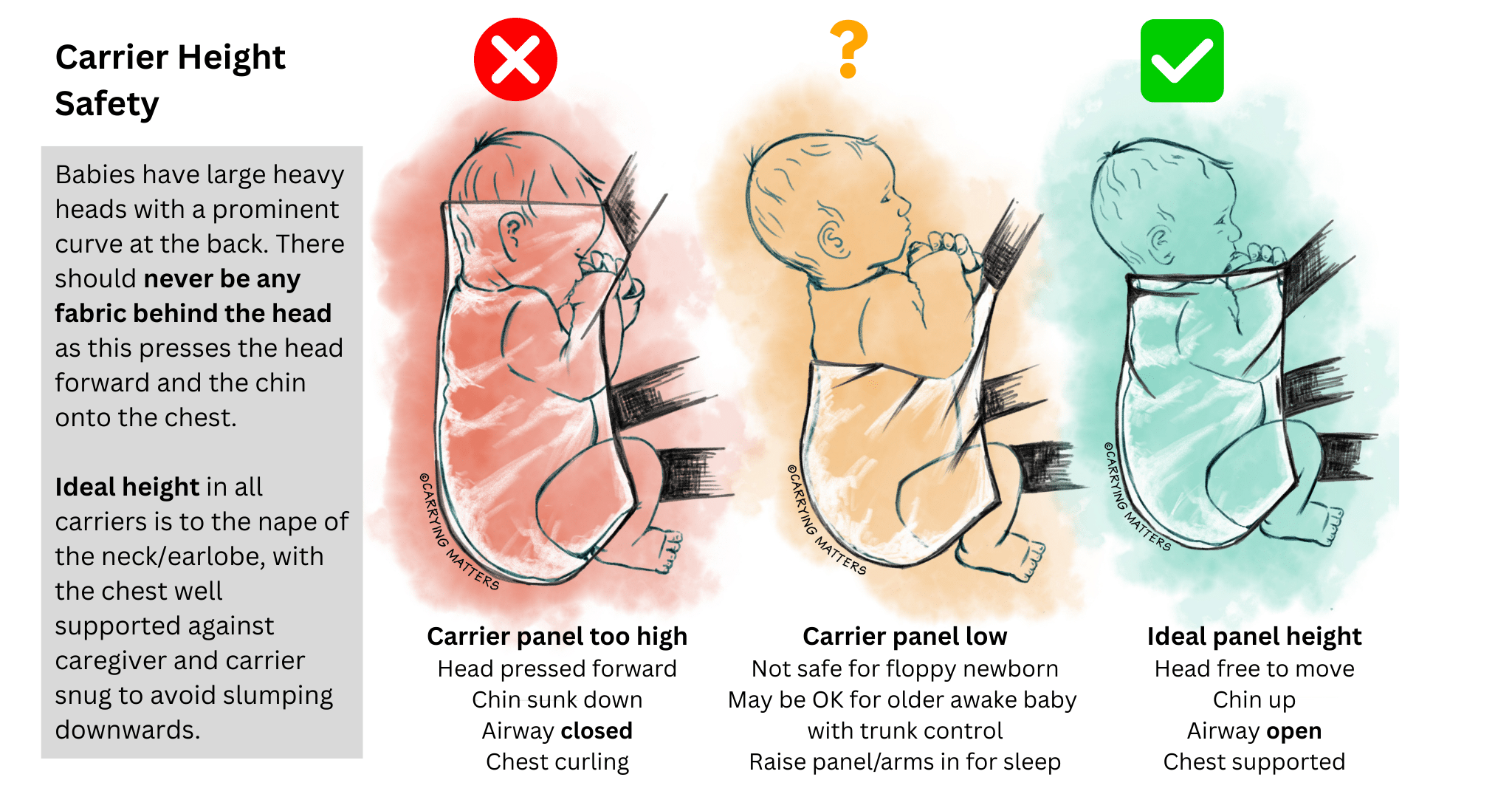
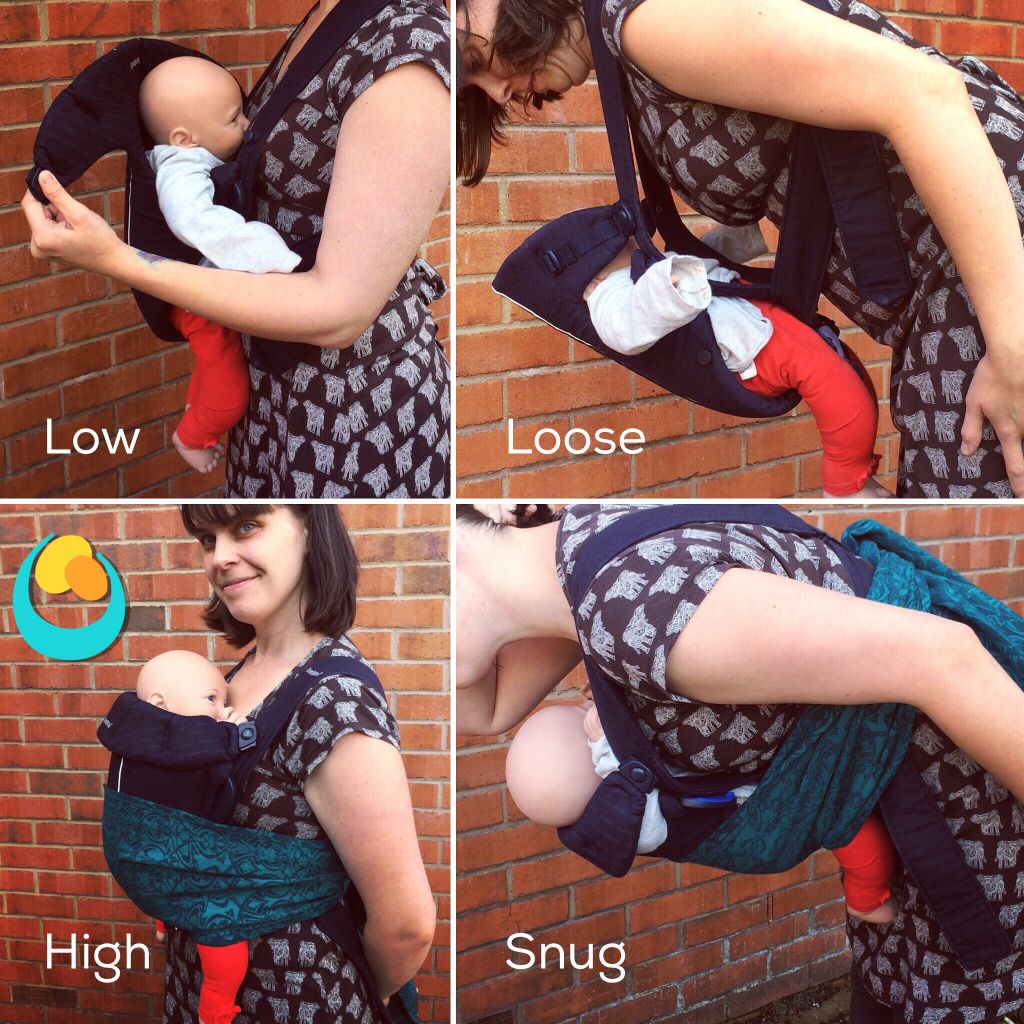
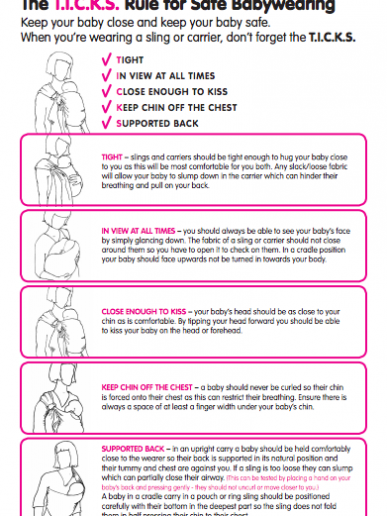
Like all carriers, buckled carriers need to be used safely and the TICKS guidelines should always be followed. The most important consideration is to protect baby’s airway; a baby should be held snugly chest to parent, the neck should never be folded in half and two fingers should fit between their chin and their chest. Neither should they be leaning away with a gap between themselves and their parent. A carrier that swings free when parent leans forwards is not a safe one.
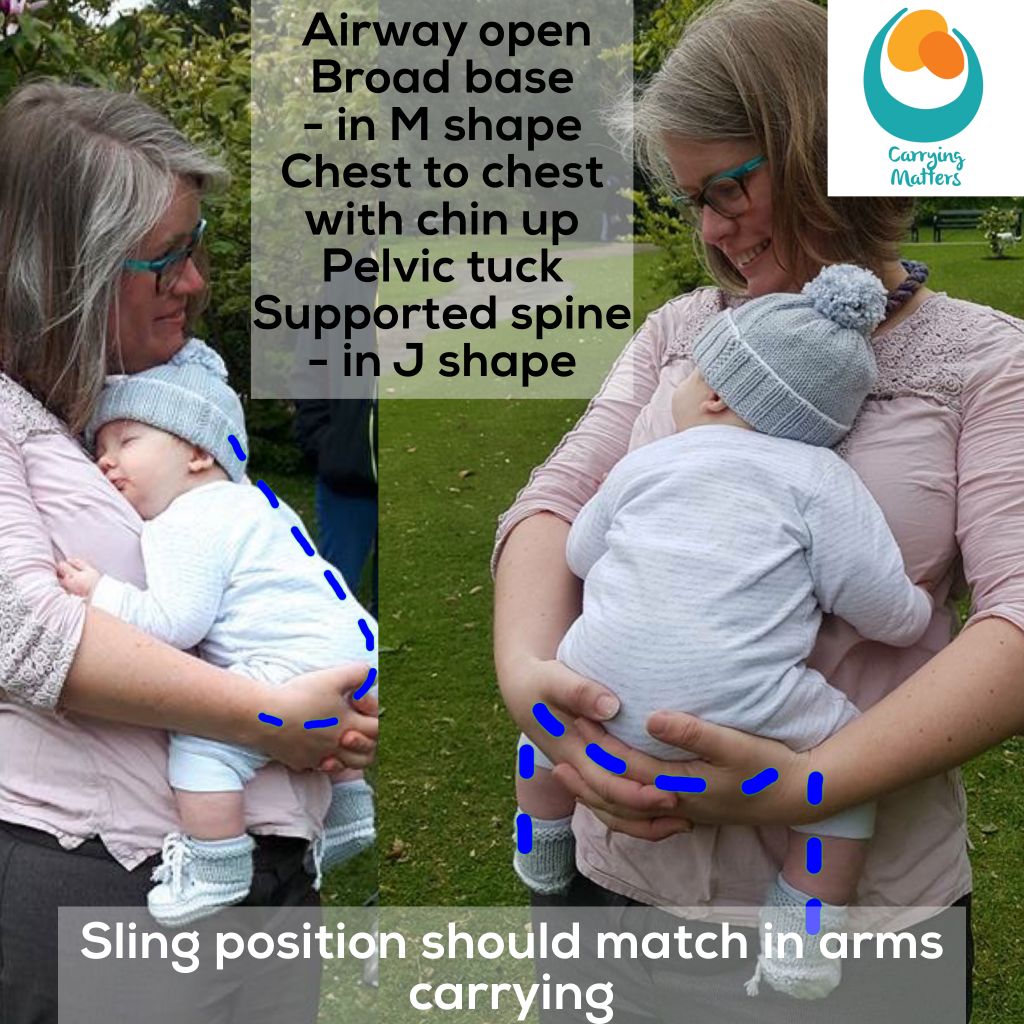
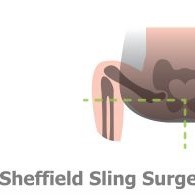
The most frequently adopted, anatomically respectful position for carrying young babies is upright and facing the parent, with legs slightly spread apart (the M position) and head well supported against parent’s chest, as this will also protect growing hips and spine. Awake babies will look around, then regather their strength by resting their head on the parent’s chest for a short while; this is the safest way to carry, rather than leaning back loosely into a large head-rest.
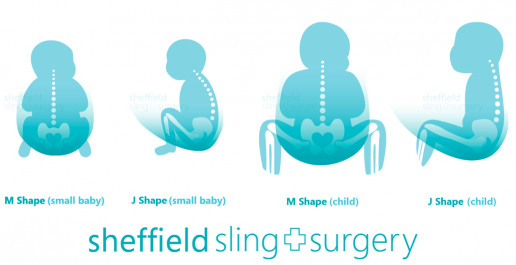
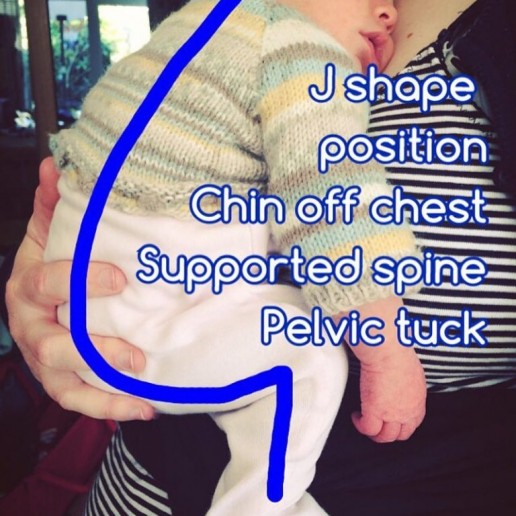
Anatomically correct positioning in a gentle J shape
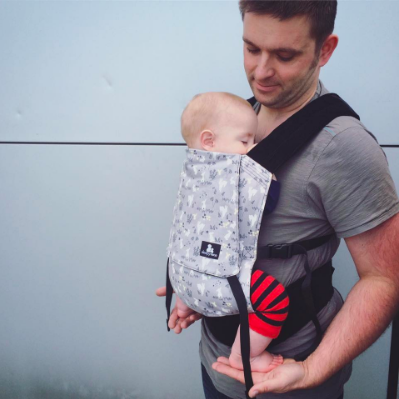
The buckle carrier has a structured panel, often a waistband, and two shoulder straps that all buckles together to hold the child close to the carer’s body. Good full buckle carriers are designed to keep baby snugly close and high up (close enough to kiss) and ensure the airway is protected for safe breathing. A baby should never be loose enough to swing free when parent leans forwards. They should not be too tall for the baby – too tall carriers or an over-focus on “head support” can cause airway issues.
Good buckled carriers should ensure baby’s spine is able to curve gently into the natural fetal tuck with the knees above the bottom that is so comfortable and natural for babies and children, thereby supporting them gently from the kneepits up to the nape of the neck.
Carriers like this are usually very comfortable for the caregiver, so much so that children are often carried happily and contentedly well into the toddler years and beyond (as compared to typical narrow-based high street brands which can feel uncomfortable quite quickly).
What kind of buckle carriers are there?
There are many variants on the basic model, such as the type and structure of the waistband, the way the straps fasten (cross straps or rucksack straps), and the height and width of the panel. Some carriers can be adjusted to fit younger or older babies while some have separate inserts for newborns.
Generalisations such as “you need a carrier with a waistband for support if you have back pain” or “you’d be better off with a carrier that crosses the straps if you want to front carry” can be unhelpful.
Each parent-child dyad is unique and it is ALL about how each carrier distributes the weight around the body, which varies enormously from parent to parent, and also from child to child. An adult’s body shows its history as it stands; how active it has been, how sedentary, any injuries, any chronic postural habits. When you load this body with a baby, all sorts of mechanics come into play, such as the convergence or divergence of centres of gravity, which joints end up being loaded and at which angles, and so on.
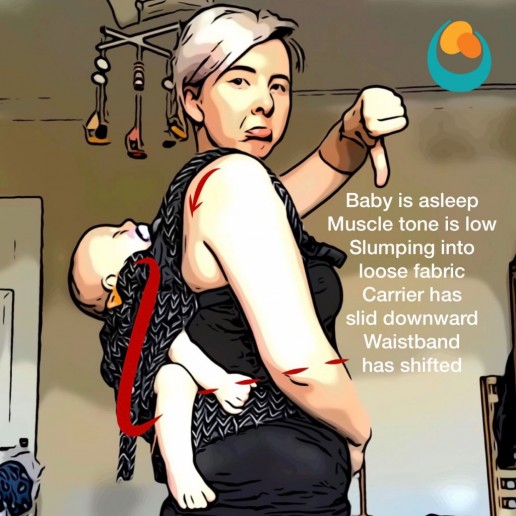
Babies themselves play a part in being carried; they may be more or less active participants. Sleeping babies or those who have “low tone” are harder to carry, as are those who are wriggling and twisting and turning to be able to see past straps too close to their faces.
One size does not fit all, and this is why sling libraries, sling meets and sling consultants exist, to give parents a chance to identify what fits their baby, their own physiology and their circumstances best. You can read more about how to choose a sling here.
Crossed straps, soft padded waistband

Cross strap carrier with soft panel
Rucksack straps with padded waistband
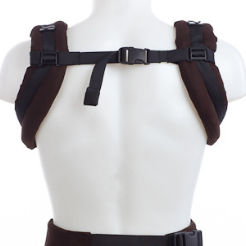
Rucksack straps, firm padded waistband
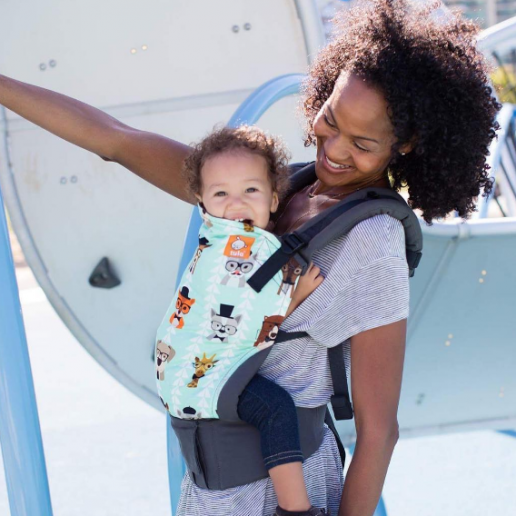
Adjusting buckle carriers for newborns
On the whole, most buckle carriers fit babies from three months upwards, and stretchy wraps or ring slings can be more useful with newborns. However, there are a few full buckle carriers that can be used from birth, which have adaptations or inbuilt support structures for babies of 7-8lb and upwards.
Some have unpadded webbing waistbands that can be rolled and cinched with straps to fit baby’s smaller knee to knee spread and narrower torso while they are small, and be gradually widened as baby’s legs grow longer. Others have foldable corners that can be poppered into a narrower shape for little legs; all can be widened as baby grows to ensure there is always a good fit while hips are still growing and forming.
Using inserts with newborns
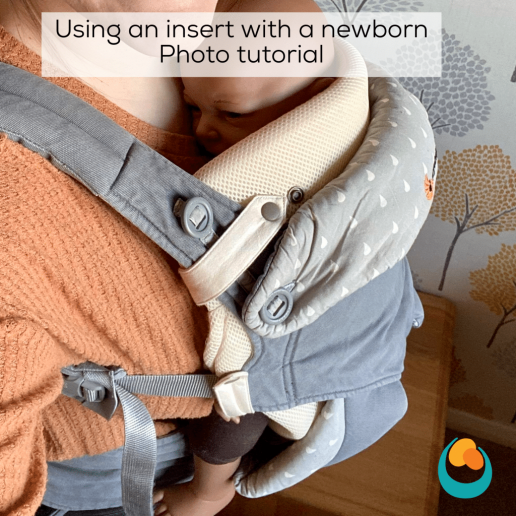
Many other carriers have separate inserts to make the volume inside the panel smaller. Baby perches on the insert in the seated squat position, and the panel is brought up over their backs. Small babies may need the “back” section of the insert to hold their little bodies securely inside the wide panel. Here is a a handy photo tutorial for how to use an insert.Here is a a handy photo tutorial for how to use an insert.
Inserts can feel very warm in hotter weather, so do dress your baby carefully and ensure they don’t overheat.
Many people will find that they enjoy buckle carriers most once their small babies have grown a little bit stronger with more muscle tone and a little bit of head control (around three months), but with care and attention, young babies can be carried safely. Always remember that baby must not be slumped over to one side or folded in half.
Unpadded waistband, carrier "cinched" in for a perfect fit
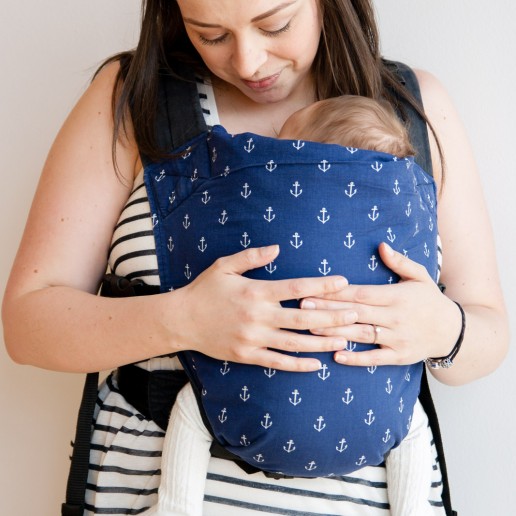
Baby seated on insert, about to have panel brought up
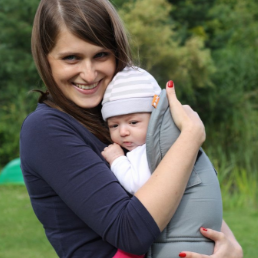
Unpadded waistband, carrier "cinched" in for a perfect fit
Baby seated on insert, about to have panel brought up
What positions are best with buckle carriers?
Newborns and young babies under four months should be held facing in towards their caregivers. Thus position allows good airway, spine and hip support for babies who have not yet developed significant muscle strength and endurance, and who still have the curved spines of infancy. This keeps them safe. Babies should not have their spines artificially straightened but should be held in their natural fetal tuck, the M and J shape as seen from the back and from the side.
This “seated squat” position is a safe position to sleep when needed; heavy little heads resting against a carer’s chest with free airflow and not buried deep in cleavage. This is why “close enough to kiss” matters.The facing-in position keeps the baby and caregiver’s centres of gravity as close together as possible for greater all-round longer lasting comfort. Weight is distributed better around the body as baby curls in, rather than the parent needing to lean back to offset the weight hanging from the front.
Lastly, being able to see the parent can allow active “social referencing”. This is also known as “triangulation” – where a baby experiences something in her field of vision and is able to turn to see what her caregiver makes of this same experience – three corners of a triangle, environment, baby, caregiver. This allows baby to assess and process a new experience in the light of her caregiver’s response, thereby allowing learning from a “safe place”.
Manufacturers usually suggest short periods of time for facing out for those with good head control, this is usually four months at the least, due to the fatiguability of young muscles, and the time it takes for the infant brain to learn how to focus on one stream of information and zone the rest out. A child should never sleep facing out, as this can pose a risk to airway.
There are now some more thoughtfully designed carriers on the market that allow both facing in and out and provide better seated positions and thus great comfort for both parent and child. Furthermore, carriers with wider top panels will allow an elbow and shoulder to move freely which increases a child’s visibility enormously.
Some buckle carriers can also be used on the hip (some are designed specifically for this) and many will also carry on the back.
Read more about facing out carrying here
Facing out with a wider hip position
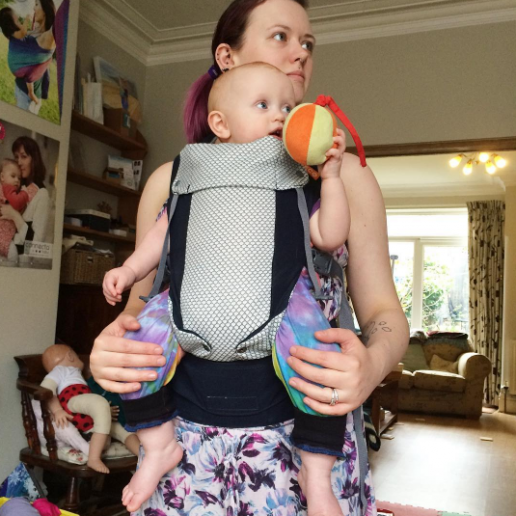
Facing out in a seated position
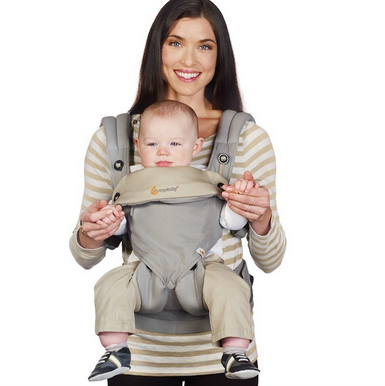
Arms out and facing in

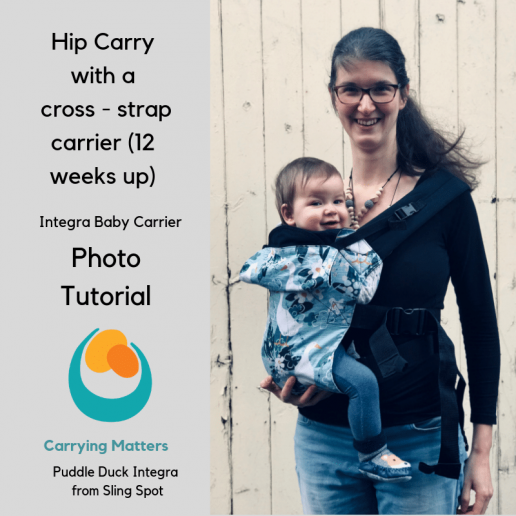
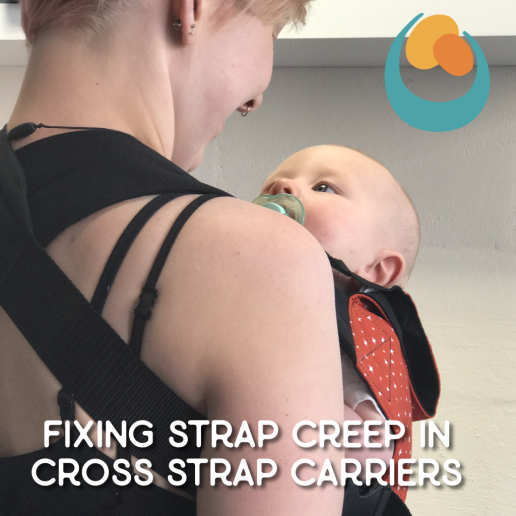
How do I put my cross strap buckle carrier on?
Having trouble with the shoulder straps creeping to your neck? Read our guide to fixing this here.
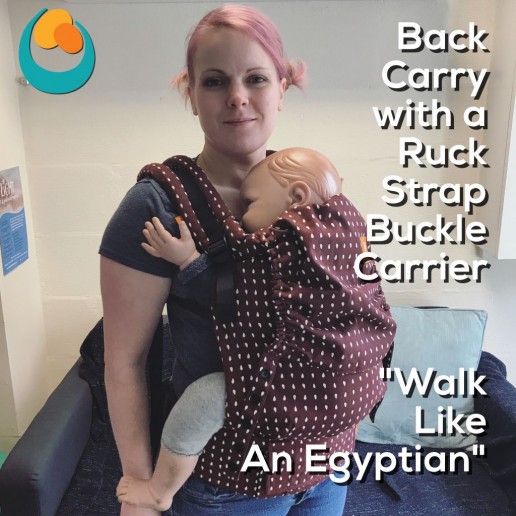
How do I put my ruck strap buckle carrier on?
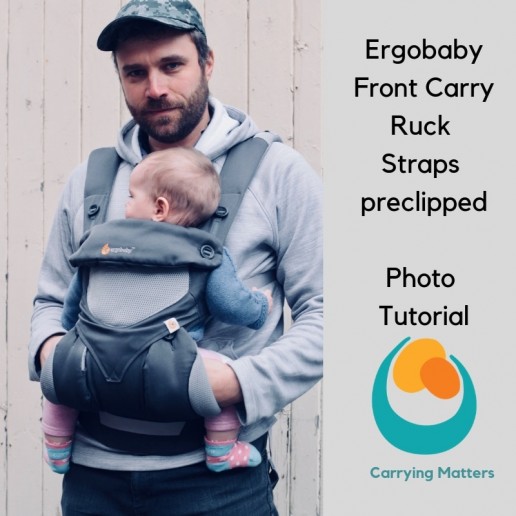
Front carry with an older baby, pre-clipped ruck straps
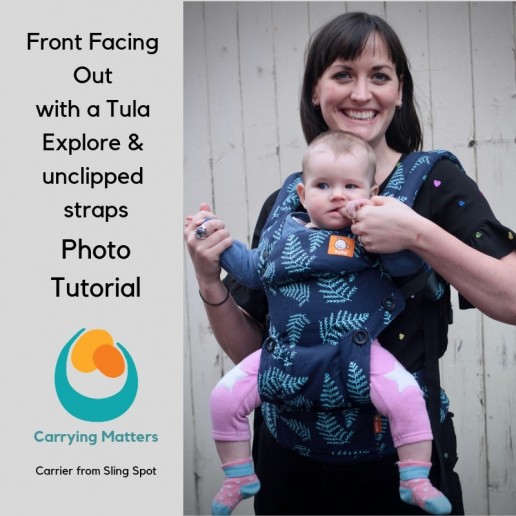
Front facing out carry with ruck straps, clip behind neck
Front carry with an older baby, pre-clipped ruck straps
Here is a photo tutorial to remind you of the basic position of a child in a buckle carrier. Please click/swipe through each image.
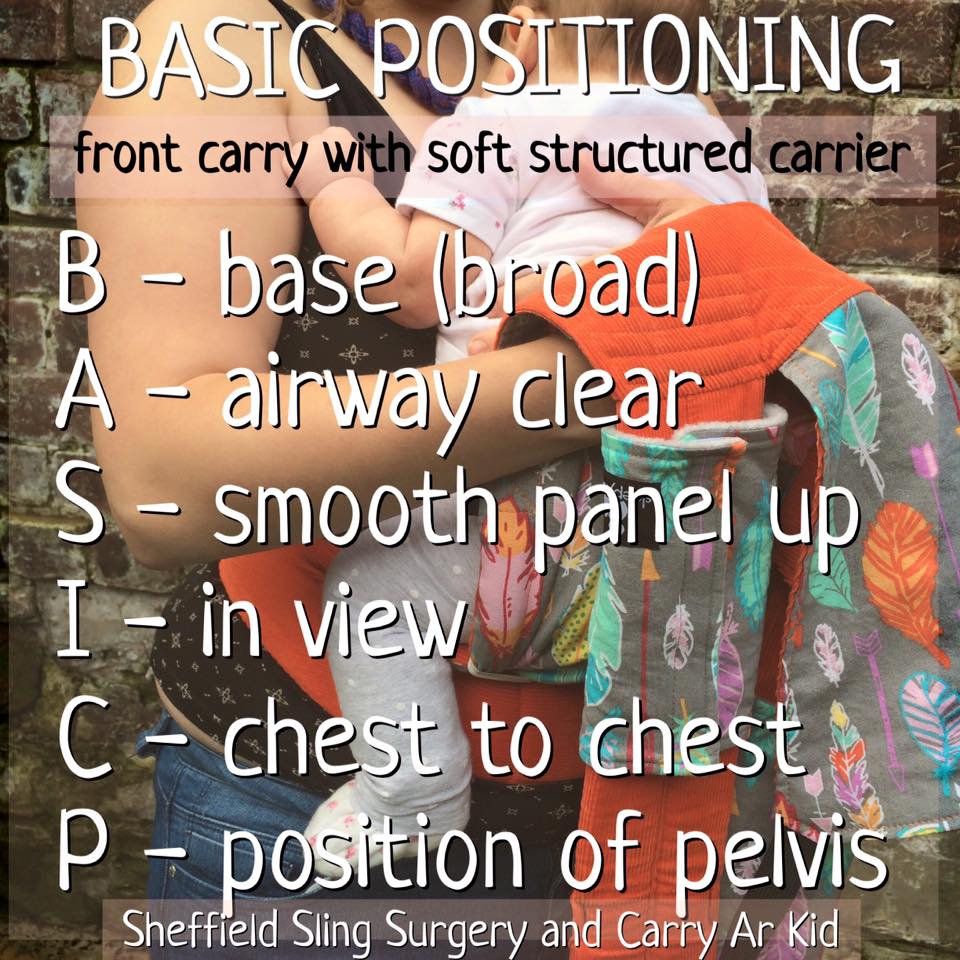
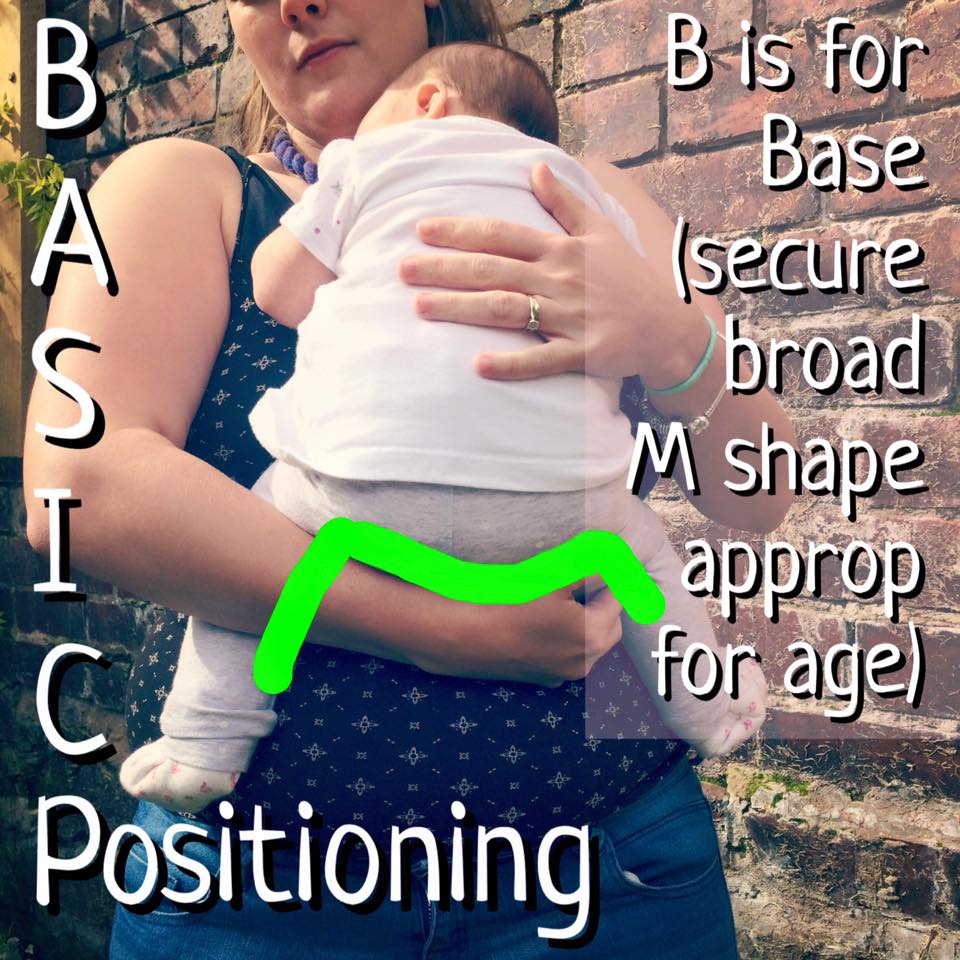
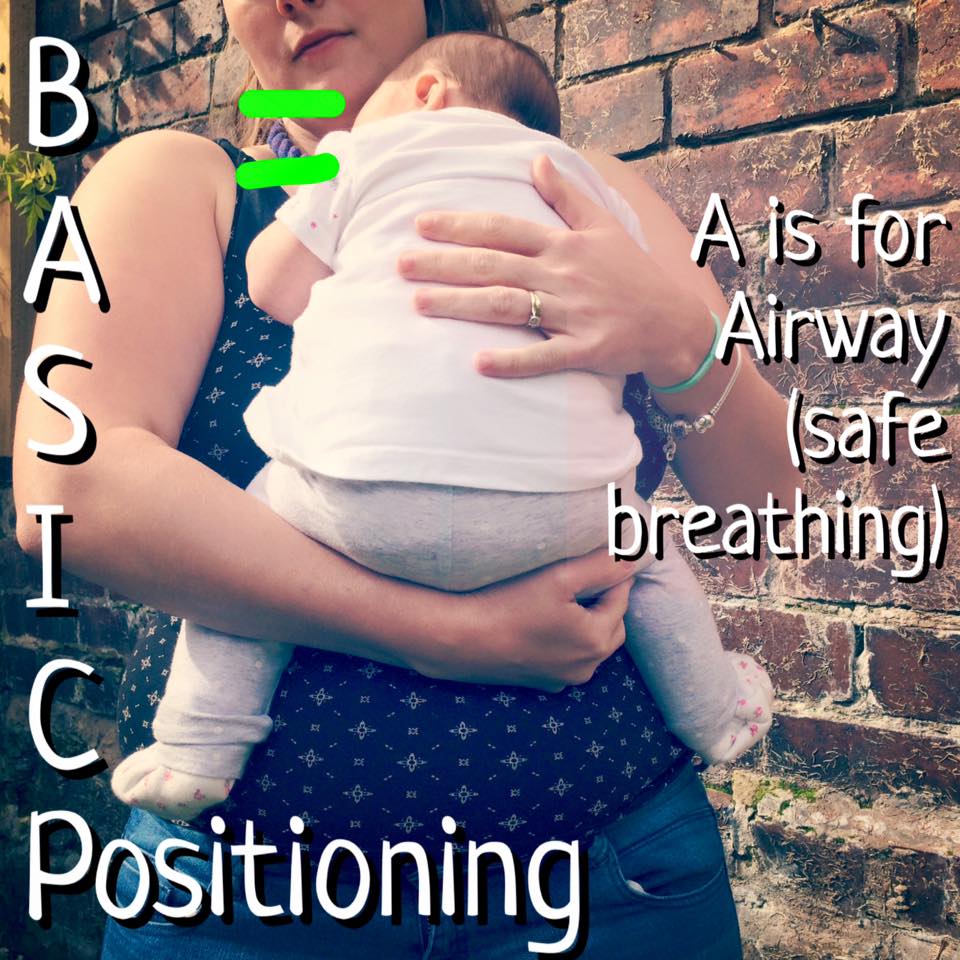
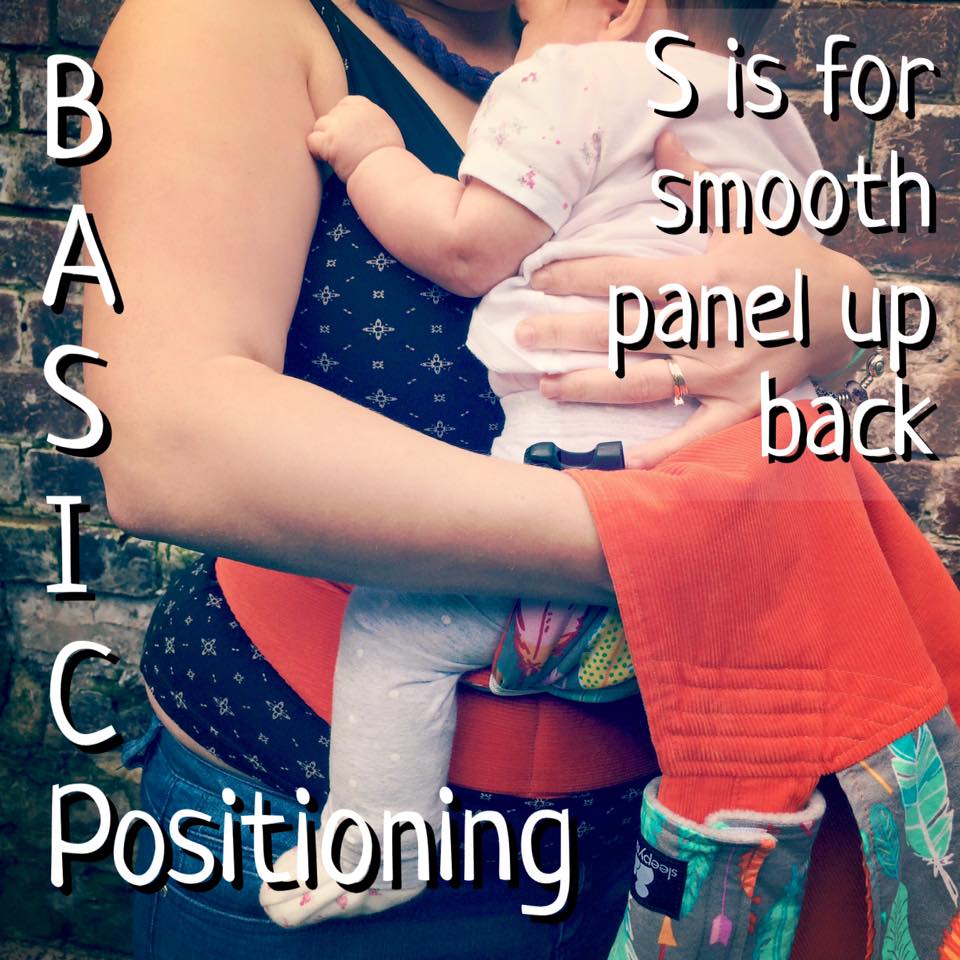
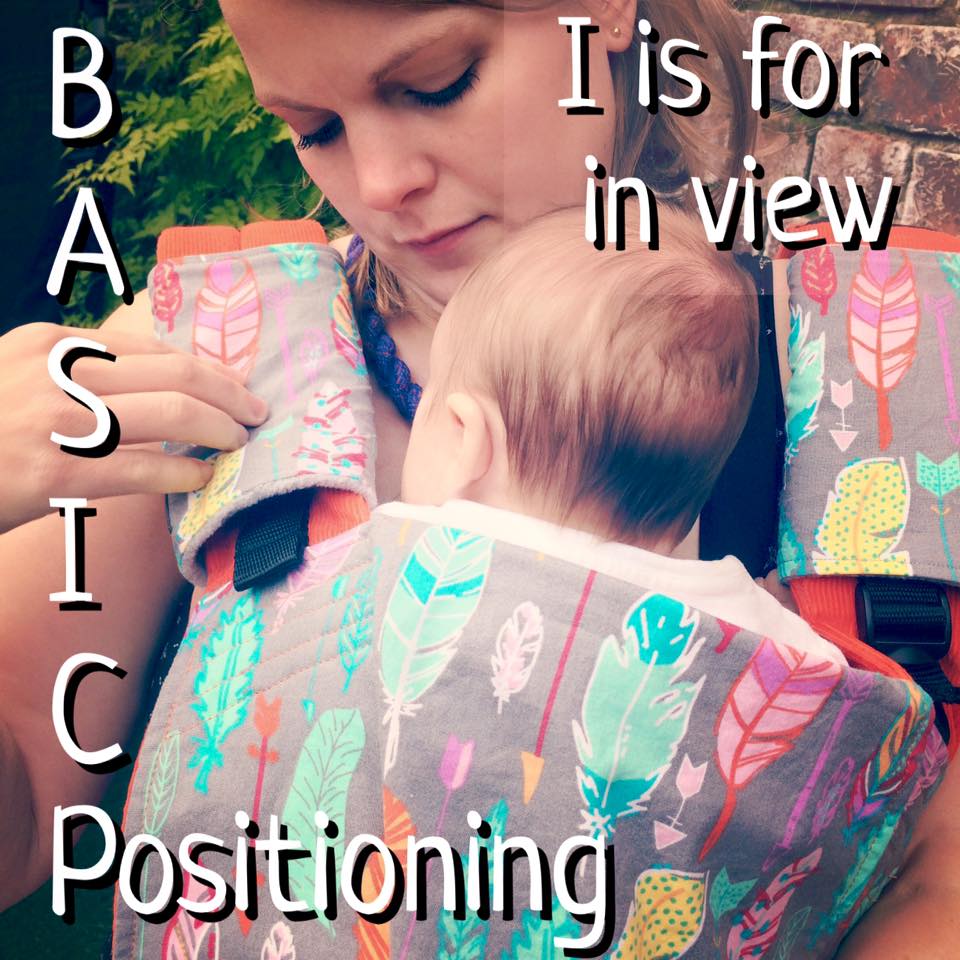
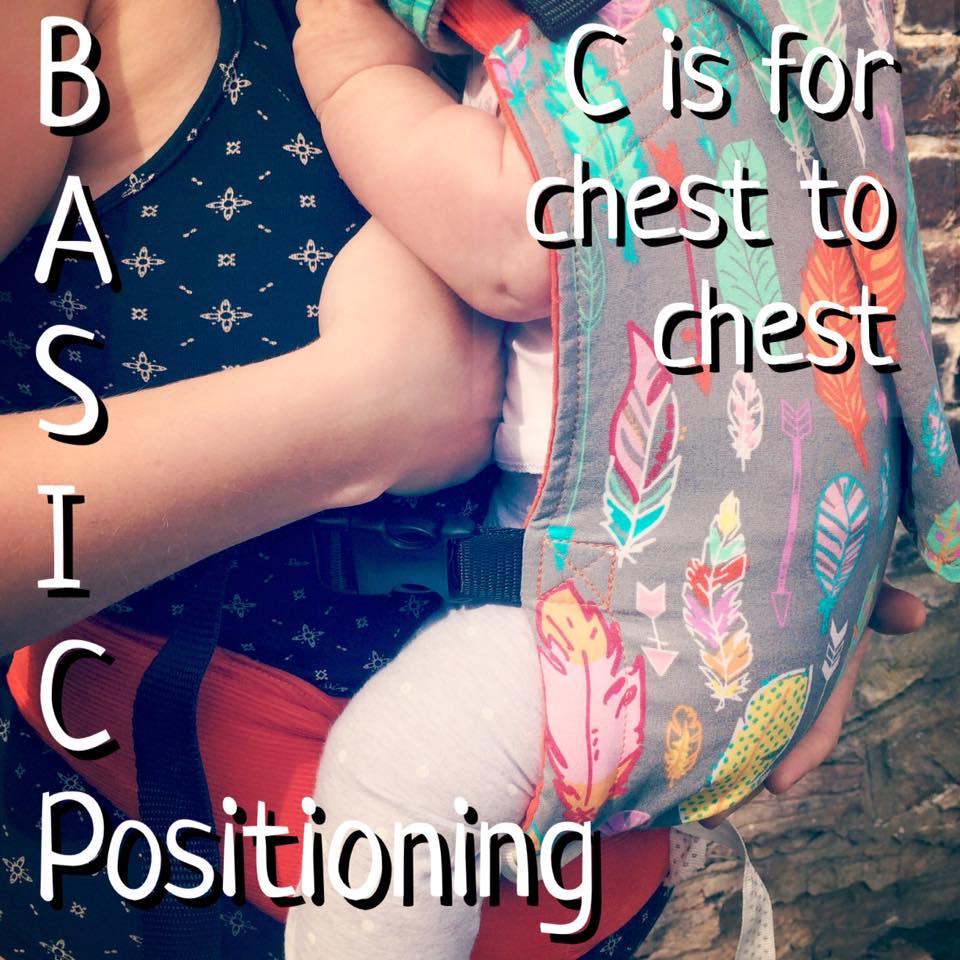
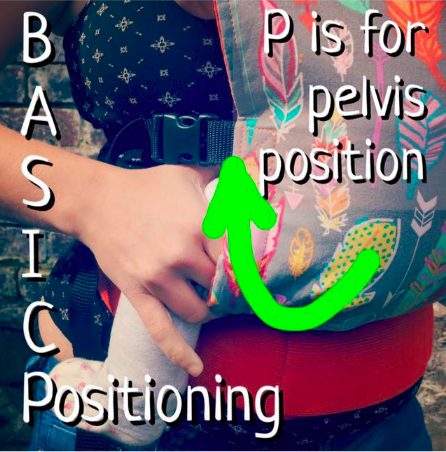
Here is a video to show you how to do the pelvic scoop/tuck with a buckle carrier.
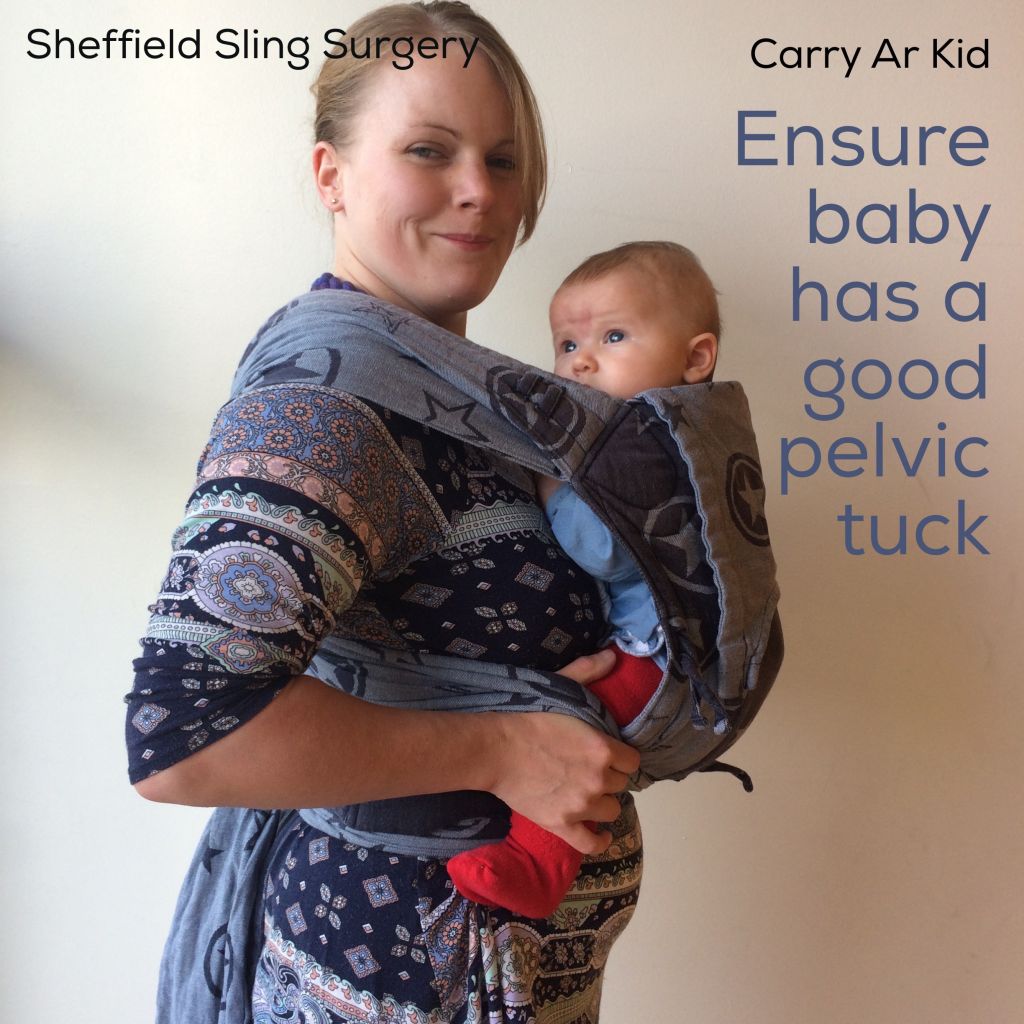
The pelvic tuck/scoop technique of encouraging a child to sit in a position that creates a “J shape” (from the side) or an “M shape” (from the front) in a carrier is very helpful. Such positioning is more comfortable, more respectful of anatomy, and also helps preserve open airways. The aim is to raise the knees up, allowing the bottom to settle downwards into the classic “M shape”. Read more here.
Trouble with cross straps?
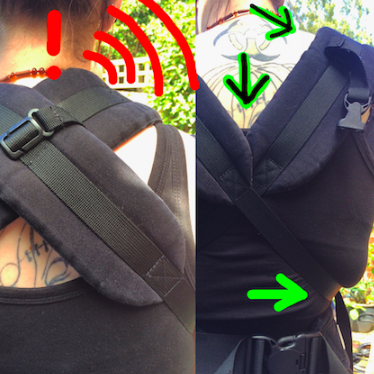
Troubleshooting your ruck strap carrier
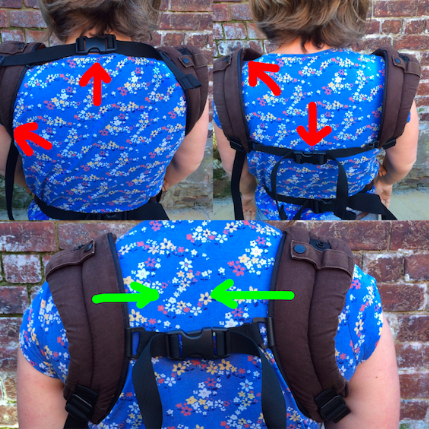
Top Tips!
- Work on your waistband; have it parallel to the ground.
- Hold your baby straight in the centre of your chest, not slipping to the side.
- Make sure he is sitting in the M shape and hold his chest close to you as you go. Getting position right at the beginning makes it much easier later.
- Bring the panel up smoothly, keeping him close.
- Keep arms in if possible, and bring older babies' arms out later, once the carry is finished. Toddlers may prefer being carried arms out from the start; ensure the panel comes right up under their armpits.
- Practice tightening your straps; become familiar with them first so you can get them snug.
- Always tighten webbing in parallel to itself or it will be a struggle to remove slack.
- Lift your baby's bottom with one hand as you tighten straps, this may make it easier (as you are not pulling their whole weight).
- Keep the straps wider on your shoulders if you can.
- The key thing is to keep baby close and high; low and loose causes strain and can lead to discomfort for you. If you are uncomfortable, come and get some help.
Common Queries about Buckle Carriers
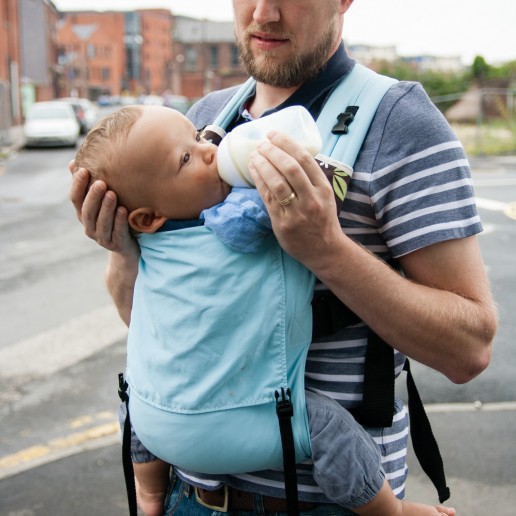
Feeding in buckle carriers
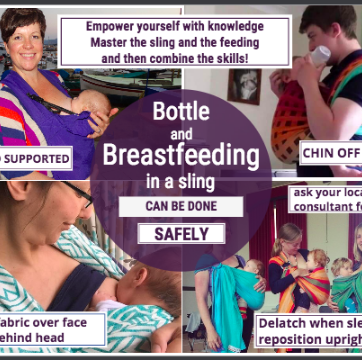
Feeding is possible in buckle carriers worn on the front, with a little care to ensure baby’s airway is well protected. Typically, for breastfeeding, this involves loosening the panel in stages so baby is lowered gently to the nipple. No breastfeeding is hands free, and it is usually a good idea to get some help and advice from people who are familiar with how to do it. Please note that when baby has finished feeding, he must be returned to his safe snug upright position, close enough to kiss.
You can read more about how to breast and bottle feed here.
Bottle feeding in a buckle
When can I start back carrying with my buckle?
Many families love this way of carrying an older baby, and it also allows the child to see where they are going when carried!
On the whole, most people feel that the best time to begin back carrying in structured panelled carriers is when baby’s upper body and torso muscles are strong enough. They need to have enough endurance to be consistently able to support themselves and hold their heads upright for a significant amount of time without tiring. This typically occurs when babies are beginning to sit unaided (or nearly). This commonly happens around six months, on average – it varies from child to child. This is in contrast to wraps or floppy meh dais (formerly known as mei tais) as these can be controlled and tightened carefully to mould around baby’s body, to ensure neck support to heavy heads.)
Some children may take longer to develop upper body control, but their parents may be struggling to carry them on the front; do go and get some help from a professional who can help you find some solutions to this problem and keep you carrying. Generally, if the carrier fits your child properly and provides the necessary support with no slumping when a hand is not available for support, you can back carry in it. This will apply to children with disabilities for example; it can take longer to gain head control but back carrying may be important. This may also apply to twin carrying, where a parent just needs to survive. The right carrier that fits well and is used optimally may work just fine.
Read more here about beginning to back carry.
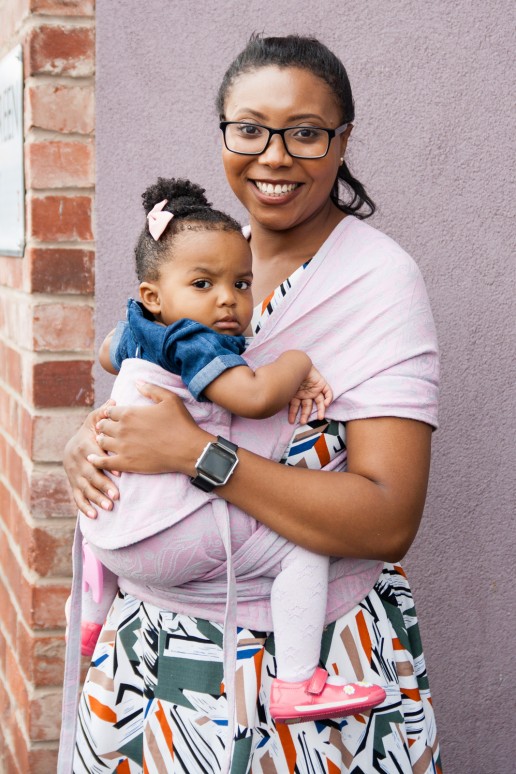
Meh Dais/Bei Dais (formerly known as Mei Tais)
Meh Dais/Bei Dais(formerly known as Mei Tais) and their variants are marvellous carriers, often overlooked amidst the huge range of other types. They are among the oldest style of carriers in the world, combining the flexibility of a woven wrap with some of the convenience and simplicity of buckled carriers.
Like all carriers, bei dais and their variants need to be used safely and the TICKS guidelines should always be followed. The most important consideration is to protect baby’s airway; a baby’s neck should never be folded in half and two fingers should fit between their chin and their chest.
The most frequently adopted position for carrying young babies is upright and facing the parent, with legs slightly spread apart (the M position) and head well supported, as this will also protect growing hips and spine. The fabric should be adjusted snugly around baby for the perfect fit.
Bei Dais and other long-strapped carriers can be used for hip or back carries, and some variants (such as the onbuhimo) are designed particularly for back carrying older babies, often with their arms out.
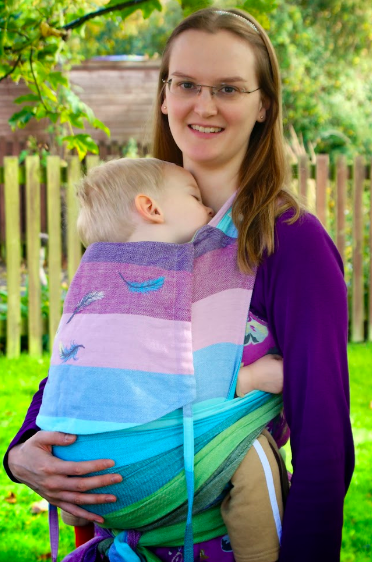

What is a mei dai?
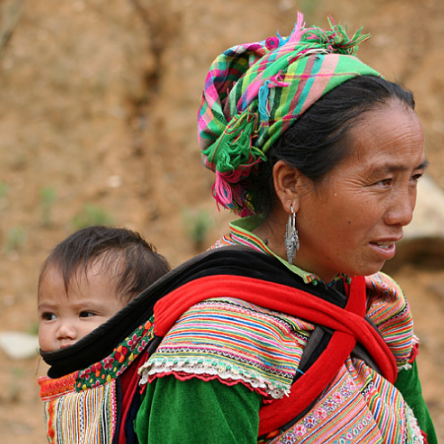
A meh dai (also known as a bei dai, formerly known as mei tai) is the common name given to a type of Asian carrier that originated in China many years ago; consisting of a fabric panel with long straps that are wound around the parent’s body, to be tied or twisted or tucked away securely. The Chinese name for this type of carrier (mispronounced as mei tai) has become eponymous for the style, but different cultures have their own variants of these cloth carriers, which all consist of fabric panels with long straps that are wound around the parent and baby for a secure carry.
These styles of carrier have been made from many different fabrics; from reeds and grasses, to woven cloths covered with beads. Some can be cultural heirlooms with great ritual significance, many are beautifully made; painstaking displays of cultural craftmanship, yet extremely practical for daily life.
They have been the inspiration for many, many Western carriers today. Most modern meh dai and variants are made from cotton or canvas and some are made from woven wraps. including the modern buckled carriers.
What’s so good about meh dais?
In the Western world of babywearing, meh dais are popular with those who appreciate the mouldability and support of woven wraps but prefer something with more structure and definition than a length of fabric. A meh dai consists of a fabric panel that has two straps at the base that are tied (or buckled, in some variants) securely around the waist, and two straps from the top of the panel that can be wrapped around the parent and baby to ensure a snug and comfortable fit. Baby sits in the pouch with legs on either side of the panel, and the long straps allow a great degree of adjustability to all shapes and sizes.
Some people prefer the flexibility of the meh dai to the more structured and fixed shape of full buckle carriers, and with practice, meh dais become very speedy to use. As the straps are wrapped around and knotted, they can be tightened and adjusted to fit around the body exactly, which can be more of a challenge with some buckle carriers which are limited by the placement of buckles or the length of webbing.
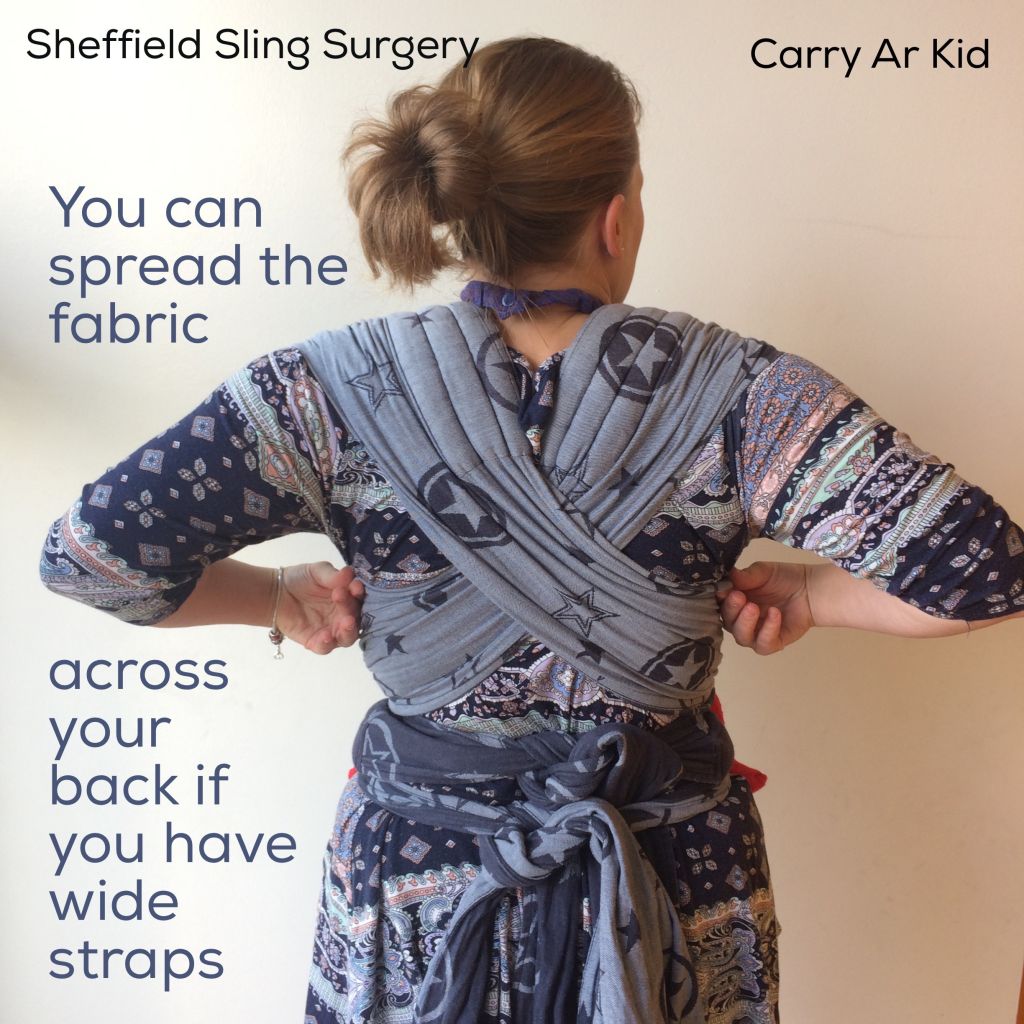
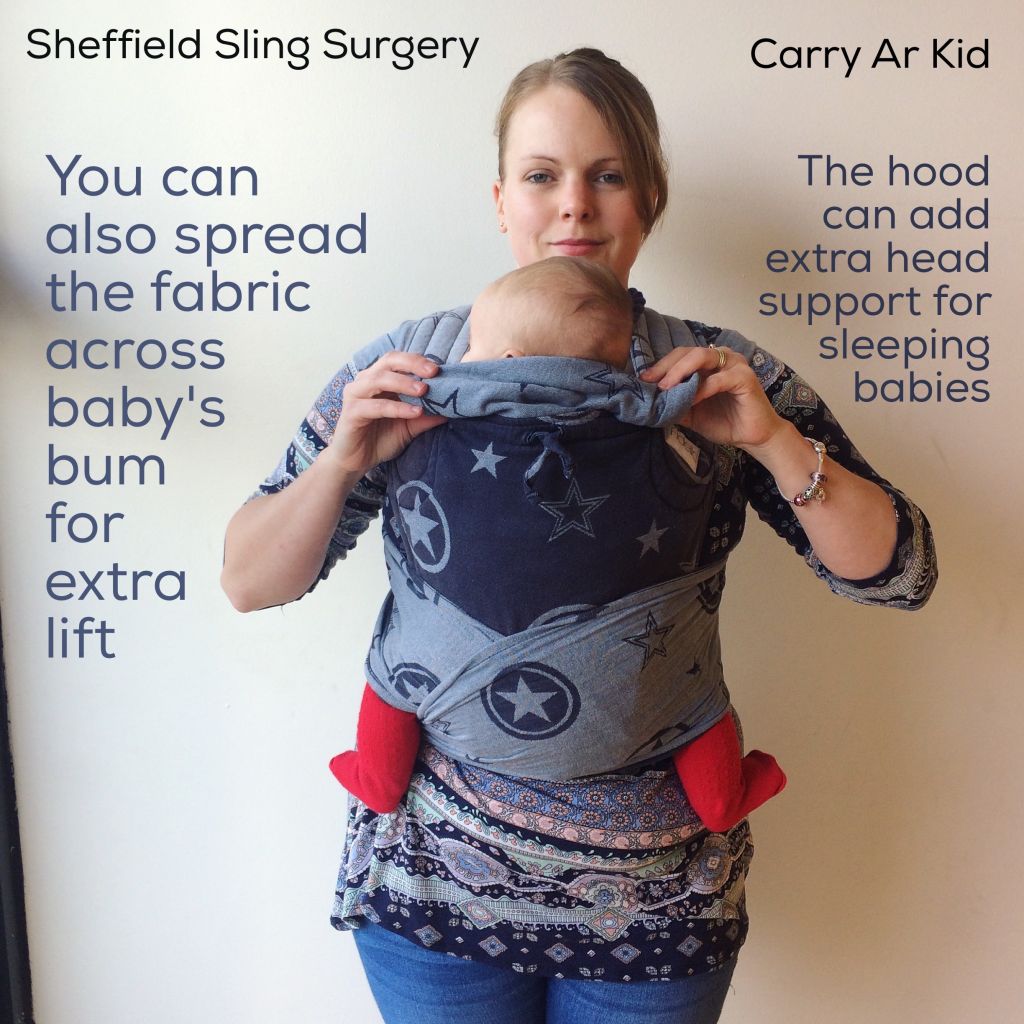
Wide straps made from wrap fabric are popular as they can add an extra level of support if needed across the upper and mid back. They can be spread across the wearer’s shoulders and wrapped around baby’s bottom for extra lift and support, as well as creating a wider seat for longer legs. Broad, slightly padded straps are more comfortable than the thinner, narrower straps that are often found on cheaper brands, which don’t distribute the weight as well.
Modern buckled version of the onbuhimo
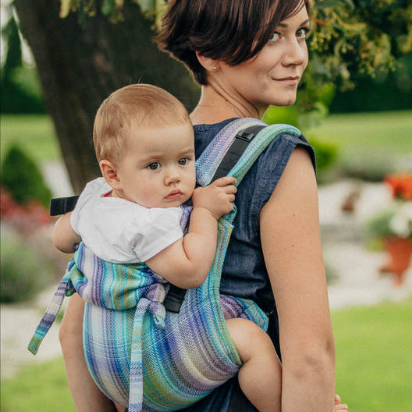
Korean Podaegi used in a Western style
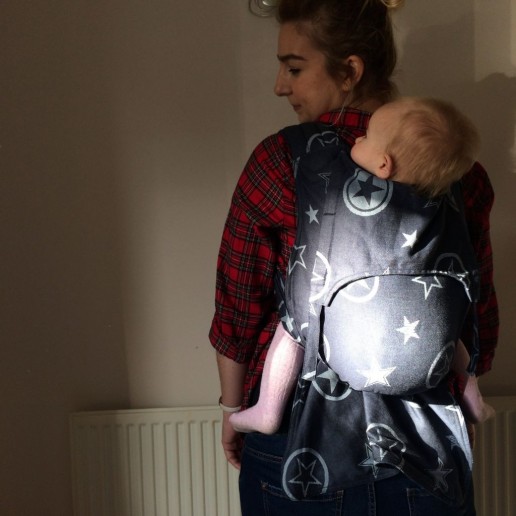
Variations on the Meh Dai
Half buckles are meh dais with buckled waistbands, but long shoulder straps for tying like a meh dai. (The buckle at the waist can be useful if you feel uncertain which knot to untie first to get baby out.) These are popular with people who want the sturdiness of a buckled and padded, yet flexible waistband. They are usually made to order by specialists.
Onbuhimos are the traditional Japanese back carrier, which have metal rings or fabric loops at the waistband for the long straps to be threaded through. Western versions of these have webbing and buckles. They are designed to work especially well for back carries. “Onbu” means to carry on the back, and “himo” means a rope or string; the rope is tied securely around the child’s legs to keep him seated safely. There is no waistband as the carrier is meant to be worn high. This can be useful if your child wants to see the world, or if are pregnant and carrying your toddler!. Read more about onbuhimos here
Korean Podaegis have two straps at the top of a long blanket that is wrapped around baby. The straps are tied around the parent’s body and back around the baby to hold him in place. There is no waistband with this carrier either. Traditional podaegis have the straps tied under arm but most Western carrying with the podaegi is done with the straps coming up over the tops of the shoulders.
South Korean Chunei carriers are similar to jackets fastened around the parent’s body that have a pocket for baby to sit in.
How do I put my meh dai on?
Tie your meh dai around your waist. You may choose to use it “apron” style, where the panel hangs straight down from the edge to the floor. This will create a pouch for baby to sit inside. You may also choose to tie the waistband flat against yourself, so that the panel folds down over the waistband to the floor. Soft waistbands can sometimes be rolled over onto themselves to shorten the overall height of the panel, so that it reaches to the back of baby’s neck (no higher than the earlobe is typical for little ones).
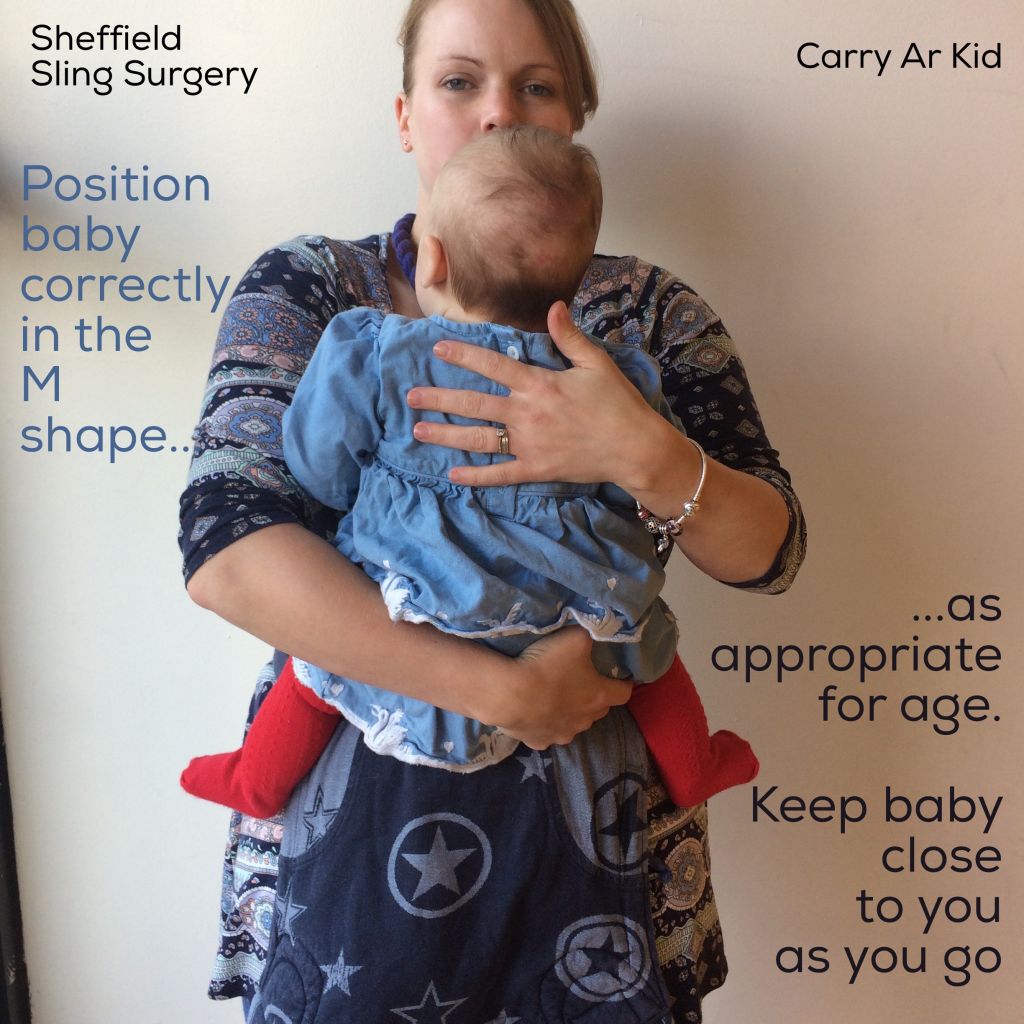
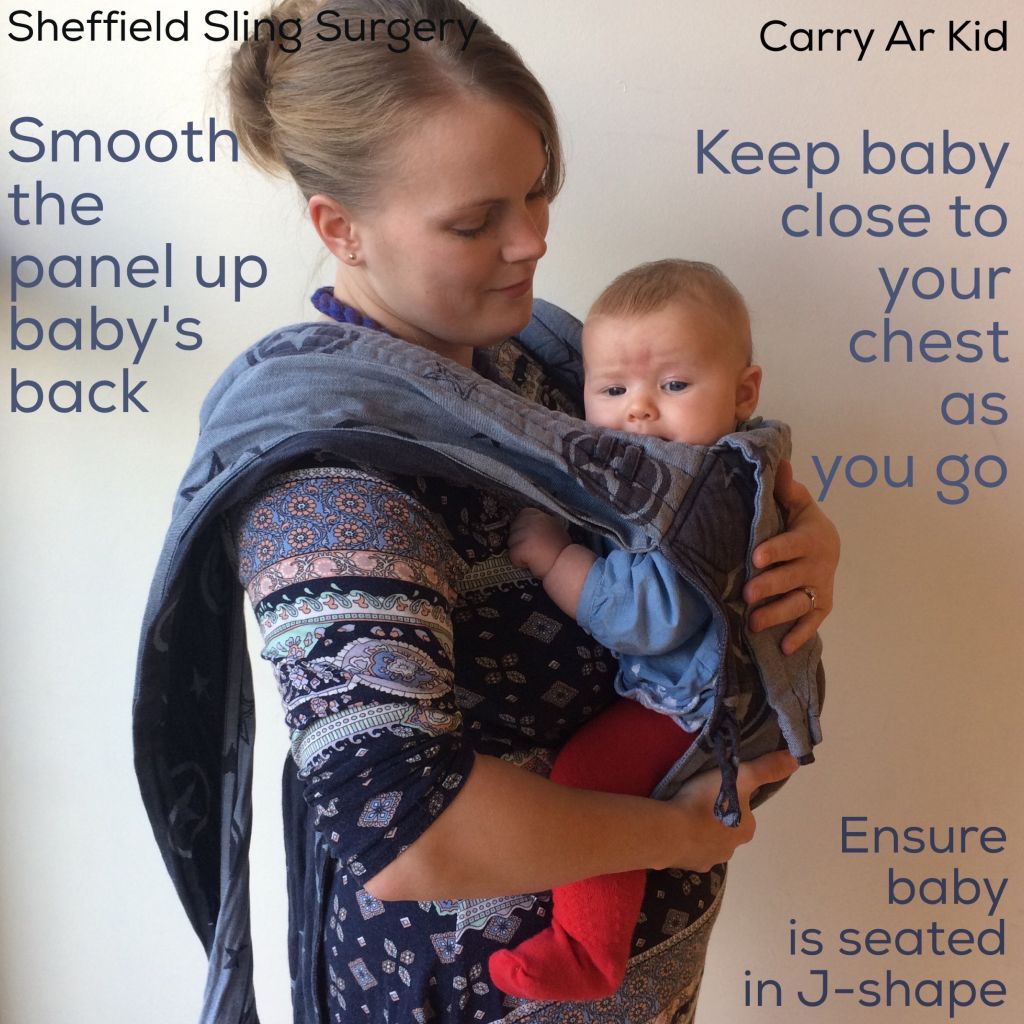
Pick your child up and hold him chest to chest, and position his legs into the seated squat M shape. Put one hand under the panel and smooth the fabric up his back, swapping hands as you go. This will keep him held safely against you.
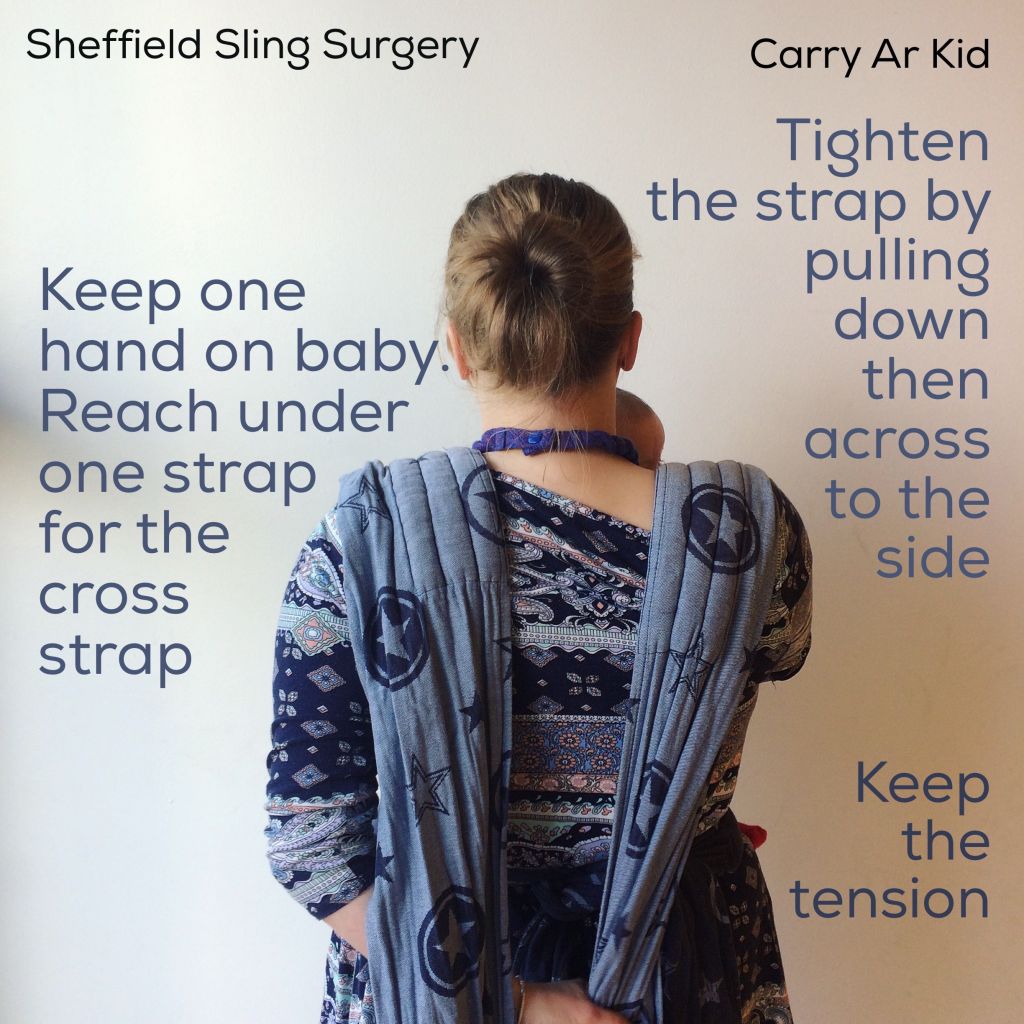
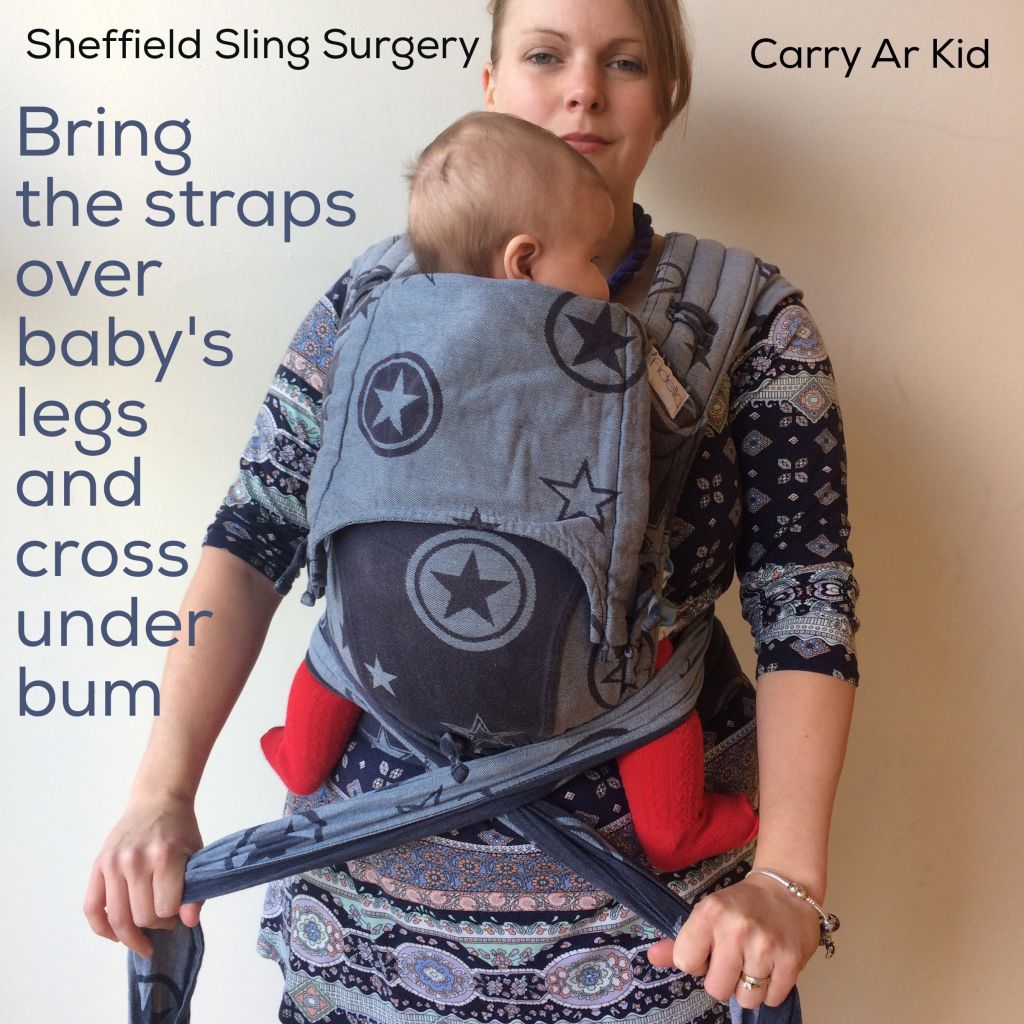
Smooth the panel around his back and pull up any loose fabric at the knees. Keeping one hand on your baby, put each shoulder strap over your shoulders so they then hang down to the floor vertically behind you. With one hand still on baby, bring your free hand around behind your back to your waist and grasp the strap hanging down from the far (opposite) shoulder. Pull this downwards to tighten over your shoulder, and then bring the strap diagonally across your back and around your side. Pull out any more slack. Bring the strap over your baby’s leg and hold baby and strap with that hand. Repeat on the other side.
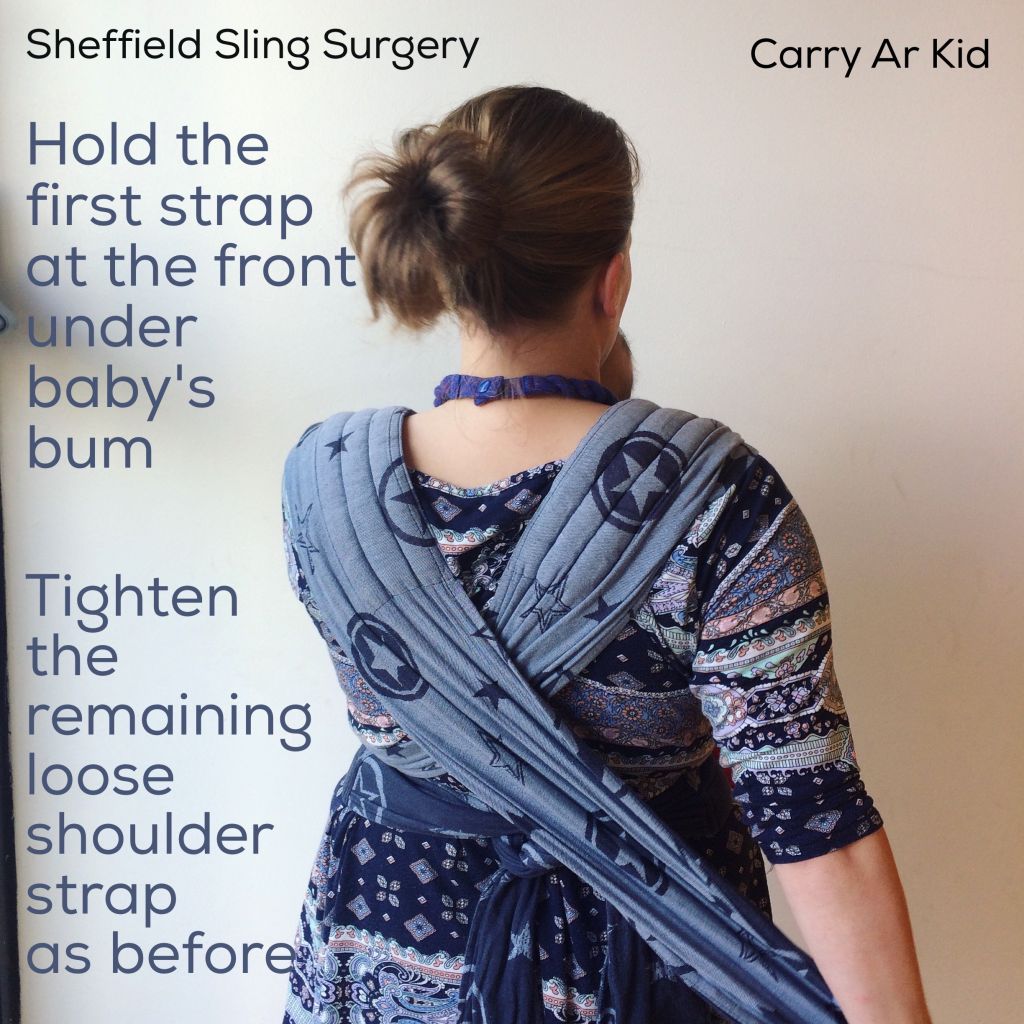
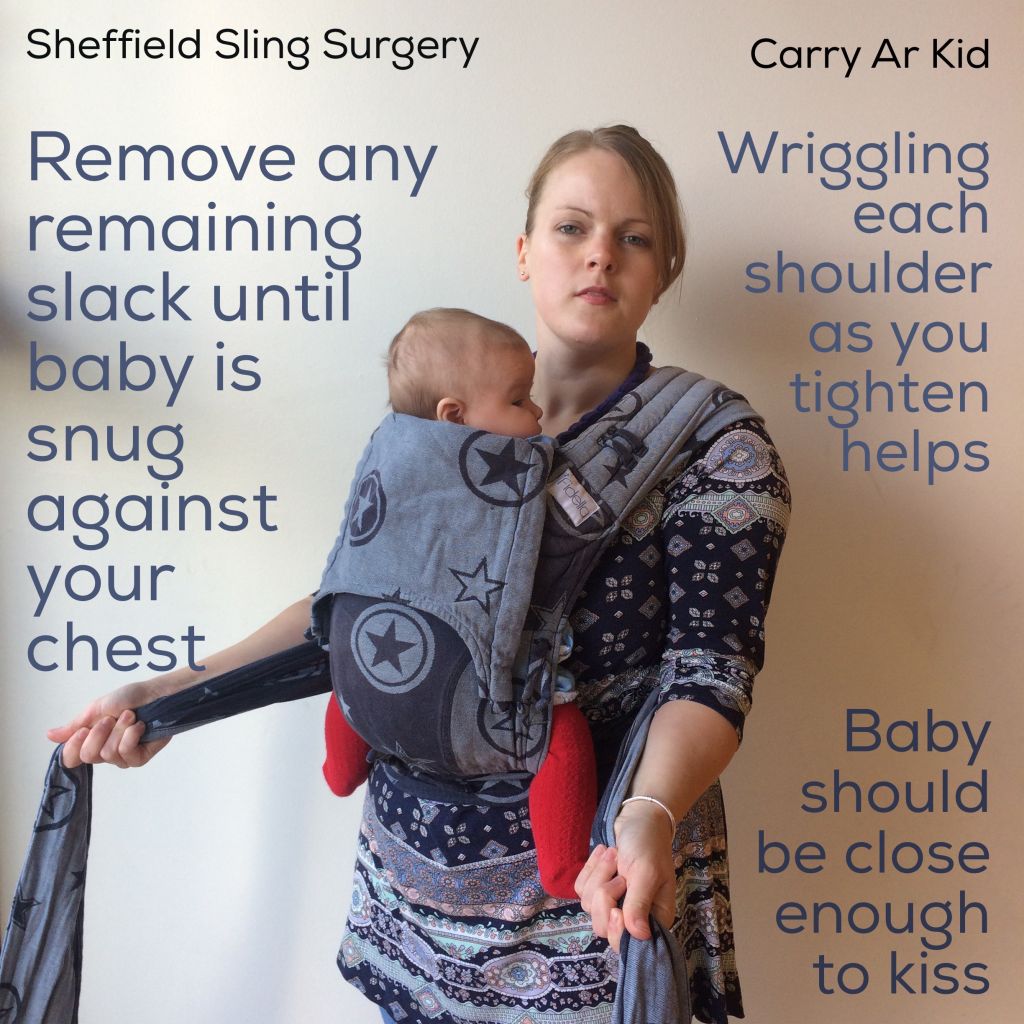
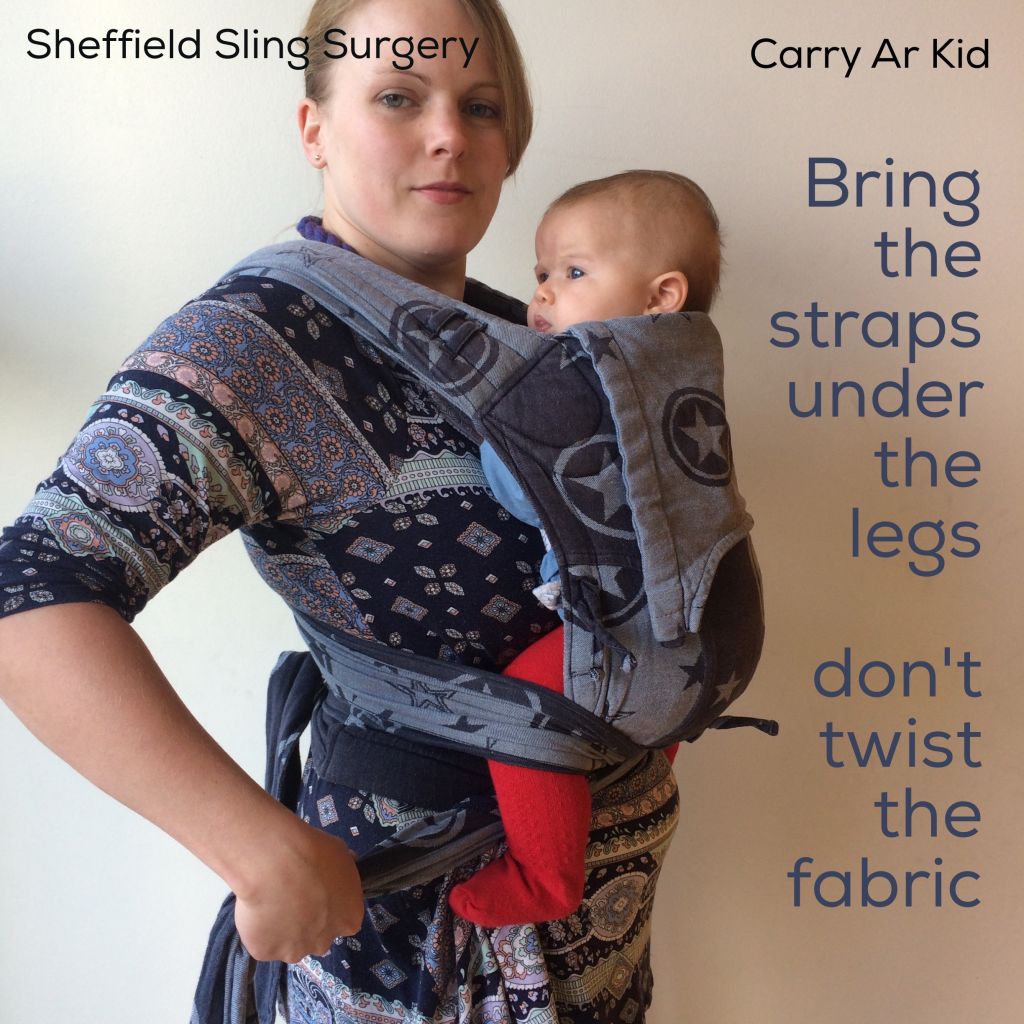
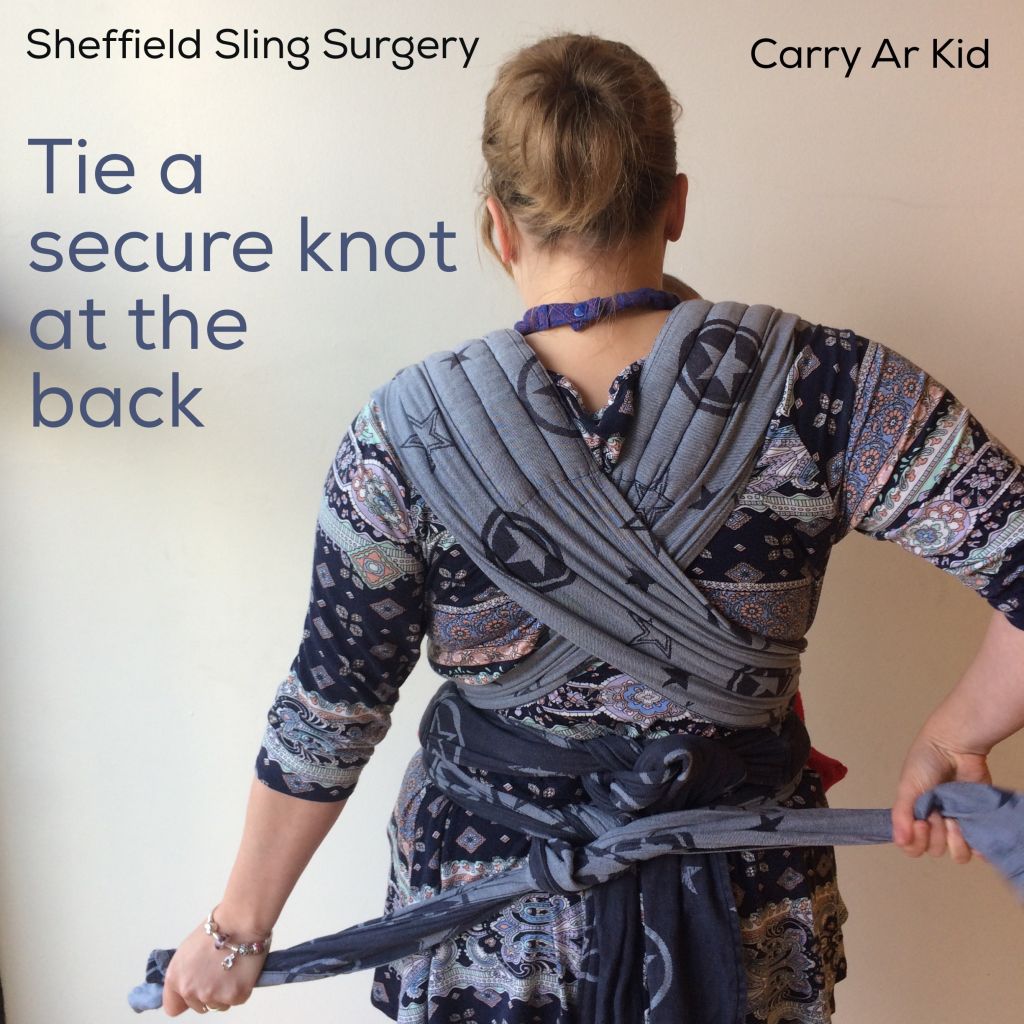
With each strap held in front of your baby, wriggle your shoulders and pull out any remaining looseness. Swap the straps over in your hands under baby’s bottom, and then bring each strap under baby’s leg and behind yourself. Tie a secure knot.
Ensure your baby is sitting in the pelvic tuck with bum above knees and that their chest is close to yours with no slumping. If the position isn’t’ right, untie the knot and tighten each strap again.
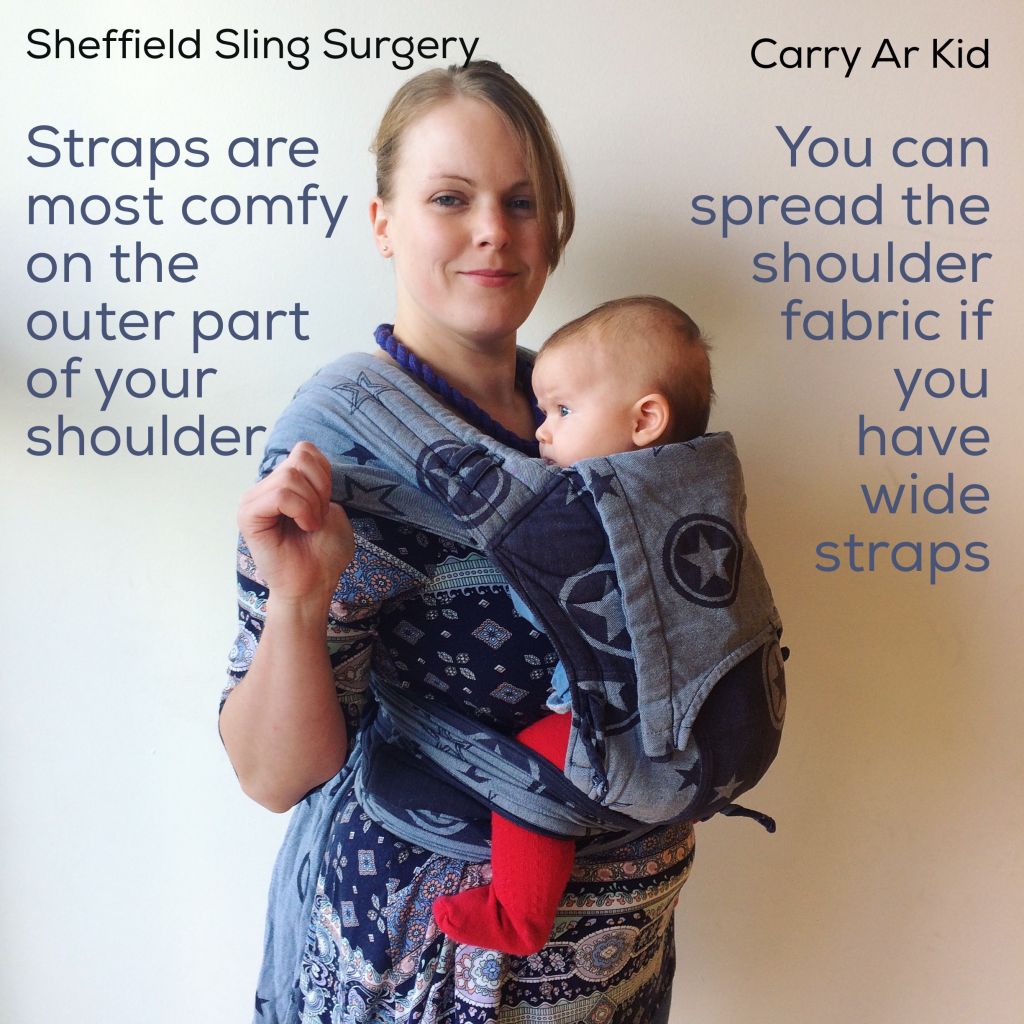
Spread the shoulder straps out widely to cup your shoulders for extra comfort. You can also spread the straps across baby’s bottom for extra lift.
Your baby’s tummy and chest should be in close contact with your body . If you find it hard to get right, do get in touch for some practical help at a library drop in or a one to one.
Learning how to use a meh dai on the hip or the back does take a little more practice. Some parents find it comes easily and have taught themselves. Others need a few goes to get it right and find a consultation or workshop where they are taught in person helpful.
Front Carry with a Mei Tai
Basic positioning with a mei tai front carry
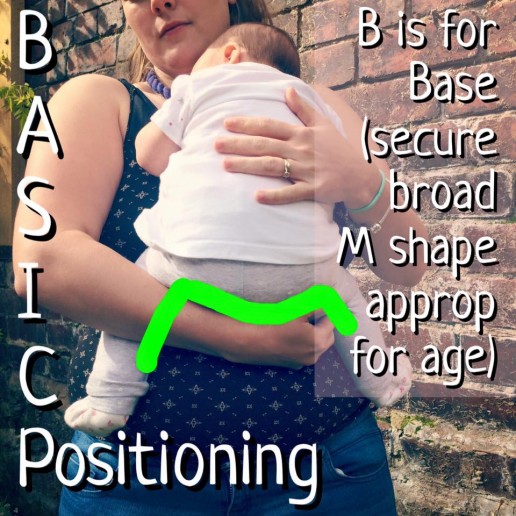
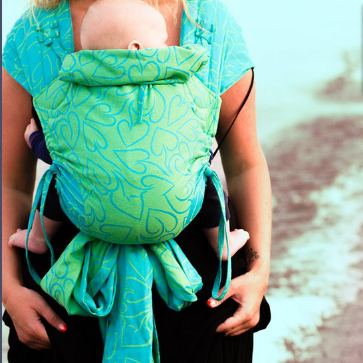
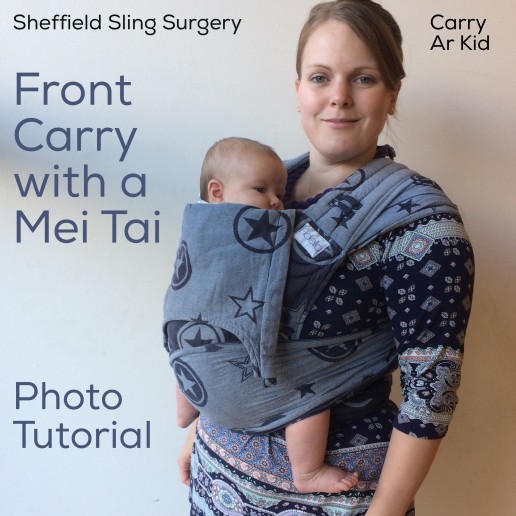
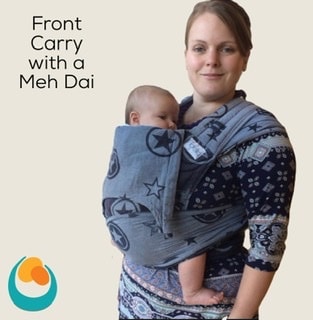
Here is a photo tutorial for a upright meh dai carry with a baby. Please click/swipe through each image.
Here is a separate link to the tutorial.
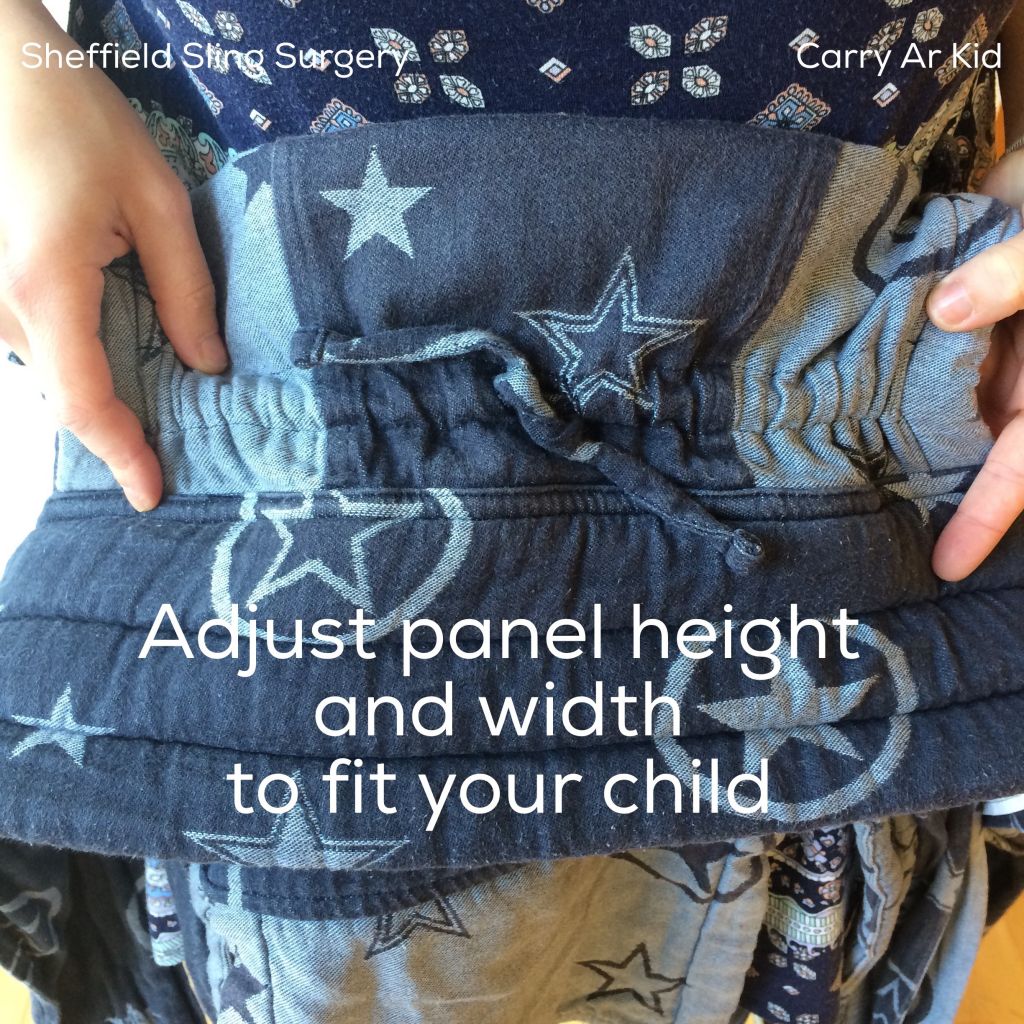
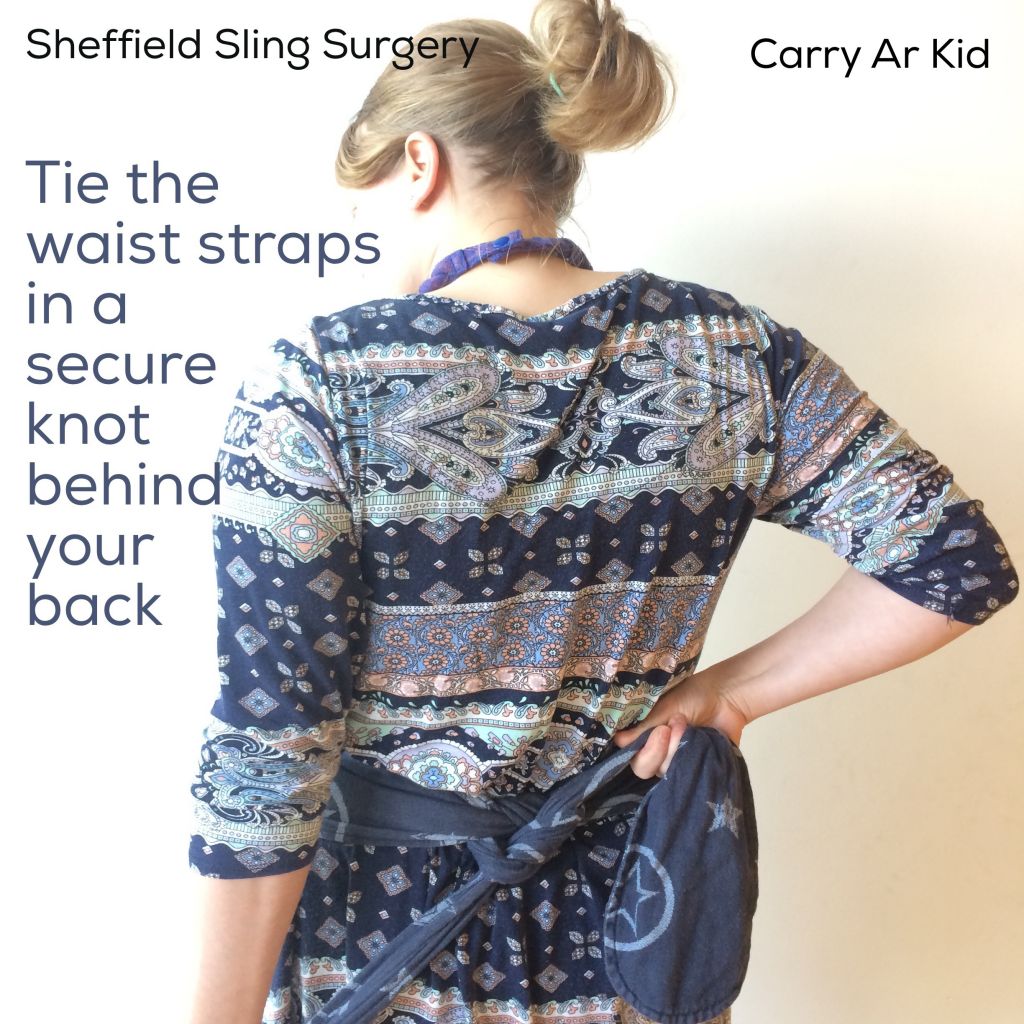
More videos and tutorials can be found on the useful videos page here.
Wide straps help with comfort for big children
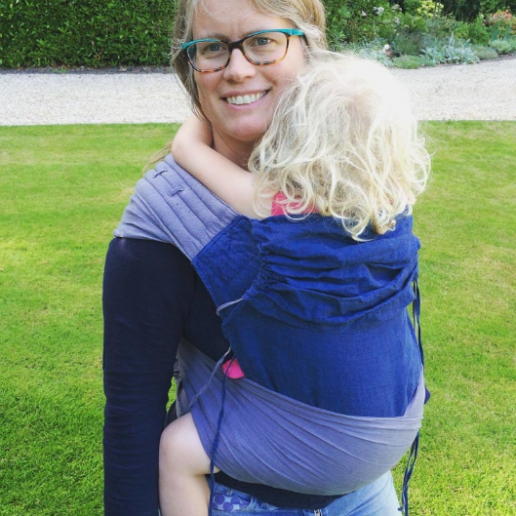
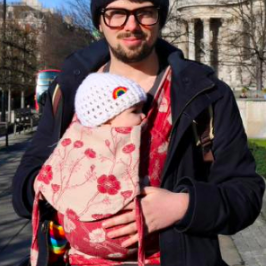
Mei tais can be used by the whole family
Top Tips!
- Choose how you want to put your waistband on so that the panel is the right height for your baby's back.
- Adjust where possible so the width of the base fits comfortably between your child's seated knee to knee shape.
- Make sure he is sitting in the M shape and hold his chest close to you as you go. Getting position right at the beginning makes it much easier later.
- Smooth the panel up the back and remove any looseness as you go.
- Keep arms in if possible, and bring older babies' arms out later, once the carry is finished. Toddlers may prefer being carried arms out from the start; ensure the panel comes right up under their armpits.
- Wriggle your shoulder as you tighten the strap, this helps remove slack.
- Wrap straps should be tightened in sections for the greatest effect.
- Do not tighten the straps over your baby's knees too tightly and ensure you do the pelvic tilt so baby's weight is resting on their bottom not on their knee pits.
- Spread the fabric across baby's bottom if you can, this will add lift.
Common Queries about Meh Dais
Feeding in Meh Dais and their variants
Feeding is possible in these soft strap carriers, with a little care to ensure baby’s airway is well protected. Typically, for breastfeeding, this involves loosening the panel in stages so baby is lowered gently to the nipple. No breastfeeding is hands free, and it is usually a good idea to get some help and advice from people who are familiar with how to do it. Please note that when baby has finished feeding, he must be returned to his safe snug upright position, close enough to kiss.
You can read more about how to breast and bottle feed here.
Back carry with a mei tai
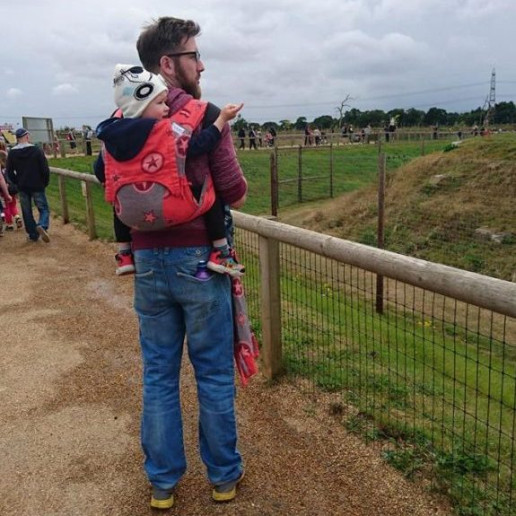
When can I start hip and back carries with a meh dai or similar carrier?
Babies can be carried “off centre” on the front from early on, as long as their natural tucked narrower M shape position is preserved. Lateral hip carries tend to work best when babies begin to sit comfortably the parent’s side, this is typically about 3 months or when baby begins to roll.
It is possible to back carry with a meh dai and a podaegi from a relatively young age, especially with one made with a woven wrap, as the panel and straps are very mouldable to ensure a safe open airway and no slumping.
Onbuhimos are designed primarily for back carrying and many families find this easy to do, they are best with older children. The weight is all taken on the upper body and shoulders which will suit some people better than others.
Back carrying is harder to do than the front and hip carries, seek help if you need it!
Read more here about beginning to back carry.
Troubleshooting your Meh Dai
- Carry feeling too loose or too low? You are likely to have too much slack in the straps that has worked its way to the front. Retighten and retie.
- Struggling to tighten it further? Hold your baby's bottom with one hand to reduce the amount of weight you have to lift as you tighten the strap with the other hand. Pin the tight strap between your knees to help maintain the tension and repeat on the other side.
- Baby folding over or slumping over to one side? This is likely to be looseness in the panel, or the straps too near your neck; leading to an unsupported back. Hold your child chest to chest and retighten the panel around him. Ensure the straps are sitting on the outer part of your shoulders not near your neck. Still not right? Go and see your local sling professional for some extra tweaks.
- Baby's head leaning back? This is usually due to looseness of the top third of the pouch not keeping shoulders and upper body held chest to chest, or not having enough fabric up the back. Lengthen the panel if available and position the straps more widely on your shoulders to bring the top edge of panel flatter and closer.
- Shoulder digging on your neck? Spread the fabric broadly across your shoulder to redistribute weight.
- Red marks at back of baby's neck? This is usually due to over tightening; try a touch looser, but keep baby safe.
- Baby leg straightening? Ensure you have put the crossing straps under the knee pits in the M shape with knees above bottom.
- More videos for other carries can be found clicking here and we can teach you in person too!
Some wrap companies make their own mei tais

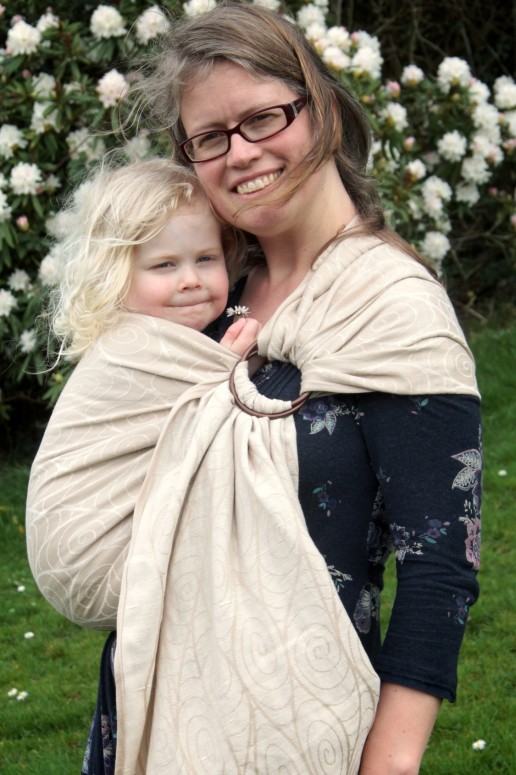
Ring Slings
Hip carriers such as ring slings can be very useful for parents who prefer a slightly “off-centre” upright positioning, or those who have children who want to see more of the world, but aren’t yet ready to consider back carrying. Hip carrying preserves the visual connection of parent-facing positions and can be very quick for mobile children who want to be up and down frequently, or for a lightweight carrier for occasional use. Hip carriers can be fabric based ring slings, pouches (for use with older babies), some buckled carriers and a few “carrying aids” that are not hands free.
Here is a quick link to a video about how to use a ring sling; as if you were having a consultation with Rosie herself and Lucy (from Little Lifts)
Like all carriers, ring slings and other hip carriers need to be used safely and the TICKS guidelines should always be followed. The most important consideration is to protect baby’s airway; a baby’s neck should never be folded in half and two fingers should fit between their chin and their chest.
The most frequently adopted position for carrying young babies is upright and facing the parent, with legs slightly spread apart (the M position) and head well supported, as this will also protect growing hips and spine. Most frequently this will be the simple upright position slightly “off-centre” from the midline, with the fabric being adjusted snugly around baby for the perfect fit. There are ways to use a ring sling to hold a baby safely in other positions, but these need to be done with care. Pouch slings are best used for babies from three to four months and up and MUST fit the adult’s body properly to be safe; loose fitting pouches can pose a risk to the airway.
Ring slings are very versatile, and can be used for front, hip or back carries as babies grow. They have been around for thousands of years in many traditional formats to allow parents to carry babies on their front or hips, from the Mexican rebozo to the Welsh babywearing shawl and the German Hockmantel.. simple, practical, incredibly useful.
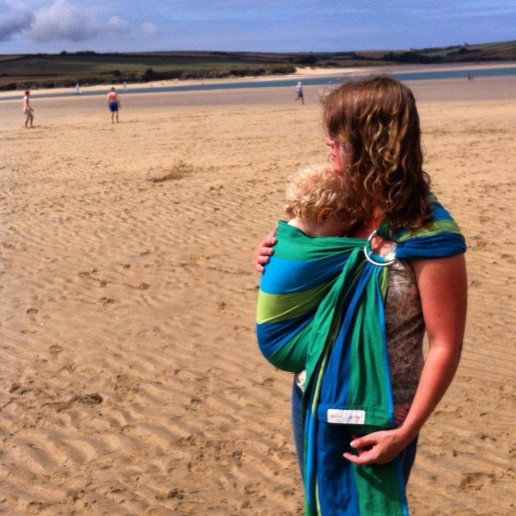
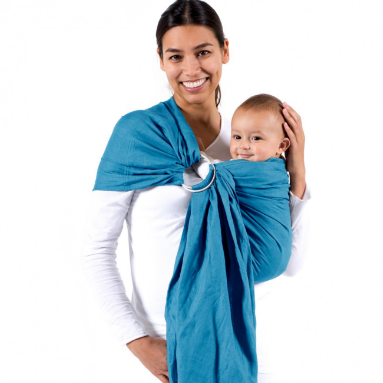
A ring sling is a piece of woven fabric usually about 2m long and 60cm wide that has one end sewn securely into two strong rings.
They are worn on one shoulder with your child sitting in a pouch on the opposite side of your body, with the loose end of the fabric threaded through the rings in such a way that the tension holds the fabric firmly and the weight is distributed across your shoulder and back.
They are derived from the ancient practice of tying short cloths around the body with a knot at one shoulder, such as the Mexican rebozo shawl (which is a multipurpose cloth).
Ring Slings are very versatile for a wide range of ages, and can pack away small, which is great for portability and convenience. Once you have the knack, they are very quick and easy to put on.
They can be used from birth, and allow preservation of the natural foetal curved position with knees tucked up into the M shape, and many babies will sleep contently in a ring sling, allowing the carrying parent to be hands free (which can be very helpful with toddlers around).
They are useful for feeding as they can provide discreet cover, or allow semi-cradled or sideways seated positions for breast or bottle access. They can be perfect for quick up-and-downs with toddlers, or to keep in the car for emergency carrying needs.
For babies who love to see where they are going (and not yet ready for back carries) a ring sling allows a comfortable off-centre or hip carry that still preserves healthy hip position. Children can see past the nearside shoulder and also look directly ahead. This position allows a child to turn its head into the carer’s chest, away from too much stimulation. Babies have not yet learned to organise and “zone out” of their multiple sensory streams, and need to be able to retreat and sleep safely.
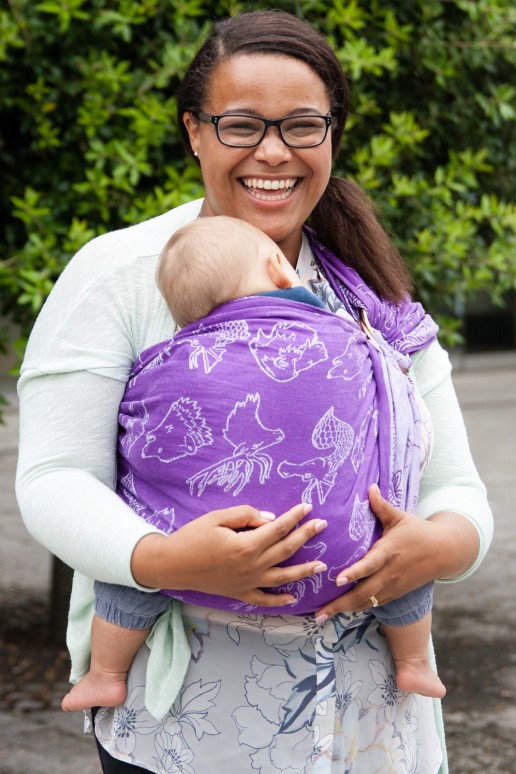
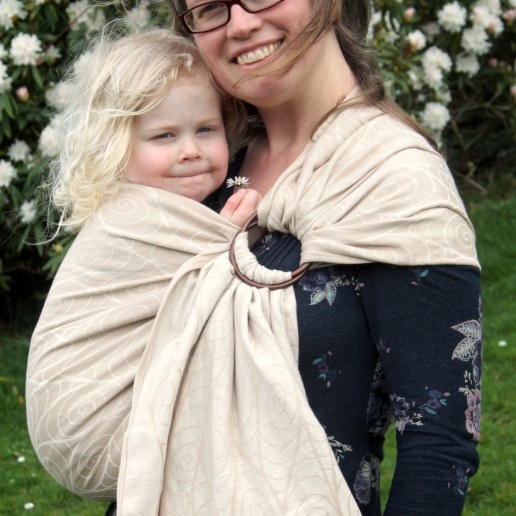
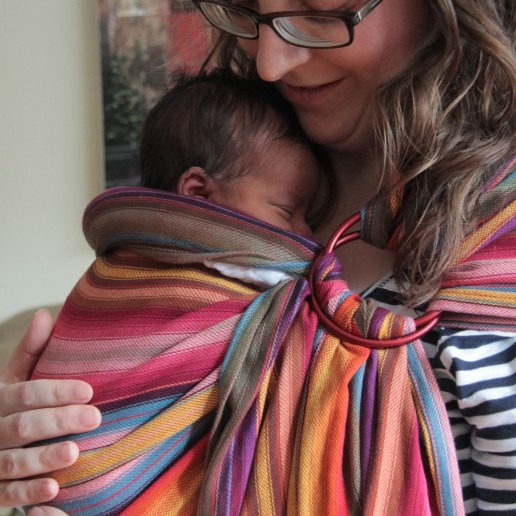
Types of Fabric
Many ring slings are converted from cotton woven wraps, as cotton is easy to care for, soft, strong and supportive. Some may be made of blends of cotton, wool, linen, hemp, silk or bamboo. These fibres can add features such as extra supportiveness, grippiness, softness or glide, and people will often have their preferences. Linen, silk and hemp are extra supportive for older children, but can be a little rougher than cotton, whereas bamboo adds softness and smoothness. Some grippier fabrics can be harder to work with, while slippy fabrics can feel as if they are loosening a little
Some ring slings will therefore be thinner and cool to wear, some are dense and blankety for extra comfort.
Wrap fabric works very well as a ring sling, as it moulds well around a child and the wearer’s shoulder and is easy to work with and tighten through rings. Ring slings made of cheaper cotton or with things like padded rails or shoulders can be much more difficult to use well and safely. I do recommend going to your local sling library to try a few out and see the difference for yourself.
Types of shoulder
The most common types are simple gathered shoulder and pleated shoulder. They are all different and most people find one style suits them best, it is worth trying a few out from the sling library or sling meet to see which works best for you; what is right for one person may not suit another.
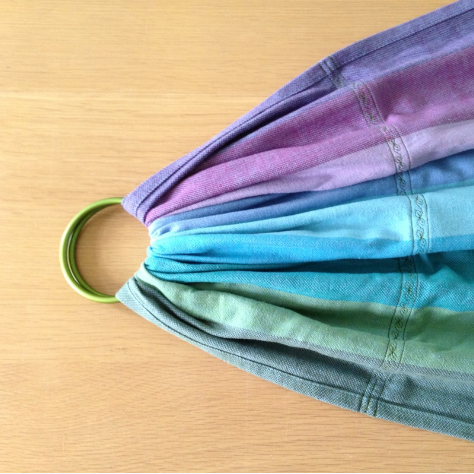
Simple gathered shoulder; this enables a good spread of fabric across your shoulder in a cupped distribution, as well as spreading widely across your back. Most ring slings have this shoulder.
A popular variation of this is a “floating” shoulder, where the seam is sewn about 9-12 inches away from the rings. This keeps the seam behind the shoulder (which can help to keep the rings nice and high) and the double layer of fabric adds to the feel of cushiness.
Pleated shoulder (typically with knife pleats): the fabric is kept in a narrower distribution to the top of the shoulder but still spreads widely across the back.
There are many variants of pleated shoulders, such as
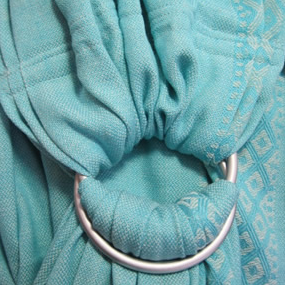
The Eesti shoulder is a pleat at each edge with simple gathering in the centre, it will spread widely to cup the shoulder, but less broadly than the gathered.
The box pleat shoulder (with knife pleats) is of medium width across the shoulder so keeps it a little constrained for a tidier look at the front while still spreading across the back.
Simple gathered shoulder
Floating gathered shoulder
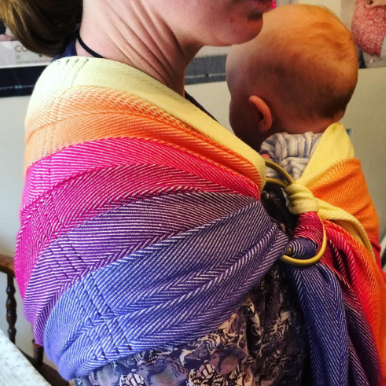
Knife pleated shoulder

Floating pleated shoulder
Eesti shoulder
Box pleated shoulder
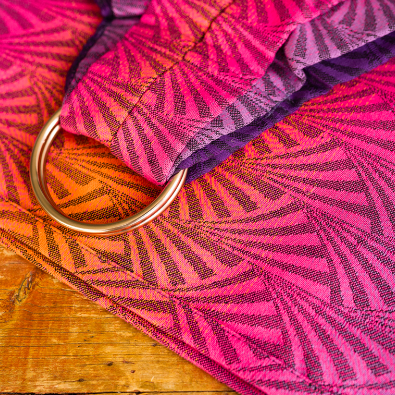
How do I put my ring sling on?
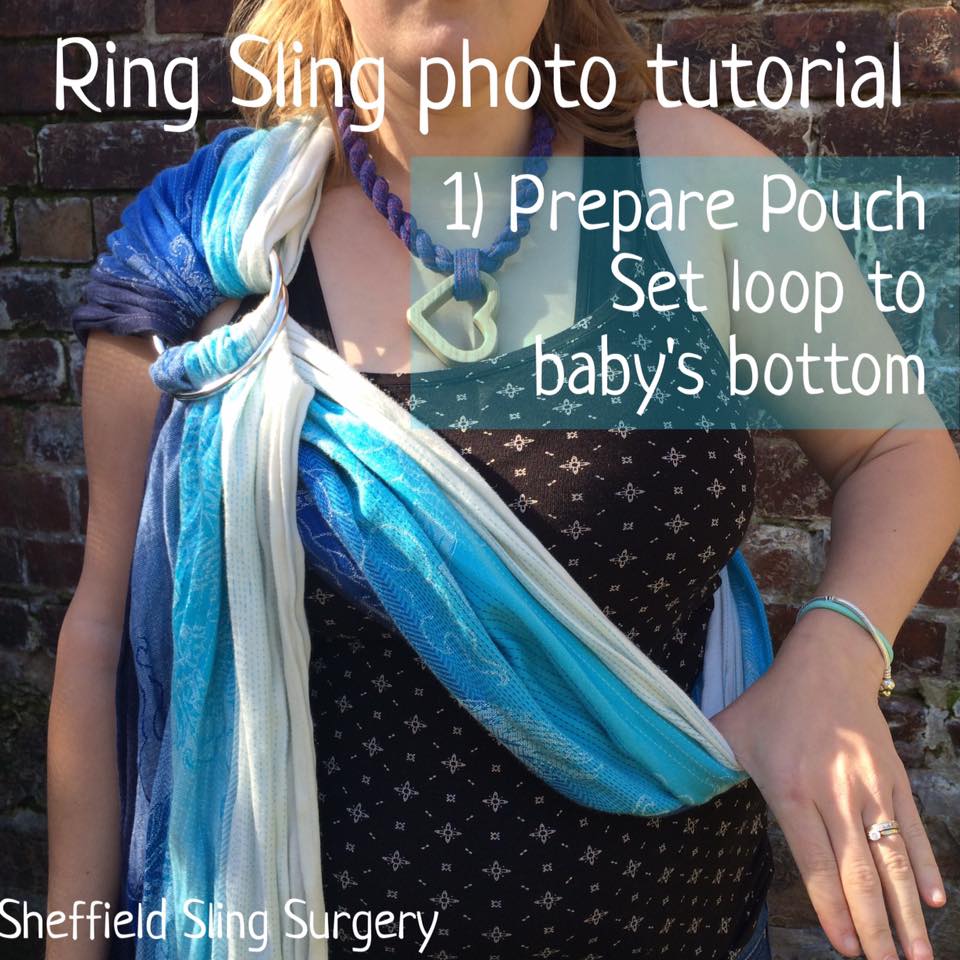
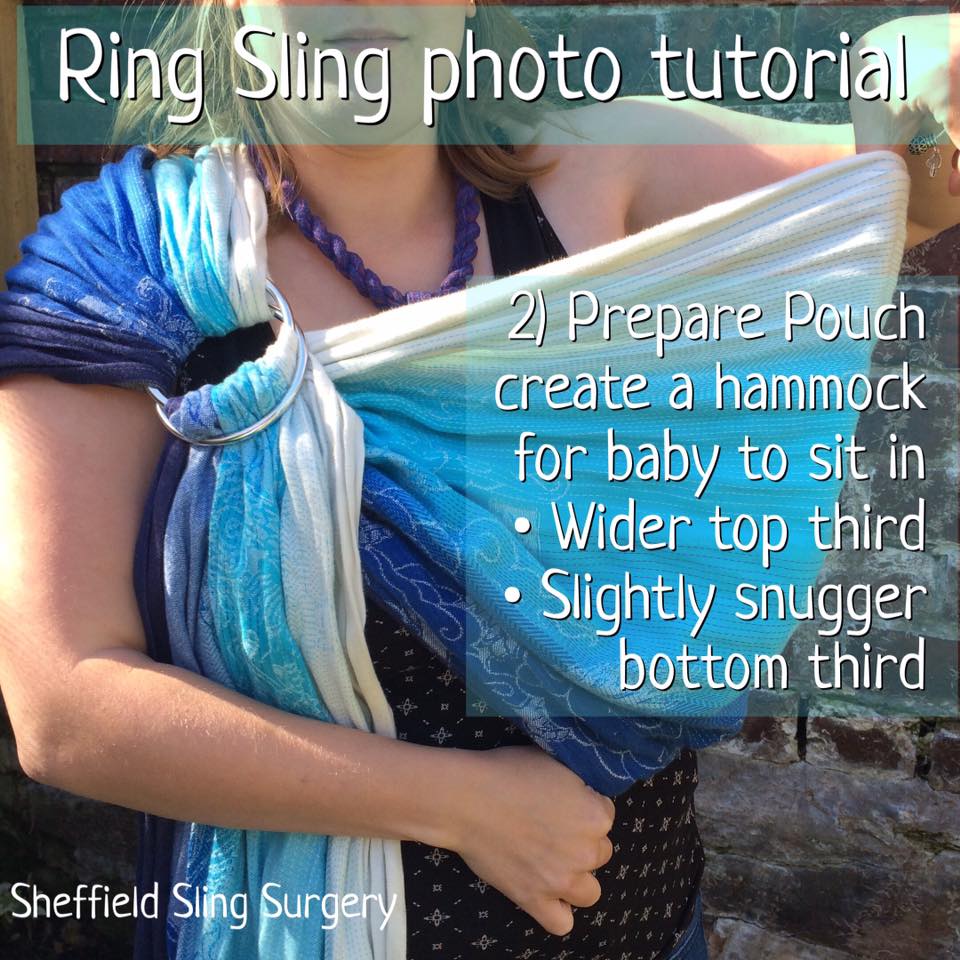
Set your ring sling up with the long end threaded through the rings like a belt, with the lower rail a little tighter than the top rail, making a pouch.
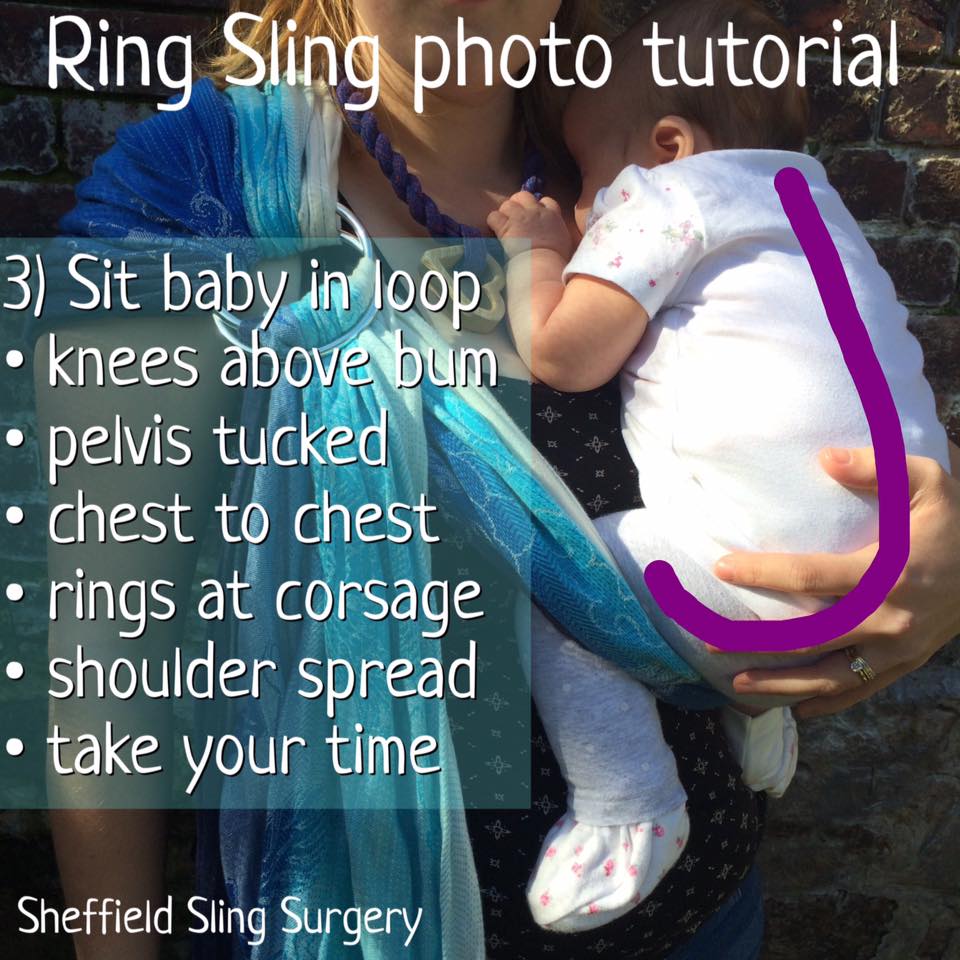
Slip your child’s legs into the gathered rope of fabric, and sit them down with the fabric collected well into their kneepits and bottom resting lower than knees (this is the M shape that protects hips in a healthy position and provides a secure carry). Readjust the rings so they stay high, just below your collarbone.
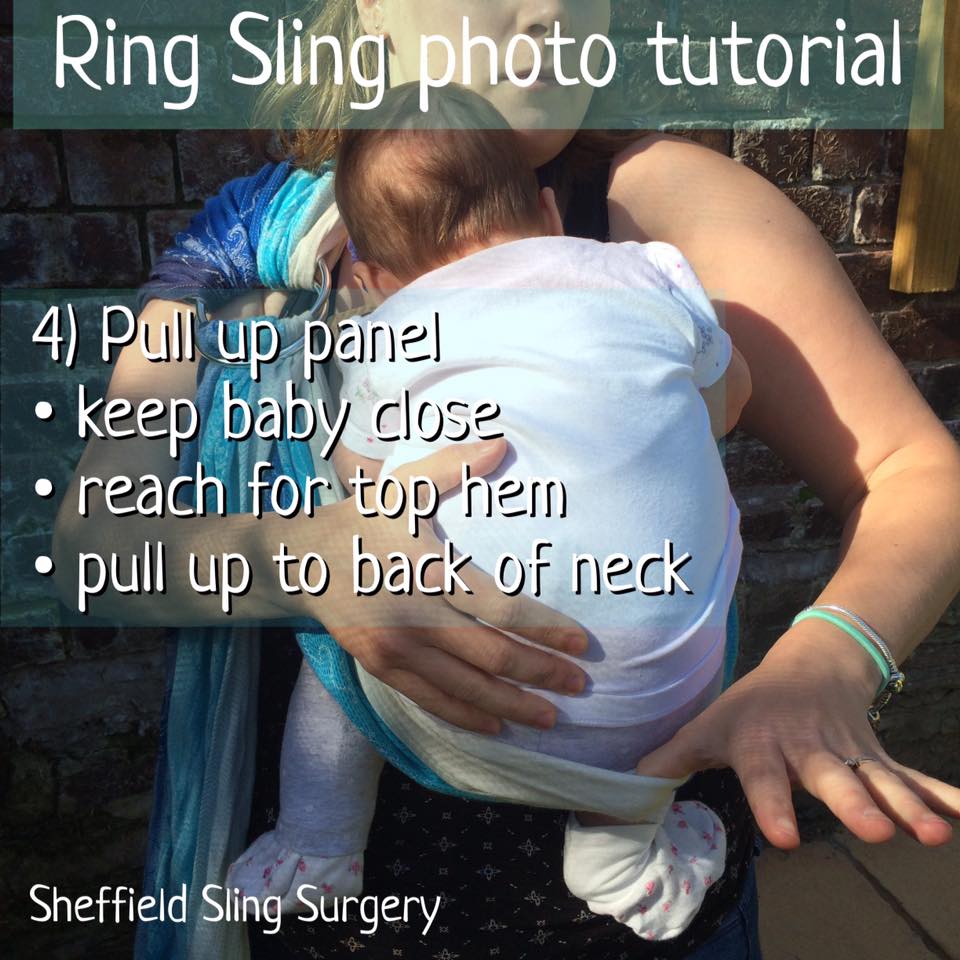
Once this position is achieved, pull the top edge of the fabric smoothly up baby’s back to the neck, and then check that the lower edge of fabric is well tucked up into baby’s bent knees, to ensure you have a good seat. You will need to smooth any loose fabric under the baby’s knees towards the rings. Baby should be sitting in a “bowl” with the bottom third of the fabric snugly gathered in a horizontal aspect.
Spread the fabric comfortably to cup your shoulder with the rings up high, and then while holding baby securely, bring the slack of the top edge of fabric around your back, over baby’s body and towards the rings.
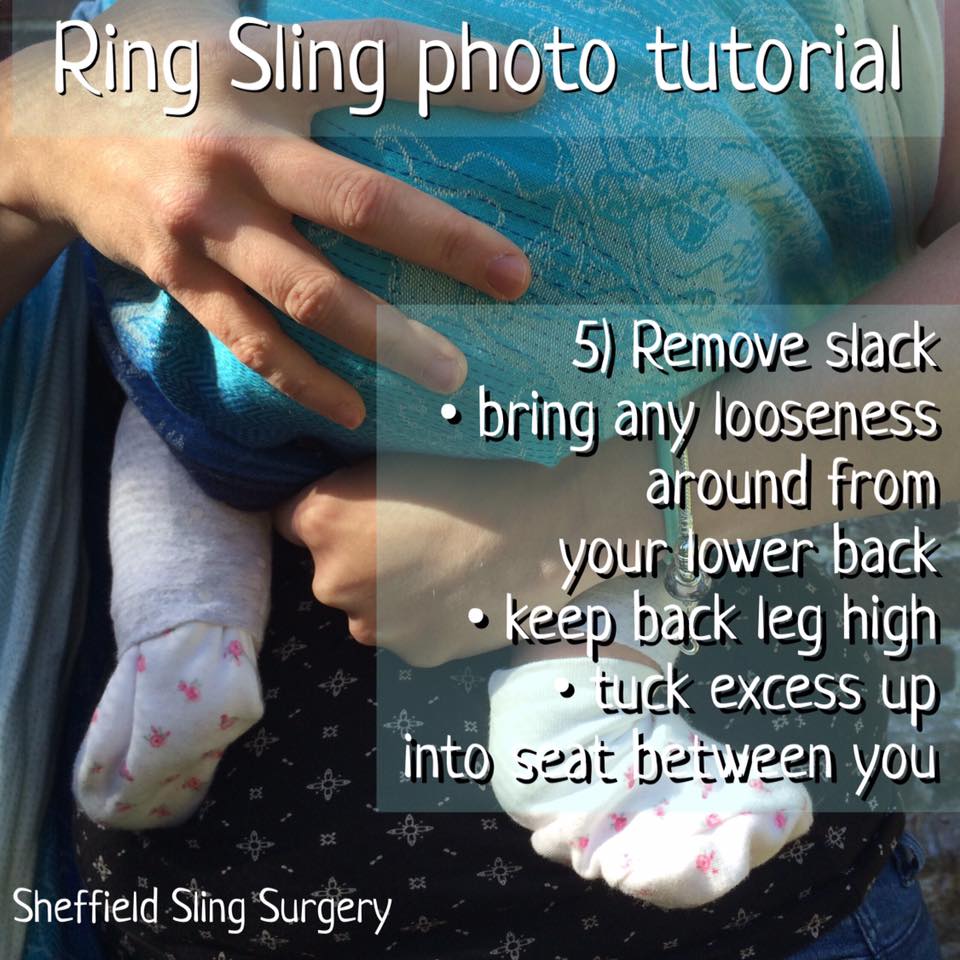
Find the top rail of the fabric in the section after the rings and pull the fabric through the rings in a direction slightly away from your body and over your child, rather than tugging downwards. Keep moving the fabric through the rings in sections down the width of the fabric, little bit by little bit, keeping the rings up high, until you’ve got to the bottom rail and all feels nice and snug.
Your baby’s tummy and chest should be in close contact with your body . If you find it hard to get right, do get in touch for some practical help at a library drop in or a one to one.
Learning how to use a ring sling does take a little practice. Some parents find it comes easily and have taught themselves. Others need a few goes to get it right and find a consultation or a workshop where they are taught in person helpful.
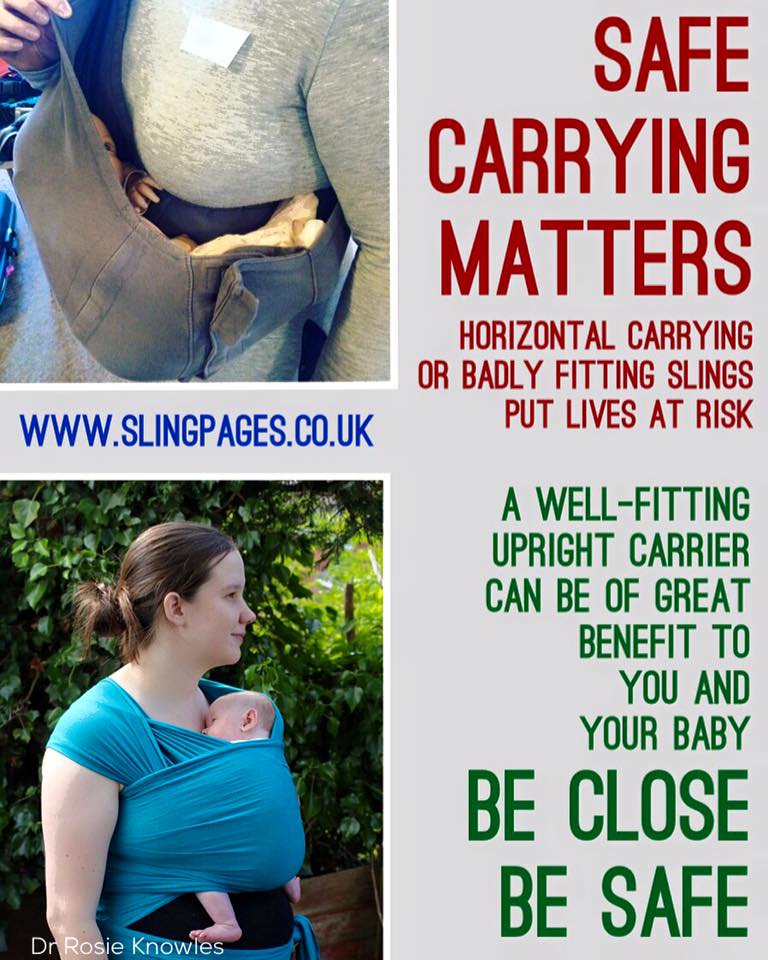
Please note that low horizontal cradle style carries are no longer recommended due to airway risk. However, semi-reclined positions where baby’s face is free of fabric can be very comfortable. For such carries or with premature or especially small babies you may find it helpful to have some help in person.
Upright front “tummy to tummy” carry with a small baby

Front carry with a four day old
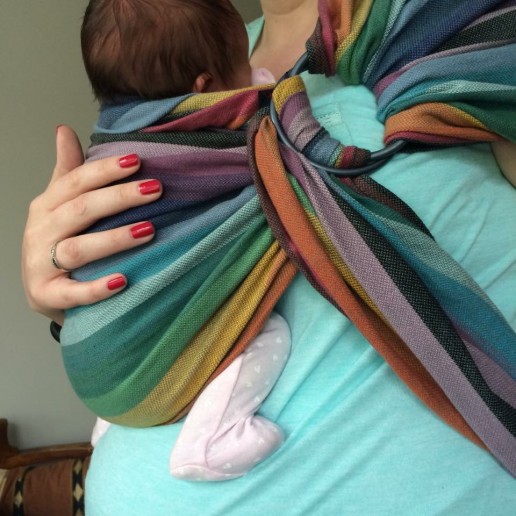
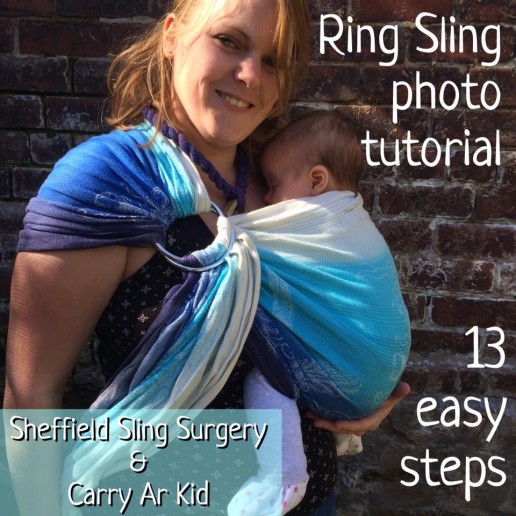
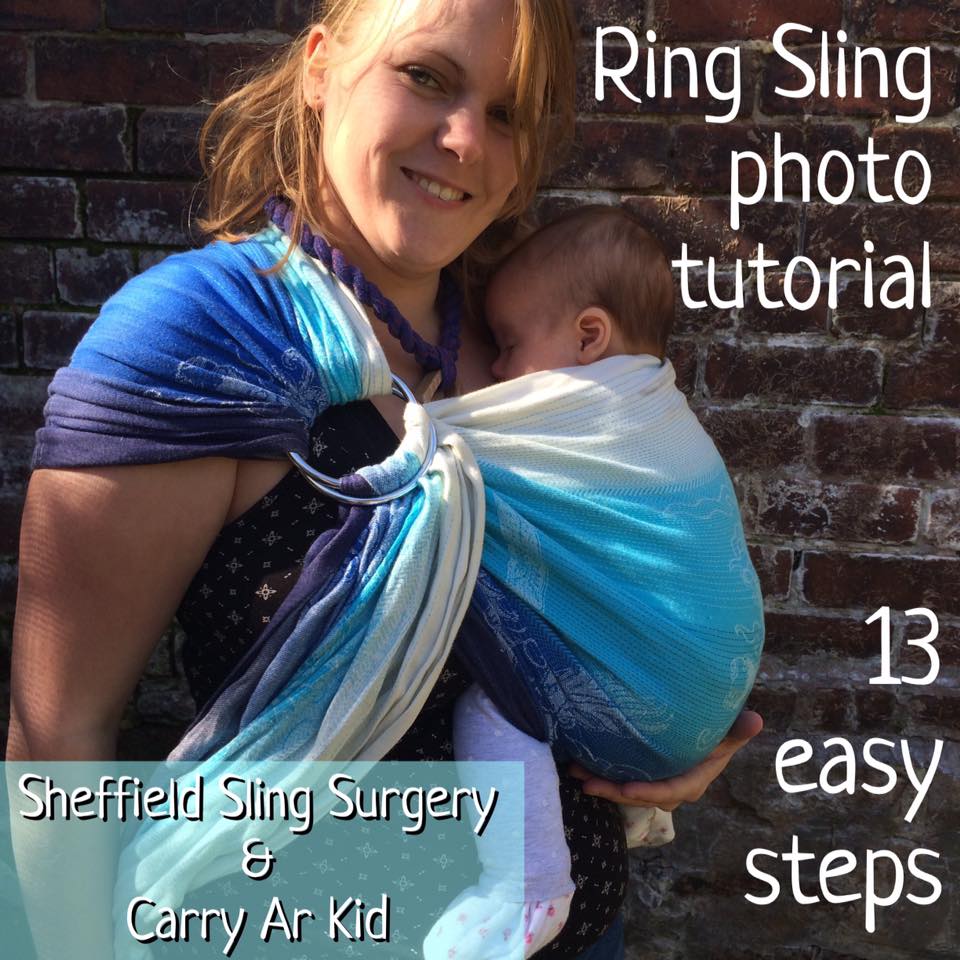
Here is a photo tutorial for a upright ring sling carry with a baby. Please click/swipe through each image.
Here is a separate link to the photo tutorial.
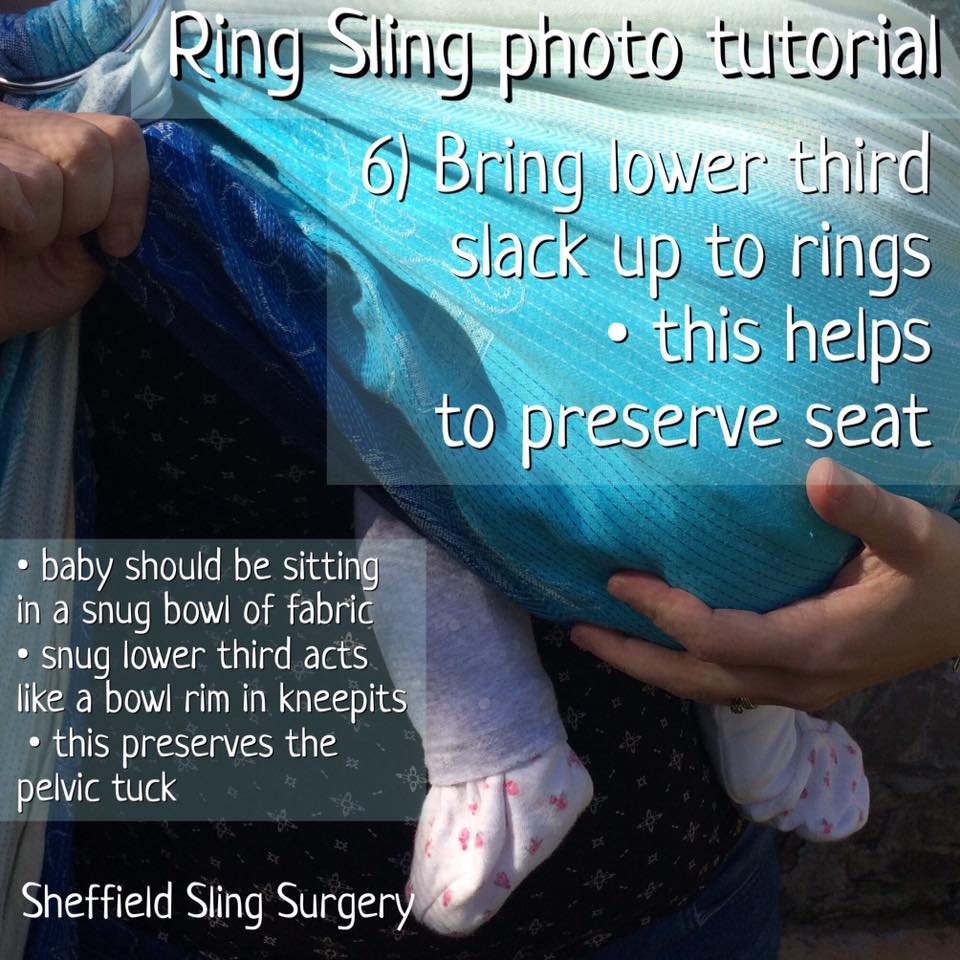
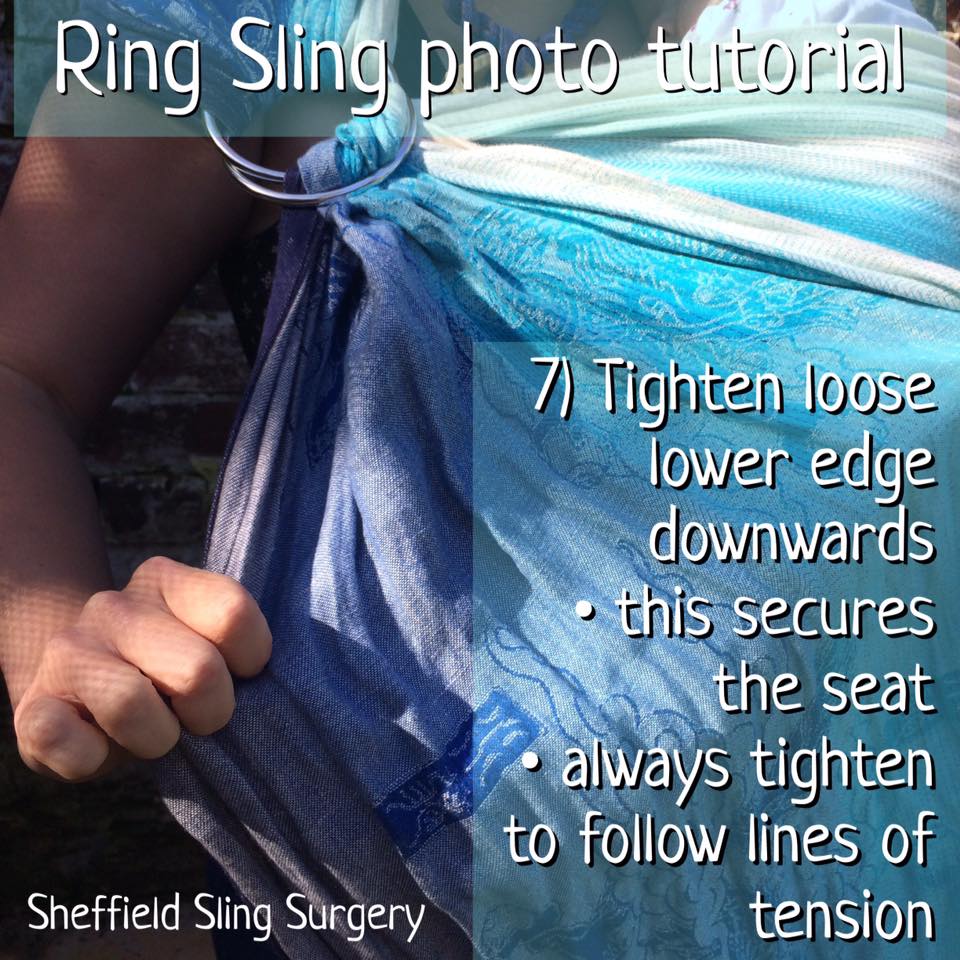
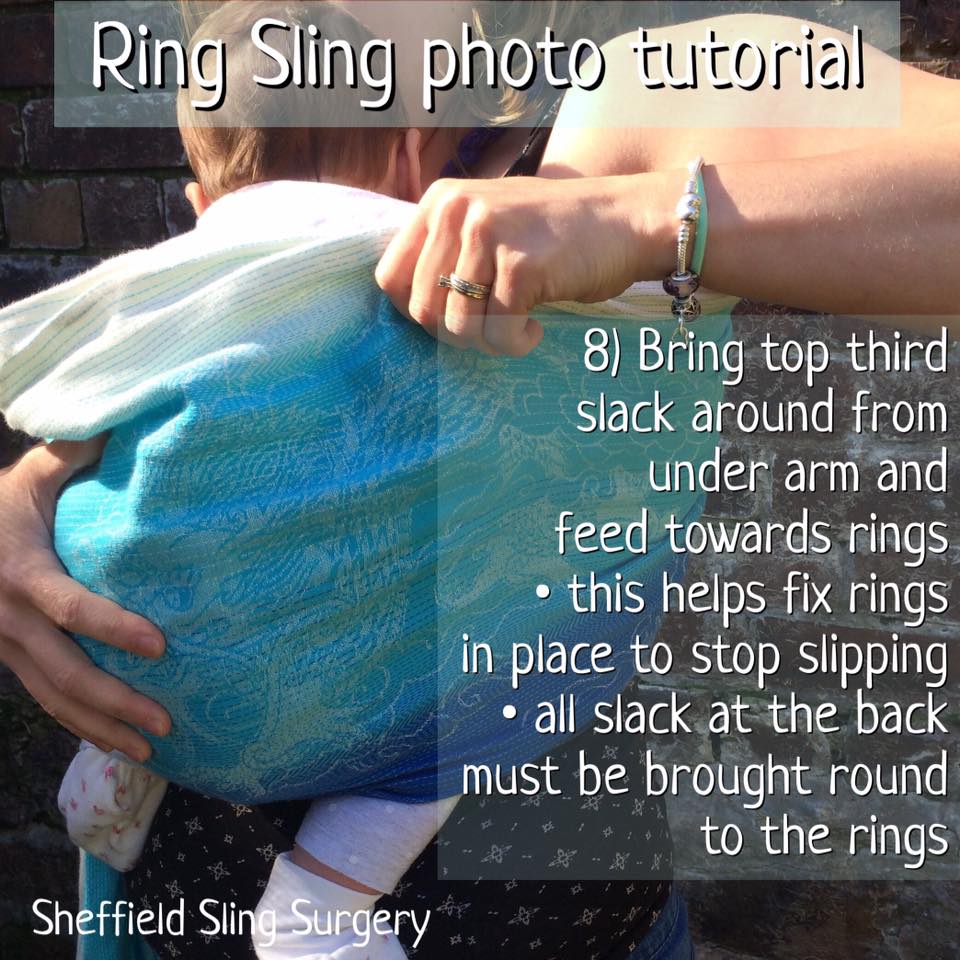
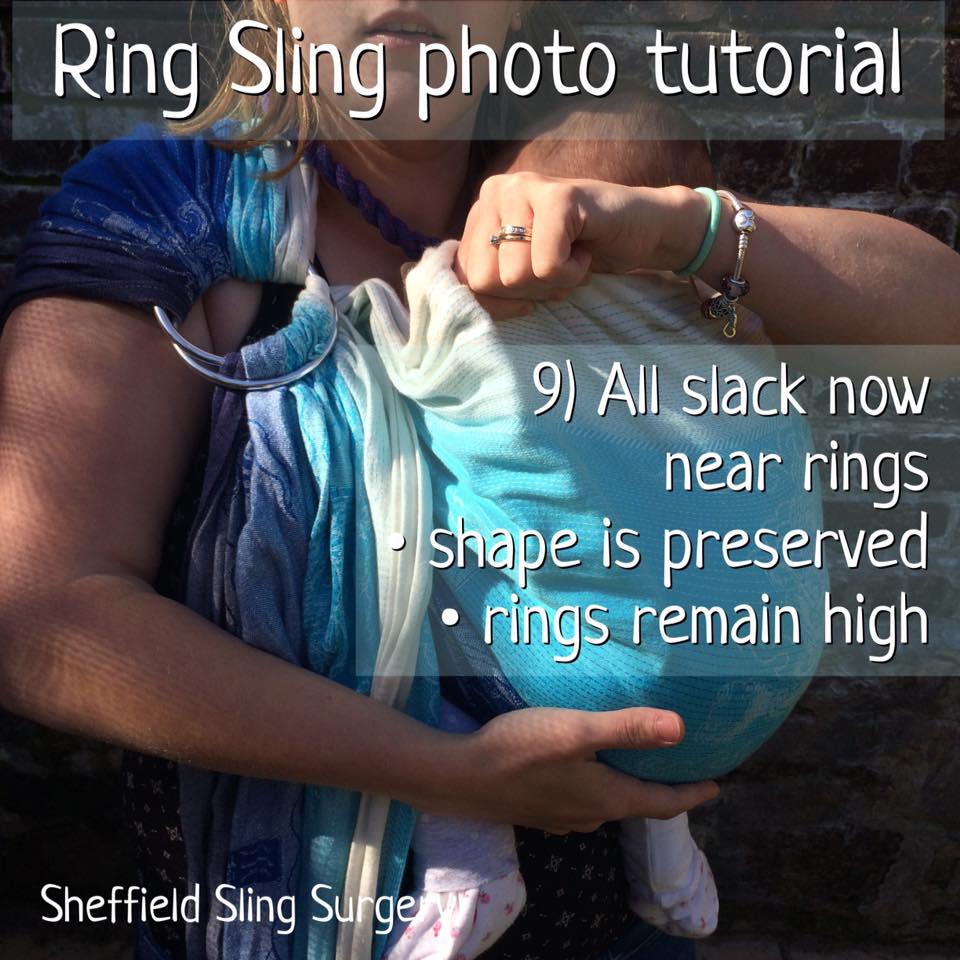
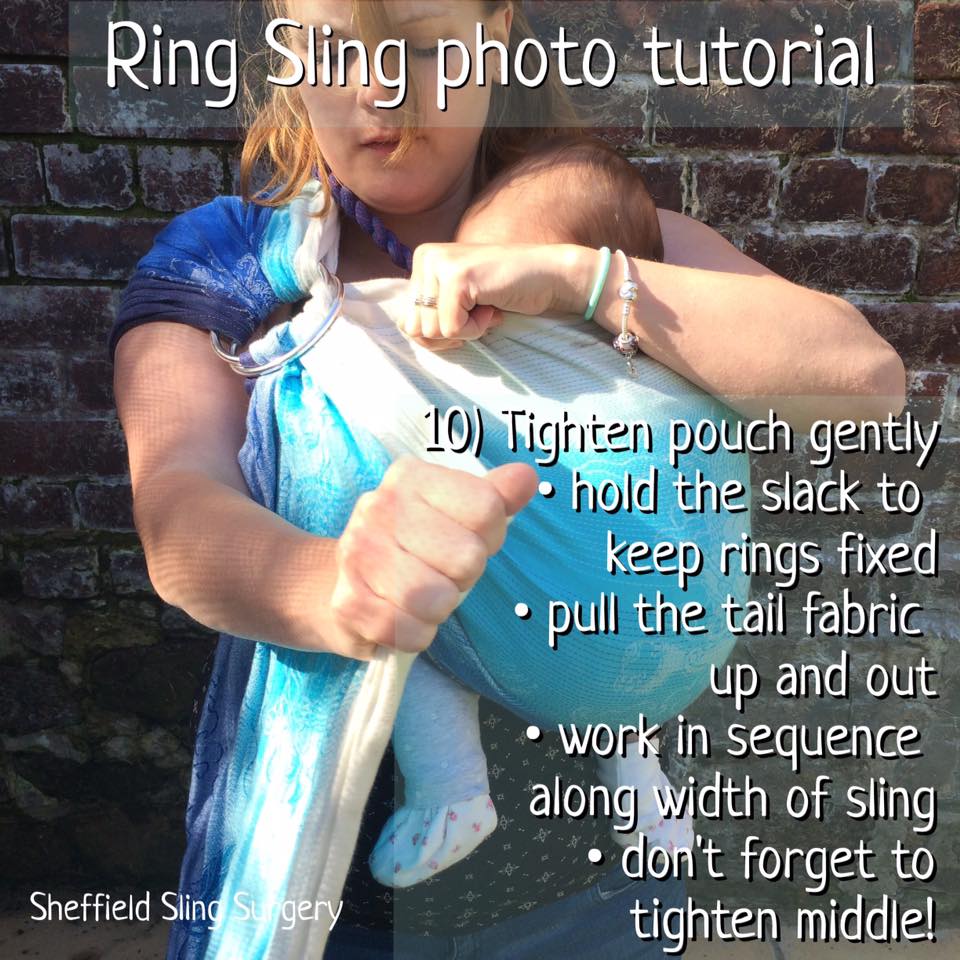
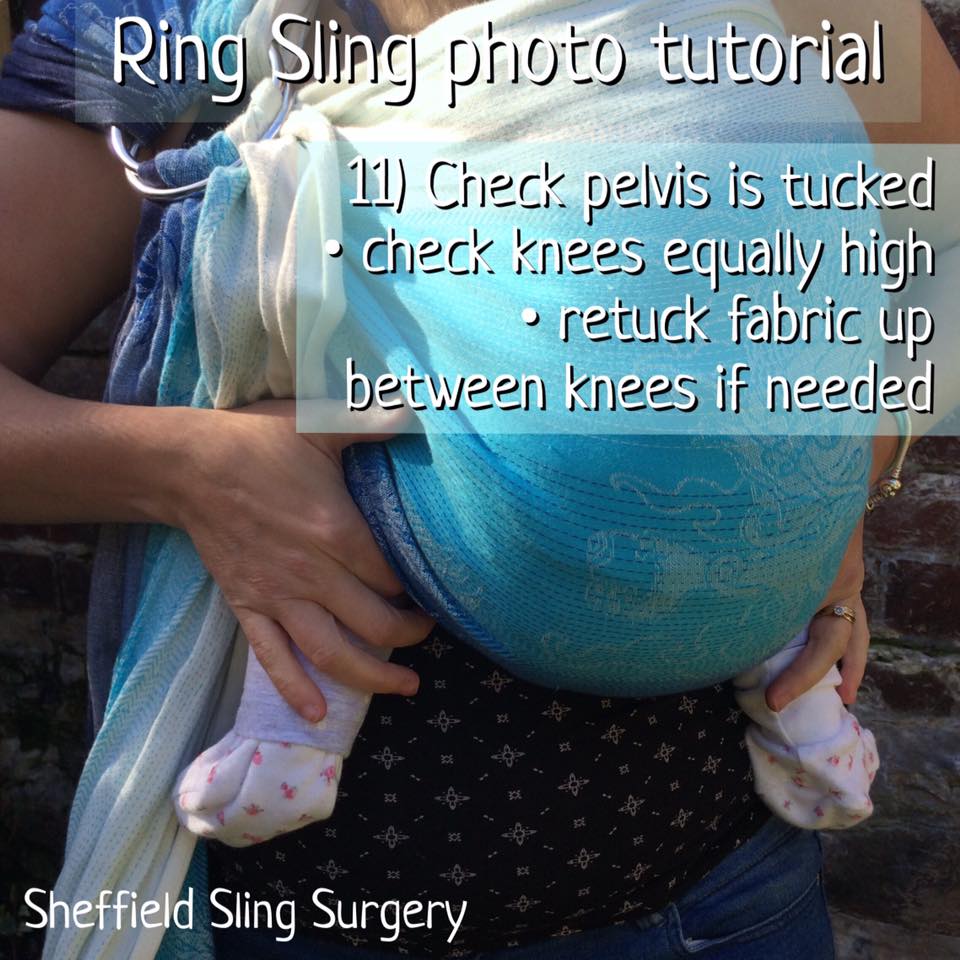
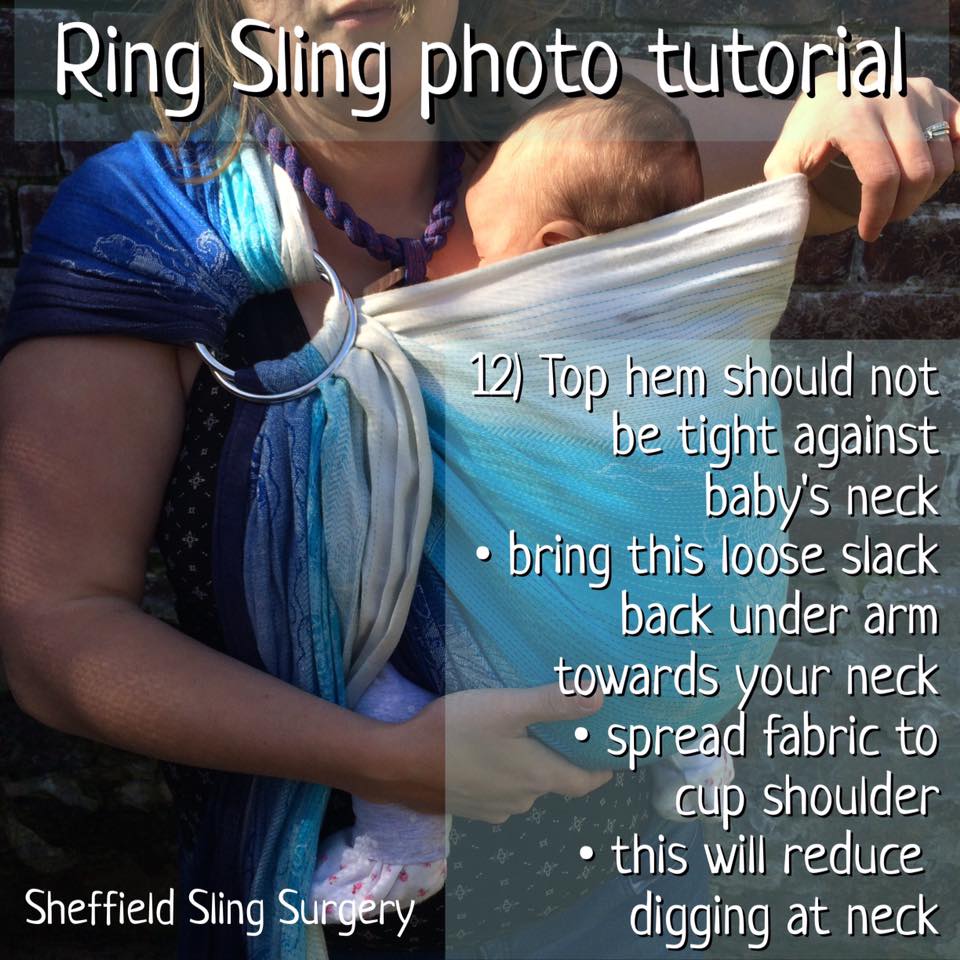
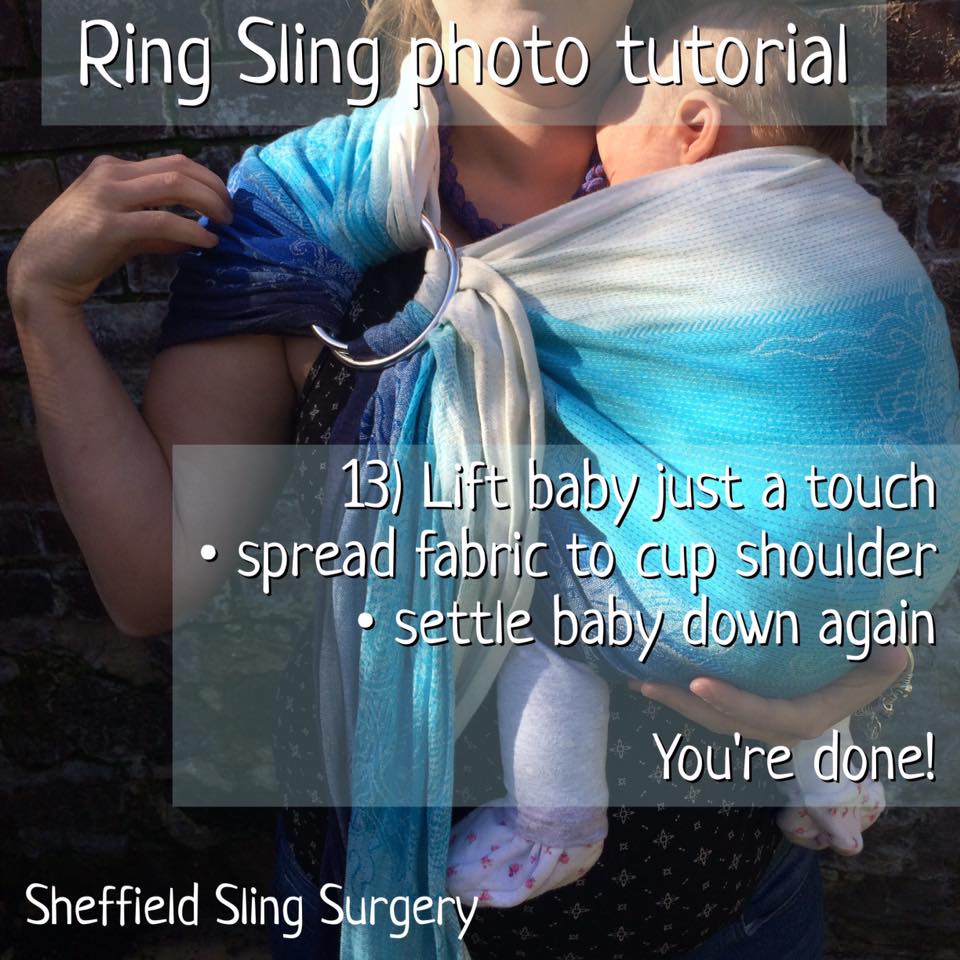
Toddlers love ring slings too!
Ring slings can be used by all the family

Top Tips!
- Prepare the pouch for your baby; a little snugger at the bottom third to help hold knees up, and the middle and top sections only just wider than the volume of your baby's body, so it is snug as you pull it up.
- Hold your baby straight in the centre of your chest and bring his legs through the rope pass on the front.
- Make sure he is sitting in the M shape and hold his chest close to you as you go. Getting position right at the beginning makes it much easier later.
- Keep the rings in the right place as you go; it is easier to amend ring position before you bring up the panel.
- Keep arms in if possible, and bring older babies' arms out later, once the carry is finished. Toddlers may prefer being carried arms out from the start; ensure the panel comes right up under their armpits.
- Bring all the slack from your back around to be near the rings and hold this fabric as you tighten; this stops the rings sliding down and ending up too low.
- Practice tightening the fabric strand by strand. This is key for ensuring the top, middle and bottom sections of the ring sling are snug around you and your baby.
- The middle thirds need to be snug to avoid folding and slumping over.
- An over-tight lower third will impede the formation of a seat.
- Do not tighten the top hem on its own; this can lead to over tightening and red marks. Tighten the top few inches; this will hold shoulders in.
- Lift your baby's bottom so you can spread the shoulder fabric well for comfort.
Common Queries about Ring Slings
Feeding in Ring Slings
Feeding is possible in ring slings and some buckled hip carriers, with a little care to ensure baby’s airway is well protected. Typically, for breastfeeding, this involves loosening the panel in stages so baby is lowered gently to the nipple. No breastfeeding is hands free, and it is usually a good idea to get some help and advice from people who are familiar with how to do it. Please note that when baby has finished feeding, he must be returned to his safe snug upright position, close enough to kiss.
You can read more about how to breast and bottle feed here.
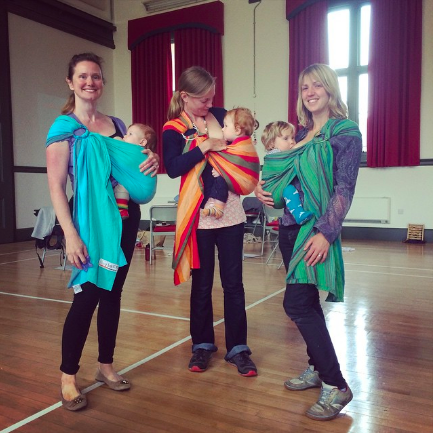
When can I start hip and back carries?
Babies can be carried “off centre” on the front from early on, as long as their natural tucked narrower M shape position is preserved. Lateral hip carries tend to work best when babies begin to sit comfortably the parent’s side, this is typically about 3 months or when baby begins to roll.
It is possible to back carry with a ring sling and many families find this a quick way of carrying an older baby. It is harder to do than the front and hip carries, but your local sling educator (find them at Sling Pages) can help. This French video is one that I like and use myself.
Read more here about beginning to back carry.
Back carry with a ring sling
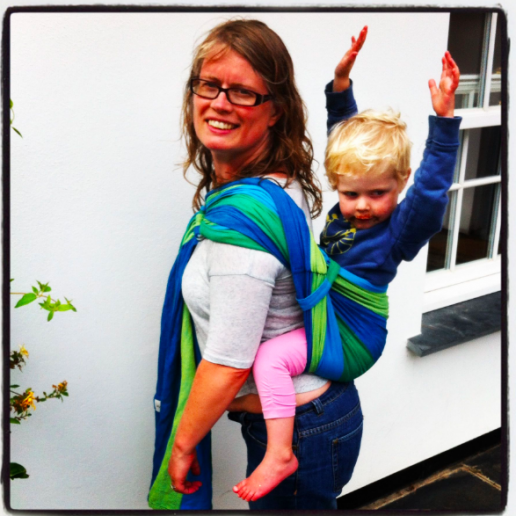
 Can I face my child forwards in a ring sling?
 Can I face my child forwards in a ring sling?
Indeed you can, once they have head control (typically about 4 months). This is known as the Buddha position and some babies love it! Their legs are crossed into a buddha position with feet in front of the tummy (so weight is not placed on the ankles).
Troubleshooting your Ring Sling
- Carry feeling too loose or too low? You are likely to have too much slack in the pouch.
- Struggling to tighten it further? If the fabric is all tangled up in the rings, distributing it more evenly and freeing the hems will make it easier. New ring slings may need some "breaking in". Try to have the pouch the right size for baby to minimise how much tightening you need. Tighten in strands, in a wheel spoke pattern, lifting baby's bottom a touch as you go to reduce the weight you have to pull.
- Baby folding over or slumping over to one side? This is likely to be looseness in the middle third; leading to an unsupported back. Hold your child chest to chest and tighten around them.
- Baby's head leaning back? This is usually due to looseness of the top third of the pouch not keeping shoulders and upper body held chest to chest, o not having enough fabric up the back. Pull up more fabric if needed (a third should remain under the bum) and tighten the top third.
- Baby's face too close to the rings? Bring the pouch back down to the rope pass, and rearrange the rings, before pulling the pouch back up again. Bring the slack from behind you towards the rings before you tighten.
- Shoulder digging on your neck? Spread the fabric broadly across your shoulder to redistribute weight. Loosen the top hem a little at the rings and feed the slack back under your arm to your neck.
- Red marks at back of baby's neck? This is usually due to over tightening of the top hem of the pouch; it is the top third that needs to be snug to support the shoulders.
- Baby leg straightening? Ensure you have enough fabric tucked under the knee pits in the M shape with knees above bottom. Too tight and you won't be able to tuck this under. When you have at least a third of fabric tucked under, bring the back slack along to the near kneepit and tighten any slack.
Ring Slings can be great for weddings
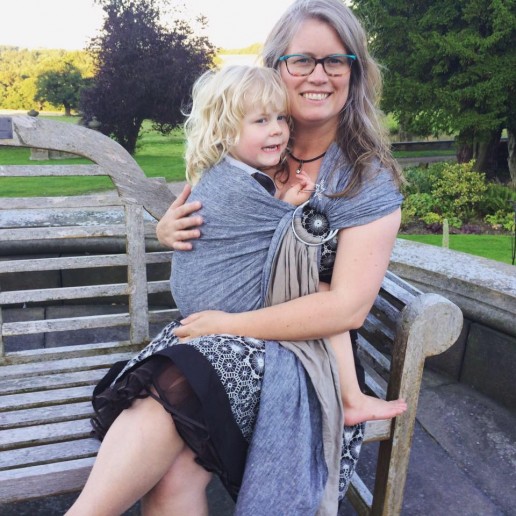
Ring Slings can be used facing out, with care
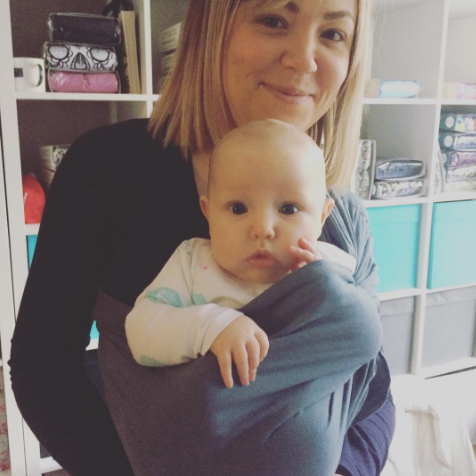
Pouches and Carrying Aids
Simpler than ring slings but very similar, pouches are “tubes” of non-stretchy fabric, usually cotton, which are folded in half along their length and then partly unfolded to make a deep pouch for baby to sit in.
You need the right size for your body shape for them to work well so they do need to be fitted, and used properly. They can be risky if used badly as it is very easy for a young baby to slip down inside the pouch and end up with the chin pressed forwards onto their chest or their face squashed against the parent. That said, once a baby is nearer four months or so with robust upper body control, pouches can be very useful for quick carries as they pack down so small.
Carrying aids are not technically slings at all, as they are not hands-free and the parent will need to support the carried child with one arm. These are things like shaped mesh cross body sashes that a child can ride on the hip (some of the weight borne by the opposite shoulder) or small shaped seats that are buckled around the parent’s waist for a child to perch on.
Buckle Hip Carriers
There are a few buckled hip carriers such as the Scootababy that support children fully and are hands free; many parents find them invaluable tools for getting on with daily life with a child held comfortably on the hip, where they usually tend to rest when in arms. They can be used for central front carrying and back carrying (with caution) and fit best from around 4months up.
Dad needs to keep a hand on baby's back for safety with this carrying aid
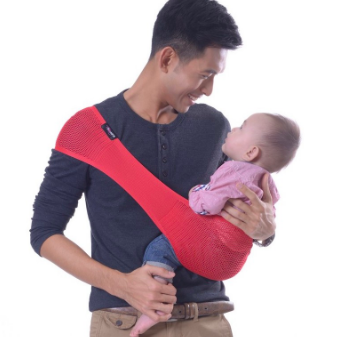
This hip carrier provides full back support
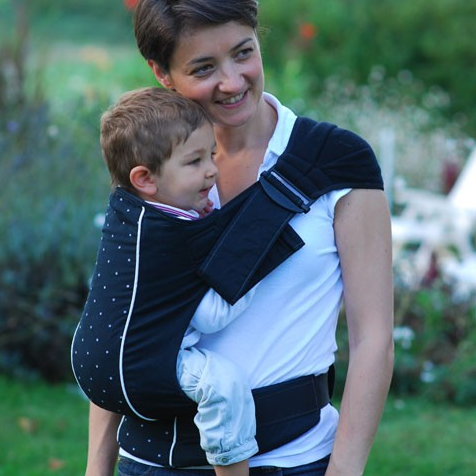
This photo (of a demonstration doll) shows the risk of low, horizontal cradle carries in bag slings and some pouches.
Please take great care if you are using any kind of reclined carry as it puts your baby’s airway at risk, it can push the chin onto the chest and restrict breathing.
Pouches MUST be the correct size for safety and are best used for babies over 3-4months.
If you would like to learn how to use a ring sling for your young baby in a semi-reclined position please get in touch with your local sling educator, who may be able to teach you how to do this safely. This video shows you one way to ensure baby is kept high in a semi-reclined carry with an open airway in a ring sling.
Unsafe, low, horizontal cradle carry in a pouch sling
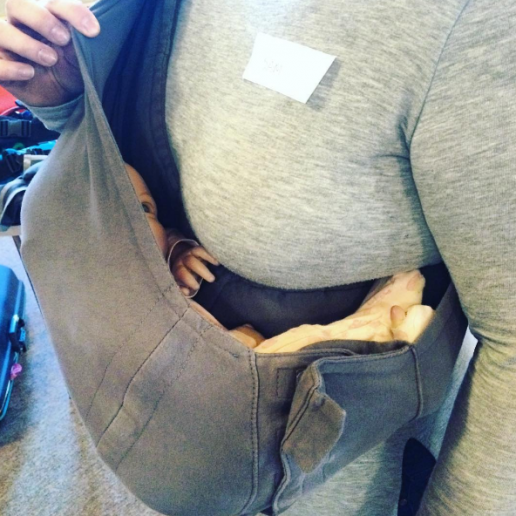
A careful, cautious, semi reclined ring sling carry
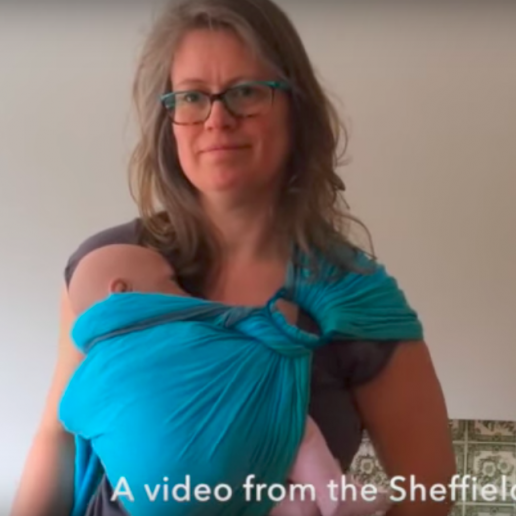
If you need some more support, please get in touch with your local sling educator.