
The importance of soft touch for healthy infant development
A huge amount of work has been done in recent years to understand the role of soft touch in how babies' brains develop. Here I summarise the major points in one page! It has been a great privilege to visit the Affective Touch conference in Liverpool and all the ACE-Aware Nation events in Scotland (with Nadine Burke-Harris and Gabor Mate) and to see all this research coming together.
 Soft touch changes the DNA and the brain
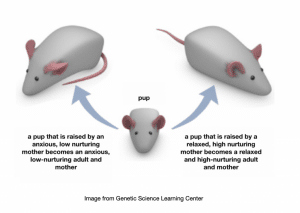
- it switches certain genes on and off, thus affecting cortisol receptor expression and therefore modulates the stress response. This was shown by Michael Meaney and his team; rat pups who were licked and groomed frequently by their mothers became high-licking mothers themselves. The DNA methylation of these high-licking rats and their offspring were different from low-licking rats. When a pup from a low-licking mother was fostered in a high-licking nest, this pup became a high-licker, and was found to display the same DNA changes. Behaviour had altered the expression of these genes, and these epigenetic changes persisted into the offspring.
- Soft touch reduces anxiety and pain, thought to be via effects on the HPA axis, parasympathetic system and oxytocin release.
- Deep pressure (as in hugs and massage) is also thought to play an important part in social touch, activating brain regions highly similar to those that respond to C-tactile stroking.
- Neonatal studies have shown the impact of soft touch (skin to skin) on improving long term neurodevelopmental outcomes, as they are thought provide a scaffold for the developing social brain.
- Soft touch and holding is know to help with regulating and stabilising cardiovascular parameters in premature babies and a good case for babywearing as a positive intervention has been made in a study in one NICU.
- There are positive long- term effects of supporting early mother-baby close contact. The "Family Nurture Intervention" studies suggest that at age 4-5, the intervention arm showed more healthy autonomic regulation
Soft touch also affects the hormonal systems of the body.
- Oxytocin is well known to be released by skin to skin tactile contact, as well as visual, auditory, olfactory stimuli, and works to promote further social interaction. Close contact stimulates release of this important hormone of bonding into both halves of the dyad (usually mother and baby).
- Oxytocin reduces stress and increases a sense of wellbeing and connection, and it has been proposed that regular skin to skin contact can shift the overall balance of the neurohumoral system away from sympathetic activation (stress, flight/fight) towards the parasympathetic/oxytocinergic system (calm and connection). With what we know about the effects of prolonged stress and cortisol release on health, this is encouraging.
It is clear that there are major benefits to the frontal closeness that babywearing in the early months and years can bring!
Further reading
Epigenetic programming by maternal behavior, Nature Neuroscience volume 7, pages 847–854(2004) Meaney et al
C-Tactile Afferents: Cutaneous mediators of oxytocin release during affiliative tactile interactions? Neuropeptides, Volume 64, August 2017, Walker et al
Pleasant Deep Pressure: Expanding the Social Touch Hypothesis Neuroscience, Aug 2020, Case et al
The Dual Nature of Early-Life Experience on Somatosensory Processing in the Human Infant Brain, Current Biology Vol 27 Issue 7, P1048-1054 Maitre et al
Babywearing as an intervention in the NICU Advances in Neonatal Care: September 29, 2020, Williams et al
Longer term effects of nurture on mother/child regulation Clin Neurophysiol Off J Int Fed Clin Neurophysiol. 2014;125(4):675-684, Welch et al
Why Oxytocin Matters, Kerstin Uvnas-Moberg, 2020
Neuroendocrine mechanisms involved in the physiological effects caused by skin-to-skin contact. Infant Behavior and Development, Volume 61, November 2020, Uvnas-Moberg et al

Top FAQS
These are the most common questions about babywearing I am asked, in a single helpful list!
Just click on the links to read the relevant blog posts, some are kindly shared from others
Firstly; some of my most popular articles:
Do the babywearing “rules” really matter?
Babywearing and infant mental health
Secondly, I get this query daily. “Can I use your infographics to support families?” ABSOLUTELY! Everything on this website was created to help families with children to feel close and connected. Please credit me appropriately and link back to my website/social media (facebook, instagram)
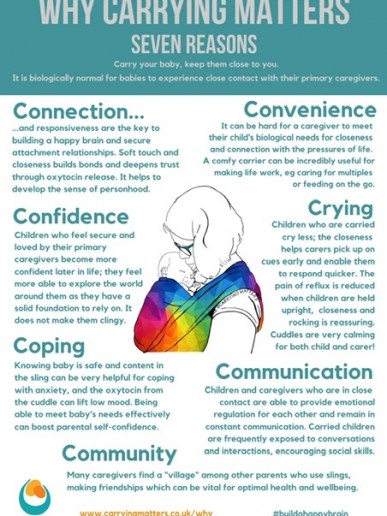
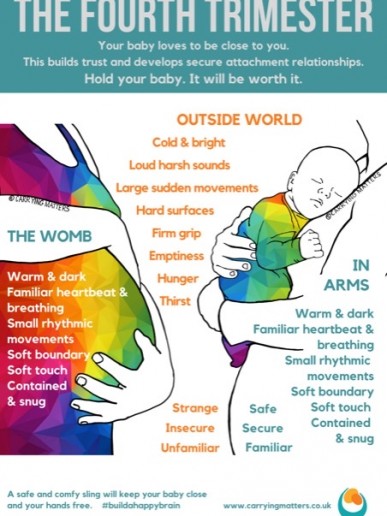
Here is the link to the infographics (eg the Fourth Trimester/Build a Happy Brain/Why Carrying Matters/Skin to Skin posters, safe carrying images and much more)
Here is a search box to help you find what you’re looking for.
Getting started, and learning the basics
What kinds of sling are there and how do I use them? (links to the major types with useful guides, videos and troubleshooting)
How do I keep my baby safe in the sling?
Babywearing with a Newborn
What are the benefits of babywearing for my baby?
Are there any benefits for me too?
What are the best newborn sling options? (Coming soon)
How soon after birth can I carry my baby and what if I have had a Caesarean Section?
My baby’s head is so wobbly in the sling!
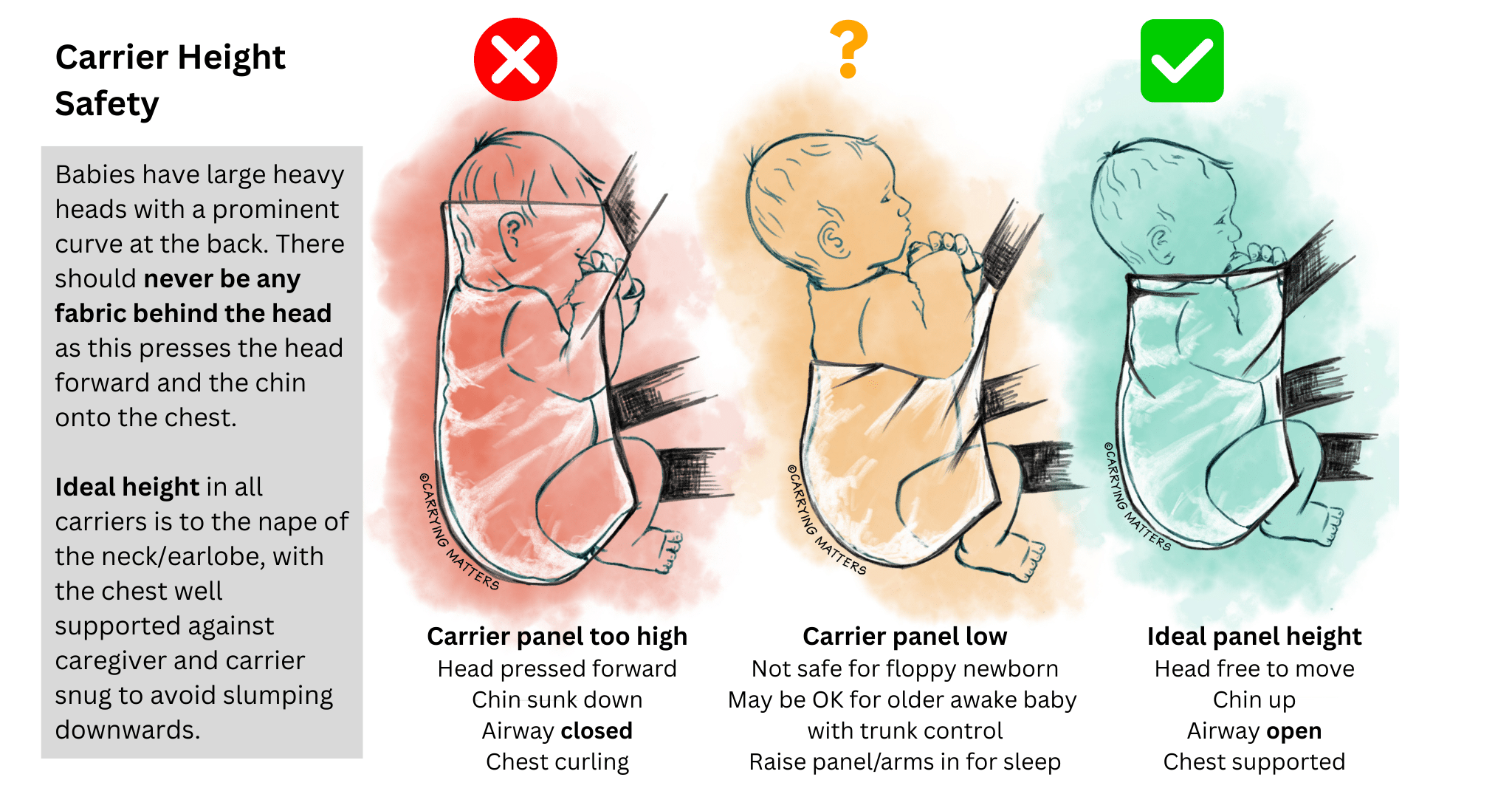
How high should my carrier be?
Can I carry my premature baby?
How do I protect my postnatal pelvic floor and babywear?
What about if I have a prolapse? (Thanks to Forest of Dean Slings)
Help! My child cries in the sling!
Does babywearing help my mental health?
Are slings useful if I have a perinatal mental health challenge?
Carrying in different circumstances
Can I sleep while my baby sleeps in their carrier?
How do I carry more than one child at a time?
How can I carry safely in hot weather?
How do I keep my baby warm while carrying in the cold? (ie can I put them in a snowsuit?)
How do I keep myself and baby dry when babywearing in the rain? (Coming soon)
Carrying adopted or foster children
What if my child has a disability? See this link for a stories from families living with a range of specific conditions.
Common safety queries
Will my sling hurt my baby’s hips?
What if I fall while babywearing? (Coming soon)
Skin to skin contact brings long lasting benefits
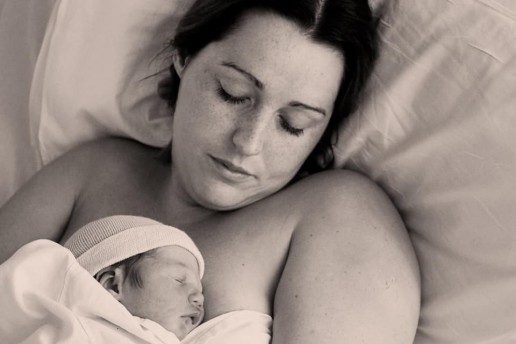
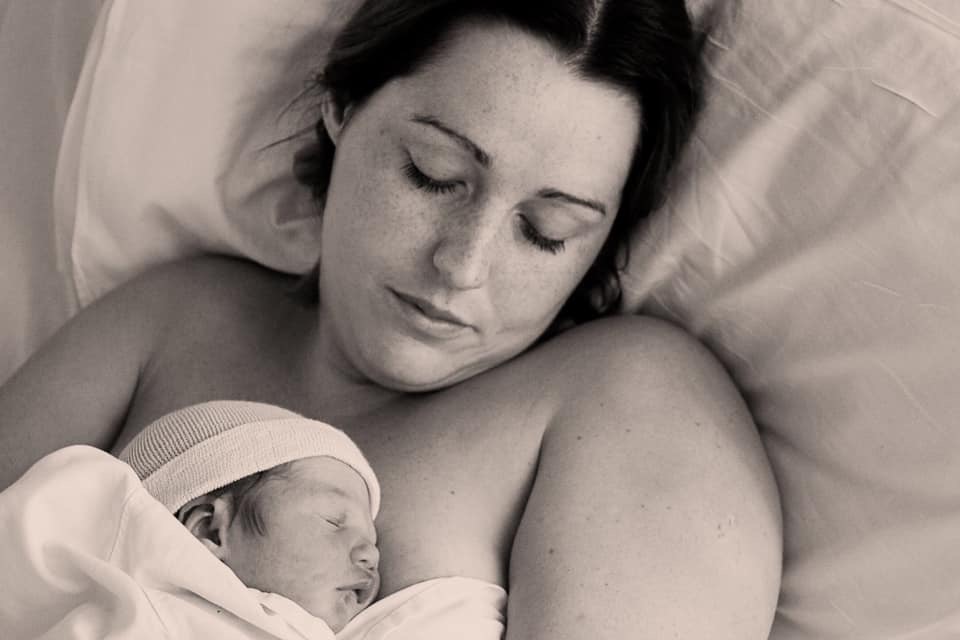
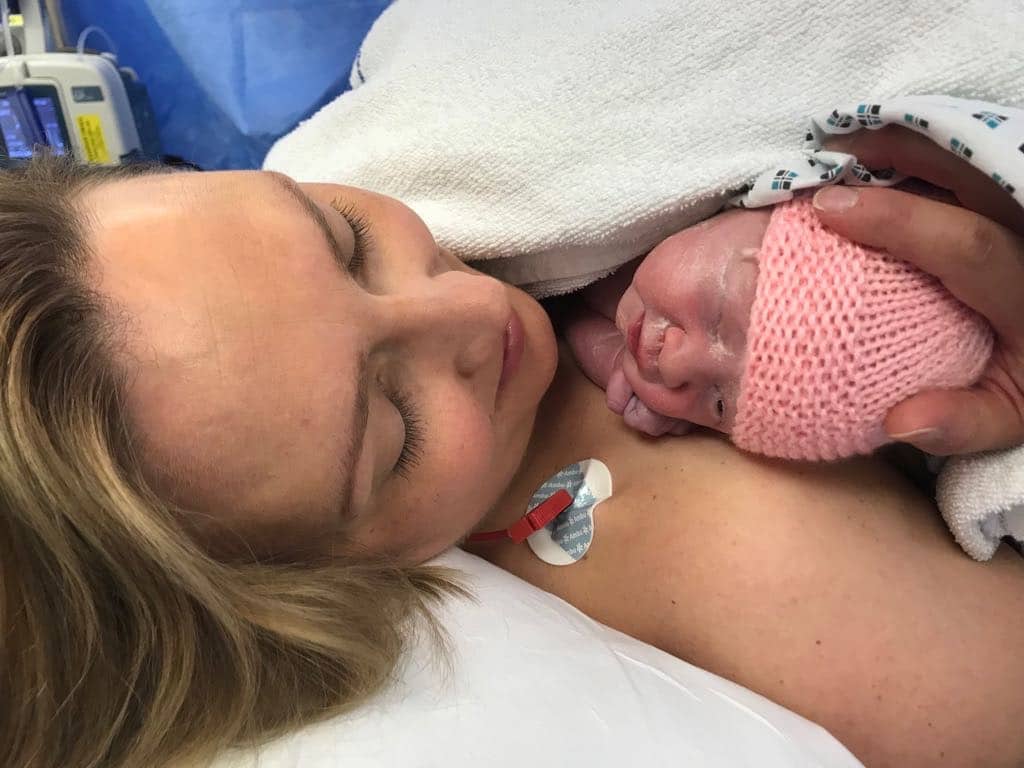
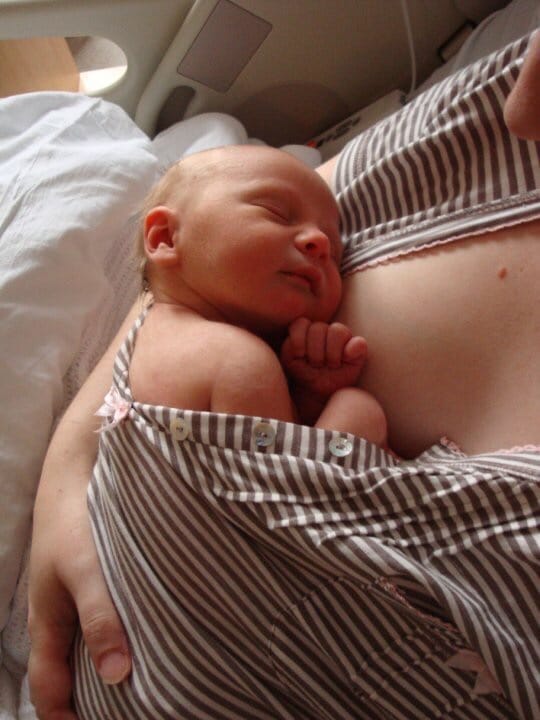
Skin to skin contact, also known as "kangaroo care", is one of the simplest yet most effective practices to help babies and their carers make the transition to life as a new family, supporting the development of essential bonds.
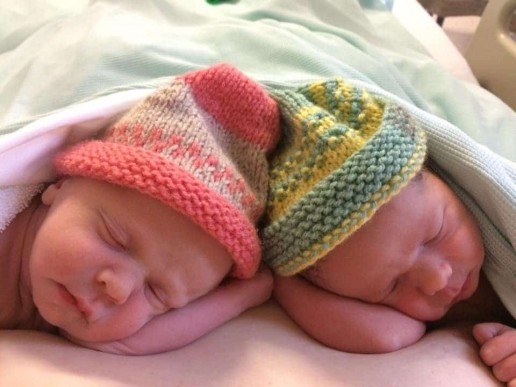
It is a major part of helping the baby to adjust to life outside the womb; the “fourth trimester” concept, and is highly important for supporting mothers to initiate breastfeeding and for carers to develop a close, loving relationship with their baby.
What exactly is skin to skin?
Here is the Unicef definition.
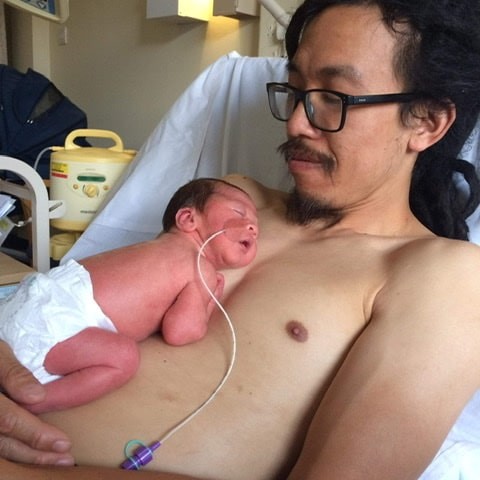
It is usually referred to as the practice where a baby is dried and laid directly on their mother’s bare chest after birth, both of them covered in a warm blanket and left for at least an hour or until after the first feed. Skin-to-skin contact can also take place any time a baby needs comforting or calming and to help boost a mother’s milk supply. Skin-to-skin contact is also vital in neonatal units, where it is often known as ‘kangaroo care’, helping parents to bond with their baby, as well as supporting better physical and developmental outcomes for the baby.
Why does it matter?
Outcomes for babies and their parents are better when kangaroo care is offered, especially with premature or low birthweight infants. A collection of studies examined outcomes for mothers and healthy newborns and concluded that there were clear benefits for physiological development, breastfeeding outcomes, emotional wellbeing. Other studies are helpfully summarised here, showing enhanced bonding and attachment, and likely a direct impact on infant development by contributing to neurophysiological organisation and an indirect effect by improving parental mood, perceptions, and interactive behaviour.
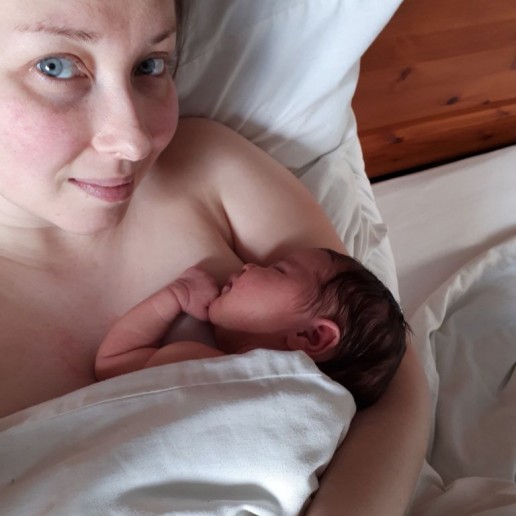
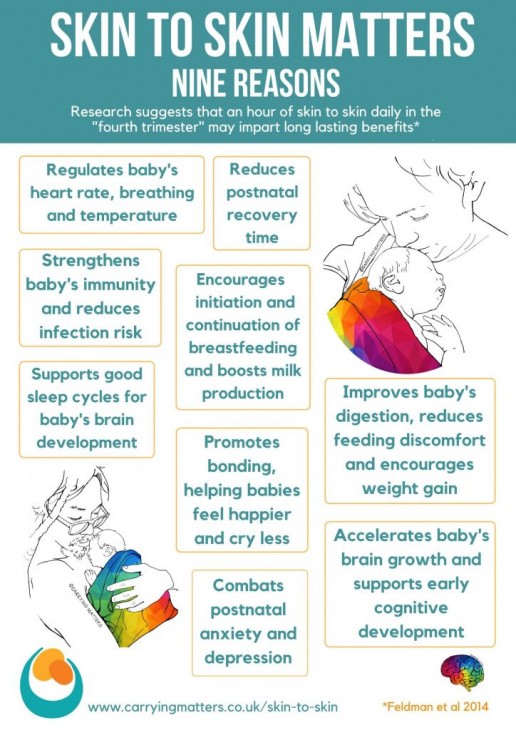
The major benefits of skin to skin care can be summarised in these images (thanks to Vija UK).
How is this thought to happen?
At birth, the neonatal brain has two critical sensory needs; smell and contact that is warm and soft. (Dr. Nils Bergman). Frequent skin to skin contact meets these needs in abundance, allowing the brain and the body to begin the process of adjusting to the outside world optimally, forging a pathway from the baby’s amygdala to its frontal lobe. This connects the newborn’s emotional and social brain circuits. Mothers also need early uninterrupted contact with their babies to fire up their hormonal response; that is, the release of oxytocin that helps breastfeeding and bonding to get going. Oxytocin and soft touch build connection and empathy, helping people to connect and care about each other. Studies suggest that an hour a day of skin to skin in the first 14 days is enough to derive long lasting benefits.
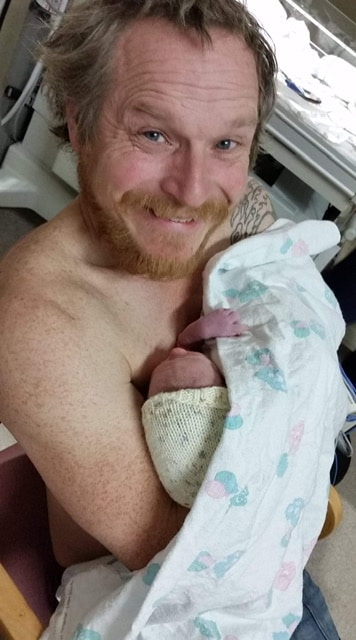
The mother’s body remains the baby’s natural home for many months after birth, and a policy of zero separation at birth is ideal for creating the conditions that allow new families to thrive. Fathers (and other primary caregivers) also benefit from skin to skin contact and this should be encouraged.
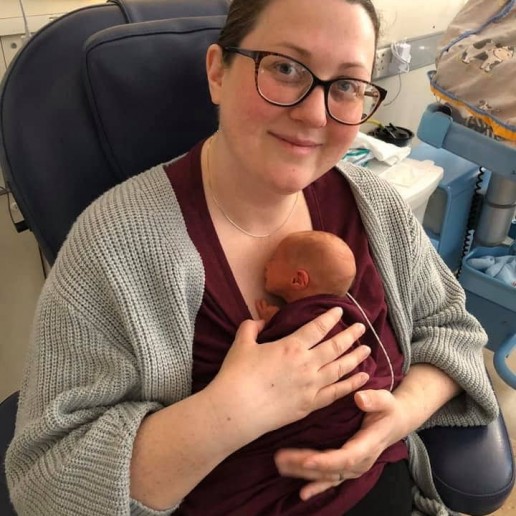
The impacts of this early contact are long lasting. Feldman et al in 2014 showed that kangaroo care “increased autonomic functioning and maternal attachment behaviour in the postpartum period, reduced maternal anxiety, and enhanced child cognitive development and executive functions from 6 months to 10 years.”
Skin to skin is clearly a fantastic thing; and the best thing about it is that the close contact in the early hours, weeks and months is normal human instinctive behaviour. It is free and effective; and should be available to all new families.
Simple wraps or specialised “kangaroo care” shirts can offer a more prolonged time skin to skin, and allow a parent/carer to move around, however it is the close contact itself, not the tool, that matters here!
What if I couldn’t do skin to skin with my child?
Not every parent/carer has the opportunity to experience skin to skin, for a wide range of reasons. This can be a source of sadness and concern, however, there are many ways to bond with your baby and help them to form secure attachments. Skin to skin is one very helpful practice, but it is not essential for relationship forming.
Your ability to bond with your baby is not determined by your birth experience, whether or not you were able to offer kangaroo care at birth or later, how you feed your child or where they sleep. It doesn’t depend on your gender or your family set-up. Relationships form by experiencing a sense of connection and love. Children learn how to love by being loved. Playing, talking, cuddling, snuggles, reading to your baby, bathing them, being responsive and present are the things that matter.
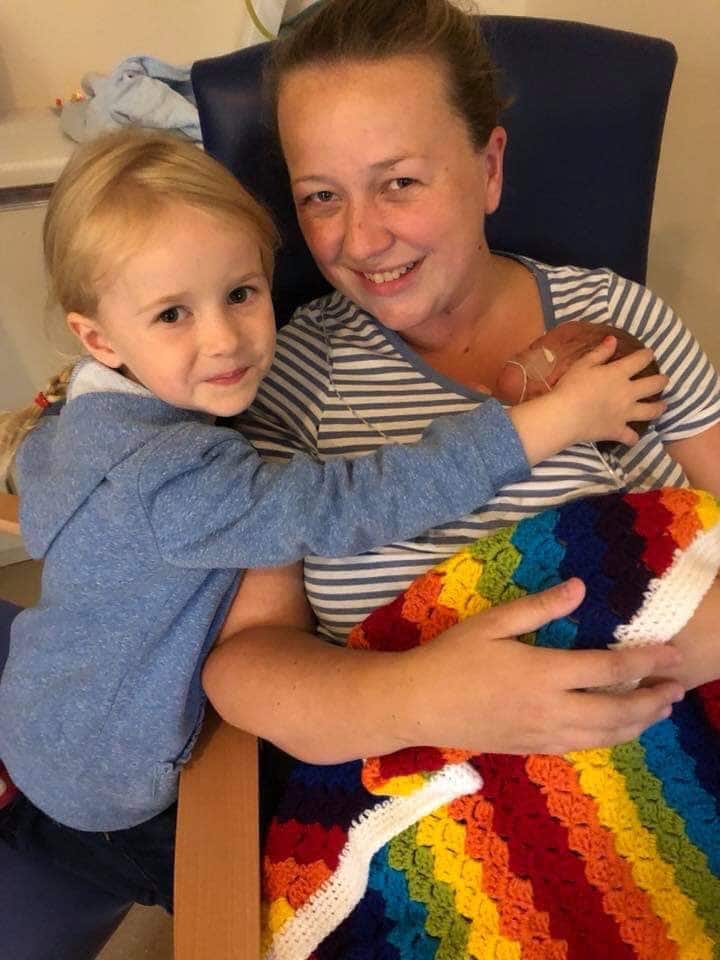
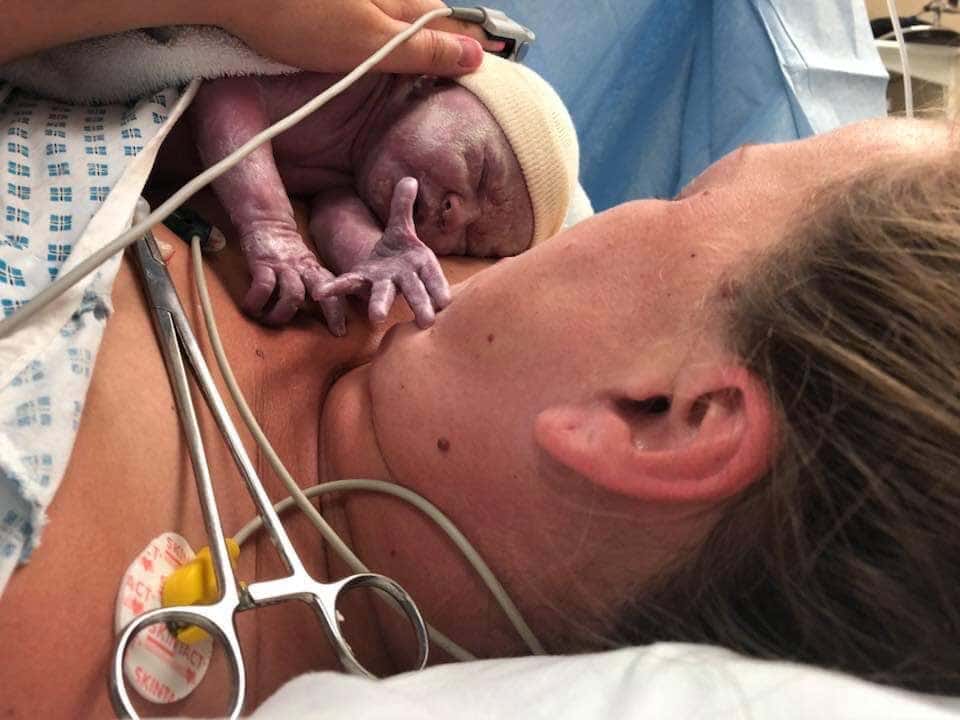
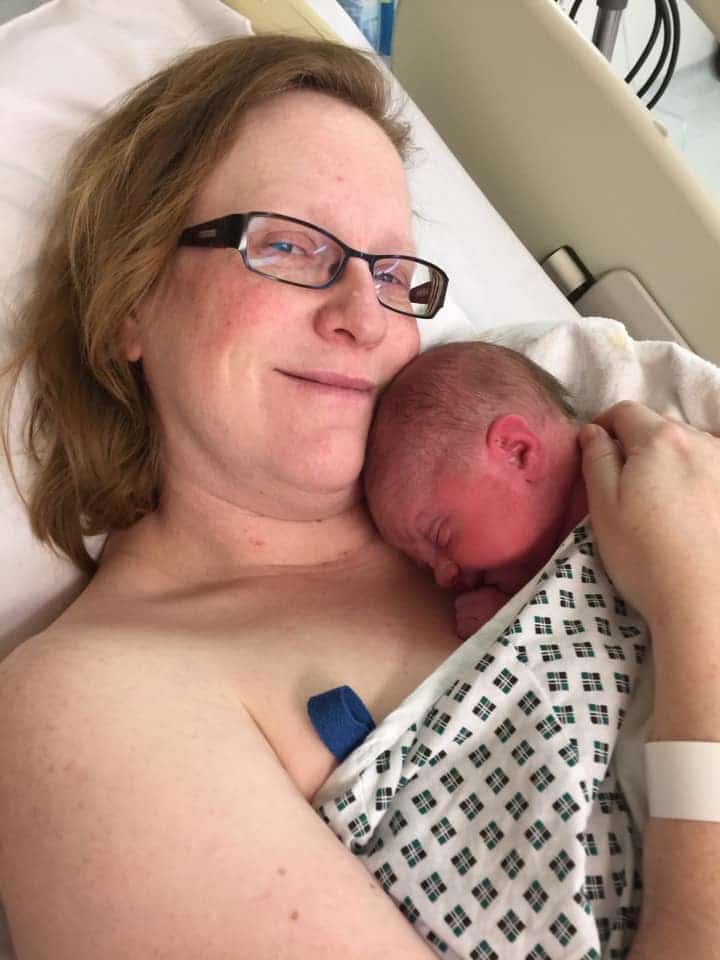
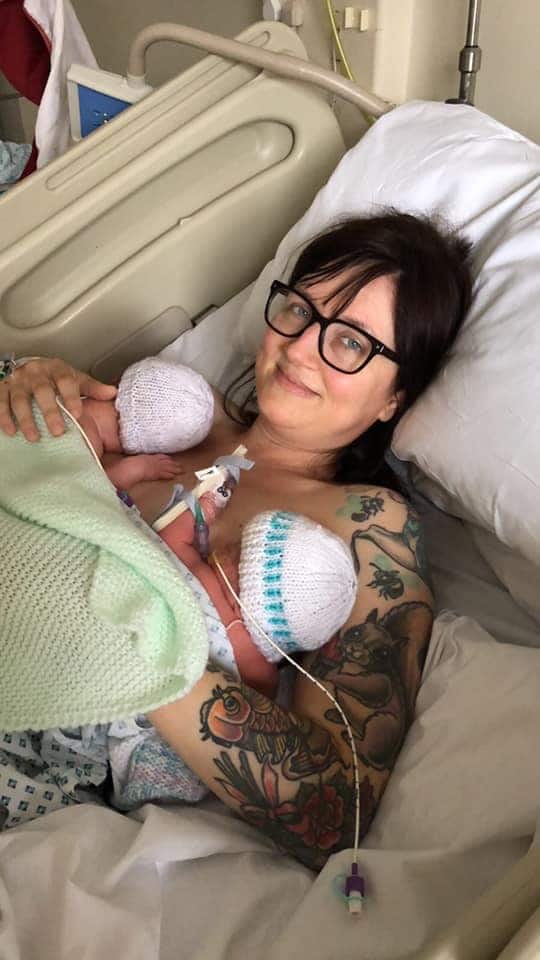
Encouragement and Affirmation Cards
Parenting is tough; modern society does not make it easy for families. Parents and carers are often bringing up their babies feeling isolated or uncertain and in need of support and encouragement. These little cards are designed to lift you and help you to keep going with your responsive parenting journey; it will all be worth it.
Read more about why infant mental health matters here and how babywearing can help the formation of the mother-infant-dyad here.
Scroll through the images and let us know which is your favourite, or if you have ideas for more!

Congratulations
You've been carrying your baby for one whole year!
The close contact has connected you to each other and helped your baby's brain to grow. Hopefully it has brought you many happy adventures together and been useful in many ways: sleeping, feeding, travelling...

There is a lot of evidence to show that babies need to be close to their primary caregivers in the early months and years of their lives. This shared space creates an intimate connection between the two individuals that builds lasting bonds; and these bonds can shape your child's future. It may well have helped you too, to survive the challenges of parenthood.
Choosing to carry your baby has been one of the most important things you could have done for your family unit. I congratulate you for that and encourage you to keep going!
If you'd like to download this for yourself or to give to a friend or someone you know, here is the link to the PDF.
Babywearing Training
Do you love babywearing and want to know more about it, or be able to support others with their sling use? Then a training course could be just what you need!
My courses
I am unfortunately no longer able to provide the in-depth peer supporter and consultant training that I have done for many years, due to my own increasing NHS workload and other responsibilities. These courses have always involved face to face, hands-on training, this face to face component has always been of paramount importance to me. I have loved the part I have been able to play in this industry for over 15 years - I believe that all parents should have access to information about safe and comfortable babywearing as part of the standard antenatal and postnatal care offered to them by statutory bodies.
This is why I am creating a babywearing safety and signposting course focused on those working with new parents (particularly in the health and social care sectors). This course is designed to give people a good understanding of how baby carriers work and how to support families to keep their babies safe in these carriers and is a mixture of theory and simple practical.
My theory and safety course is a good option for those who wish to understand more about safe sling use but will not be actively advising families. More about both can be seen below.
Carrying Matters Affiliated Peer Supporter Trainers
I work with and offer support and mentorship to other Peer Supporter trainers in different parts of the country, who can offer PS courses that are of high quality and involve the vital face-to-face training that I believe is key to ensuring the health and well-being of young babies when being carried.
Please see here for more information about affiliated trainers and their contact details.
I am hopeful that one of my colleagues will be offering similar excellent in person peer supporter training in person in Sheffield later in 2026.
The Building Bonds Project is going strong with the recent grant from the National Lottery (providing access to babywearing support and high quality carriers to families in need) - I remain very involved with this, and I am always happy to offer advice and guidance from my experience - please feel free to get in touch with queries.
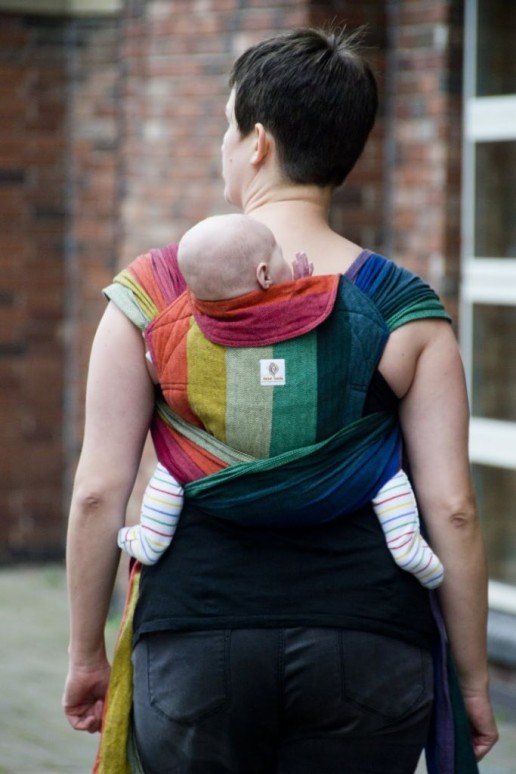
Babywearing theory and sling/carrier safety – online course, £49
 This online course is a comprehensive introduction to babywearing theory and safety, which will give an excellent grounding for becoming an advocate for carrying behaviour and how slings can help promote health and wellbeing. It is a deep exploration of the science around connection, child development, infant mental health, anatomy, physiology, psychology, sociology, neuroscience, anthropology and more! It also provides a brief introduction to the major types of carrier.
This is open to everyone, and can be completed at your leisure. There are short tests of your knowledge as you proceed through the course and a final assessment to complete the course for a certificate of online learning.
- This will suit many people who wish to enhance their knowledge and understanding, become evidence-based babywearing advocates, be able to signpost to local libraries with more confidence, and are not planning to offer in-person support to families on a regular basis.
- This course is not timed, and can be done at your own schedule and to your own pace.
- Please be aware that this course is not a Peer Supporter or Consultancy course and the certificate cannot be presented as such.
- This course is not sufficient on its own for anyone planning to offer any form of movement classes with babies in slings.
Structure of the course
- Why Carrying Matters – the science.
- Introduction to Basic Babywearing Safety.
- The Different Types of Slings And How To Use Them.
- Assessment Module (to confirm learning)
Sling and Carrier safety and signposting course for organisations working with parents – hybrid online and practical course, TBC
 This hybrid course is a combination of an adapted introduction to babywearing theory and safety course, exploring how slings can help promote health and wellbeing, alongside a thorough look at the key features of keeping babies safe in slings and carriers and how to recognise and avoid risks. It also provides a brief introduction to the major types of carrier via video, and there are quizzes to assess understanding. This is followed by a practical session to see good carrying in action, discuss how to check carriers for use, practice identifying suboptimal positioning and learning how to engage families in conversation. You will learn how to give general advice, answer common questions from parents (eg feeding, sleeping, temperature, facing out, duration of sling use etc) and how to signpost to appropriate services who can offer in person support and fitting.
This course is particularly suitable for organisations who work with antenatal and postnatal families, wishing to be able to offer basic safety advice and are not planning to offer in-person one to one support to families with their own slings.
- Please be aware that this course is not a Peer Supporter or Consultancy course and the certificate cannot be presented as such.
- This course is not sufficient on its own for anyone planning to offer any form of movement classes with babies in slings.
Structure of the hybrid course
- Online – Why Carrying Matters – the science about why using slings is so beneficial for families
- Online – Basic Babywearing Safety
- Online – The Different Types of Slings
- Online – Assessment Module (to confirm learning)
- Half day in person training with a Carrying Matters trainer to consolidate learning
- Assessment MCQ to assess competence, if passed, will be issued with a certificate of learning.
Peer Supporter Course
I am training one of my colleagues to offer a high quality face to face Peer Supporter course in Sheffield from Summer 2026. Please do get in touch if you wish to register interest.
Please see the list of affiliated Carrying Matters trainers for other options in alternative parts of the UK
Feedback
“I really enjoyed trying different carriers. I found the trouble shooting sections particularly interesting and fun. I learnt a lot and feel more confident with all carriers and especially with how to wrap a new born.
I really loved it and now want to do the consultant training even more. Rosie was clearly very enthusiastic and dedicated and made everything so interesting. She was pretty inspiring.”
“Everything I had hoped for was met, I feel like a peer supporter now, not just someone who loves slings!”
“Rosie was born to teach people. Simply fantastic in the way information was relayed. Would highly recommend.”
“The whole day was so good! A key element was the ability to see and try so many different types of slings and to have time to go through basic principles regarding how to use them all. The role play aspects where we were able to troubleshoot carrier problems was also very useful.”
“Hi Rosie, I couldn’t go to bed without sending you a note to say a huge thank you for the course today. I’ve never felt more included and welcome and I’m so thrilled I came along. Thank you for your hospitality and brilliant teaching, I’m raving about babywearing to my husband and cannot wait to volunteer at a meet soon.”
“I loved the content of the day, the discussions, playing with different slings, learning new ways of slinging, wrapping etc. The course was well run, well organised and I felt empowered to speak, share and question.”
“I feel much more confident in my knowledge of both the benefits of babywearing, and how to go about enabling parents.”
“I really enjoyed meeting other like minded people. I liked the theory of babywearing as it related closely to the work I do as Breastfeeding Lead in the NHS. I enjoyed trying all the different slings and carriers and understanding in what situations they would be used.”
“My personal learning aims were met, it exceeded my expectations. I found the course was extremely enjoyable and covered so much subject matter but was not overwhelming. My aims were well and truly met. I now believe I could give a new babywearer good/correct advice and help in ways I was unsure about prior to the course.”
“Having someone with your experience and knowledge available all day to ask questions and watch demo was incredible. I really enjoyed the contextual and historical information about Babywearing and what led us all into that room that day. It put everything into the ‘bigger picture’ and made me feel such a part of the huge Babywearing community. Having such a massive amount of slings in the room to try and compare was utterly invaluable – such a rare opportunity. I thought the balance between practical and theory was absolutely spot on. As someone who’s very interested in the sociopolitical aspects of Babywearing I was really pleased to see this covered in the course and really appreciated that you placed Babywearing so firmly in this context during the day.”
“The course really opened my eyes to consider the needs of individuals and how essential it is to be inclusive and approachable and gave me the tools to do this confidently (especially regarding narrow base carriers). It was useful to be shown how to exaggerate movements and words when teaching and to have the opportunity to practice this. Rosie’s enthusiasm was infectious and made the whole day very engaging. The size of the group worked well and I especially enjoyed how well we all got on.”
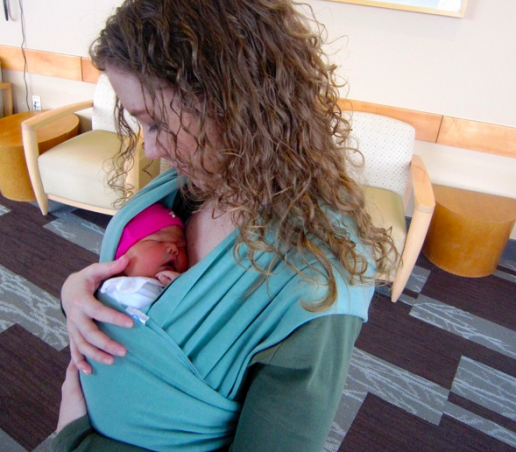
Slings and Adoptive and Foster Families
We all know how vitally important it is for children to build secure attachments with their primary caregivers, both for a sense of security and belonging now and in the future. It is much harder for this supportive relationship to develop when the primary caregiver has difficulties of their own, and when children need to be taken into care. The adverse experiences being endured by children in these circumstances have been shown to have a long term effect on future mental and physical health
This page collects some of the most useful writing on the topic of sling use among adoptive and foster families.
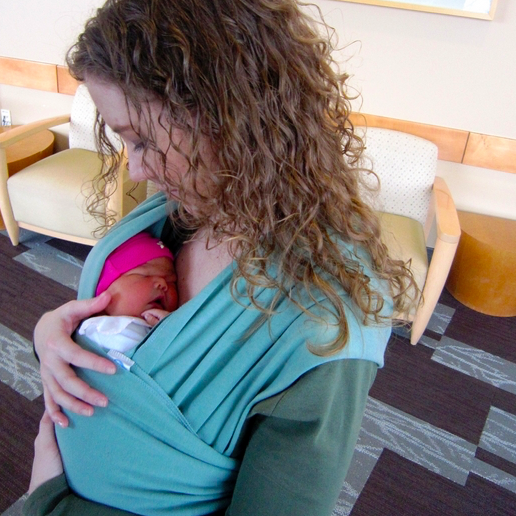
Adoptive and foster parents will know that their children need all the love they can give; and a sling can play an useful part in building these bridges amidst the turmoil. The biochemistry of creating a secure attachment is not a conscious process, or one that depends on ancestry; the release of oxytocin and the down-regulation of the stress response that happens with consistent, close and loving contact happens in the background.
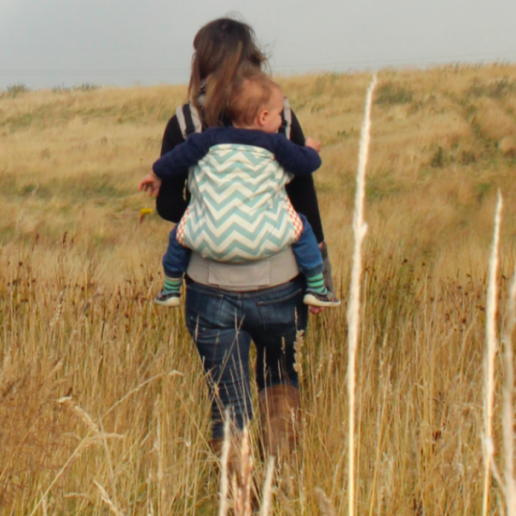
There are many other benefits in terms of language acquisition, socialisation, and also helping children to learn which of the adults around them are their primary caregivers.
Sue, a foster parent in the South, is a strong advocate of using slings as part of her care.
“Many of the babies who we care for have been exposed to either drugs, alcohol or domestic violence whilst in the womb. Carrying them has, without doubt, enabled them to develop into calm, sociable, happy, securely attached babies who meet (and often exceed) their developmental milestones.
Babies who have been neglected for the first few months of life can be very wary of people and situations. By carrying them they learn more about the world from a position of safety. They take cues from watching our faces and learn to trust people and situations more more quickly.
Using carriers when introducing babies to their adoptive parents show the babies that this is someone to be trusted. Only I carry the baby in a sling whilst they stay with me although many other people hold them. However from the first day of introductions the adoptive mother wears the baby in my (the baby’s) sling. I believe this shows the baby that Mummy (or Daddy) is a special person which enables the attachment to switch between us. “
“Children with disrupted attachments are often indiscriminate in who they seek to have their needs met by. Children should always be guided back to their parents by family and friends if they are approached by the child particularly for food and nurture. This process is called funnelling and is extremely important in giving a clear message to the child about who their primary caregivers are. A sling or carrier could be helpful in this process, reducing indiscriminate attachment seeking behaviour and discouraging over-enthusiastic family and friends from picking up and nurturing the child.” Carrying the Connection
This blog post from Slings and More (based in the North East) assesses the science behind how slings can help adoptive and foster parents to build secure attachments.
“Foster and adoptive families have an immense role in helping to form strong attachment bonds with the children they look after and to help those children who do not have strong attachment bonds to begin to form them.”
This is a personal account of a mother’s experience of using slings as she adopted a little girl.
Her father told her: “You two should have some time alone. She needs to learn your smell and the sound of her mama’s heart.”
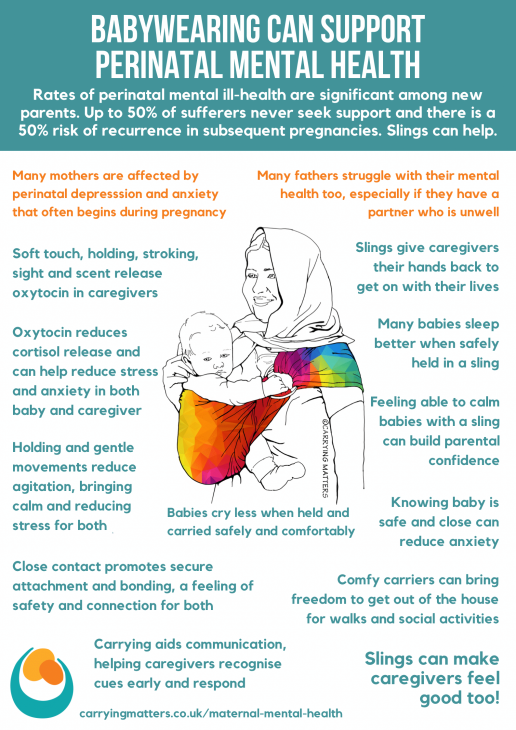
Perinatal mental health challenges can be very real for adoptive parents too, and slings can be enormously helpful for all shapes and structures of family unit.
Educational Resources
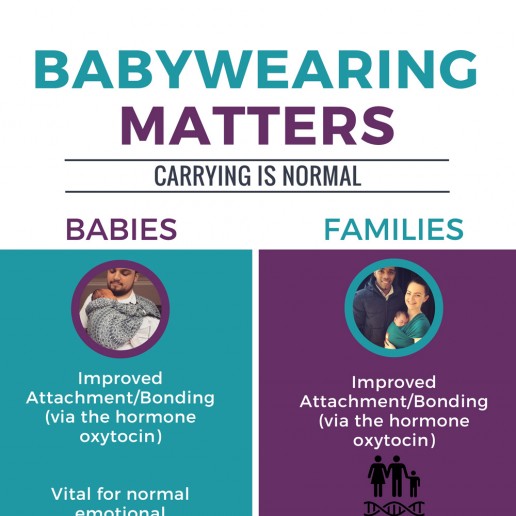
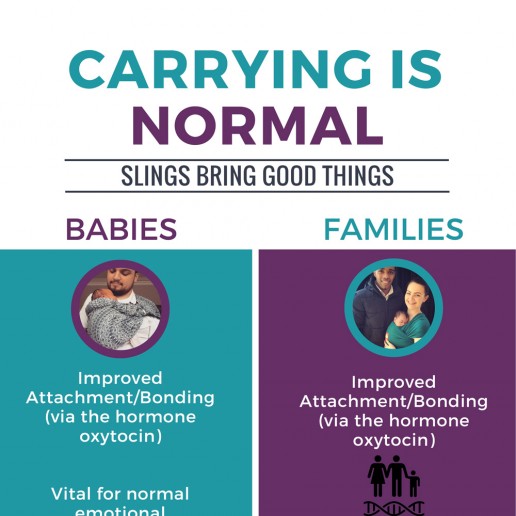
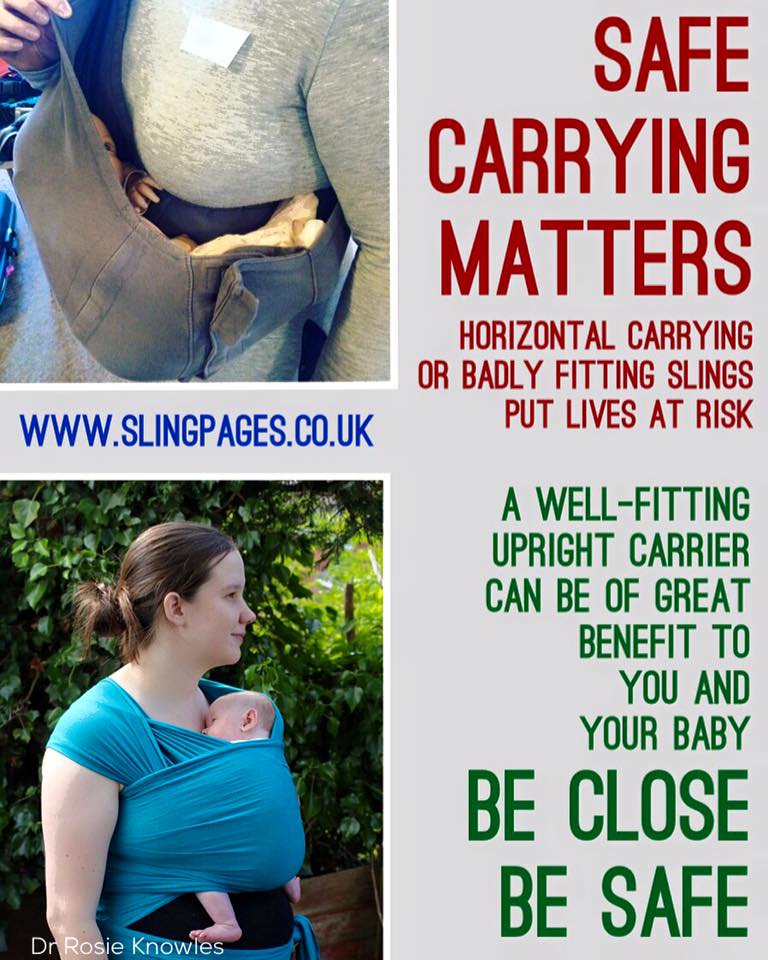
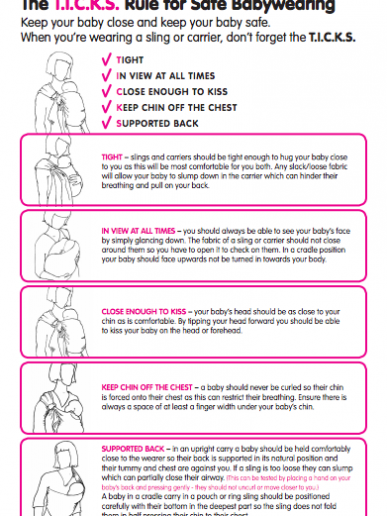
This page contains various resources that may be useful for education and supporting others. Leaflets, posters and postcard packs can be purchased. Images and PDFs can be downloaded free of charge by clicking on the photos. Please ensure you credit me (Dr Rosie Knowles) if you use them.
Safety Resources
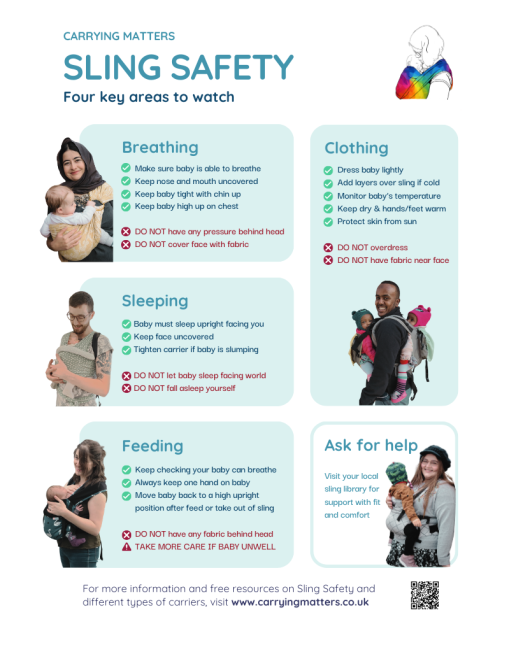
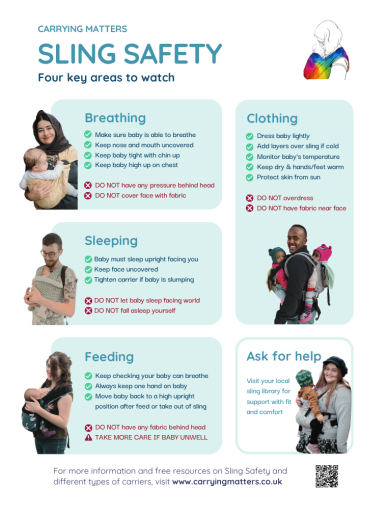
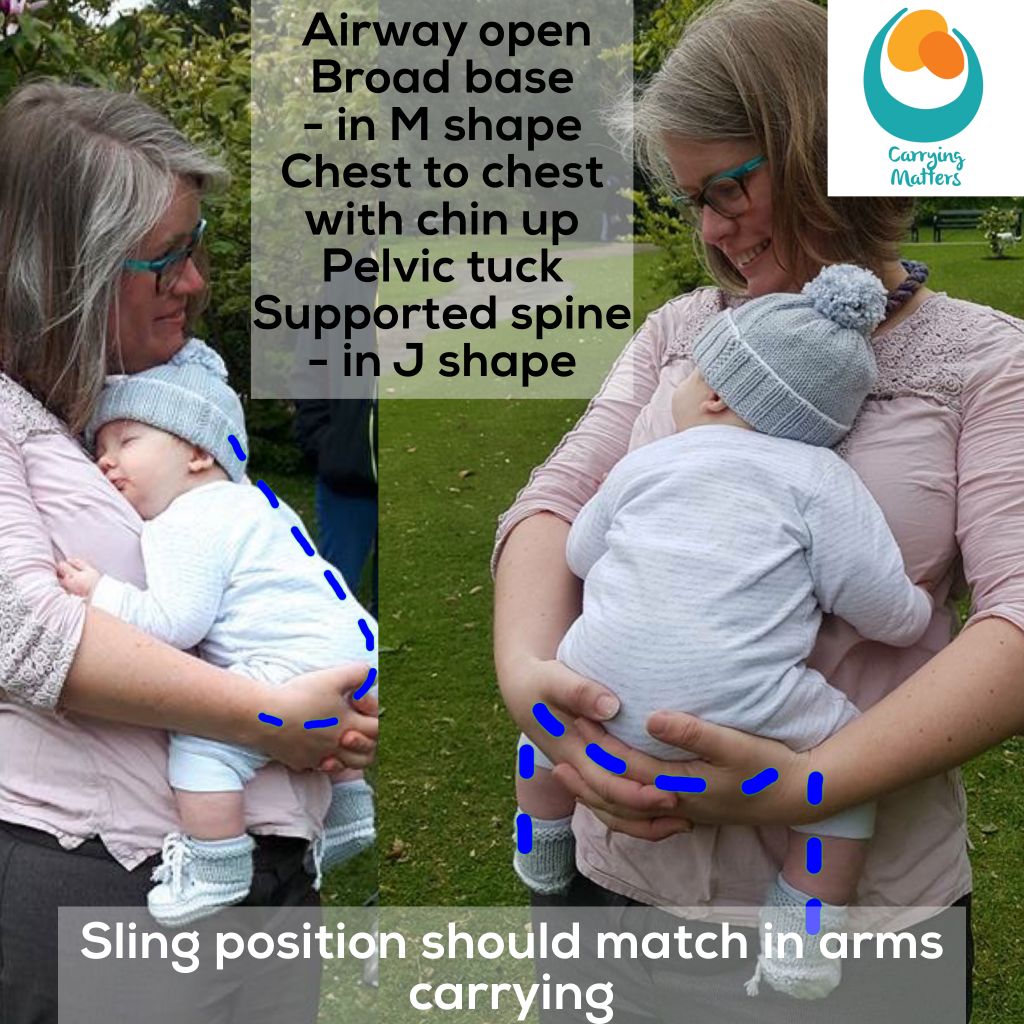
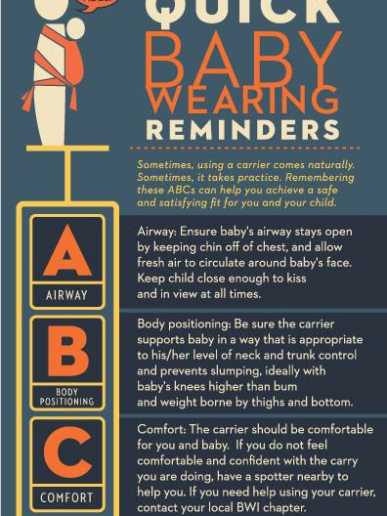
- The 4 Key areas webpage can be found here – this has links to translations into other languages.
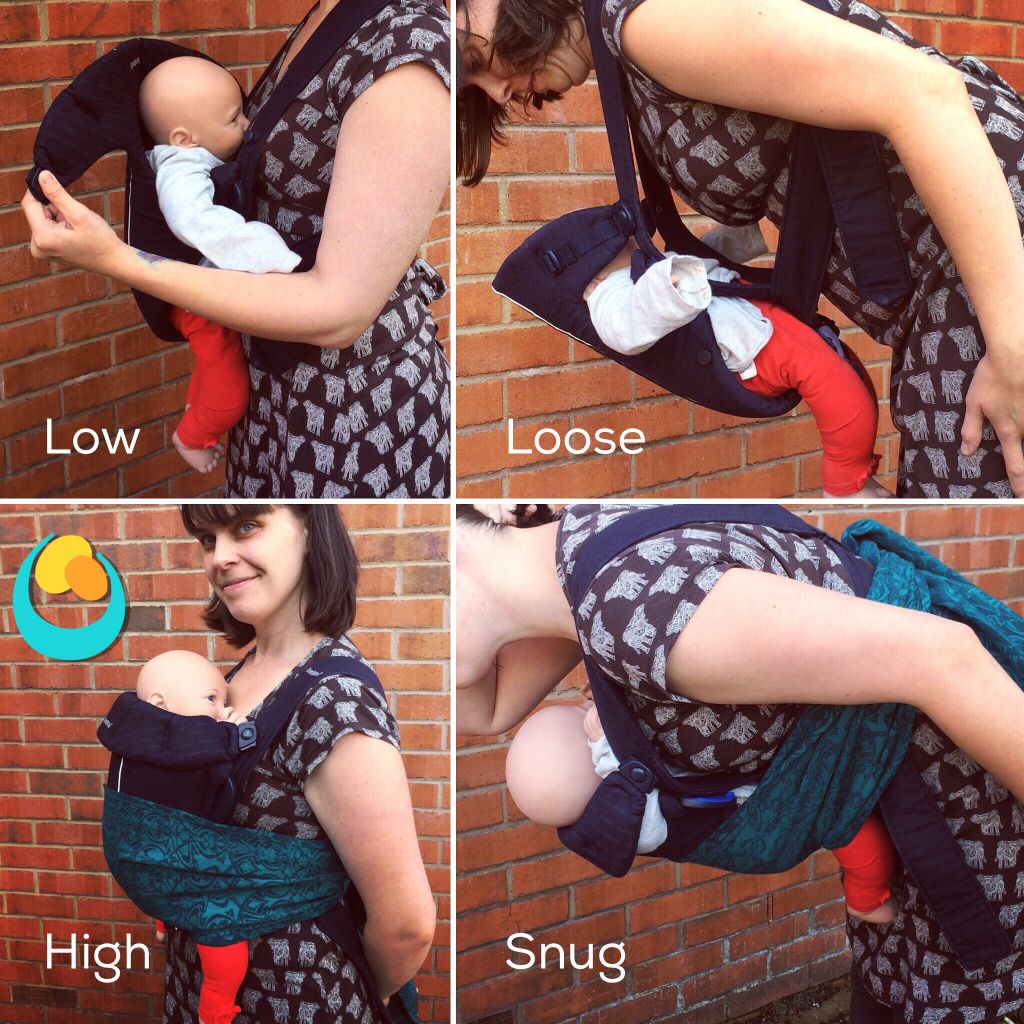
- The Carrier Height webpage is here – the image can be found lower down on the page.
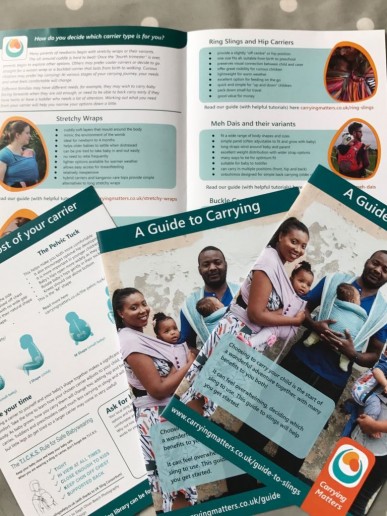
Click on the image to download a PDF, or order a pack of high quality printed leaflets using the button below.
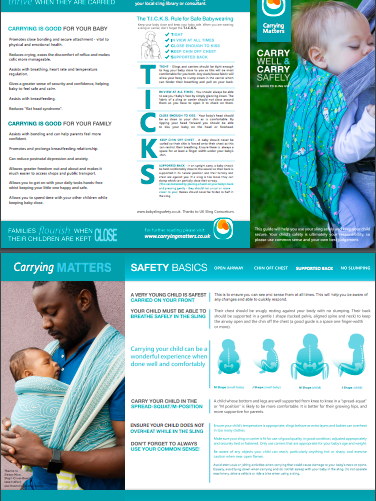
Click on the image to download a PDF, or order a pack of high quality printed leaflets using the button below.
Click on the image to download a PDF, or order a pack of glossy postcards or posters using the button below.
Click on the image to download a PDF, or order a pack of glossy postcards or posters using the button below.
Click on the image to download a PDF, or order a pack of glossy postcards or posters using the button below.
Click on the image to download a PDF, or order a pack of glossy postcards or posters using the button below.
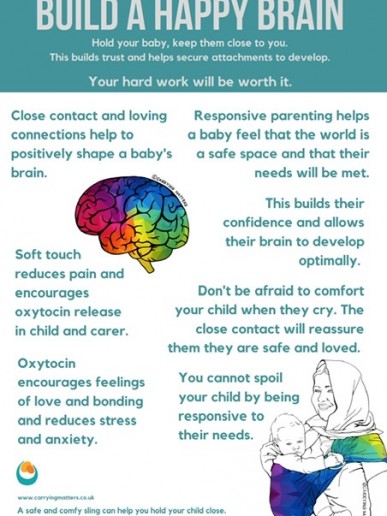
Click on the image below to download a PDF, or order A3 posters using the button below.
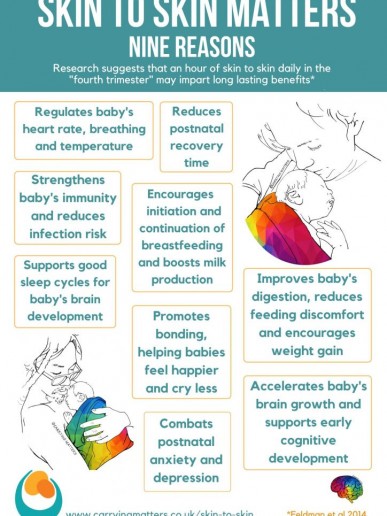
Click on the image to download a PDF, or order A3 posters using the button below.
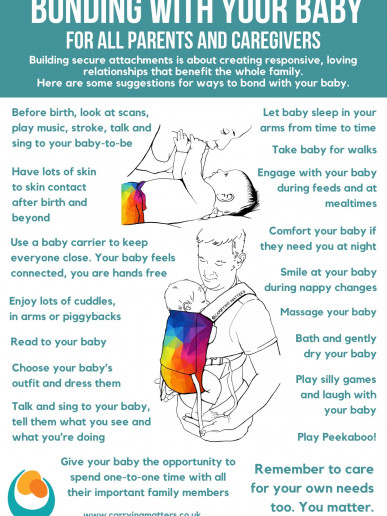
Click on the image to download a PDF, or order A3 posters using the button below.
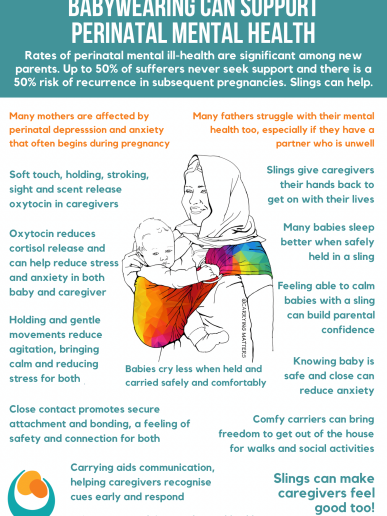
Click on the image to download a PDF, or order A3 posters using the button below.
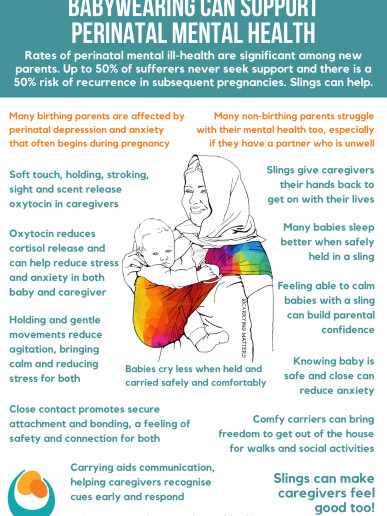
Click on the image to download a PDF, or order a pack of posters using the button below.
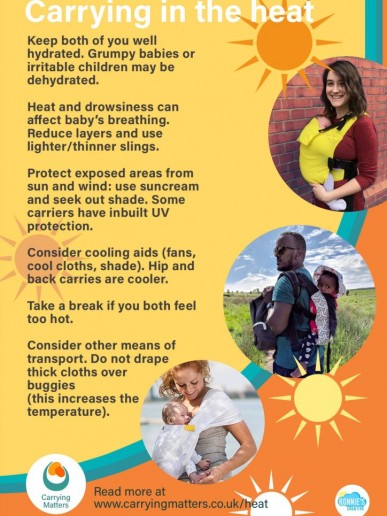
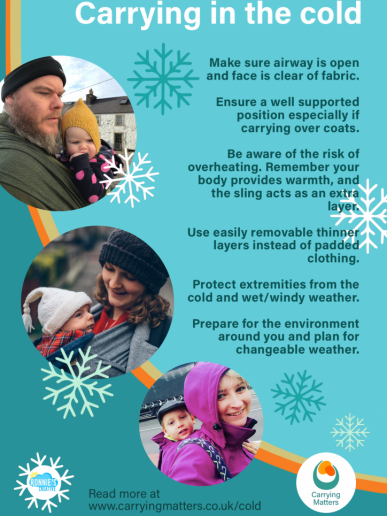
Click on the image to download a PDF, or order a pack of posters using the button below.
Read Rosie’s well loved Why Babywearing Matters book here, published by Pinter and Martin.
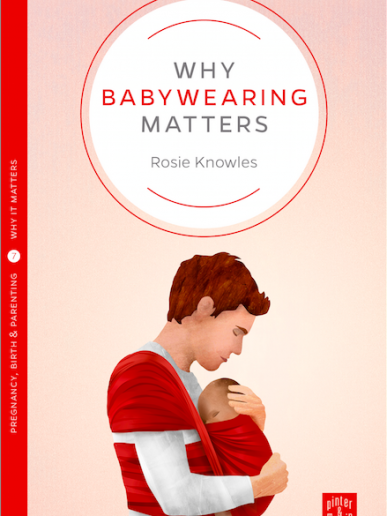
Read Rosie’s well loved Why Babywearing Matters book here, translated into Polish by Lenny Lamb.
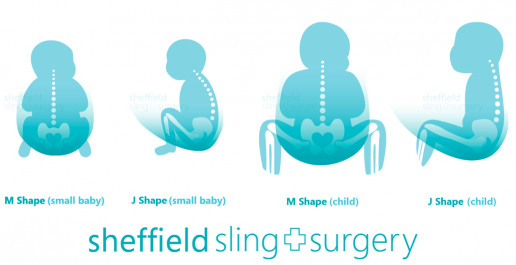
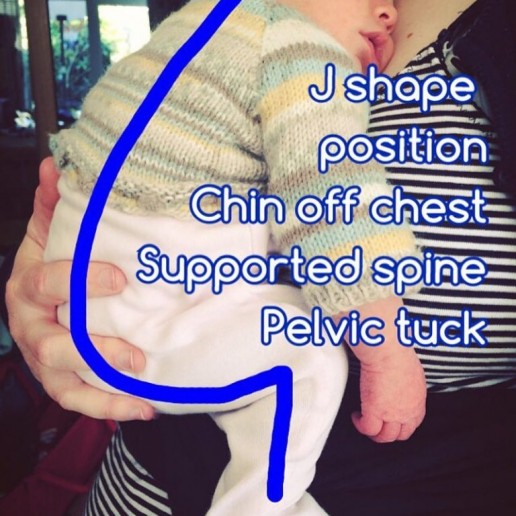
Bonding with your big kid
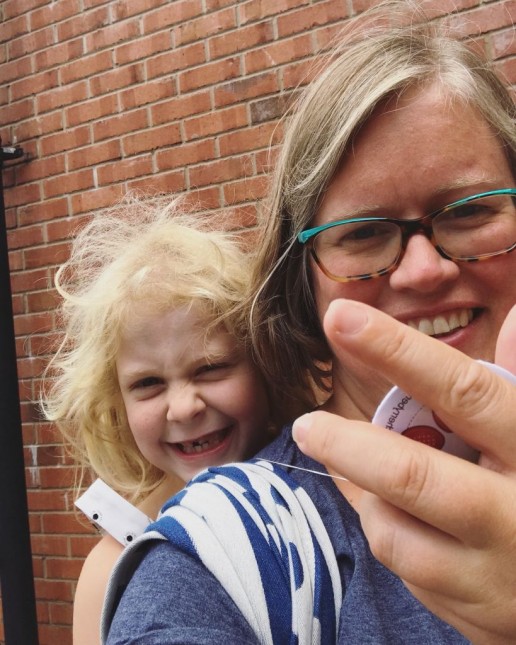
Bonding with your big kid is just as important as bonding with your baby. Older children need love and secure attachment relationships too, as their brains are still growing and their foundations still being laid down.
“I wish I had known about slings when I had my first child!”
“My son suddenly wants to be carried all the time suddenly and he’s so heavy now, I feel like we missed the boat.”
“My big girl is finding it hard with our new baby and seems to be much more clingy than usual. I wish I could carry her somehow..”
Do any of these comments seem familiar to you? I hear this kind of thing almost daily, and while part of me rejoices that now, at least, these parents do know how fantastic slings can be for family life, I appreciate their sadness.
But did you know, big kids like to be carried too? How many of us have hoiked our hefty toddlers onto our hips when their legs get tired of trundling along, or felt little arms wound around our necks when they are tearful? How many of our huge preschoolers still appreciate long hugs and piggyback rides? All children need closeness, long beyond the baby stage, long after they take their first steps, long after they start school… and so do grown ups! Loving contact is vital to our emotional health, from cradle to grave.
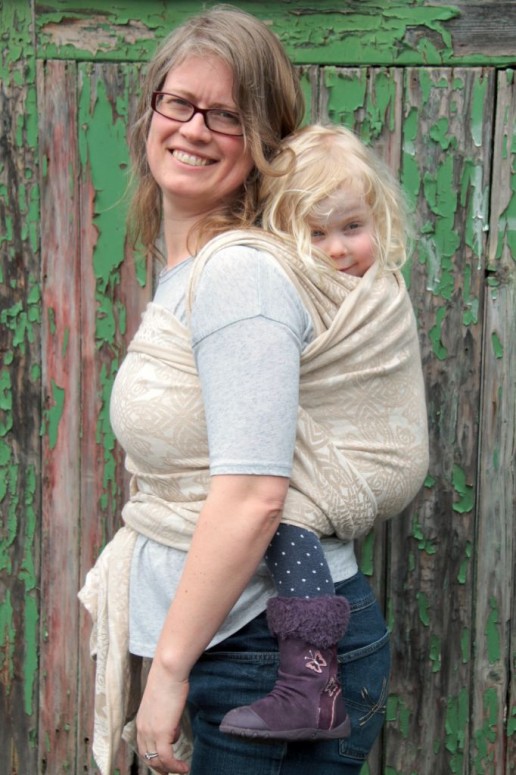
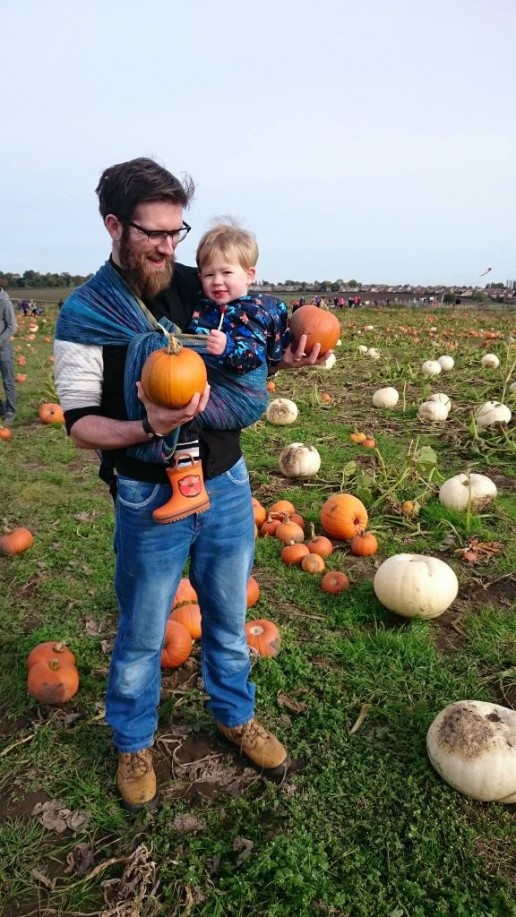
A sling is, at its most basic, a tool for enabling close contact, almost like another pair of enfolding arms around your child, while your real arms can be used for other things. A good sling, when used well, provides a feeling of all-around gentle pressure, as if being hugged all over. This can be very valuable for children struggling with sadness, with sensory overload, with tiredness, or fear from loud noises, for example. Being close to a parent’s body is reassuring and sends a valuable message to a child that “You are loved. I will look after when you are unhappy, I will keep you close when you need it. I am always here for you.” There are many other advantages to slings beyond this opportunity for connection; not least that they can be very comfortable and help to distribute the weight of a child around your body evenly, making it much easier and much less tiring than in-arms carrying. They can help to provide nourishment – breastfeeding or bottle feeding on the go, they can make school runs easier, allow greater freedom in exploration, enable naps, and keep exuberant runners out of danger in crowded areas or near roads etc.
Slings with Big Kids
You can use pretty much any kind of sling with a bigger child, even a stretchy, if it is a high quality hybrid one like the JPMBB or the Ergo wrap. I’ve helped a couple of parents with toddlers find the stretchy love, as there’s nothing quite like the enveloping gentle bounce you get with these. They do tend to work best and most easily in front carries.
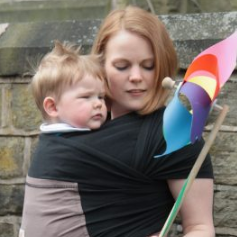
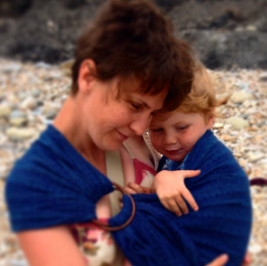
Ring slings can be fantastic, if you have the shoulder style that suits you best (pleated vs gathered), and made of a fabric that is supportive enough. People often suggest linen or hemp or silk to add strength to the softness of cotton, which indeed they do, but many 100% cottons are more than sturdy enough for heavy children, who can become easier to carry as they develop more core strength and become more compliant and easier to carry than the “bowling ball stage” – it’s worth trying a few out!
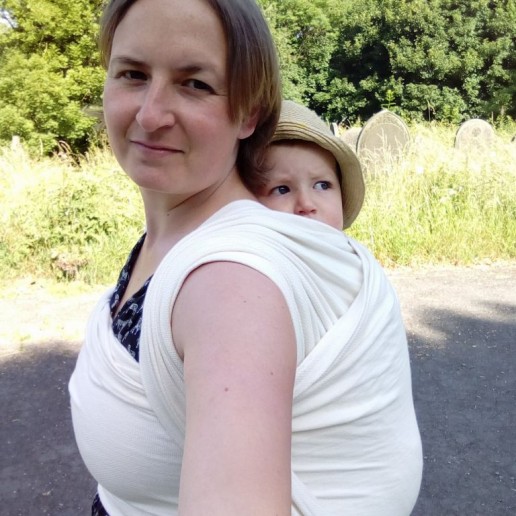
Woven wraps are the most versatile, as they can be tied in different ways, in different positions and with different levels of support. As with ring slings, the fabric used can make a difference to how a wrap feels – fibres with extra support can be helpful but may not be necessary, and as above, understanding tightening techniques and how to get a good position can really help you make the most of your current wrap
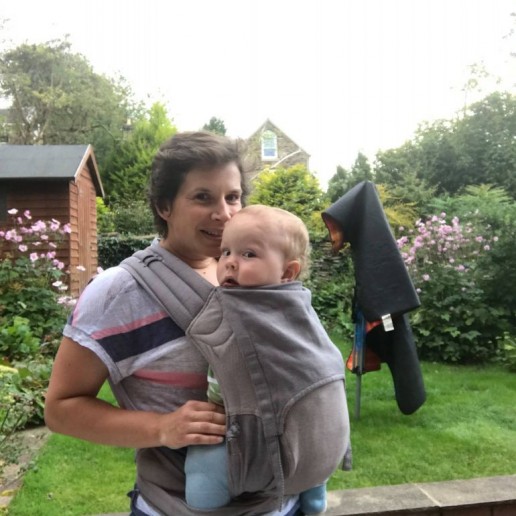
You can get toddler size meh dais, half buckles and full buckle carriers, even some up to preschool size. Again, it is worth trying a few out at your local sling library as one size does not fit all, and the body size and shape of the carrying parent plays a part too (some preschooler carriers will just be too big for petite mums, for example). Waistbands may need to be worn lower (around the hips) for front carries, and some creative methods for getting a good seat in a back carry may need to be employed! Please do take advantage of your local sling professionals about whether you need a bigger carrier for your child; it may be that your current carrier just needs a few tweaks in technique to get the most out of it. Many people upgrade to toddler carriers earlier than really necessary, and too big a carrier may be more problematic than one thats just a touch small (see my “beyond the knee to knee” article for more information).
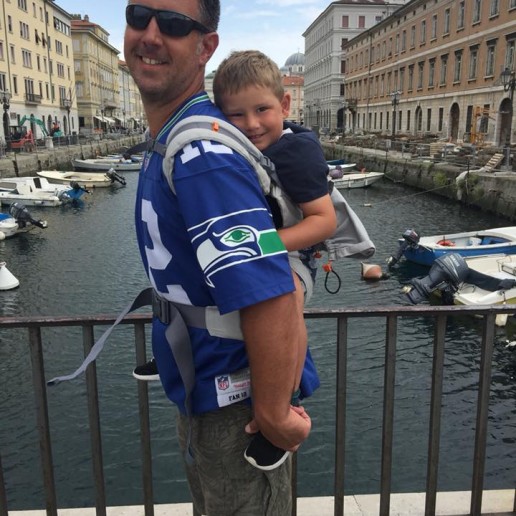
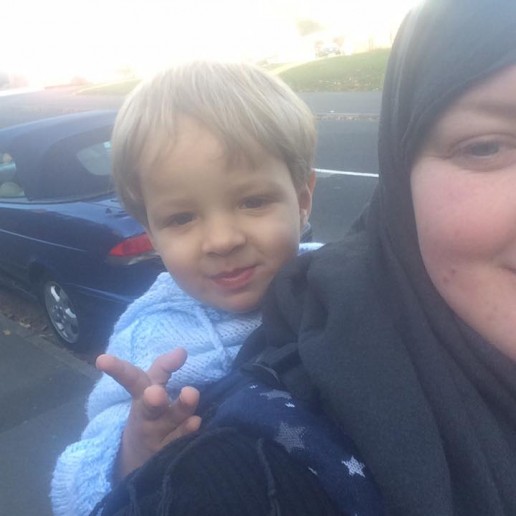
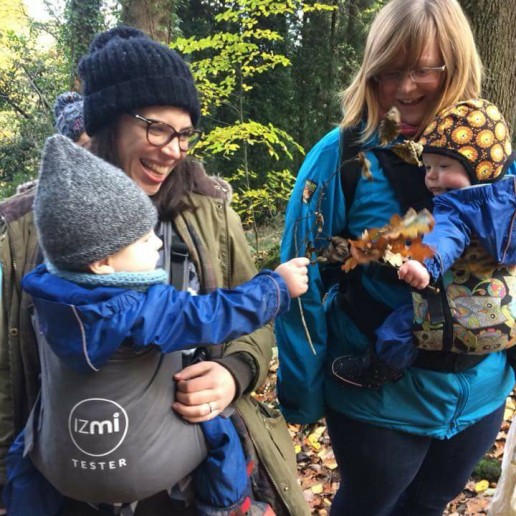
What about the inevitable comments “he’s too big to be carried like that, he should be walking!” or “You’ll just make that child clingy, you know”? Well, I think a sling is as valid a means of transport as a pushchair, and far more comfortable than achingly weary in-arms carrying. Don’t be afraid to carry your toddler – for every comment you get, you may well have planted an idea in someone else’s head. Ensure that your child doesn’t feel hurt by any comments, sometimes talking about any incidents together afterwards can be helpful. Using a sling for your bigger child from time to time will not harm them, nor will it make them babies again, any more than a hug or a hip carry would do.
My own experience
My big girl, who was nearly 4 at the time of writing, is much less often carried these days; much to my chagrin.. but she is vocal about it when she does want to be carried, climbing up me and wrapping her legs around my waist. I am happy to oblige as I’m never sure how many more carrying days we have left to enjoy. She has moods, and disappointments that the world doesn’t revolve around her, and sometimes she finds it hard to wind down. Often, at these moments, a sling has been our saviour, holding her close so she can relax, feel safe, and listen to my reassuring murmurs, while I can still get on with some of the things that just can’t wait, or save my back and arms from her lopsided weight! We use all sorts of carriers – ring slings for quick up and downs, woven wraps for sleepy cuddles, preschooler buckle carriers for rainy school runs, warm snuggly half buckles for winter walks.
Even my (then) six year old found a wrap carry a great reassurance one day when he got separated from us at the Yorkshire Sculpture Park; he was very distressed when found half an hour later and just wanted to be holding onto me. My husband’s shoulders got pretty tired after a few minutes; but I was able to carry F on my back for well over half an hour, due to the support and the weight distribution, enough time for him to feel reassured and connected again. I found it really helpful too – it was a pretty horrible forty minutes and having him in close contact was very valuable for my own feelings and allowed me to breathe and absorb, and move on.
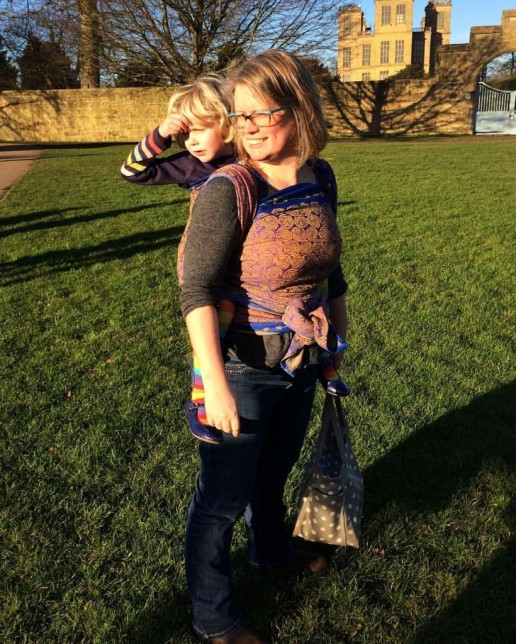
A local story of re-connecting with a sling
I’ve got to know one family with a preschooler pretty well, they hadn’t used a sling for over a year, but started again, almost from scratch. Here’s what they have to say about their experience of carrying a bigger child.
After starting nursery, H became anxious and disconnected. She chewed her fingernails to a painful point, and became difficult to communicate with, as well as regressing in toileting. Instead of adopting behavioural control techniques, I drew on my experience from other parts of our lives and adopted a regression tactic. A big part of this was returning to carrying her in a sling. We had used our high-street carrier rather than a pram on our dog walks, but had given this up over a year before as she had outgrown it. We wondered if a ring sling would be a solution for short snuggles for reconnecting. H was too heavy to attempt this from online videos, so we booked a workshop with a local sling consultant, who reassured us that she wasn’t too big, and showed us how to ensure we were all comfortable. The ring sling has been perfect for our needs and has really helped us all. More often than not, it has doubled up as a dramatic scarf for the 80% of the time H wanted to walk!
H is now almost 5. Our new buckled carrier is the perfect tool for winding down for bedtime on a camping trip, resting tired little legs whilst hiking (without the bulk of a framed carrier), and elevating her out of danger in busy, crowded areas. I really believe there is no such thing as “too big to sling!”
Slings with Two Kids
Another situation where carrying a bigger child can really help is with sibling jealousy. The other day I spoke to a family who hadn’t used their sling with their toddler for some time, and now have a new baby. Big sister has been feeling a bit jealous of the new arrival and has wanted to begin breastfeeding again. They asked for some advice, and I suggested that their daughter would really appreciate the contact that would come from using their ring sling and buckle carrier again… and so it seems to have proved. It’s not so much the desire to be a baby again, but more of a chance for communication – “you still belong to me, don’t you?”
I’m working with another lady whose older child is struggling to accept their brand new baby. She asked me to show her how to breastfeed her baby in a sling, in the hope that this would allow her to be hands free to play with her toddler. She’d never carried her first child but was loving the slings with the little one. Successful breastfeeding in a sling is a challenge that requires care to do well and safely, and in my opinion is never fully hands-free. However, one hand available can make a big difference – you can hold a book to read, help with a jigsaw at the table, stir a mixture, hold a hand, for example. Amongst other things, we looked at a ring sling, which can be used for little babies as well as bigger children who love to sit on the hip and look around, so it is a carrier that can be used for children of multiple sizes. Hopefully, carrying the bigger child from time to time while the baby is sleeping, or in a pram or carried by Dad will be helpful for dealing with big feelings and the need to know that his Mum is still Mum and will always be there to meet his needs, even with the new addition taking up so much of her time.
There are some carriers that can be used with small babies and bigger children; which means the same carrier can be used for both children when needed. The ultra- versatile ring sling and woven wraps are good examples, which mould around the parent-child dyad and can be used from birth to preschool age and beyond.
Some mei tais with adjustable width can work well for families with children born with a small age gap. The buckle-waist equivalent half-buckles can be useful, or those with wide wrap straps that can be tied in such a way that bigger children will be supported knee to knee. Some full buckle carriers can be used from birth and their panels can be adjusted to the size of the child. Some come with inbuilt adaptations for using with babies, and some have separately purchased inserts for small babies to rest on until they grow big.
Do visit your local sling library or get in touch with a sling consultant for some help navigating all these options; there will be something to suit nearly every situation!
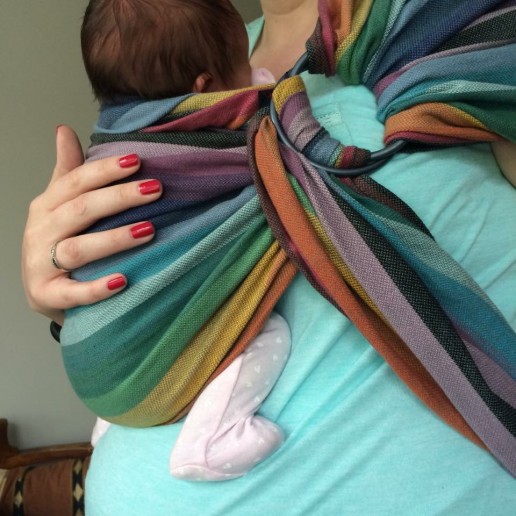
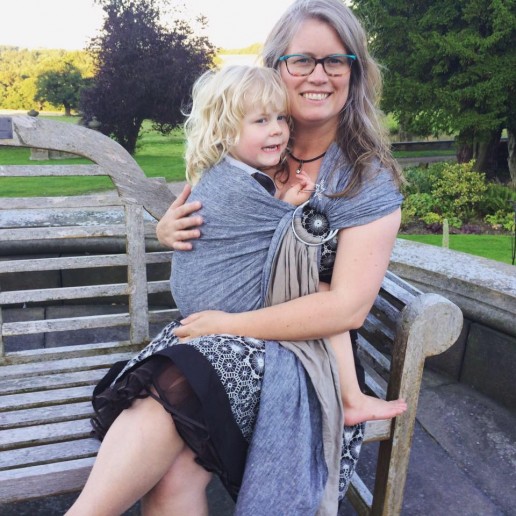
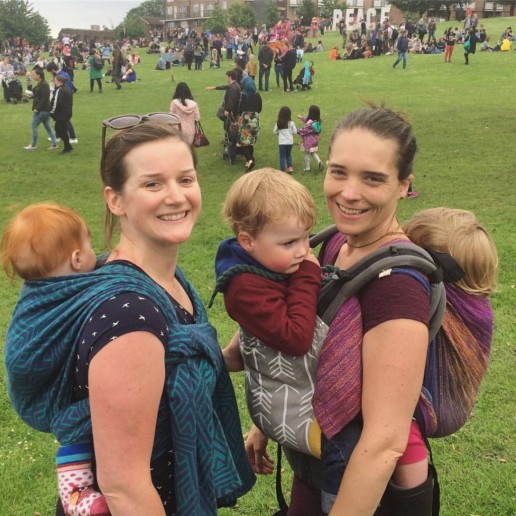
Slings during Pregnancy
During pregnancy, carrying an older child can be an opportunity to help deepen relationships and prepare for the new arrival, being reassuring that things really are going to be all right after all. Carrying while pregnant has its own challenges too; ensuring the bump isn’t compressed, that weight is well distributed, that any symphysis pubis discomfort is not exacerbated. Do see your local sling consultant or chiropractor or physio for help if you need (bearing in mind that many health care professionals may not be up to date with ergonomic, safe carriers.) There is more reading here about carrying while pregnant.
In summary, older children do not stop needing the love and support of their caregivers for a surprisingly long time. Our society seems to believe that we should encourage separation of children and caregivers as young as possible, to breed “independence”, when actually, neurophysiology suggests that children will learn independence at their own pace, as their cognitive and emotional capacities develop.
Secure Attachment and the "Fourth Trimester"
Secure attachment is the deep and enduring emotional bond that connects one person to another across time and space; a "lasting psychological connectedness between human beings" (Bowlby/Ainsworth).
 Secure attachment to other people is vital to human health and wellness; we thrive on relationship, on belonging. Such healthy attachments are the bedrock to future positive mental health and enjoyable relationships. However, Sutton Trust research shows that 40% of children lack secure attachments; instead they display insecure-ambivalent, insecure-avoidant or disorganized/disoriented attachment, and are significantly disadvantaged, especially those growing up in poverty.
Research shows that one of the strongest predictors for insecure attachments in children is to have a parent who lacks secure attachment themselves.
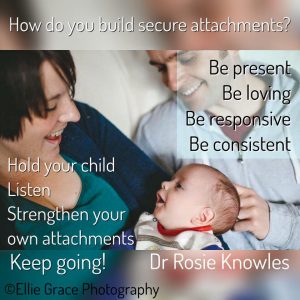
So, how do you build a secure attachment relationship with your child?
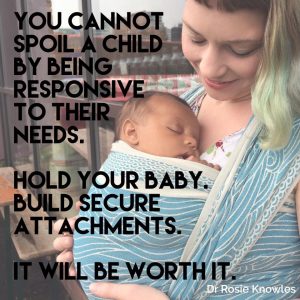
Secure attachment is created by loving responsiveness to your child's needs. It is not about your parenting style. Your baby may sleep in a crib or your bed, be fed from a breast or a bottle, be held in arms or a sling, be weaned in any style, be brought up by any combination of carer and still have secure attachments. It is not about subscribing to a particular parenting philosophy. You do not have to sacrifice everything - your identity, your sanity, your relationship, your job, your money or anything else at the "altar of childhood".
Building secure attachment is about having respect for a child's personhood, building their sense of self-worth within a consistent, loving and responsible relationship, regardless of their age or understanding.
Your child's humanity is as valuable as your own; neither more nor less. You are your child's advocate in the world and their greatest defender. You can provide for their every need, and they depend entirely on you and your surrounding network. They will learn whether or not they matter from how they are treated and how their requests for support are met. Securely attached children are confident that they will be cared for, and that any distress will be met by love. They are easily soothed by their caregiver when upset, are more able to be self-reliant, form positive relationships and generally have smoother paths through life.
However, their needs need to be balanced with that of the family, as a crumbling family dynamic will ultimately not be in anyone's best interests.
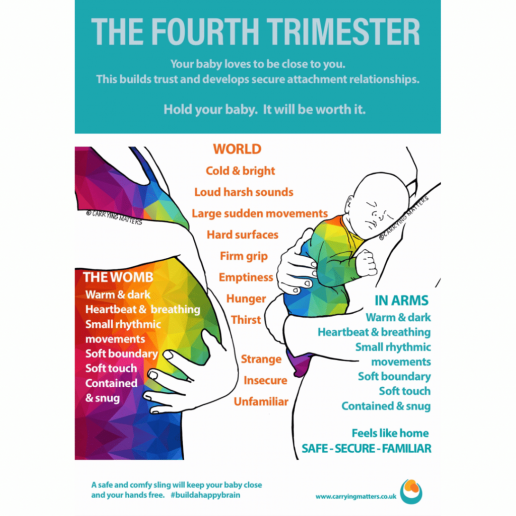
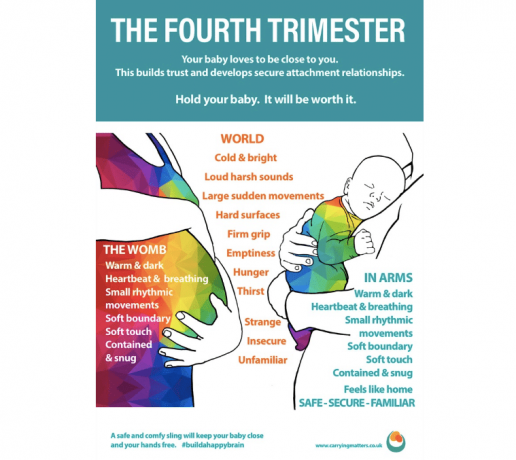
The "fourth trimester" is where attachments begin to form.
What is the Fourth Trimester?
 Theories regarding the size of the infant cranium, the shape of the upright human maternal pelvis, and the limits of the mother's metabolic energy provision for growth all discuss why human babies are born at a stage where they are still very vulnerable. This is in contrast to many other species where a young animal will be able to walk after its mother within hours of birth, or sleep in a hidden nest. To survive, a human baby needs to be held and carried around by his carers, fed and kept warm or he will die. To thrive, a baby also needs love and secure attachment.
The ‘fourth trimester" is the period immediately after birth, a few more months of intense nurturing to allow a baby to continue with their essential development from a place of security and safety.
A baby who has spent all their life growing peacefully in the womb, gently compressed by uterine walls at the end of the third trimester, will find the sensation being born, followed by freedom and open space in the outside world enormously different. Limbs that have been limited are suddenly free to stretch wide, darkness has turned to light, the muffled gentle rhythmic sounds of the mother's body have been replaced by loud, unfamiliar noises or deep silence. Constant gentle motion has turned into complete stillness or sudden movements. No wonder that when babies are held close, rocked and soothed, contained in soft boundaries once more, that they settle; this feels right and familiar.
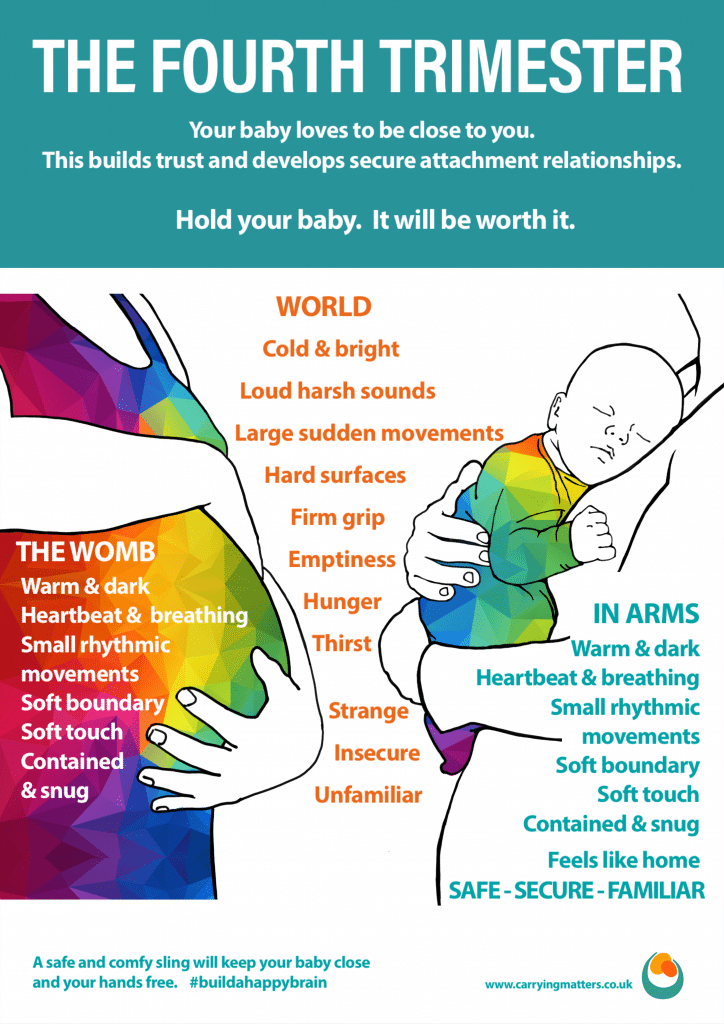
The "fourth trimester” is all about gentle transitioning from the peace and stability of the womb towards active involvement in a new world.
A newborn needs to be supported to gain skills and strength at a steady, individual pace from the security of an unshakeable foundation and place of comfort and familiarity. Being held, close to familiar noises and scents is essential to development and positive learning; the infant brain is growing rapidly and forming new connections all the time. Connections that are reinforced frequently will persist into later life, whereas those that are rarely used will wither away. It is worth taking the time to ensure that these unconsciously forming connections are positive ones. Young infants do not have the cognitive development to behave in "manipulative" ways; but they do learn to trust someone who proves reliable time and again as these pathways are reinforced. They will be startled and upset when this love is withdrawn.
The importance of responsiveness
If you are sensitive and responsive to your baby as they begin to communicate their needs with you (by crying, wriggling, yawning etc) they will learn that they matter to someone. If they are uncomfortable, the people they are learning to trust will soothe them. When they are hungry, they will be fed, when they are tired, they will feel secure enough to sink into sleep. They will not be frequently left alone unattended for long periods of time, and will not be left to exhaust themselves in calling for someone who never comes. When they cry, loving arms will be there to comfort and keep them safe. These same arms will show them the world and provide a safe place that facilitates learning. Carrying matters; babies need it. It does not make them clingy, rather, the solid foundation of secure attachment relationships will be the springboard to confident independence later in life.
How does babywearing help?
One tool that can help you meet your child's need for loving contact in these early months is a soft carrier that holds them in a comfortable, safe and anatomically respectful position. Such carriers will help you to meet their needs to be close to you while allowing you to be hands-free for daily life. There are many other positive reasons to carry a child; such as reduced crying, reduced plagiocephaly and more. Parents benefit too, for example carrying can be helpful for those with postnatal depression, and increase overall activity levels. This idea is not new; most of the world’s families across history and cultures have used some form of sling to make life work.

You can find out more from your local sling library or consultant; there are hundreds across the UK. They will help you to find the right type of carrier for your needs.
What about my older child?
Attachment relationships continue to form beyond the early months and children's brains are very "plastic". Warm, responsive, emotionally available parenting will help to build a child's sense of self-worth at any age. There is evidence that "mind-minded" parents (ie those who treat their children as intelligent, relational individuals with feelings, and speaking to them in such a way) seem to have children with more secure attachments. Active play and laughter, as well as consistent loving boundaries help to reinforce neural connections that the primary caregivers are a reliable source of security; forming strong foundations for the future. Read more about how carrying can help the learning brain.

References
Bowlby J. (1969). Attachment. Attachment and loss: Vol. 1. Loss. New York: Basic Books
Ainsworth, M. D. S. (1973). The development of infant-mother attachment. In B. Cardwell & H. Ricciuti (Eds.), Review of child development research (Vol. 3, pp. 1-94) Chicago: University of Chicago Press.
Ainsworth, M. D. S., Blehar, M. C., Waters, E., & Wall, S. (1978). Patterns of attachment: A psychological study of the strange situation. Hillsdale, NJ: Erlbaum.
Sutton Trust; Baby Bonds Parenting, attachment and a secure base for children. March 2014 Research by Sophie Moullin, Jane Waldfogel and Elizabeth Washbrook
http://www.parentingscience.com/attachment-parenting.html
Rethinking Maternal Sensitivity: Mothers’ Comments on Infants’ Mental Processes Predict Security of Attachment at 12 Months; J. Child Psychol. Psychiat. Vol. 42, No. 5, pp. 637–648, 2001