
Positive Effects of Carrying for Baby
Carrying your baby is essential to their normal physical, psychological and neurological development. Human bodies are adapted to be a carrying species, it is part of our evolutionary history, however, our bodies are not as fit or as strong as our nomadic ancestors. It can be hard to carry in arms for prolonged periods of time. Nevertheless, babies need to be held, so a good, safe sling can be very useful in to help with increasing carrying frequency.
Remember, it is the relationship of closeness and loving touch that matters, as well as the position adopted in a good sling. The type of sling or the fabric that you use is just personal preference.
The benefits of babywearing- or the positive effects of carrying for baby are many; here are a few.
The positive effects of babywearing for baby are many; here are a few.
- It encourages bonding with the parent and helps to meets baby’s strong need for a sense of security and attachment, which will lead to greater confidence and independence later in life, as well as greater resilience and better long-term physical health.
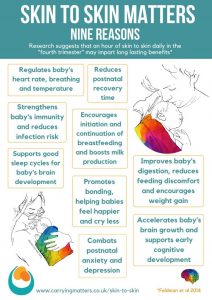
- It helps to regulate temperature, heart and respiratory rates, and emotional and physical growth. This can be especially useful for premature babies (the term “kangaroo care” and “fourth trimester” come from this concept) or children who are unwell.
- It promotes and encourages the establishment of a successful breastfeeding relationship, in part due to the oxytocin release from the soft touch. Mothers who carry their children in soft slings are more likely to breastfeed beyond the early weeks.
- Soft touch has many benefits for neurodevelopment and and helping the social brain to form.
- Regular close skin contact is believed to help babies regulate their circadian rhythms better and distinguish the difference between night and day sleep.
 It reduces crying, both frequency and duration, (Hunziker and Barr 1986) and can improve sleep. It is safe for your baby to sleep in the sling, if the airway is well protected. Less crying means more time to be in “quiet absorption’, promoting learning and positive interactions with the world. The Esposito study discusses some of the mechanisms behind movement and how carrying is calming for babies.
 It reduces crying, both frequency and duration, (
- Babies with colic can be hard to soothe, but the motion gained from being gently rocked in a sling while the parent/carer walks may help to settle them, and also the parent/carer may feel less helpless. There is no evidence to suggest that babywearing actually reduces colic itself.
- Many parents of reflux babies spend a lot of time holding them upright and have tired arms and sore backs! A good sling that supports an upright position can thus reduce regurgitation and the discomfort of reflux. A spread squat position helps relax puborectalis muscle, to aid bowel elimination.
- The motion experienced by a baby being held by the carer allows the vestibular balance apparatus to develop more rapidly and enhances neuromotor development and muscle strength. It improves neck and head control, but is not a true substitute for “tummy-time” (tummy-time head-lifting is against gravity from a prone position). This is more marked with dynamic in-arms carrying (where this is possible). A sling or carrier should never be used as a prolonged restraint (unless danger is present such as crossing the road).
- Children should always be encouraged to be active as much as possible (WHO 2019) and if they want to get down and it is safe and practical to do so, this is ideal. However, this doesn’t mean that a child who is otherwise very active needs to be automatically removed from the sling after a certain amount of time. Sleeping babies do not need to be disturbed, just gently adjusted to ensure safety.
- It is believed to encourage sociability and language development; being able to hear the parent’s voice close up and watch their interactions with the world and other people from a higher vantage point is beneficial and also aids formation of family relationships. Studies into reduced talking in outward facing buggies highlights the importance of children being able to communicate easily with their carers.
- It allows baby to retreat from an overwhelming world and snuggle into the parent’s body for respite when needed. This is harder to do with world-facing carries, so encouraging parental responsiveness with front-facing out positions is important. (The challenges of facing forwards is covered in more depth here)
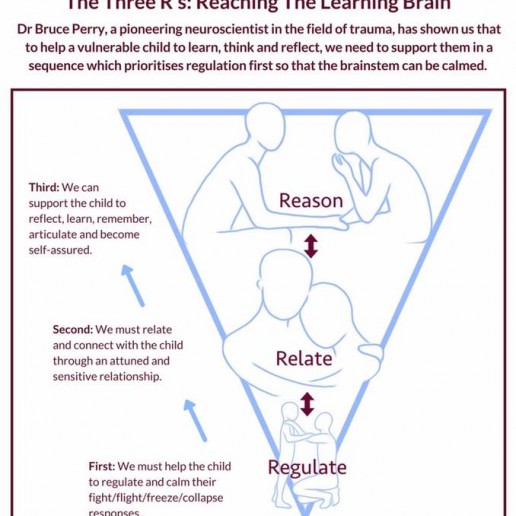
- Babies can learn very easily from a place of consistent safety, as their brains are not engaged with mere survival.
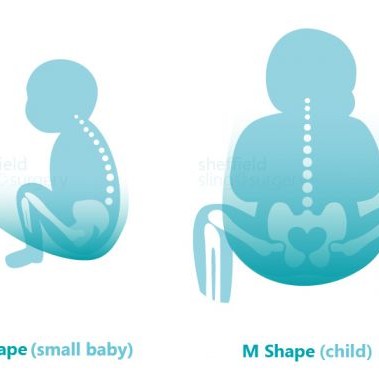
- Good, correctly designed slings that encourage the physiological spread-squat "M shape" position (that mimics hip-perching) can help prevent hip problems later in life in those children at risk of hip dysplasia. There is currently no convincing evidence that narrower based carriers cause hip dysplasia in otherwise healthy hips.
- Babies who are carried are less at risk of plagiocephaly (the flattening of the skull bones at the back of the head from prolonged periods lying on the back, more common since the “Back to Sleep” campaign). Slings are recommended as one solution (by the NHS, too!)
Further reading
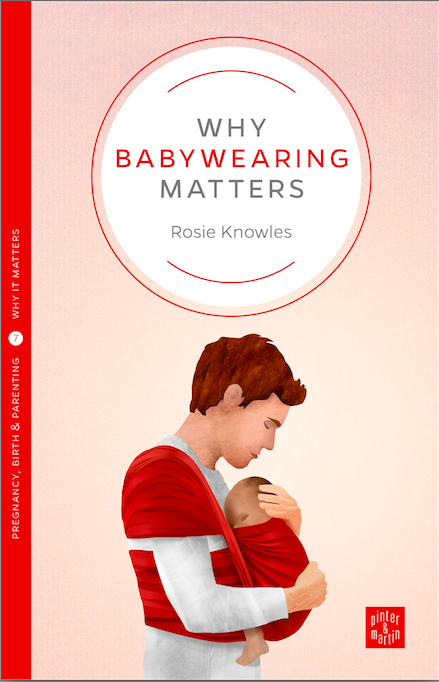
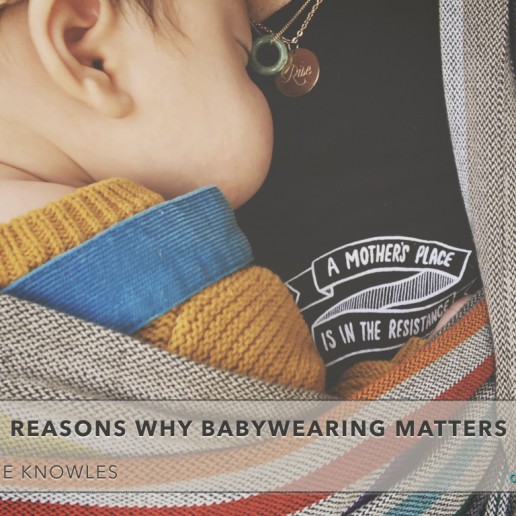
"Why Babywearing Matters", Rosie Knowles, 2016
To have and to hold: Effects of physical contact on infants and their caregivers, Infant Behavior and Development, Volume 61, November 2020

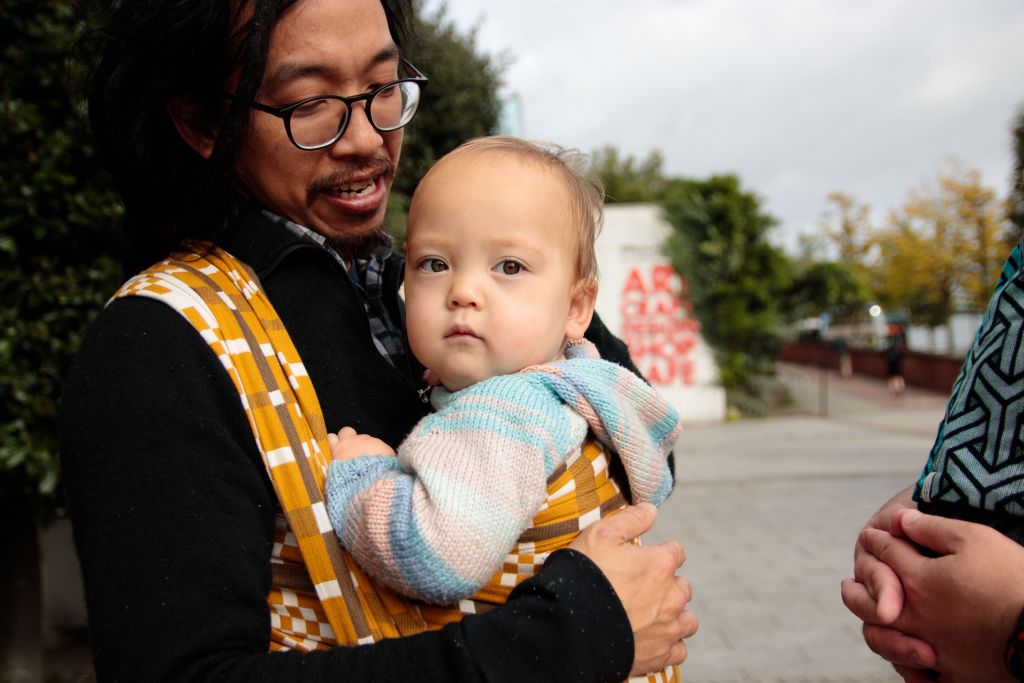
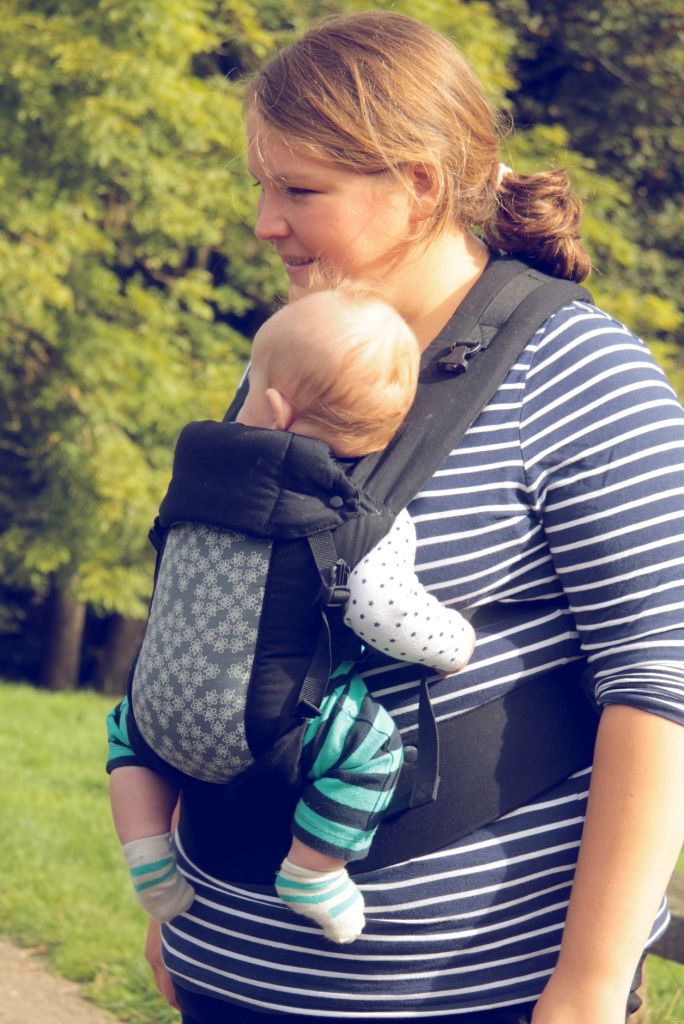
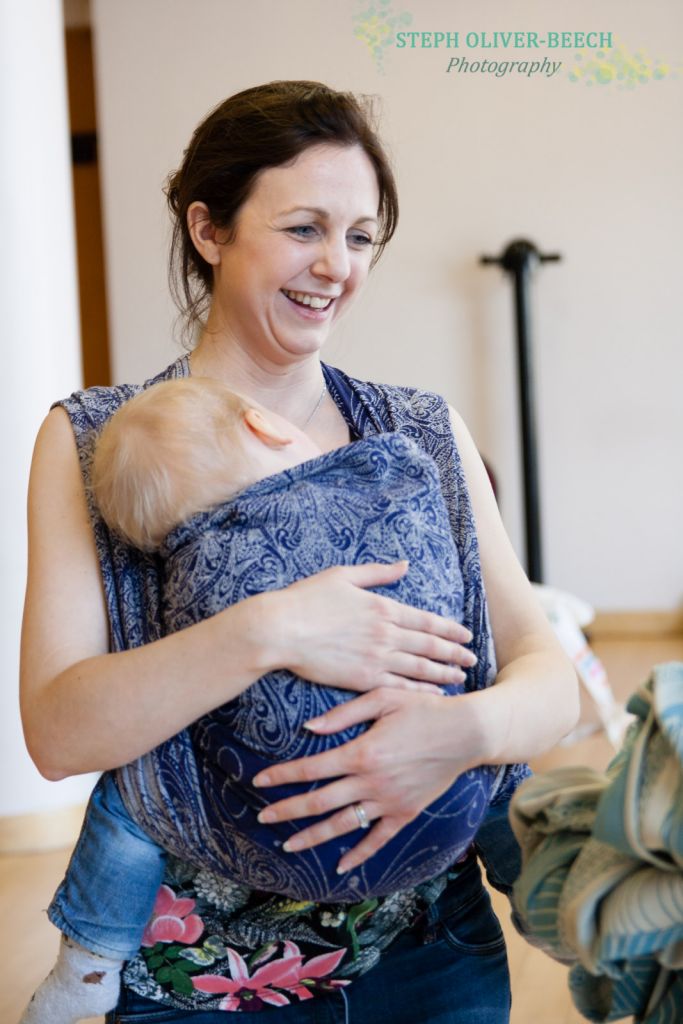
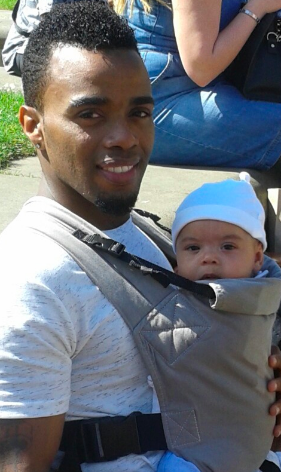
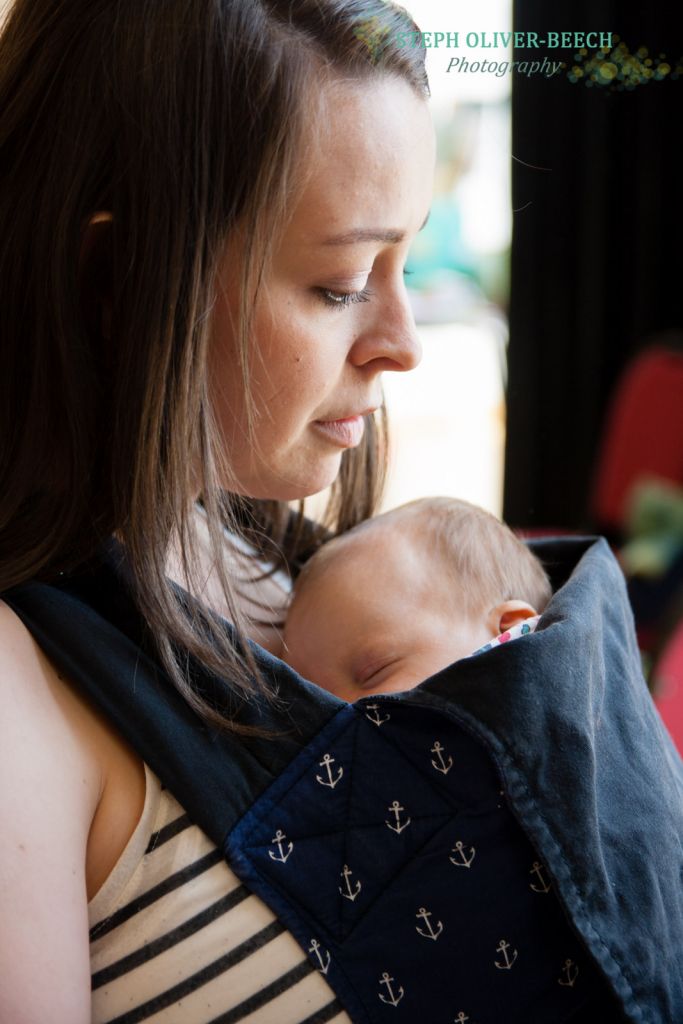
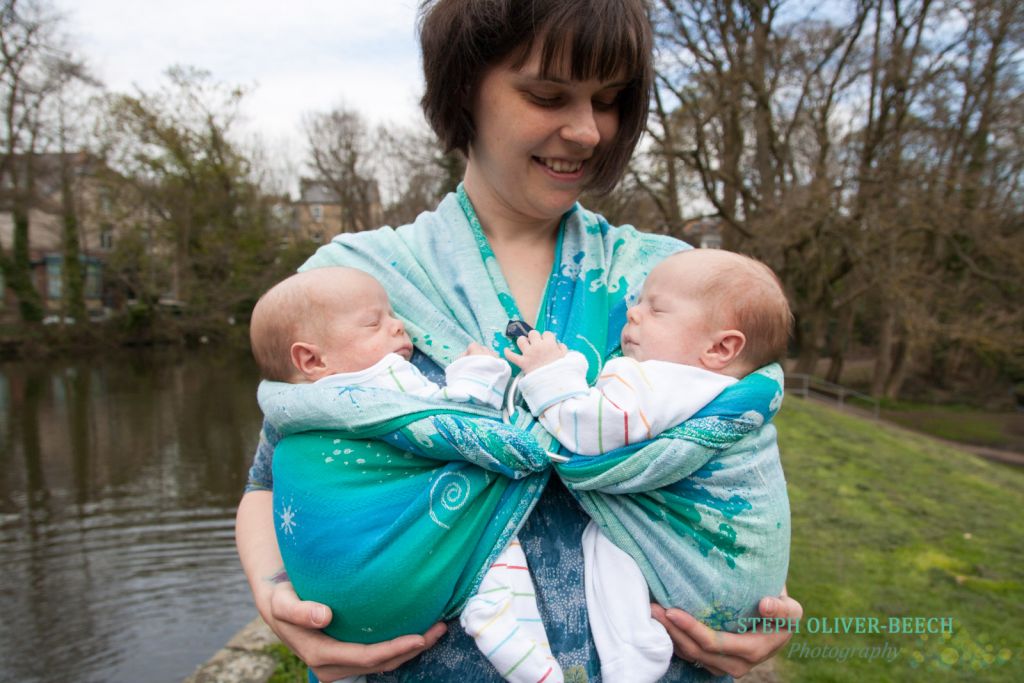
Read some more articles about why carrying and using slings are good for babies below
Attachment, Babies and Carrying (HuffPost)
Secure Attachment and the Fourth Trimester
Adverse Childhood Events and building resilience in children
Seven Reasons to Carry your Baby (HuffPost)
Why Carrying Matters (Juno Magazine)
If you would like to read in more depth on this subject, my book “Why Babywearing Matters” discusses much of the evidence base for the importance of carrying. It is normal behaviour for the human species to carry their infants close to their bodies; the book considers the anthropological, physiological and psychological reasons for this. Carrying really matters.

Blog
The Carrying Matters blog page.. enjoy reading! If you have any topics you'd like to see covered, get in touch! I enjoy writing and am always keen to hear of new ideas, and to host guest blog posts too!
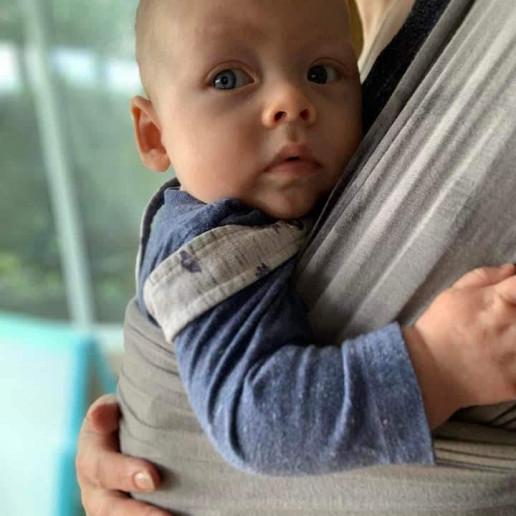

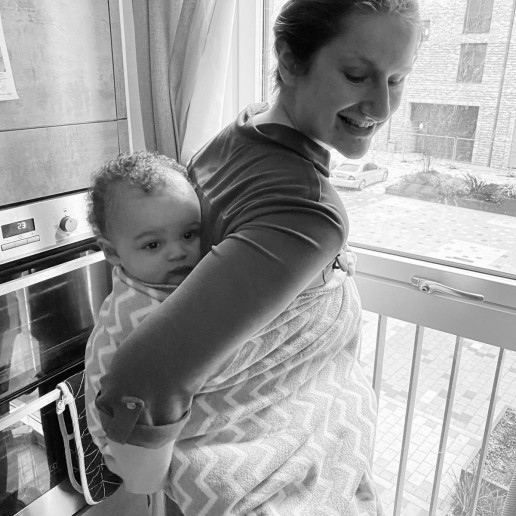
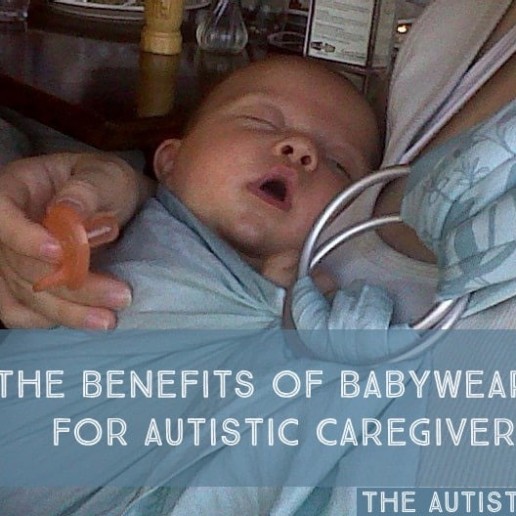
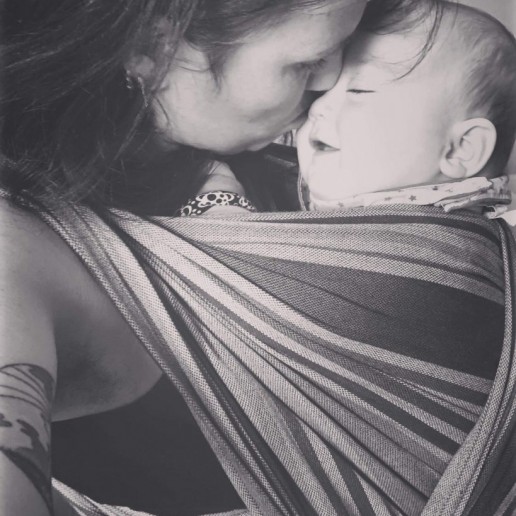
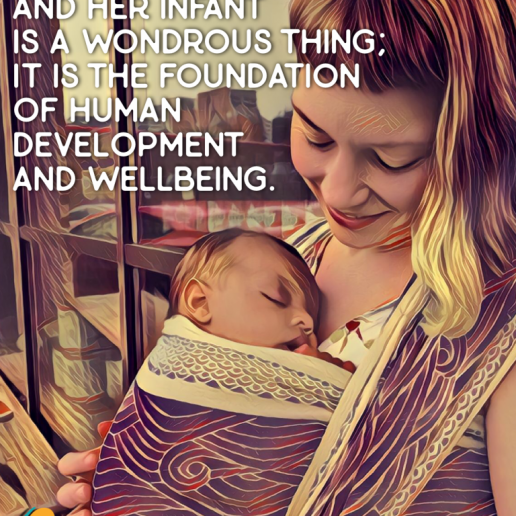
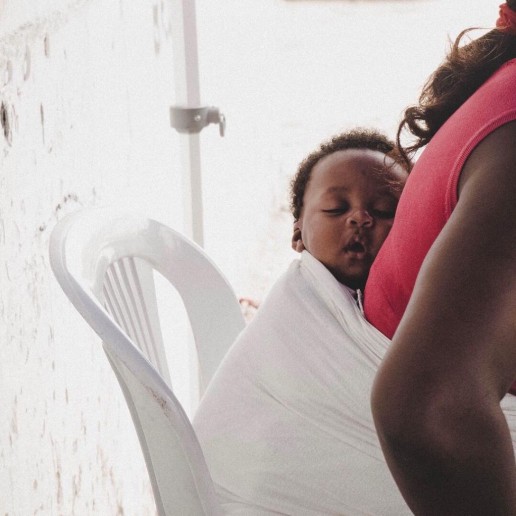
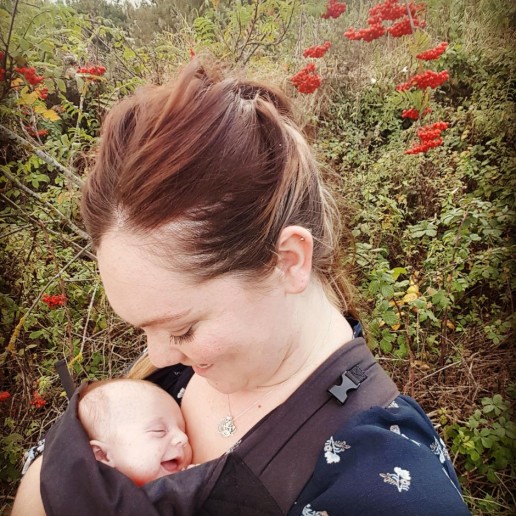
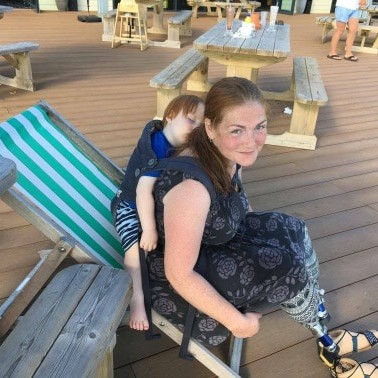
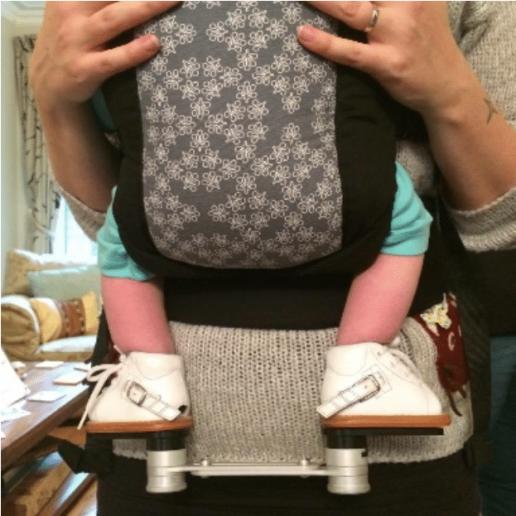
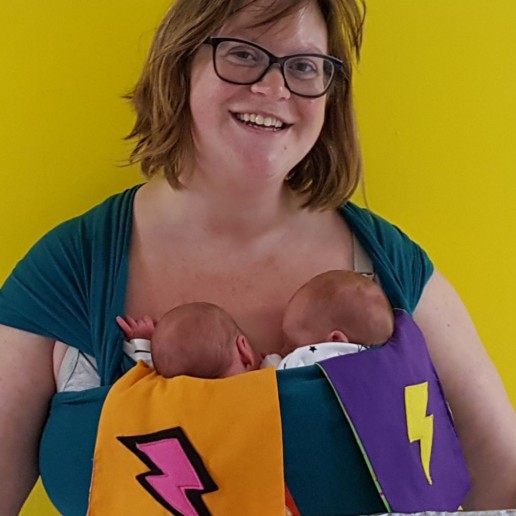

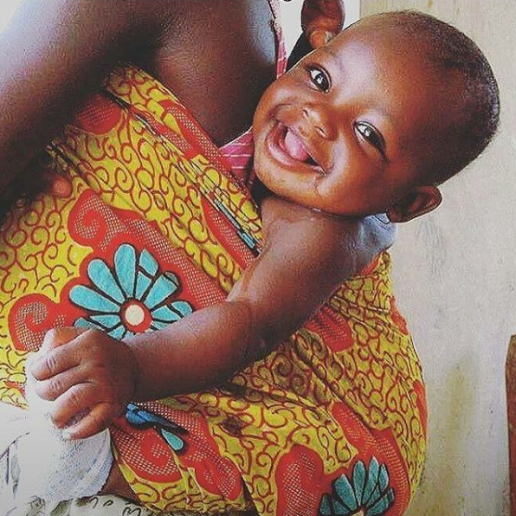
I am a Carried Baby
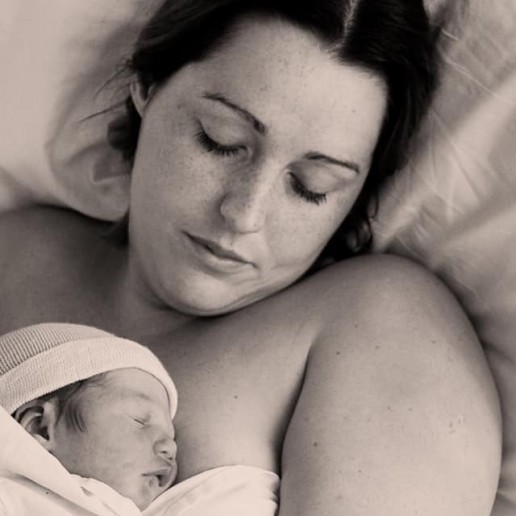
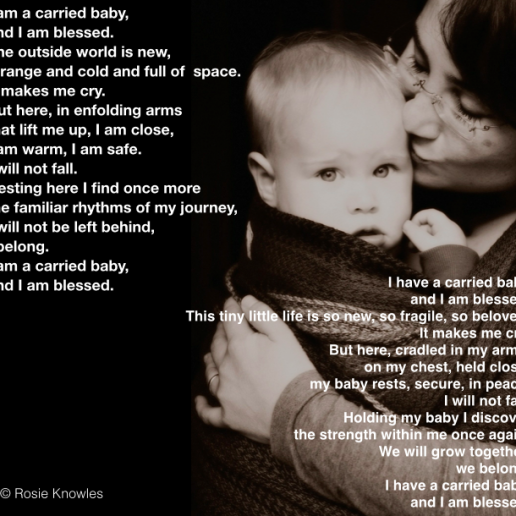
Why do we carry our babies? We carry them because it is a biological, instinctive parental response, that blesses the children we carry, and that blesses us. I find myself blessed by the small part I…

Can I carry my baby in a sling if I have epilepsy?
Guest Blog from a friend of mine about her choice to use a sling to keep her child close despite her diagnosis of epilepsy. It has worked out very well for her. Here she discusses the processes of…
Breast and Bottle Feeding Safely in a Sling
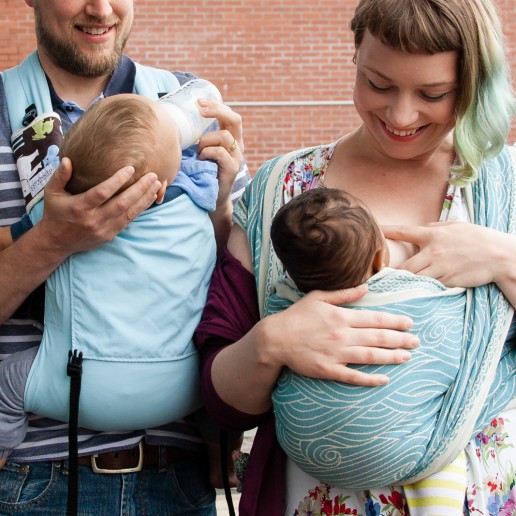
I meet a lot of pregnant ladies in the course of my varied roles, and many new mums, and one of the questions I am most frequently asked is "Will I be able to feed my baby in a sling?" It's an…


The Fuss about Facing Out
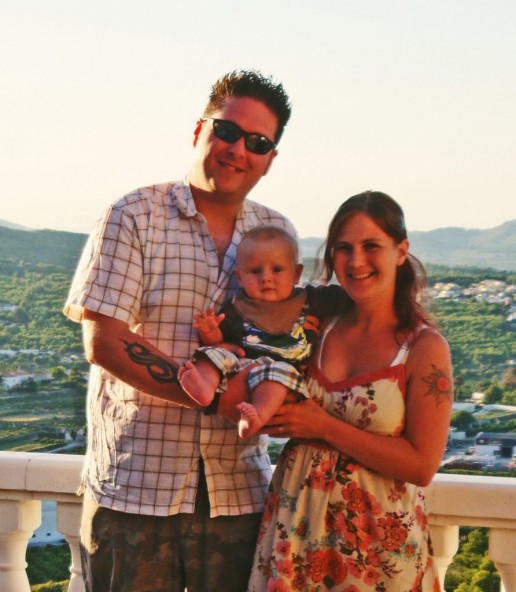
 One of the most common “controversies” in the babywearing world is the “fuss about facing out” that is, the issue of babies being carried in facing out positions. This means babies being held with their backs to their carer, facing the world, rather than facing the person who is carrying them. Opinions vary widely among manufacturers and parents and even among professionals. Many babies do very much enjoy being held in positions where they can see the world, so why all the fuss? Is there any need for a fuss at all?
What are the advantages of world-facing?
Babies do enjoy seeing the world, especially once they are a little older and have mastered head control and wish to be more involved with their environment, rather than sleeping or snuggling in as they did when they were very little. Curiosity often coincides with increased motor co-ordination and greater periods of awake and interaction time. This is often the point at which families begin holding their babies in positions that give them greater visibility. Instinctively, they tend to support their little ones in very gentle positions that still ensure good hip and spine support; cradled in arms with chin off chest, or held in semi-seated positions with back curved against parent but hips held in flexion, as if sitting in a bowl.
These positions protect the natural anatomical curve of the immature spine and do not straighten it uncomfortably.
As babies grow, their muscle strength increases and fatiguability decreases, alongside greater coordination and gross motor skills. This allows slowly improving head and neck and upper back control (with less drooping or wild flailing) as their spines gradually begin to uncurl. Furthermore, as their focal length improves and visual acuity rises, the world becomes very interesting! There are stages in baby development when babies seem to arch away in arms a lot; this may be related to a desire to see more, but may also simply be attempts to hone upper back strength, in preparation for turning skills and rolling over. This is very common around ten to twelve weeks. Babies may also arch when they are tired, if they have reflux, if they are frustrated.
In-arms holding is responsive, which is the key issue; if baby makes a protesting movement or noise, the carer responds and moves the baby to help it to become calm again. Also, parental arms get tired and baby is easily moved to another position, this may often be on the shoulder facing parent again for a while. Such reactive carrying in-arms, with changing facing-in and facing-out positions, is of great benefit for honing development and also to encourage learning about the world from a safe and comfortable position.
This all sounds great, so what’s the problem with using a sling for this?
What are the hazards of facing out?
It is important to remember that young babies are not ready for prolonged and intense interaction with a very sensory-overloading environment; they have not yet learned how to process the bombardment of information their brains are receiving. They have not yet discovered how to “filter out” the irrelevant for a more focused look at the world, (a skill that we take for granted) so this can be very tiring. Being able to turn away from the noise and bustle and fall asleep (to process information) is important. Babies should NOT sleep facing out.
A facing-out carrier holds a baby in a fixed position for a prolonged period of time. The duration of this time is entirely dependent on the parent; they are unable to see their baby’s face to pick up early cues of tiredness or distress or breathing difficulties, and they are less able to feel subtle shifts in baby’s body signalling discomfort or a need to change positions. Babies can easily be left in carriers for much longer than they would be held in arms.
Babies are intensely social creatures and learn to regulate and control their emotions from interaction with their parents and watching their faces. Social referencing (also known as triangulation) is very important in the first year and well into the second. A child will often decide how to react to a new experience after it has looked to its carer; it will be less likely to touch something dangerous if the carer reacts in an upset way. Potentially scary experiences can defused by turning the head to see a parent remaining calm, or to receive comfort and reassurance, and vice versa. In a structured carrier worn facing out, it isn’t as easy for a baby to twist around to see the parent’s face for reassurance or to be able to seek comfort.
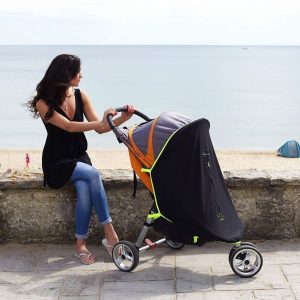 Many pushchair makers now include parent-facing positions as standard, as this is believed to encourage and improve language skills and bonding. (It is worth noting that there is no formal evidence to suggest that our children are any slower at language acquisition than previous generations who did not use facing-out means of transport, however, anything that promotes bonding and communication is to be encouraged.)
Furthermore, the world-facing positions do not provide any safe sleeping positions (all respected manufacturers say babies must be turned around to sleep; this is often missed in the small print) as there is no head support in this carry. A heavy head that is unsupported by a parent’s chest will droop forwards, putting baby’s chest under slight compression and pressing the chin downwards, potentially compromising the airway.
This is why the majority of respected sling manufacturers suggest that babies under 4months should not be carried facing out. Before this, babies simply are not developmentally ready. Beyond this age, they should not be held in carriers facing the world for longer than twenty minutes to half an hour or so. (Some manufacturers say facing out from 3 months up, some say from 5months up). I think it depends on the child’s personal developmental stage and there should really be no rush.)
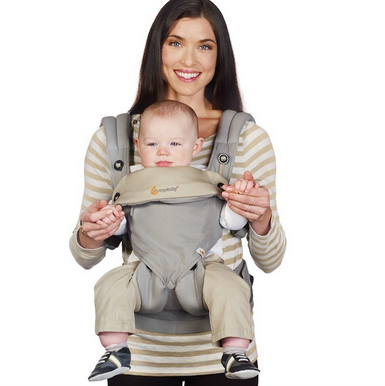
There is also the issue of hip and spine positioning in facing out positions. Most facing out in slings is done with “narrow-based” carriers, as very few high street options offer wider, more ergonomic seats that protect the gentle curve of the spine and promote healthy hip development in the world facing position. Most babies find their backs are held in straighter positions than ideal, with their legs hanging straight down from their hip sockets in this narrow shaping. While there is no formal evidence that choosing a narrow-based carrier will cause any harm to a baby who has healthy hips with normal sockets, there is a small percentage of babies who do have developmental hip dysplasia that are missed at their routine checks. These babies will benefit enormously from the ergonomic seated M shape position that allows their joints to be held in the optimum angles for healthy blood vessel growth and nutrient provision, and often this positioning is all that is needed to correct mild cases of hip dysplasia. It is worth weighing up the risks and may be better to choose a carrier that holds a baby more optimally if you decide to face baby out. Additionally, it is more comfortable for a person to be seated on a broad based hammock shaped chair rather than perched astride a narrow padded beam, and babies are no different.

Carrying a baby who is sitting high up against the carer’s body with the centres of gravity closely aligned is much more comfortable than carrying one who is low down, far away, and suspended from the carer’s shoulders. The parent’s body does not form part of the support structure of the carry when facing out, so much of the work of carrying has to be done by the upper body, rather than the core postural muscles. Centres of gravity diverge further when held facing out in narrow based carriers. Put simply, carrying facing out in this style of carrier is often uncomfortable.
Ok, so what can I use to carry my curious child optimally?
It is common among parents who are considering using a sling to look for options that offer world-facing positions. This position is what is often seen in the media and is widely advertised; it may be more pleasing to see happy babies looking directly at the camera rather than away from it, which can be better for marketing purposes. As it is so visible, it becomes the “norm” and carriers that offer this option are often perceived as “better.”
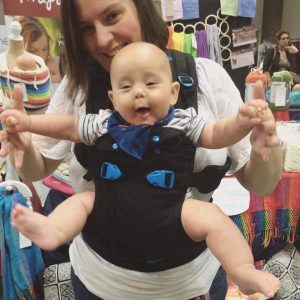
Many parents believe that babies need to be given the opportunity to face the world as much as possible for the stimulation, rather than looking at their parent all the time. Sometimes this belief can be be a marker for low self-esteem in a parent; that they just aren’t interesting enough, when in fact, for many well-attached babies, their parent is their most beloved sight. This is especially true if parent and baby are attuned and the parent is responsive and communicative and able to engage happily in play with their baby. Babies are often able to pick up on unhappy or uneasy feelings in parents and can be reflexively resistant to close contact, creating a negative spiral. Lots of in-arms carrying, skin to skin, and just time spent together can be very helpful with this.
Sometimes babies may begin to resist being carried in their parent-facing positions – they may have come to associate the sling with sleeping which they don’t want to do, and they may want to be able to see more.
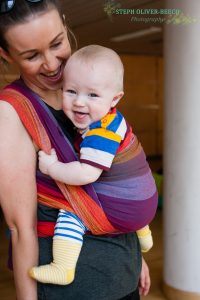
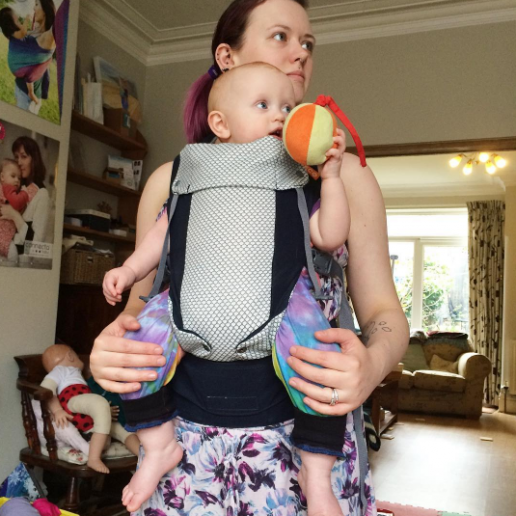
To achieve a good view while the child remains parent-facing, and ensure access to the world, try carriers with broadly angled straps that don’t get too close to the face can be very useful, or ones that can be tied carefully for good visibility. As children grow in co-ordination, they need less head support and often enjoy having their arms out of carriers (with the panel reaching up to the armpits for safety and support.) It is surprising how far a child can turn round to see when they can move their shoulders! 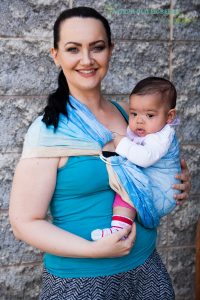 Hip carriers and ring slings will hold a child “off-centre” or laterally on the hip, for a great vantage point, and they will still be able to turn towards their parent for conversation or rest. Back carrying can be another very useful way for a curious child to see the world coming towards them. Most structured carrier makers will suggest sitting-up age to be the most appropriate time to begin to think of this option, and it is not hard to do on your own. Your local sling library or consultant (www.slingpages.co.uk) will be able to help you learn.
If you have a baby who is developmentally ready for facing out in a carrier and has stable hips, then I think it is just fine to give it a go! Your local sling library will be able to show you some options and talk you through which may be the most comfortable for you. Trying the carrier out first for a period of time at home is very useful to see if it really does work for you before you buy; advice from the internet is no substitute for real life trials.This period of “fussiness” doesn’t usually last long, as babies grow in co-ordination they are happier and many babies who once resisted facing in are very content a few months later in a carrier that is more comfortable with greater longevity.
In summary, facing out can be a great deal of fun for parent and child, if done sensitively and thoughtfully, with consideration to the child’s anatomical development and comfort; look for those carriers that take your baby’s comfort as seriously as yours. Try to pick a carrier that will hold baby optimally for most of the time, some come with specially designed bucket seats and others will widen for facing in and back carrying.
Age-appropriate facing out for those who enjoy it is great, when done safely! Your local sling library can be found at www.slingpages.co.uk.
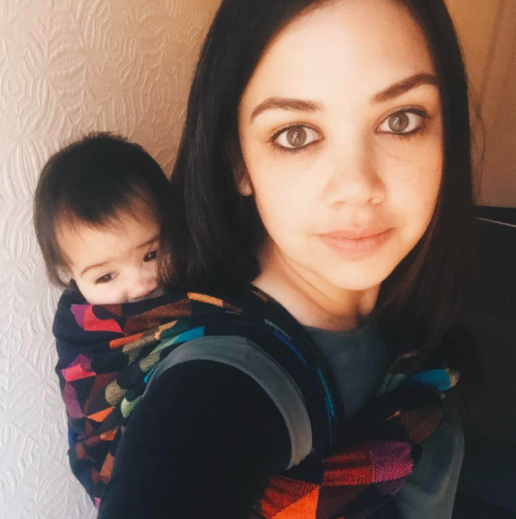
Babywearing in Ramadan
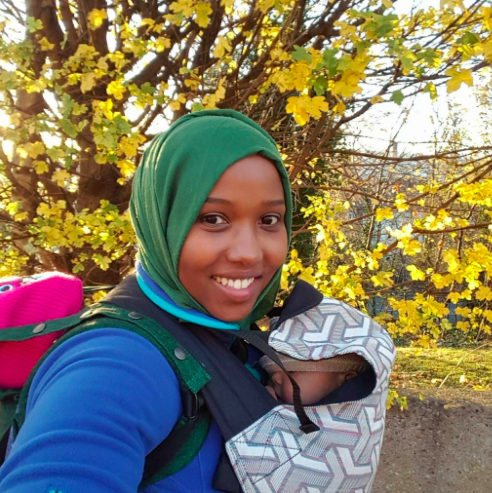
Nafeesa tells us about Ramadan and her experiences of babywearing during this holy month.
Parenting isn’t always easy. A poorly child who wants nothing more than cuddles, a grumpy child who for whatever reason cannot be consoled, a parent who is feeling touched out or is sleep deprived may not necessarily feel like having the responsibility of parenting that particular day. We all have challenging days as parents and it is part and parcel of the family narrative that we create.
Now imagine if you were having a challenging time but you were not eating or drinking all day, particularly in the summer? Or you were trying to console a sad child knowing full well you desperately needed them to settle so you could catch some quiet spiritual contemplation? Such is the life of a Muslim parent. Since the end of May this year (2017), Muslims all around the world (including those in Sheffield) have been observing the holy month of Ramadan and without a doubt these will have been issues that have cropped up during this time.
For most people who are not Muslim, Ramadan is automatically associated simply with not eating or drinking. However, in fact it is about much more than simple fasting. Whilst fasting is expected for every Muslim who is physically capable to do so – it is only one component of a month that brings in spiritual gain in generous amounts. For Muslims, Ramadan is a time to spiritually check in, audit our souls and put plans in place on how to be the best people we can be in the year beyond. It’s for this reason that we love Ramadan so much. It’s our chance to reap good deeds.
Unfortunately parents of small children find themselves having to juggle the needs of their children with their own spiritual needs and many parents, including myself, wish we had the extra time to engage in Ramadan more effectively. In my experience using a sling can really help. As a mother of three, including a 5 month old baby, having a sling on hand has ensured I’ve been able to work a little more effectively at getting jobs done quickly so I can engage more time in ibadah (worship). It means that my little one can be kept more calm during “the witching hour” while I tend to my other two, and get iftar (the meal which we break our fast with) ready on the table.
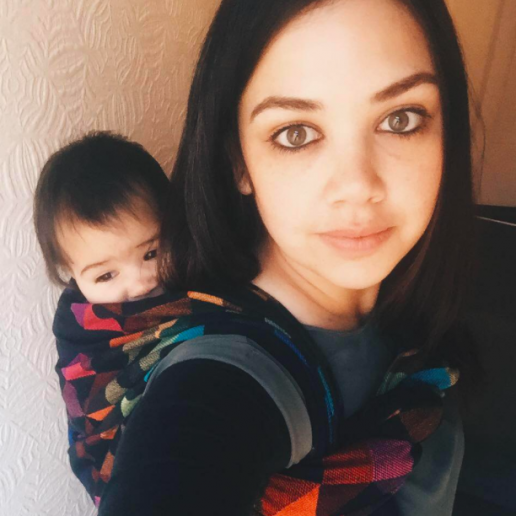
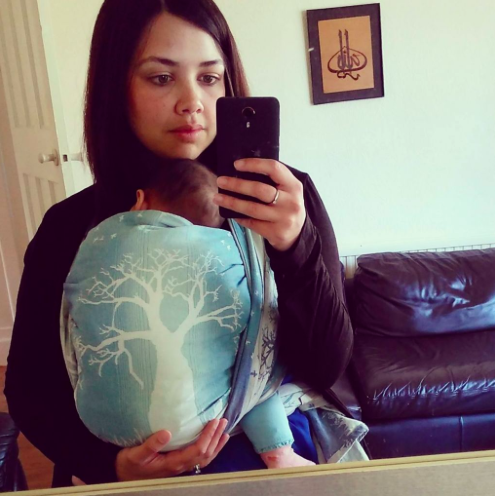
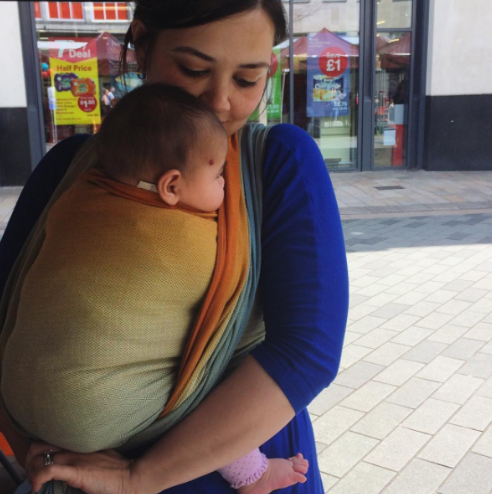
Four years ago, I found myself fasting in the summer months with my two year old (as an aside, Ramadan does not always fall during the summer, but currently is and will be for the next couple of years). I have a very fond memory of walking 2 miles with a heavy toddler in tow on my back on a hot summer’s day. I remember looking at my watch at 2.30pm thinking “I have seven more hours of this to go” (fasting).
It would be easy for anyone to read that and immediate feel sorry for me or think I’m mad for inflicting difficulty on myself for my conviction. One of the biggest micro-aggressions Muslims face are well meaning but ill-informed comments of pity for our choice to fast. The fact is that all who are physically capable of doing so are expected to fast, but there is an element of choice for those for whom it may be too debilitating (for example, with medical conditions, while pregnant or breastfeeding).
Fasting is a physical endurance that gives me the opportunity to cleanse my insides both physically and spiritually.
Fasting and babywearing do not need to be mutually exclusive and ultimately it is no one’s call but the fasting parent’s to determine what they can and can’t do. Ultimately Ramadan is a relationship of deep connection between the individual and their Creator. It’s not my place, your place or anyone else’s to advise a fasting person what they should do.
I chose to babywear four years ago while fasting, as I felt well enough to do so, I did not feel faint and I knew I could keep my children safe that way. This year, as I’m exclusively breastfeeding a small baby, I took the decision not to fast.
Babywearing is an amazing way to share the joy of Ramadan with our little ones. Even if no words are spoken, Ramadan is an opportunity to reap good deeds and build connections. I have enjoyed carrying my baby girl everywhere, speaking and meeting new people, sharing iftar and attending prayers while having my little partner in tow, and now celebrating Eid-al-Fitr with my loved ones.

Perinatal Mood Disorders and Carrying
The prevalence of Perinatal Mood Disorders (pre and post-natal depression, anxiety and post-traumatic stress disorder) is increasing in Western society as it is increasingly fractured and isolated, with a decreased sense of local community and shared care. The birth of a baby is often an overwhelming time for both parents, especially when also faced with the expectations and demands of a fast-paced culture that often judges people by their apparent productivity and appearance. As a GP, I see many families struggling with these conditions that are often diagnosed, and keeping babies close may play a part in surviving these illness, mainly due to the closeness with your child, rather than the choice of sling.
Postnatal depression is on the rise – affecting at least 10-15% of new mothers (with many more sufferers (and fathers) never being recognised to have the condition). Anxiety and PTSD are also worryingly common. Parents are encouraged to put their babies down as much as possible and regain their old lives; babies are expected to learn independence as quickly as possible and stop relying on their parents for their every need.
This approach to caring for children is very new in human history and runs counter to attachment theory, which suggests that the human infant thrives on responsive parenting and close contact.
Read about Ruth’s experience of antenatal depression here; for the rest of this post we will focus mainly on postnatal depression (PND).
What is Postnatal Depression?
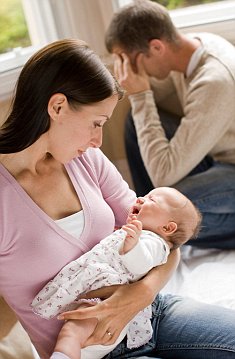
Postnatal Depression is a depressive illness which affects between 10 to 15% of new mothers. Many more are never diagnosed with this condition, which can become a very significant issue in the functioning of a family. It is often poorly managed by health care providers, and can be misunderstood by the community and dismissed as “just the baby blues” or “tiredness.” It is common for sufferers to feel very alone and unable to explain just how they feel and why it is so difficult to endure. Prenatal depression is also experienced by many new parents, and postnatal anxiety and Post Traumatic Stress Disorder are also commonly experienced pre and postnatally.

Why is it so common?
Western society is increasingly fractured and isolated, with a decreased sense of local community and shared care. Depression is common in our culture, for reasons not clearly understood, but partly due to the way we live. The birth of a baby is often an overwhelming time for both parents, especially when also faced with the expectations and demands of a fast-paced culture that often judges people by their apparent productivity and appearance.
Before parenthood, people’s identities are often based on their roles and responsibilities in life; work, friendship circles, hobbies and interests. After a baby arrives, this often changes dramatically, sometimes in unexpected ways, and for many, the huge change in the pace of life and the loss of control can be very difficult to deal with. “The burden of conscious responsibility with no let up and the unusual and unexpected degree of fatigue can make a mother feel desperate about whether she can survive and how she will manage.” (Kennell & Klaus) This is the role that community used to play; supporting and carrying each other’s burdens as part of a committed and close-knit group of people who lived together, an experience that few parents enjoy in the West today.
What does it feel like?
Common words used to describe PND are guilt and inadequacy.
“The worst part was the guilt I felt about crying every day when I had a beautiful new daughter.”
“It isn’t about not loving your baby but about feeling overwhelmed with responsibility and unable to cope.”
“My head can feel empty and I have no thoughts.”
“It is just so hard to face another day of feeling totally unlike myself, missing my old life, unable to enjoy this new one.”
Fathers suffer from depression after birth too.
“The first few weeks were the hardest and I would just sit and cry. I felt like this shouldn’t happen to me, I should just be taking it on the chin and getting on with it. But the truth is, I felt alone and without the support of my wife, I would’ve been a lot worse.”
Many parents with PND feel a sense of dissociation and detachment from the child they want to love so much.
“It isn’t about not loving your baby but about feeling overwhelmed with responsibility and unable to cope.”
Caring for people with PND is hard.
“PND is the scariest and loneliest place on the planet and puts a terrible strain on the whole family.”
“My husband felt helpless because he knew something was wrong but I wouldn’t admit it and shut him out. All he could do was try to look after me and be there when I finally admitted it. It caused a lot of irrational arguments.”
What can I do?
If you are suffering, or think you may be suffering from perinatal mood disorders, first be reassured that you are not alone and the vast majority of people with it survive with few long-term ill effects.
Here are some suggestions that may help.
Get help where you are.
Tell your nearest and dearest how you really feel.
“I found the hardest bit was to admit that I wasn’t coping, even when it looked like I was, I was fine on the outside but was a complete mess on the inside.”
Many women testify how supportive their partners and families and close friends are once they understand – ask them to help with the basic jobs of daily life; cooking, cleaning etc. Help them to see how useful you will find it when they listen to you with acceptance and without judgement, and how their understanding when things go wrong is vital. Guilt is a large part of PND and many kind people may inadvertently add to this burden.
Get help from your local health care providers.
This may be your GP, your midwife, your health visitor, your local SureStart centre. The quality of care from these resources can vary enormously. It can help to write down on paper how you feel in advance and what you think you need (validation, formal counselling, CBT or medication, for example) and take it with you to appointments. Continuity of care is great, if available; a HCP who listens and cares can make a greater difference than one who fires questions and is keen to tick boxes and prescribe medication at once.
“Guilt and lack of confidence are so typical of PND and my HCP was essentially validating those feelings even though objectively I was doing a great job!”
Be armed with information (e.g. if you wish to carry breastfeeding, sertraline is safe in these circumstances). The Breastfeeding Network is a valuable resource. If you are not satisfied with the care you are receiving, find different care.
Get help from your local non-NHS resources.
These can be very useful, such as HomeStart (a befriending service) and local PND groups. A postnatal doula may help, and there are many national helplines and resources (see below)
Get help from online social resources.
There are many forums and parenting groups full of people who know how you feel, and will listen and share. Being among people with the same values and parenting beliefs may be a source of great encouragement. Equally, avoid too much time online.
Get out!
It can be very hard to actually get out of the house when struggling with dark thoughts or hopelessness, but it is worth the effort involved. Even a walk down the road is a good start, and encourages release of endorphins (the natural feel-good hormone). Arrange to meet some friends, and ask them to encourage you to come. Try to make a plan for most days, and be kind to yourself if you decide on a pyjama day instead. Try to arrange some time to spend alone with your other half, to remember who you still are, as well as parents.
Get nourishment.
Good quality food, drink, exercise and sleep are vital to your own health and sanity, as are times to enjoy the things you used to. Dress well in bright mood-enhancing colours. You are still a person and your own needs should be met as much as your child’s. Some people make use of night-time carers to allow some much-needed uninterrupted sleep.
Get past your birth story.
For many women, recovering from birth takes a while, especially if it was not the hoped-for experience. The NHS Afterthoughts service and counselling can help if you feel a sense of grief.
Get a sling or carrier.
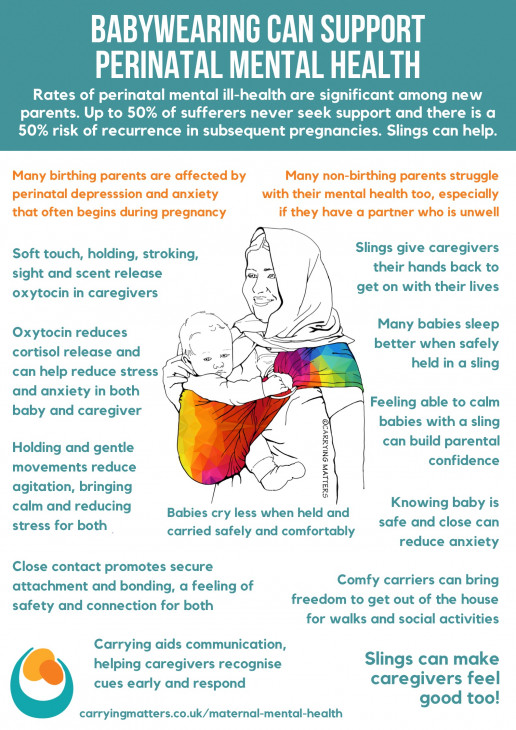
Keeping your baby physically close is well known to stimulate the release of oxytocin. Oxytocin is a hormone that is closely related to bonding and attachment. It is released during labour and breastfeeding, and, crucially, during skin-to-skin contact and social interaction. It has an important role in encouraging nurturing feelings and a sense of belonging, and reduces anxiety and depression by affecting cortisol release.
Babies who are in close contact with their parents have been shown to have a corresponding higher level of oxytocin than their non-carried counterparts; which subsequently helps to reduce baby’s own stress levels and improve their sense of secure attachment; their needs are met at the point of request. Calmer babies are easier to care for; win/win.
The soft touch of close skin to skin contact reduces the release of cortisol, the stress hormone, via C afferet fibres affecting receptors in the hypothalamic-pituitary-axis. Stroking has been shown to reduce pain responses.
Modern life is fast-paced and for many, constant carrying of ever-growing children can be difficult to achieve, or uncomfortable after the travails of birth. This is where the practice of using a sling, (sometimes known as babywearing) can be of great value. A soft sling that allows you to keep your child close to you, (thereby stimulating the release of oxytocin and reducing cortisol), and helps your baby to relax and sleep in secure comfort may make a huge difference to your life and your feelings and help you to feel that you can cope. Anxiety may settle a little as you know your little one is safe next to you.
“The sling brought us back to an almost pregnant-like state, with him a part of me, listening to one another’s cues. He was calmer for being close to me, which made me feel more confident, which brightened my mood. Leaving the house felt less daunting so I got more exercise and again increased my confidence. I talked to him more, whether he was awake or not, and he became my son rather than a tiny scary stranger.”
“My favourite thing in the whole world, that never fails to calm me or lift my mood has been cuddles with my baby, particularly skin-to-skin. For me, there is no antidepressant like it.”
“When she was in her pram I felt completely removed from her and her world. I was just an accessory, she was a job to do and I was irrelevant. Using a sling finally helped me bond properly with her and made a massive difference to the PND.”
Many slings are extremely comfortable to use, and can be very practical indeed. It is possible to learn how to feed discreetly in a sling, allowing you more flexibility about being out of the house for the day with your baby.
Slings give you and your baby the freedom to be on the move together, rather than feeling stuck; to go out into the world for a walk or go shopping without struggling with the complexities of a pram. Movement and exercise are vital to wellbeing; and using a sling safely can help your body recover from birth and become stronger.
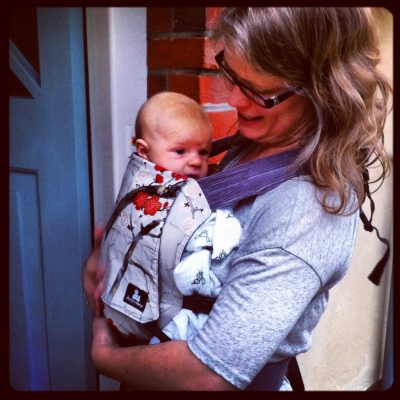
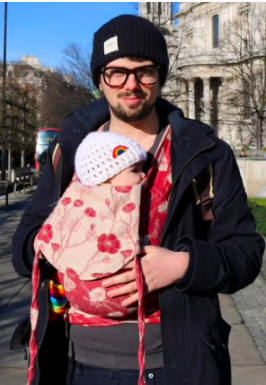
Slings can be beautiful and colour therapy can help to lift the mood. Learning a new skill can be therapeutic, and many parents find a great sense of community among other sling users both locally and online. This can help with feelings of isolation, especially if you have chosen to parent differently from your family or your peers.
Get a sense of perspective.
What matters in these early months is you and your baby. It does not matter what other people think; the house does not need to be pristine, you do not need to impress people with how well you are taking to parenthood. I have heard many women describe how they “are falling apart on the inside”.
“I thought because I wasn’t suicidal or not looking after things that it couldn’t be PND so held back for a long time from accepting it and getting help.”
“I found the hardest bit was to admit that I wasn’t coping, even when it looked like I was, I looked fine on the outside but was a complete mess on the inside.”
Get confident again.
Reflect on what you have achieved so far and use that to build self-belief. Learn to trust yourself, be an instinctive parent – and you will fin that as you encourage others, you will find yourself lifted too. Some people find going back to work can be very helpful; the chance to use skills again and have adult interactions once more can be a great boost to self-confidence.
Useful Resources
Postnatal Depression Information Leaflet
Postnatal Depression Information Leaflet 2
Pre and Postnatal Depression Advice and Support (PANDAS)
Mothers for Mothers Postnatal Depression Support
Postnatal Illness Information (PNI)
The Impact of Babywearing on Mothers’ Mental Health – Aimee Gourlay
Further Reading
“I carry my heart in a sling” – a blog on how slings helped Lindsay fight her PND.
Sling Sally’s talk on Slings and Sanity for the 2015 Northern Sling Exhibition
Surviving PostNatal Depression – Selina Shaik for MIND
How Carrying Helped My Recovery – Ellie at Peekaboo Slings
Carrying With A Mental Health Disorder – Andrea’s story
Slings and Prams and Guilt
“I have a confession to make. I like my pram; sometimes I choose it over my sling. Does that mean I’m not a real babywearer?”
“I feel guilty if I pick the pram for days out when I know the sling is so beneficial.”
“I feel selfish if I use the buggy, but sometimes my body needs a break.”
Slings and prams and guilt often seem to go hand in hand; as if there wasn’t enough guilt involved in being a parent in the first place.
I hear phrases like these from time to time, and while I am delighted that these families have discovered the good things that come from using a carrier, I feel sad that guilt has started to creep in, and that divisions are developing. There is more than enough guilt in the world for parents; how they choose to feed, how they choose to dress their children, and now it seems, how they choose (or don’t choose) to carry. I am really keen to prevent any “mommy wars” regarding carrying from springing into life, so here are my answers to this sort of situation.
Carrying DOES matter. Carrying your child is an important and necessary part of the “fourth trimester” early months of life, it is part of the essential bonding (imprinting) process whereby attachment is created. Secure attachments with a loving caregiver are the bedrock of future positive mental health and the springboard into healthy emotional relationships in later life. For young babies, loving touch and holding are one of the major means of providing this sense of being loved and being secure. Few of us are able to resist the urge to hold our crying children, to provide them with relief and to be their safe space, it is instinctive in us. We should all spend a lot of time holding and loving our babies and allowing them to learn to love us back.
However, modern life is demanding and society encourages us to think that early independence is desirable; that children should not “hold us back.” It is important to care for all members of the family; baby, siblings and parents equally; and this is where using a sling can help. A baby needs to be carried; a sling will allow this to happen while life can continue around them. A sling can mean the childcare can be shared with other adults, a sling will allow a parent to get out and around without the need for lots of equipment.
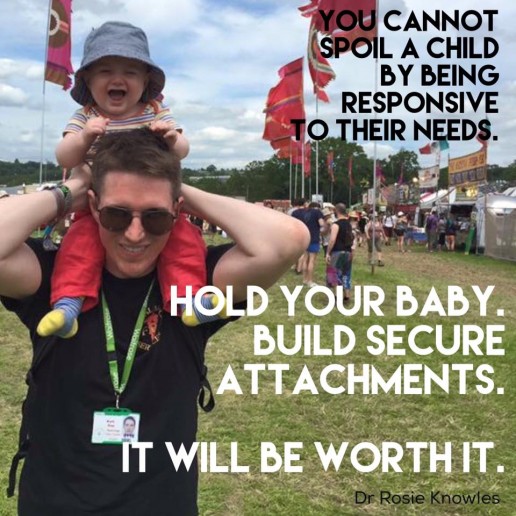
That said, there are many ways to keep a child close without the need to use a sling 24 hours a day. In-arms carrying, cuddly play, breastfeeding, bedsharing, piggybacks, reading stories with baby on your knee and so on are all ways to be in close contact. It is indeed vital to keep up with regular close contact well into the 2nd year and beyond as our children’s brains are still learning about love and attachment – it’s an investment in their future mental health. However, once babies begin to take control of their own bodies and learn how to move they need the freedom to do so.
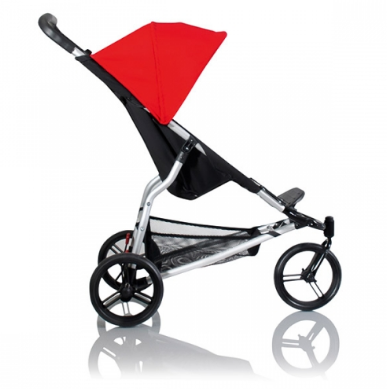
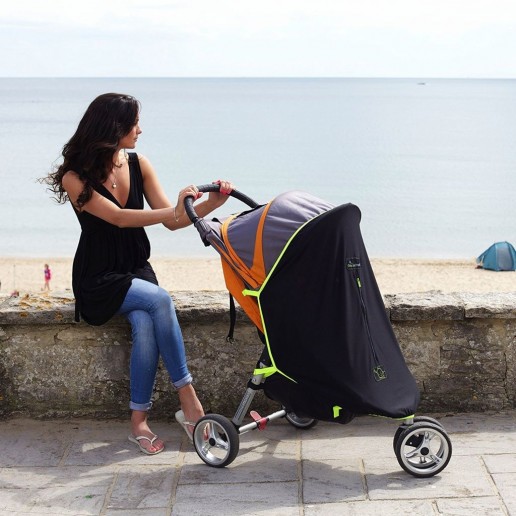
Prams and buggies are a perfectly valid, convenient and useful way of transporting your child around and there is no reason to feel you are disadvantaging your child by using one instead of the sling today, or depriving her of something, especially if she can see you and remain in communication. You can meet her needs for closeness some other way later in the day. There is no reason to “ditch” the pram if you find it helps you in your parenting. A pram is (like the sling) a tool for getting around and carrying things, and may be easier in many circumstances, just as a sling can be easier in others (eg public transport, busy shops, off-road exploring). There are many ways to carry other things when your baby wants to be up; special bags that fit around the sling.. or a buggy!! Many families use and love both types of transportation, choosing what will suit the situation best.
Some children may just prefer the space of the pram; this is not a rejection of you, but may just be an expression of their personalities or their wish to explore what they can do with their limbs. It may be that your little boy feels too hot in the carrier that you have, or just fancies a change! Your toddler may also enjoy being able to see the world from a different perspective. If your baby loves the pram and doesn’t want to go in the sling today (assuming of course it is a comfortable and well fitting one – see here if your baby seems to hate the sling), that’s just fine. You are being responsive to your child; there is nothing to feel guilty about.
Sometimes YOU may just prefer the pram over the sling, especially if you are feeling a little claustrophobic or touched out, or just tired. Maybe you have two children, or more, and the buggies are the best option!
We don’t live in the same supportive communities these days and it can be hard for one (or two) people to shoulder the load of responsive parenting alone 24hours a day, we all need a break sometimes. “Villages” of old would share the carrying/ feeding/ entertainment more widely, which provided a much better balance of life than many of us are able to find today. If you want to use your buggy, use it and enjoy it, you can cuddle your baby later (or you may have already used the sling today.) Do not feel guilty that you are not being the best parent that you could be.
Do not feel guilty if you feel you just can’t carry today. There is no such thing as a perfect parent and social media sharing doesn’t present a true picture of people’s lives; it can look like others are using their carriers hour in hour out, day after day from their photos, but these don’t show the in between hours or days where the sling is not in use (and the pram is!) Sometimes prams are an expression of our personalities too, just as the carriers we choose can be…
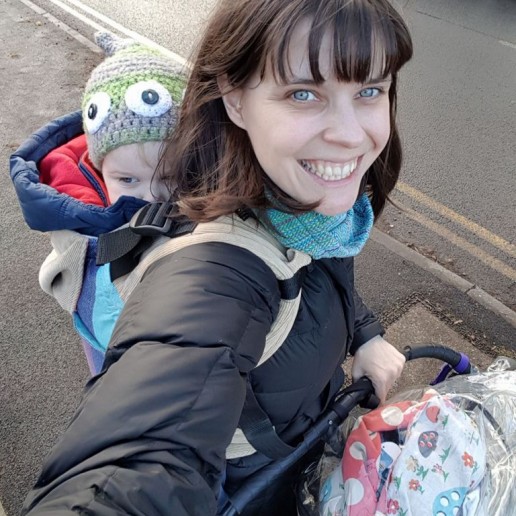
All safe and responsive carrying is good
; the sling you choose to use is not important, as long as it is safe and comfortable. A buckle carrier is as valuable as a mei tai or a woven wrap or stretchy or a ring sling. Even brands of buckle or wrap is irrelevant; what matters is that you and your child are together, in close contact, safe, and enjoying each other’s company, or sleeping in contentment.
If you are a sling user, this is a great opportunity to avoid creating a culture of guilt and judgement. The parents you see using a pram to quieten a crying baby may well have found this works better for sleeping than their sling. The mum you see pushing a pram in crowds may feel her baby is safer inside the pram than being bashed by passers by in a sling. A parent carrying a heavy toddler in their arms after a melt-down may well have chosen not to use their sling today. iIt is important to be kind and recognise that one moment is not a whole life, and we do each other a dis-service if we unintentionally spread the message that either prams or slings are superior, or if we stare and make comments about others that could be overheard. All safe slings are of great value, and we should be cautious about what message we send to the new parents around us.
I’ll finish by reiterating that carrying IS important. We should all carry our babies and spend as much time in close contact with them as we can, be that in a sling, in arms, hand holding and so on. We should try to carry our children as much as possible, as there are many good reasons to do so. That does not mean that we should feel guilty if we choose to use prams or buggies as well, or if we choose to use one kind of sling over the other.
Oh, and of course it is fine to come to a sling meet/sling library session with your pram! And no, you definitely don’t need to feel embarrassed if you see me out and about and you are using your buggy!

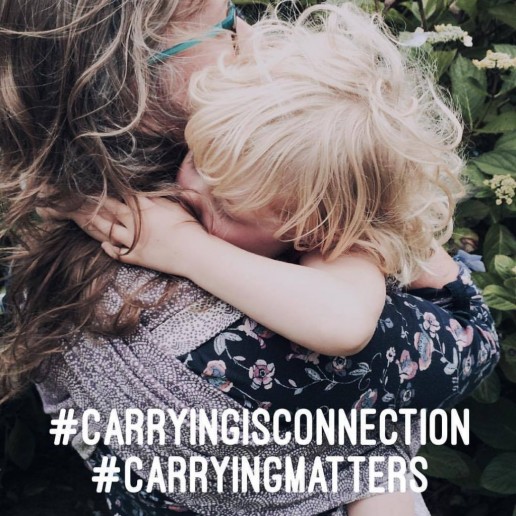
Why Carrying Children Matters
Why does carrying matter? There are so many reasons why holding and carrying children matters, on multiple levels (biological, developmental, psychological, sociological, long term health) that it would take a whole book to discuss, even in brief!
Carrying behaviour is normal for the human species; babies are very vulnerable at birth. They are born with great needs, there are many months and even years of maturation needed before human infants are able to control their bodies fully and become able to care for themselves independently. Babies and young children are dependent on their primary caregivers for a very long time. This prolonged childhood is thought to be one of the reasons why the human species has been so successful; allowing the human brain to develop complex skills such as language, creativity and the ability to alter the environment around them.
Mothers’ and babies’ bodies are adapted to each other; during pregnancy, during birth, and during the early years. They “fit together” and create a very special shared space, honed over the millennia of evolutionary processes. They work perfectly in harmony, when given the support and freedom to do so.
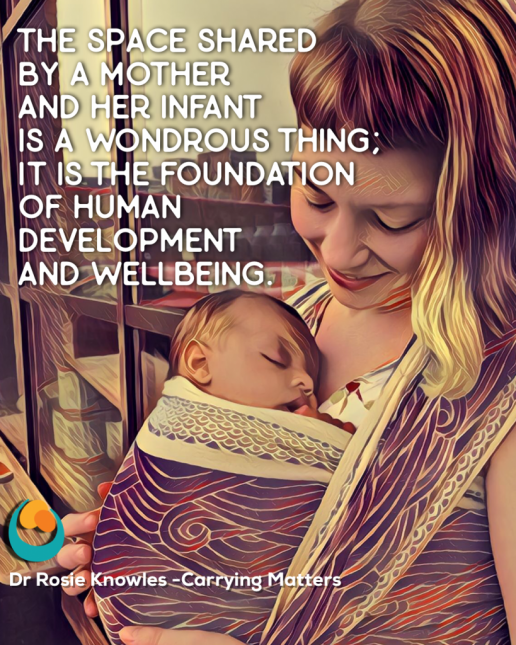
This is where the “4th Trimester” concept comes from; holding and carrying babies recreates in some part the intra-uterine environment of warmth and safety and containment and allows them to develop new skills from this platform of security. Our human instincts are strong (a baby’s cry tugs at our heartstrings and we feel the urge to gather them up, hold them close and rock gently while murmuring in a soothing way) and we are discovering much of the neurochemical science behind this normal, natural behaviour. Oxytocin release builds loving connection via multiple pathways. Soft touch has helpful effects on the hypothalamic-pituitary-axis and cortisol production, reducing pain and modulating the stress response. Gentle and responsive parenting builds and reinforces the neural circuitry as it develops in the child, creating a healthy positive inner thought state that affects long term mental health. Furthermore, building this resilience helps to combat the adversity that so many children experience. Early “skin to skin” contact is enormously useful for beginning this process of connection.
Children need loving nurture in the early neonatal period and long beyond this for normal, healthy development. Carrying babies close to an adult’s body, as human beings have evolved to do, is vital for normal physiological and psychological development. Research into the importance of skin to skin contact, soft touch and responsive parenting, as well as a better understanding of disability reinforces this.
I talk about the positive effects of holding, carrying and babywearing, rather than the “benefits” of these practices. The word “benefit” implies an extra thing, an advantage, something that can be added onto what is baseline… but the holding and carrying (however it is done, in arms or a sling) that builds connection is part of normal human development. It is the baseline! It isn’t something that some parents can choose to do to give their child an extra advantage in life. It is what all babies need, like nourishment, warmth, safety. The absence of these loving connections that involve gentle physical touch is harmful to children.
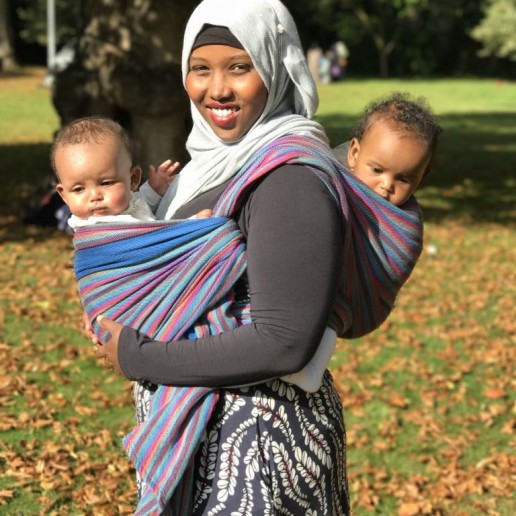
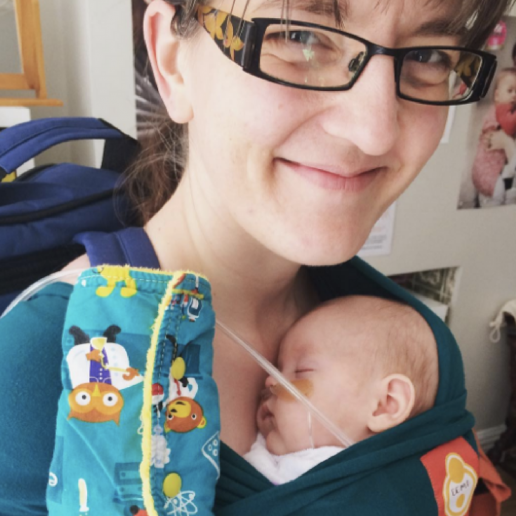
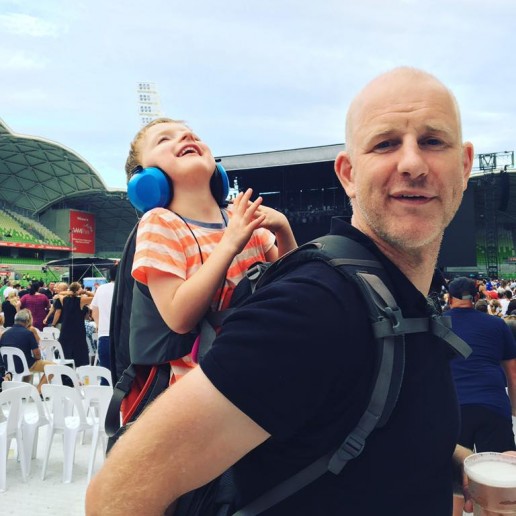
We can agree that carrying children matters. However it is not just babies and children who need the close contact; parents and caregivers also benefit hugely from holding their offspring and interacting with them closely. The same biochemical pathways that help babies and young children to thrive are present in adults too, and families flourish when the needs of all its members are met. Adults need loving contact too; and a child who calms when comforted in arms or a sling provides positive reinforcement that parenting is manageable after all. Many parents find that babywearing can help with low mood and improve their confidence, as well as giving them freedom to get on with their lives in the societal constraints in which they live.
Carrying in arms and in a sling really does make a significant difference to the overall wellbeing and physical and mental health of all members of society, both now and for the future. A society where children’s needs and rights are taken seriously, where knowledge of how to build securely attached children and adults is put into practice, and where the most vulnerable among us are treated with love and kindness, is one in which we would all wish to live. This is why carrying matters; it can change the world around us.
To find out more, please click the links below.
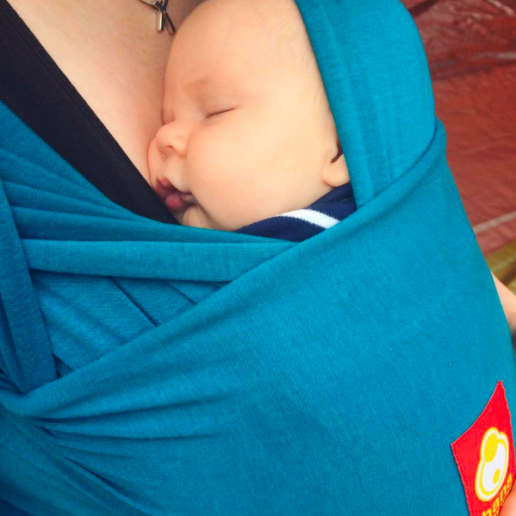
Do Slings Create Clingy Children?
Do slings create clingy children?
Many parents worry that by carrying their baby in a sling, that they are going to create a “clingy child” who won’t be put down. There is a lot of pressure from society to "put your baby down", a fear that responding to the cries of a child will somehow spoil them. Many people believe that children need to be trained into early "independence" and that too much love holds a child back. This is very, very incorrect.
It is disconcerting for a babywearing mother who has carried her child frequently from birth to find that he wants to be held much more than his contemporaries, and when the time comes (if it does) for childcare from other individuals, her baby may protest very vigorously and will not allow another adult to look after him.
All too often, at this point, the words “rod for your own back” surface and the use of the sling is blamed for the child’s behaviour, labelled as “clinginess”. People can use this as a reason to reinforce fears that a child has been "ruined" by the cuddles. For a new parent, doubt can creep in; a fear that somehow, somewhere, a wrong choice has been made and a child’s independence has been stunted by keeping them too close.
Watching parents and children struggle to separate can have an influence on bystanders; encouraging them to think that sling use is more trouble than it is worth. They are wrong.
 Secure Attachment Matters
 Secure Attachment Matters
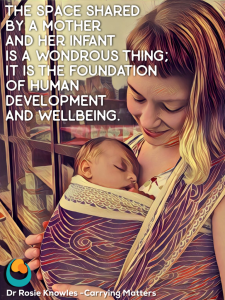
It would be worth at this point, to briefly recap the value of close bonding and secure attachment. Close contact that began at birth and has continued uninterrupted will have initiated, facilitated and consolidated a positive bonding process (mediated by oxytocin).
Such children are likely to have secure, positive attachments to their primary caregivers, which is essential to their physical and psychological health. This is how to build a happy brain; responsive parenting. Children who know their own value and have a rock-solid foundational experience of having their basic needs met, will have trust and confidence in the loving adult relationships around them. This builds resilience, a vital tool to help children thrive despite adversity.
When it is biologically appropriate, they will be more able to turn to independent play as they know and trust their mother is there, even if out of sight; she will not abandon them, she has consistently always come back. As they grow older (towards their first birthday), and begin to develop more co-ordination and independence in movement under their own steam, they will have the underlying security to roam further and further freely. This takes time to develop, and individual personalities play an important part in this.

With this natural, biological change and development in their bodies, they will also demand less frequent contact, less frequent feeding, and begin to expand their horizons. This is often the point at which carried babies begin to want to be carried less; to reach for the floor where they can explore, and investigate the world around them. They may even begin to refuse the sling from time to time, often to the carrying parent’s chagrin!
Modern society expects children to become independent individuals extremely young, praising and rewarding those first shuffles forwards, first crawls and first steps, and being quick to criticise or discourage behaviour that demonstrates need. However, it is normal for babies to express their needs, such biologically appropriate behaviour should not be “trained out of them”.
If a child has been carried in arms or a sling from birth and has strong, secure bonds with his caregivers, it is entirely normal for him to expect support from these caregivers in the way he has always experienced it, whenever he asks for it. The neural connections in his growing brain have been solidly reinforced over and over again. It is also normal for him to protest when he is removed from his trusted habitat and asked to accept different caregivers he may not know. This child is not “clingy” in the sense our society means it; it simply means he is habituated to the close contact he has enjoyed all his life, just as his ancestors were; and such close contact is normal for human babies.
With the natural progression of his emotional and psychological development, as well as the growth of his physical skills and strength, his needs will change. Until that stage is reached, a child will expect continuity of care and for things to remain unchanged. The eight month to twelve month period is often when children experience separation anxiety and often coincides with things like parental return to work, introduction of new spaces and places, and of course the sling will play a part in providing reassurance, until a child is ready to move on. It is a safe space, rather than being the root of any “clinginess”.
In our society, babies are carried much less and put down a lot more than they used to be. Some fairly recent British data in 2000 (Baildam et al 2000) suggests that mothers spent an average of just 61 minutes in 24 hours simply holding their sleeping or crying six week old child. This figure was only 17 minutes when the child reached one year old.

When feeding contact was added to the data, 6 week old infants spent an average of 3hrs 27minutes out of 24hrs in contact with their mothers, and 2hrs 23minutes at one year old. Given the trends in current mainstream society, this is likely to have declined further.
For many babies, their parent’s body has never been their primary habitat, their early communication attempts were never met positively, and for some, their bonding may be less secure and demonstrate more insecure or ambivalent patterns. Earlier “separation” may have been gained, but at some cost to future mental health.
Don't be afraid to hold your unhappy baby or to use a sling if they want to be close to you (it means you can be hands-free while you meet their needs). It is always worth building secure attachment relationships. Your baby's babyhood does not last; soon they will no longer need you in the same way, build that solid foundation while you can!
Normal Independence
So, when does normal, biological independence for the human child develop fully when allowed to proceed at its own pace? Well, personality plays a part in this; a single family may have very different children who have been parented the same way and yet have different needs and develop confident independence at different times. Generally, however, anthropological studies would suggest that full independence would occur when a child has completely self-weaned from breastfeeding and bed-sharing, no longer requests frequent in-arms carrying, being able to reliably move from place to place unaided, and able to verbally communicate effectively; usually around age three for carrying (even only occasionally, in piggy back form). Breastfeeding and bed-sharing often continues much longer in more traditional societies.
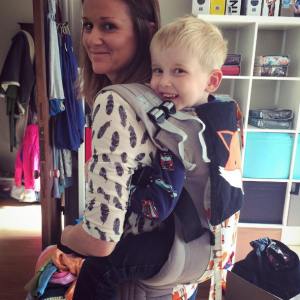
This is much, much later than the socioeconomic model many of us live in. Children are incredibly adaptive, and as there is so much technology available and so much societal pressure to encourage this early separation, this often means that babies can and do learn to need their parent less than they normally would at their current age.
They can learn to not to raise their arms or cry for contact, they can learn to stop asking for breastmilk, and they can learn to sleep alone, however they may be missing out on much of the opportunity for emotional and psychological growth in these crucial formative years. This is the current societal norm; to put babies down rather than hold them close.
So it is no surprise when a parent chooses a more instinctive and natural means of rearing their child, that clashes develop with other parents and older generations who have simply done what the culture around them does and did before them. Why change things?
Grandparents may feel rejected if they feel their own child has chosen to parent differently from them; gentle discussion about current research and new understanding of child development and tactful understanding can go a long way in resolving such conflicts.
Many families will feel they have little chance to spend as much time with their children as they would wish due to work pressures; regret or resentment about this may manifest itself as criticism of others who are able to care for their children in a different way. They may not know there are comfy slings for older children; would it be worth visiting the local sling library?
Sleeping in Slings
People often worry that their babies will only ever sleep in a sling or resting on them. This is the natural, normal place for a child to sleep, in the haven of his parent’s secure provision. A baby falls asleep when he feels warm, safe and loved; it is no surprise that babies love to sleep in their parents’ arms; and as we have discussed, as they grow, their need for this will gradually decline.

If you have the kind of life that cannot allow a child’s sleep physiology (or accepting non-parental child-care etc) to mature at its natural pace, then it would be wise to ensure that your baby is well used to happily and easily and trustingly settling to sleep in different locations; or well used to care from other trusted adults and this will be easier if he has the underlying attachment foundations and parents who respond to his need as it arises; he will trust them that the places they lay him to sleep are secure, once he is a little older with the psychological maturity to accept this.
Summary
In summary; slings will not make clingy children; your child is demonstrating normal human infant behaviour, and has had a very positive start to life with a securely attached foundation to build on. All children eventually learn to feed themselves, settle themselves to sleep, walk unaided and accept care from other adults; some learn it sooner than others, but they do all learn it, and as parents, it is our responsibility to choose a method of childrearing that feels right to us and is going to give our children the best start in life possible in the circumstances we live in.
References
Baildam, E. M., Hillier, V. F., Menon, S., Bannister, R. P., Bamford, F. N., Moore, W. M. O., and Ward, B. S. (2000). Attention to infants in the first year. Child: Care, Health and Development, 26:199–216.
Carrying Matters - all about babywearing safety, a guide to slings, and why connection matters
Welcome to the Carrying Matters website, run by the award-winning Dr Rosie Knowles.
It is important to support caregivers as they build a happy brain for their children. Soft touch and loving connections play a vital role in this. There are so many benefits of babywearing, which can be explored in this site. Babywearing safety matters; my guide to slings and my commitment to sling education will help parents and those who support them feel confident with sling use at every age.
Listen to Rosie talking about the 4th Trimester period in a new family’s life.

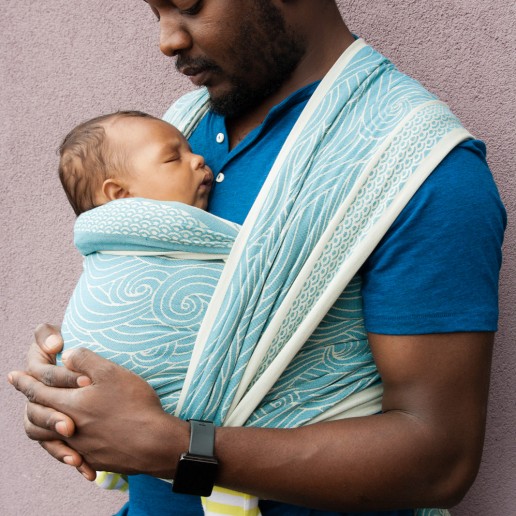
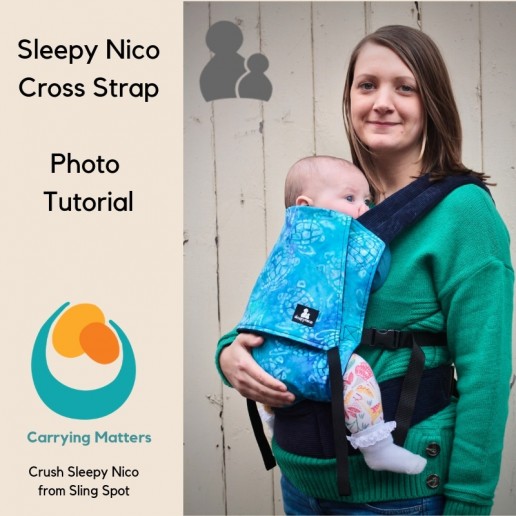
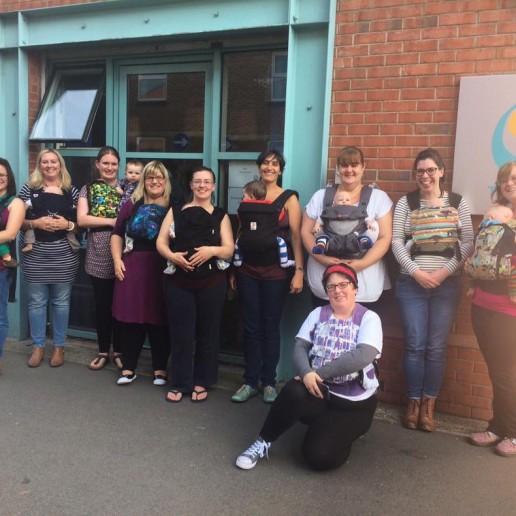
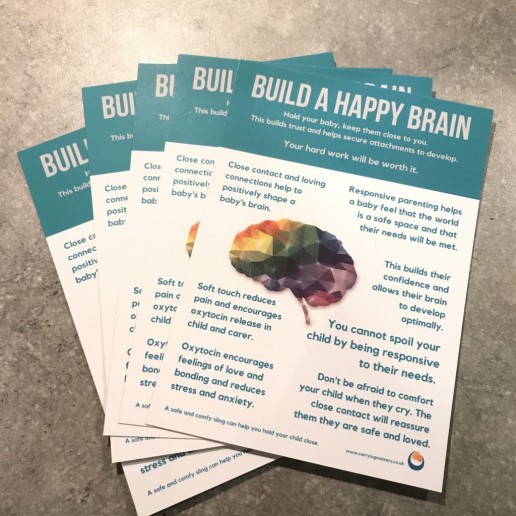
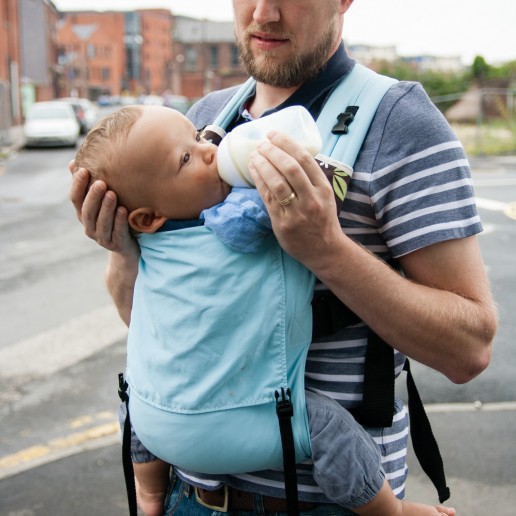
The positive effects of soft touch, close loving contact, and meaningful connections are enormous, and investment early on in family life is well worth it. Holding and carrying is connection; it matters to children, their carers, and society. The close contact helps to build a happy brain, and creates the relationships that buffer against adversity and promote resilience and long term positive health outcomes. It also helps mothers to survive the “4th Trimester” period and the months and years ahead. Here you can find everything you need to know about how to carry your baby safely and well, why babywearing is so normal and useful, how to choose a baby carrier, and help for all sorts of circumstances.
This page is run by Rosie Knowles, the author of the book Why Babywearing Matters (you can get a signed copy here). She is a GP in Sheffield, a carrying advocate and babywearing expert. She is passionate about supporting parents and carers to be close to their children; holding, soft touch and carrying matters in so many ways.
The simple act of connecting with a small person through the medium of loving touch has powerful and long-lasting effects on both child and carer. Babies need to be held close to encourage normal physiological and psychological development, especially in the early months. Every child needs love and connection to grow normally: the absence of responsive and supportive relationships that involve loving physical touch will hamper a child’s potential. Mothers heal best with their babies close to them.
Children thrive when they are carried, resilience builds and families flourish when the needs of all its members are met. Carrying is connection; carrying matters!
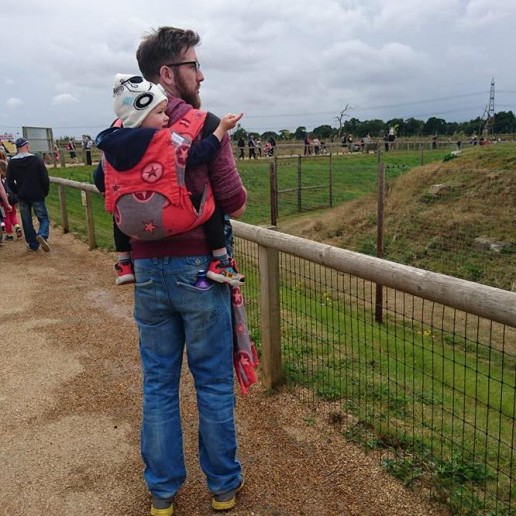
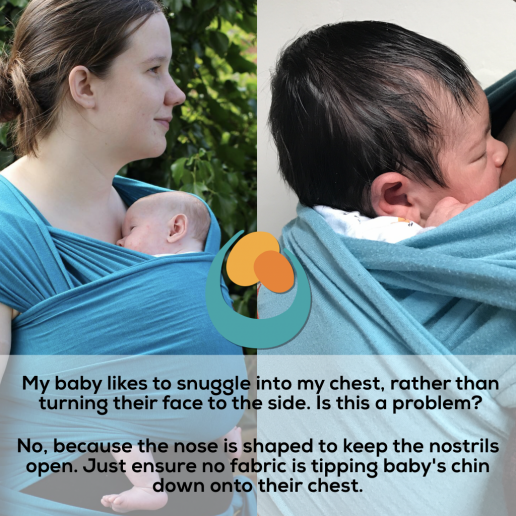
Keeping babies safe in any kind of baby sling or baby carrier is of paramount importance. The first most vital issue is to ensure that baby’s airway is open and unobstructed, with chin off the chest and the ribcage well supported. Babies’ temperatures should be considered too; they are surprisingly warm, and overheating can cause problems. Read more about sling safety here.
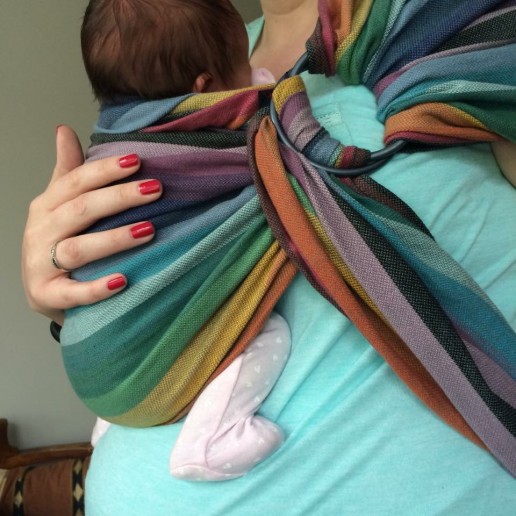
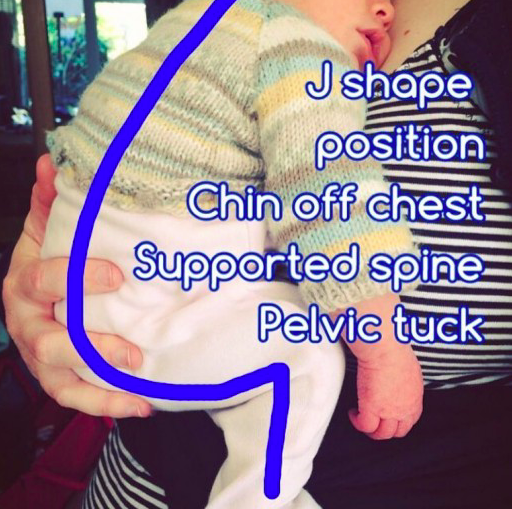
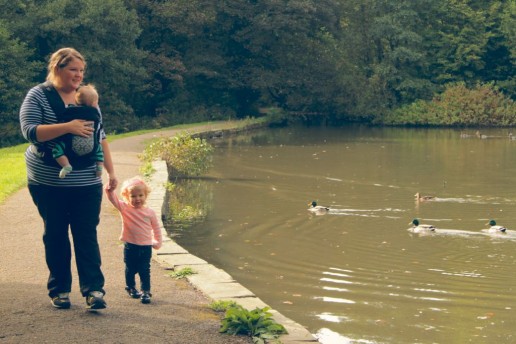
Secure attachment to other people is vital to human health and wellness; we thrive on relationship, on belonging. Such healthy attachments are the bedrock to future positive mental health and enjoyable relationships. However, 40% of children lack secure attachments, and are significantly disadvantaged. Encouraging carers to spend more time in close physical contact with their children is one way to improve children’s resilience and support everyone’s mental health. Soft touch is an essential part of building a happy brain and positive bonds that last a lifetime.
Read more about the importance of building secure attachments here, and how encouraging close physical contact can help build the resilience that children need to thrive despite adversity.
About Rosie
“I am a mum of 2, a family doctor in the UK (a GP), and a passionate advocate of building secure attachment relationships between children and their carers, due to the long lasting effects this has on future health. I believe that carrying children plays a large part in building such bonds, be it in arms or in a sling. With Carrying Matters, I focus on providing accessible information and education about this for parents and the professionals who support them. Sling and carrier use is not a new concept at all; but our Westernised society has lost the communal sharing of knowledge. We are no longer surrounded by a community of people who can help us get to grips with parenthood and share the load, so we need support in newer and more structured ways. This is what I do; empower people to keep their children close in a safe and positive way.”
Her book, “Why Babywearing Matters”, was published by Pinter and Martin in May 2016. It has been translated into several languages over recent years. She has written for a wide range of publications, including Juno Magazine, and has a regular freelance blogging role for Boba (links can be found in the Blog section).
She founded the Sling Pages, an independent website listing all the known sling professional resources in the UK and Eire, and the Building Bonds Project, a CIC supporting families in times of crisis and financial hardship to access good quality and safe carriers.
She is a practising GP in the UK with a particular interest in holistic medicine as well as children and women’s health and medical ethics. She began her career in hospital medicine but switched to general practice because of its flexibility with family life and the opportunities it presents to be more closely involved with communities, from cradle to grave. She has two children of her own, who have both been carried happily, and a husband who works alongside her at their local Sheffield premises. Rosie founded the Sheffield Sling Surgery and Library in 2013 and has supported thousands of parents across the South Yorkshire region, helped by a volunteer team of fantastic, committed parents who have found carrying their own children to be life-changing. They all want to help their fellow parents to discover this for themselves!
Rosie has won several awards for her work in this field; the Babywearing International Vijay Owens Babywearing Advocacy Award for Lifetime Achievement in Promoting Babywearing in 2016 and the 2019 Association for Infant Mental Health AIMH (UK) award in recognition of those who have highlighted and promoted infant mental health in their discipline.
Rosie developed the “Fourth Trimester” sling meet model with her colleague Lindsay Snow, focusing on the needs of parents with bumps to four months. Families often struggle to deal with the biological needs of their new baby within the confined structures and expectations of modern society, which can be damaging to the building of secure attachments.
The needs of baby and caregivers are both important, as is the mental health and happiness of the whole family. Human beings were not designed to live in small isolated units but in supportive social groupings.
Holding babies close (in arms or in a soft sling) can be a very useful tool for families struggling with mental health disorders, pre, peri or postnatally. The close contact and the soft touch has biochemical hormonal effects that can help to reduce anxiety, improve feelings of wellbeing and connection, as well as lifting the mood. Read more about this here.
You can find your local sling library or sling meet by searching the Sling Pages resource, get in touch with them!
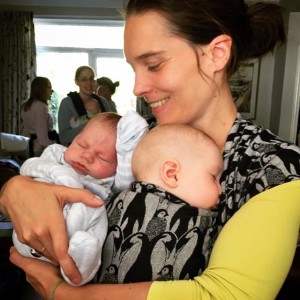
Using a sling (carrier) helps parents to keep their child as close as their biology needs, while also being able to function as adults in a demanding and inflexible world.
Rosie has trained many carrying advocates and sling/carrier peer supporters and sling consultants, running courses in Sheffield and nearby. She has trained health care professionals, sling librarians, fitness course leaders and interested parents. She still runs some training focused on health and social care professionals working with new parents. See more here.
She has lectured at conferences and gatherings around the UK and Europe about a range of topics, all related to early years parenting and how slings and carriers can make a huge difference to babies, their carers and to society.
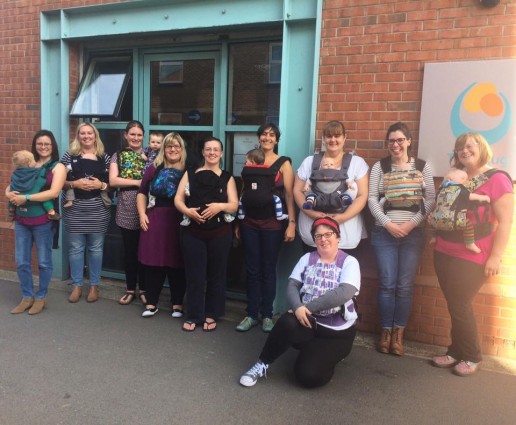
“I’d highly recommend any enthusiast to attend this course. I found it thoroughly enjoyable and look forward to being able to use this new knowledge to help more parents discover the benefits of babywearing, as I have.”
“Rosie is a wonderful teacher, very clear and good at explaining. I felt she was well educated in her field and able to answer any question thrown at her. Also very friendly which made me feel comfortable and relaxed in a learning environment and confident to ask questions.”
The unhelpful "rules" of babywearing
There are so many unhelpful rules of babywearing. I'm not talking about basic safety guidelines, but about the unspoken rules about how things must be done.This needs addressing. I love babywearing. I love how special it is. I love how empowering and enabling it can be and what a difference it can make to children and their carers and the society around them.
I also love that it just makes life work for so many people on a practical level, regardless of all the benefits and reasons about why it is an activity that matters. Babywearing may be magical for many, and has so many positive effects on a physiological and neurological level, but really, for some, it’s just about getting stuff done, keeping the cogwheels of daily life turning, or helping to survive very tough situations.
I have watched thousands of people carrying their children all around the world and I love that I am part of a tradition of child rearing that goes back beyond the history books into our anthropological origins. I love it so much that I wrote a book all about it!
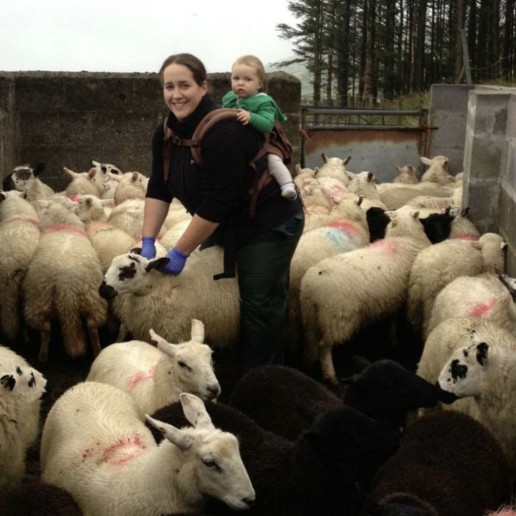
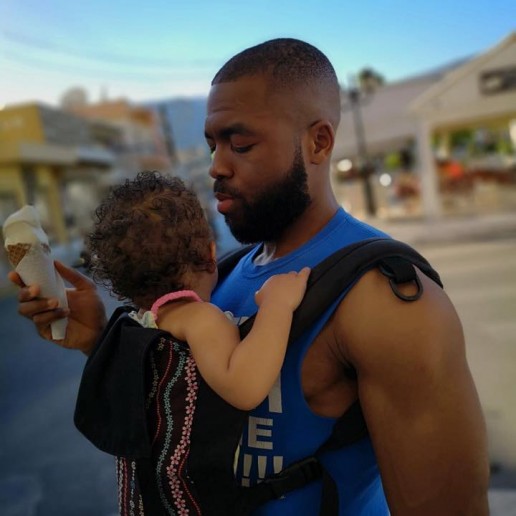
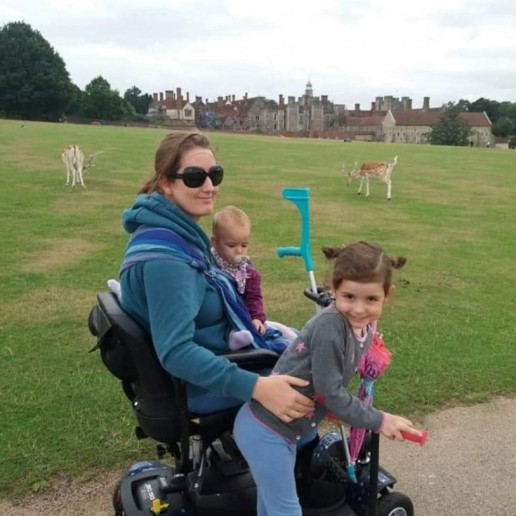
Carrying children is normal human behaviour, and it isn’t, and shouldn’t be, complicated or difficult. It shouldn’t be scary, inaccessible or expensive. It does not belong to groups of people to “own” or to build tall walls around to make things secret or elitist. Babywearing (the use of a sling or carrier to keep a child safe and close to a parent) is for everyone, every gender, every colour, every ability, every size, every shape. Babywearing should bring us together, not divide us. It should not alienate or exclude entire groups of people.
However, as the practice becomes more mainstream and the industry grows, this alienation is unfortunately happening more and more often. Marketing campaigns and the general make-up of many babywearing groups suggests that this is an activity for relatively well-off middle class “standard sized” white women in nuclear families, carrying able-bodied and healthy children. This is a direction that needs to be arrested before it becomes too entrenched. I’ll say it again, babywearing is for everyone and can be done in so many ways.
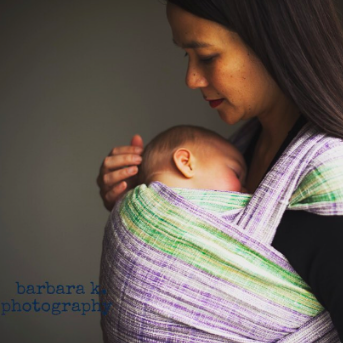
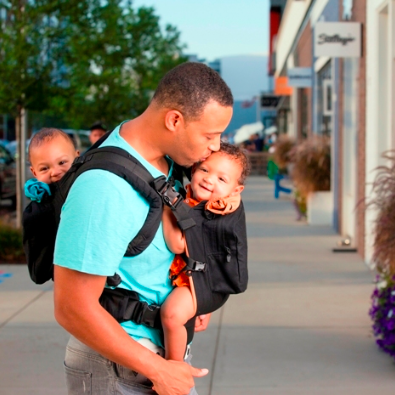
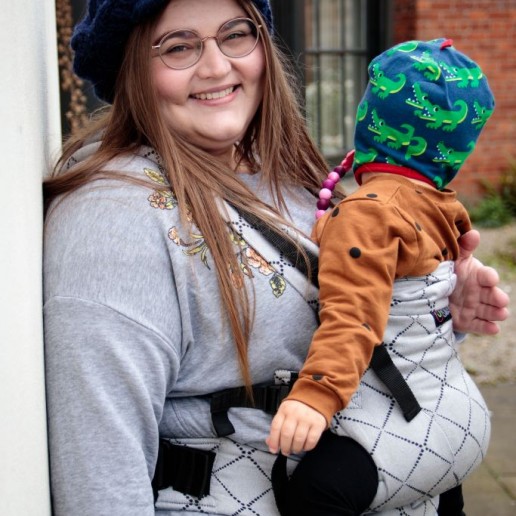
One way that babywearing can become elitist is in the development of complex rules, and I’d like to have a discussion about some of these “rules” and “guides” of babywearing that I am seeing shared around. I understand that it can feel reassuring to have black and white lists of what you can and can’t do, and schedules for certain types of carrying. These can act as a framework for where to begin with using a sling. This is valuable, especially as many of us have lost the shared collective wisdom that comes from living in communities and no longer learn how to parent from the people living around us. Many of us turn to books and to the internet and ask for guidance.
However, I think these “rules” often end up making things harder and disempowering the very people who need the most support. Here are some common examples.
Some commonly stated "Rules"
- Do not use a stretchy wrap beyond three months
- Do not back carry with a stretchy wrap
- Do not use a soft structured carrier for a newborn
- Do not do any form of sideways cradle carry
- Do not use a narrow based carrier
- Do not face your child out in a carrier
- Do not back carry a baby before they can sit unaided
- Do not back carry a newborn in a ring sling
- Low back carries are dangerous, high back carries are much better
- Once your baby is walking you must begin to use a toddler-size carrier
- Bigger children must be carried on the back
- Do not use footed pyjamas for babies in slings
I could go on…
These rules can be useful, but often they exclude significant proportions of the population. You can use a stretchy wrap to carry an older child, if they are safe and comfy. You can use your stretchy wrap in many ways, including on the back, if your child is safe and comfy. You can use a soft structured carrier for a newborn, if it fits them and is safe and comfy. You can carry a child in a sideways seated position or even a cradle carry, and facing out, if they are safe and comfy. You can use a narrow based carrier for a baby or a baby sized carrier for a toddler, if they are safe and comfy. You can carry a baby on your back in any form of carrier if they are safe and comfy. You can carry any age baby on your back or your front if they are safe and comfy. You can carry your child who is wearing footed pyjamas if the child is safe and comfy (ie their toes have room to wiggle). You can carry your child whatever size you are. In fact, you can do pretty much anything you want to do, if your baby is safe and comfy.
Do you get the theme?
I think the only “rules” when it comes to carrying a child in any form of sling are
- Can they breathe safely and without any obstruction at all times?
- Are they being held safely and securely in a carrier that fits (to ensure they are able to breathe easily and cannot slump into a position that would obstruct their airway)?
- Are they as comfortable as the circumstances allow?
How do you check if a child is breathing safely in the carrier?
- Look at them, listen to them, be aware of them.
- Check their airways are free of any fabric and they are not slumping or folded over with their ribcage compressed and chin on the chest.
How do you ensure they are safe and snug in the carrier and that it fits?
- A well fitting carrier holds a child close to the parent, close enough that if the parent leans forwards, the child does not swing free. This helps to avoid slumping over in the carrier.
- If a child’s body can slump, the carrier does not fit or is not tight enough.
- The “knee to knee” rule is often overstated in its importance for older children (the M shape can be protective for children at risk of hip dysplasia in the early months.)
How do you ensure they are comfortable in the carrier?
- This is all about being responsive and connected to the child being carried.
- They should fit inside the carrier, be able to breathe safely, and should not be too hot (overheated babies are more likely to stop breathing).
- Check on your child, be aware of their experience and how they are behaving in the carrier. The more you interact with your child the more you will know that they are OK (or not!)
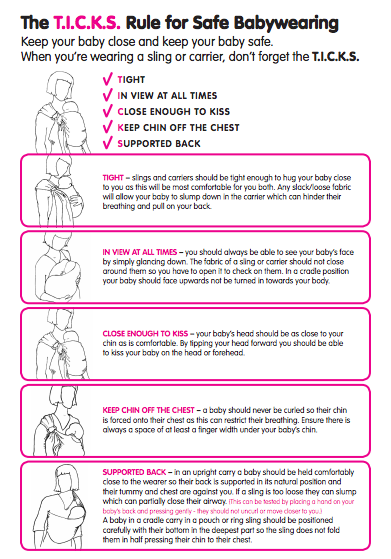
If your baby is safe, able to breathe and is comfortable, and you feel confident that all is well, then it probably is well. Carry right on! And if you would like some encouragement, find a friendly educator and help them learn how to support you in a way that builds you up and keeps you carrying happily.
It is important to remember that every child and every parent has different needs. Parents of twins may need to be able to back carry one twin from a very early age, to be able to cope with family life. They may choose to use a buckle carrier on the back, and if the child is able to breathe safely and is not uncomfortable then that makes their lives work. Telling them this is forbidden creates needless barriers and makes life harder. A stretchy wrap for a one year old may not be as comfortable as a woven wrap, but for a parent on a budget who now has a less-unhappy toddler held close while the baby can be cleaned, this is a win-win situation. A four month old who will will only tolerate facing out in a narrow based carrier can be happily transported on a school run. Millions of women around the world have carried young babies in low torso carries with simple pieces of cloth. A disabled child who cannot sit unaided can be held safely and securely on the back in several types of carrier which will definitely make everything much easier. Do be aware of how your language and how you educate can affect others and significantly disempower people.
“Oh, but these rules are for normal people!” This is a common dismissal of any criticism of “rules” and is unbelievably inappropriate. Our society is made up of people of all abilities and all skills. More than one billion people in today’s world have a disability; that’s 15% of the population. This ratio may not be reflected in the proportion of children who are brought to babywearing groups, just like people of colour are missing from these gatherings. The fault is not theirs; it is ours. We must be more inclusive and we must make efforts to reach out to people. Just imagine how different things could be, if some of these walls of prejudice were pulled down from the inside.
Grainne and Tessa are a great example of how babywearing can actually empower beyond the “rules.” Little Tessa was born without a nose (arhinia) and had to have a tracheostomy when she was very young. Her family were told that she was safest to be sleeping in a separate room with various wires and monitors attached to her for any alerts in a change of breathing. In fact, Grainne decided to wear Tessa in a sling, keeping her close and safe and visible at all times; if Tessa stopped breathing, Grainne would see it and feel it as it happened, thanks to the sling (read more about them here.) The sling made life work for them, and also made it much happier during some very tough times. Common sense, knowledge of safety and a willingness to bend the rules worked together to enhance their lives, when they could so easily have missed out.
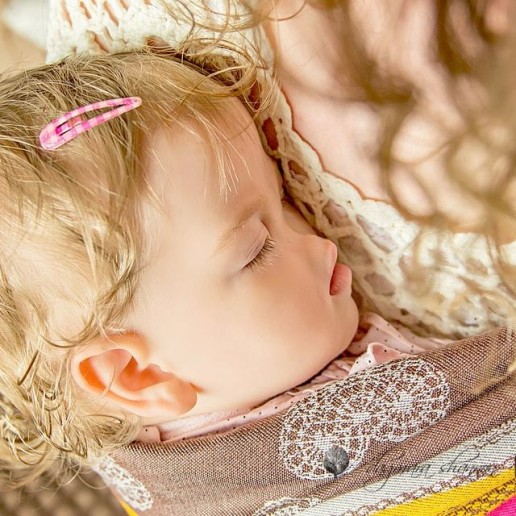
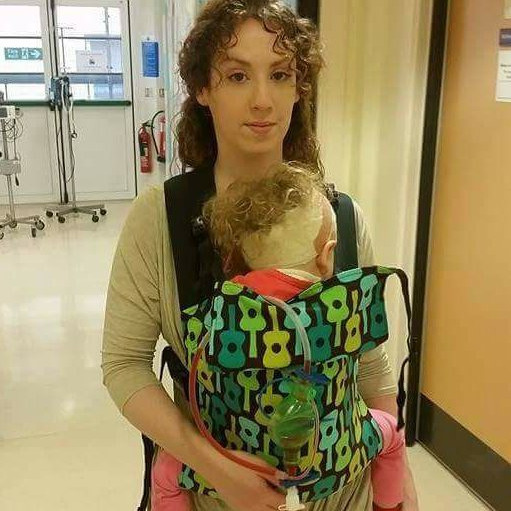
This is a superb blog for further reading; all about ableism in the babywearing community and I urge you to read it.
http://bindungtraegt.de/ableismback-wearing/
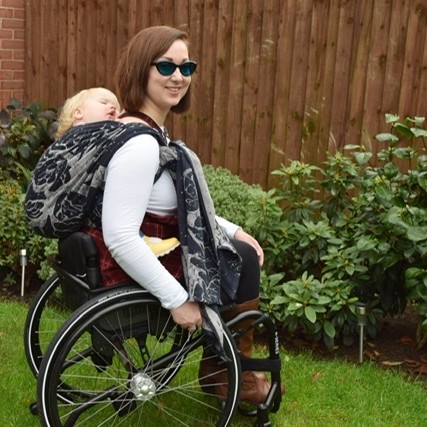
Please also read the Tania Talks blog posts on babywearing (she is a wheelchair user)
https://www.whentaniatalks.com/the-realities-of-back-carrying-as-a-wheelchair-user/
https://www.whentaniatalks.com/back-carrying-as-a-wheelchair-user/