
Babywearing Training
Do you love babywearing and want to know more about it, or be able to support others with their sling use? Then a training course could be just what you need!
Available Training
I believe that all parents should have access to information about safe and comfortable babywearing as part of the standard antenatal and postnatal care offered to them by statutory bodies. There are different types of training, here is a helpful summary,
Online Theory Course
This is like the MCQ part of learning to drive - covers basic theory of why babywearing is important and the basics of safety (based on national guidance). It is all online, no practical element. This is a good option for those wanting to know more but will not have any active role in advising families. More below.
Safety and Signposting Course
This is like the hazard awareness course of learning to drive. It includes the basic theory of babywearing benefits and the basics of safety (based on national guidance), and has a short (2-3hr) practical element learning how to spot common issues with slings/carriers (the hazards) and how to support parents/caregivers to keep their children safe and signpost to local/further resources for hands on support/fitting etc. This is focused for those working with new parents, particularly in the health and social care sectors, who do not plan to fit carriers to parents/caregivers directly. More below.
Peer Supporter Course
This course is will teach you how to drive! It is the course you need if you will be working with families, showing them how slings work, helping them to put their own carriers on safely (as well as any you have in your collection/library etc), helping them to use them in different ways, troubleshooting common issues and offering guidance about alternatives/lending carriers. This course includes the theory of babywearing benefits, and an in depth (6hr) practical section working with a range of carriers
I am willing to consider occasional commissioned face-to-face peer supporter courses within a reasonable radius from Sheffield, please get in touch to enquire.
I am unfortunately no longer offering regular in-depth remote peer supporter training courses due to my own increasing NHS workload and other responsibilities, as well as my belief that as more public bodies begin to consider offering babywearing support, this training must be face-to-face to ensure high quality and effective transference of skills at a time of vulnerability for new families.
I am training one of my colleagues to offer a high quality face to face Peer Supporter course in Sheffield from Summer 2026. Please do get in touch if you wish to register interest.
Please see the list of affiliated Carrying Matters trainers for other options in alternative parts of the UK.
Consultancy course
This would be the equivalent of the advanced driving course. My consultancy courses have always involved face to face, hands-on training, which has always been of paramount importance to me. Unfortunately I am no longer offering this course due to limitations on my time and my own NHS workload.
Building Bonds Project

The Building Bonds Project is going strong with the recent grant from the National Lottery (providing access to babywearing support and high quality carriers to families in need) - I remain very involved with this, and I am always happy to offer advice and guidance from my experience - please feel free to contact the Project with queries.
Group Courses
Courses can be commissioned for groups, and purchase orders for the NHS/councils etc can be raised, please get in touch to enquire about booking and prices.
Babywearing theory and sling/carrier safety - online course, £49
 This online course is a comprehensive introduction to babywearing theory and safety, which will give an excellent grounding for becoming an advocate for carrying behaviour and how slings can help promote health and wellbeing. It is a deep exploration of the science around connection, child development, infant mental health, anatomy, physiology, psychology, sociology, neuroscience, anthropology and more! It also provides a brief introduction to the major types of carrier.
This is open to everyone, and can be completed at your leisure. There are short tests of your knowledge as you proceed through the course and a final assessment to complete the course for a certificate of online learning.
- This will suit many people who wish to enhance their knowledge and understanding, become evidence-based babywearing advocates, be able to signpost to local libraries with more confidence, and are not planning to offer in-person support to families on a regular basis.
- This course is not timed, and can be done at your own schedule and to your own pace.
- Please be aware that this course is not a Peer Supporter or Consultancy course and the certificate cannot be presented as such.
- This course is not sufficient on its own for anyone planning to offer any form of movement classes with babies in slings.
[/vc_column_text]Enrol onto the Theory and Safety Course (£49)
Sling and Carrier safety and signposting course for organisations working with parents – hybrid online and practical course, will be available late spring/early summer – £75
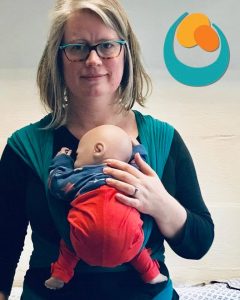 This hybrid course is a combination of an adapted introduction to babywearing theory and safety course, exploring how slings can help promote health and wellbeing, alongside a thorough look at the key features of keeping babies safe in slings and carriers and how to recognise and avoid risks. It also provides a brief introduction to the major types of carrier via video, and there are quizzes to assess understanding. This is followed by a practical session (in person or remote) to see good carrying in action, discuss how to check carriers for use, practice identifying suboptimal positioning and learning how to engage families in conversation. You will learn how to give general advice, answer common questions from parents (eg feeding, sleeping, temperature, facing out, duration of sling use etc) and how to signpost to appropriate services who can offer in-person support and fitting.
This course is particularly suitable for organisations who work with antenatal and postnatal families, wishing to be able to offer basic safety advice and are not planning to offer in-person one to one support to families with their own slings.
- Please be aware that this course is not a Peer Supporter or Consultancy course and the certificate cannot be presented as such.
- This course is not sufficient on its own for anyone planning to offer any form of movement classes with babies in slings.
Structure of the hybrid course
- Online – Why Carrying Matters – the science about why using slings is so beneficial for families
- Online – Basic Babywearing Safety
- Online – The Different Types of Slings
- Online – Assessment Module (to confirm learning)
- Half day (2-3 hrs) in person training with a Carrying Matters trainer to consolidate learning
- Assessment MCQ to assess competence, if passed, will be issued with a certificate of learning.
Feedback
“I really enjoyed trying different carriers. I found the trouble shooting sections particularly interesting and fun. I learnt a lot and feel more confident with all carriers and especially with how to wrap a new born.
I really loved it and now want to do the consultant training even more. Rosie was clearly very enthusiastic and dedicated and made everything so interesting. She was pretty inspiring.”
“Everything I had hoped for was met, I feel like a peer supporter now, not just someone who loves slings!”
“Rosie was born to teach people. Simply fantastic in the way information was relayed. Would highly recommend.”
“The whole day was so good! A key element was the ability to see and try so many different types of slings and to have time to go through basic principles regarding how to use them all. The role play aspects where we were able to troubleshoot carrier problems was also very useful.”
“Hi Rosie, I couldn’t go to bed without sending you a note to say a huge thank you for the course today. I’ve never felt more included and welcome and I’m so thrilled I came along. Thank you for your hospitality and brilliant teaching, I’m raving about babywearing to my husband and cannot wait to volunteer at a meet soon.”
“I loved the content of the day, the discussions, playing with different slings, learning new ways of slinging, wrapping etc. The course was well run, well organised and I felt empowered to speak, share and question.”
“I feel much more confident in my knowledge of both the benefits of babywearing, and how to go about enabling parents.”
“I really enjoyed meeting other like minded people. I liked the theory of babywearing as it related closely to the work I do as Breastfeeding Lead in the NHS. I enjoyed trying all the different slings and carriers and understanding in what situations they would be used.”
“My personal learning aims were met, it exceeded my expectations. I found the course was extremely enjoyable and covered so much subject matter but was not overwhelming. My aims were well and truly met. I now believe I could give a new babywearer good/correct advice and help in ways I was unsure about prior to the course.”
“Having someone with your experience and knowledge available all day to ask questions and watch demo was incredible. I really enjoyed the contextual and historical information about Babywearing and what led us all into that room that day. It put everything into the ‘bigger picture’ and made me feel such a part of the huge Babywearing community. Having such a massive amount of slings in the room to try and compare was utterly invaluable – such a rare opportunity. I thought the balance between practical and theory was absolutely spot on. As someone who’s very interested in the sociopolitical aspects of Babywearing I was really pleased to see this covered in the course and really appreciated that you placed Babywearing so firmly in this context during the day.”
“The course really opened my eyes to consider the needs of individuals and how essential it is to be inclusive and approachable and gave me the tools to do this confidently (especially regarding narrow base carriers). It was useful to be shown how to exaggerate movements and words when teaching and to have the opportunity to practice this. Rosie’s enthusiasm was infectious and made the whole day very engaging. The size of the group worked well and I especially enjoyed how well we all got on.”

Educational Resources
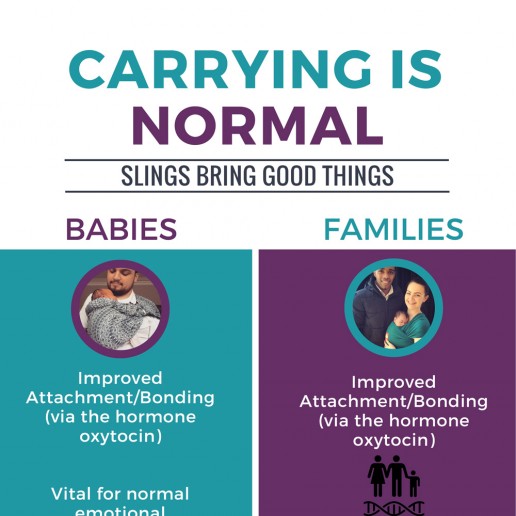
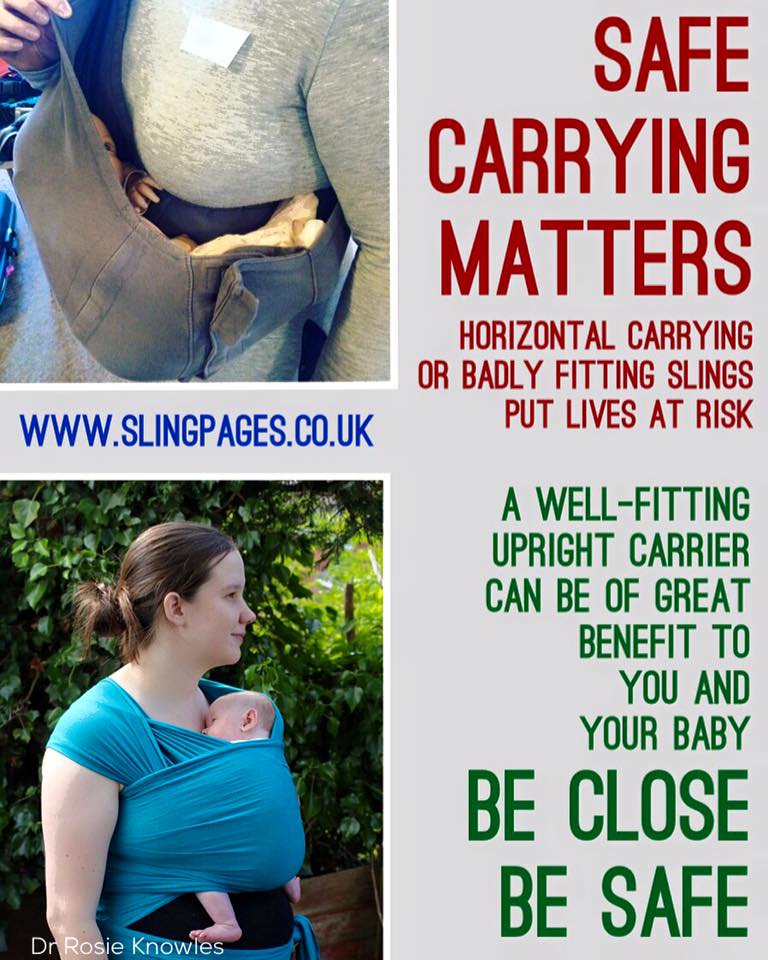
This page contains various resources that may be useful for education and supporting others. Leaflets, posters and postcard packs can be purchased. Images and PDFs can be downloaded free of charge by clicking on the photos. Please ensure you credit me (Dr Rosie Knowles) if you use them.
Safety Resources
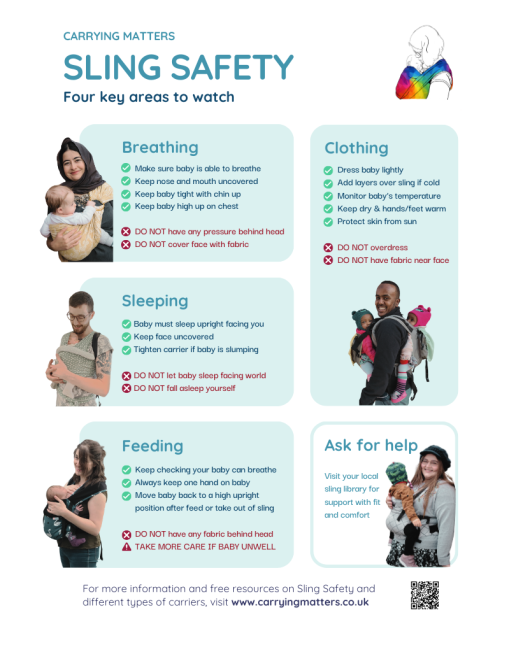
- The 4 Key areas webpage can be found here – this has links to translations into other languages.
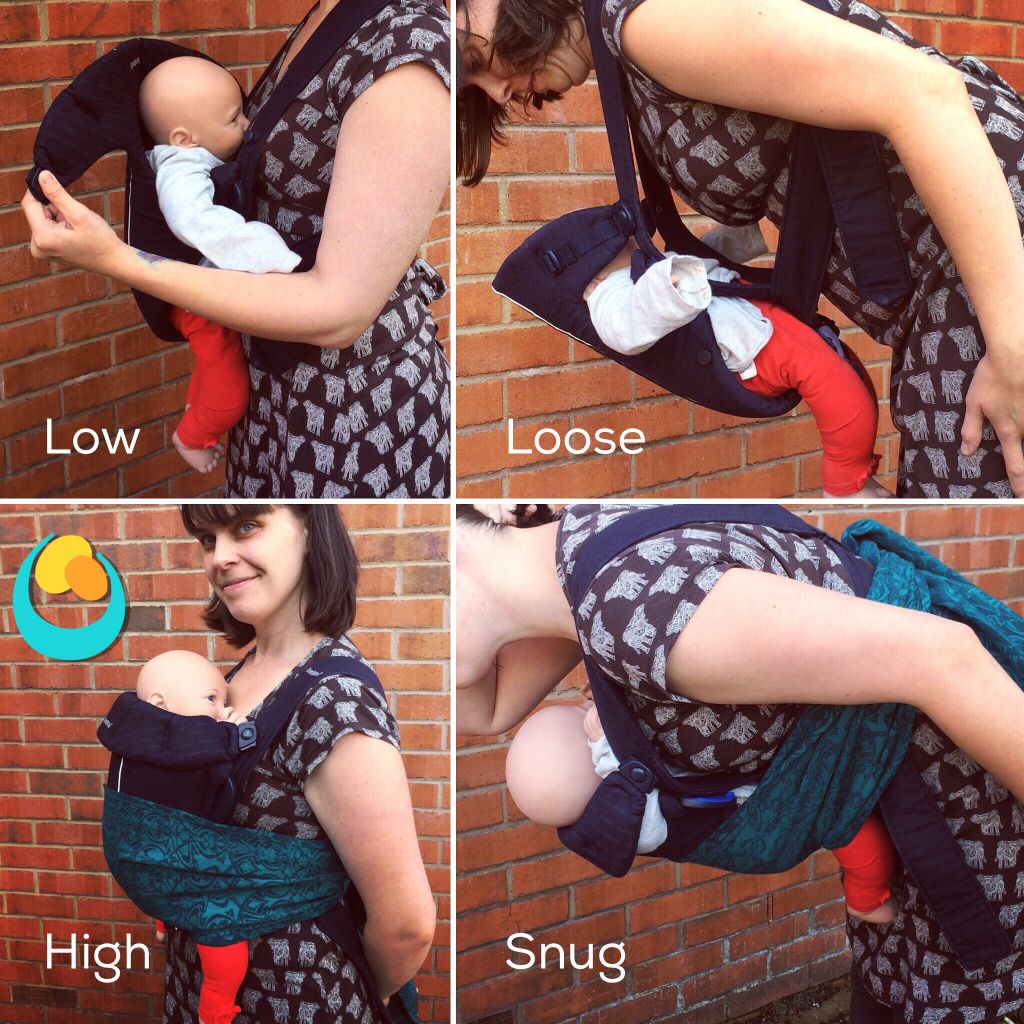
- The Carrier Height webpage is here – the image can be found lower down on the page.
Click on the image to download a PDF, or order a pack of high quality printed leaflets using the button below.
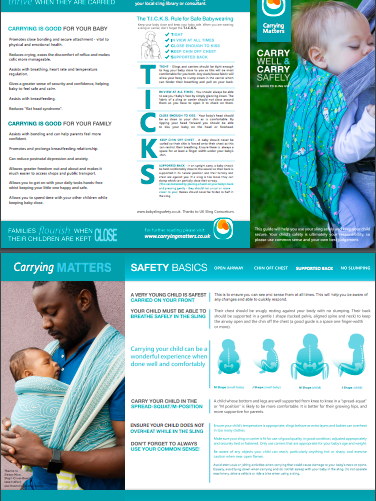
Click on the image to download a PDF, or order a pack of high quality printed leaflets using the button below.
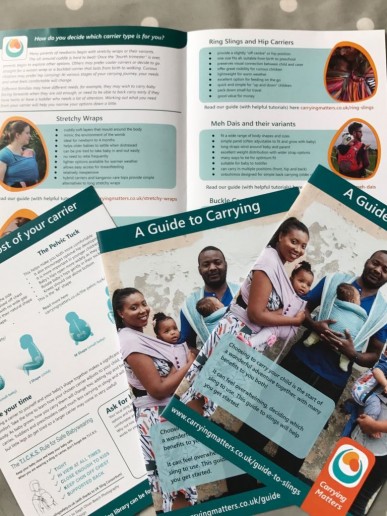
Click on the image to download a PDF, or order a pack of glossy postcards or posters using the button below.
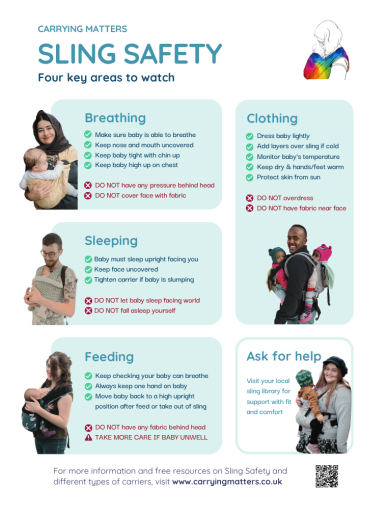
Click on the image to download a PDF, or order a pack of glossy postcards or posters using the button below.
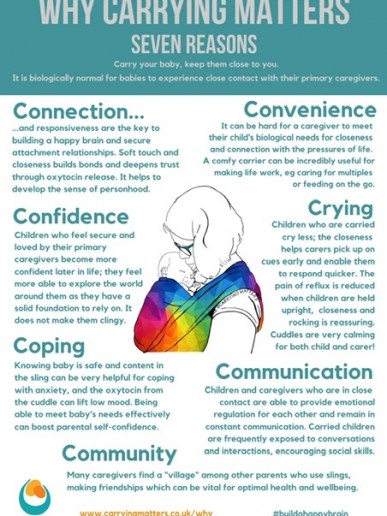
Click on the image to download a PDF, or order a pack of glossy postcards or posters using the button below.
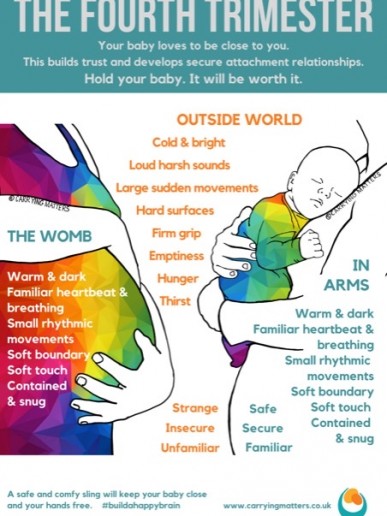
Click on the image to download a PDF, or order a pack of glossy postcards or posters using the button below.
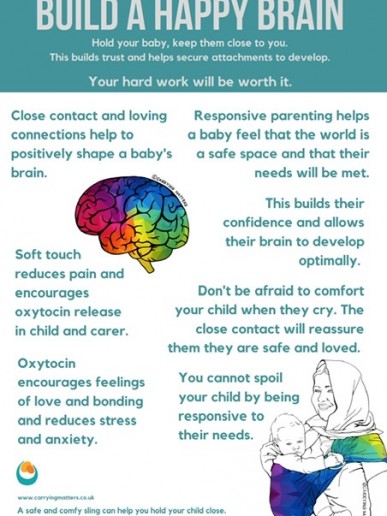
Click on the image below to download a PDF, or order A3 posters using the button below.
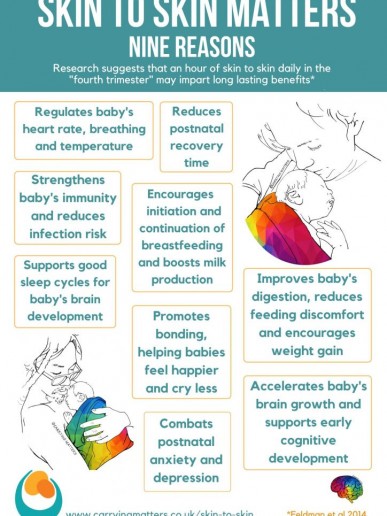
Click on the image to download a PDF, or order A3 posters using the button below.
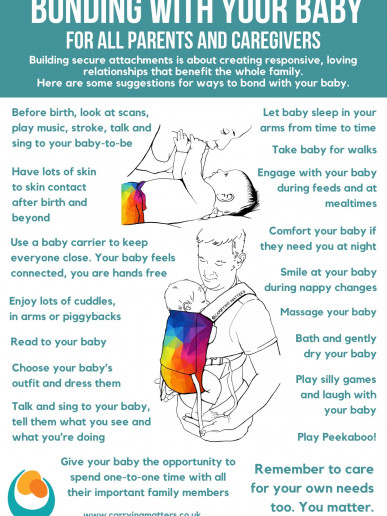
Click on the image to download a PDF, or order A3 posters using the button below.
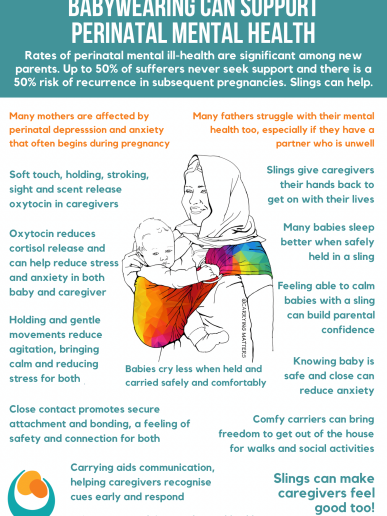
Click on the image to download a PDF, or order A3 posters using the button below.
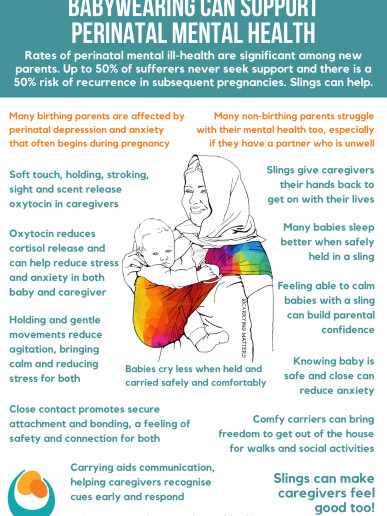
Click on the image to download a PDF, or order a pack of posters using the button below.
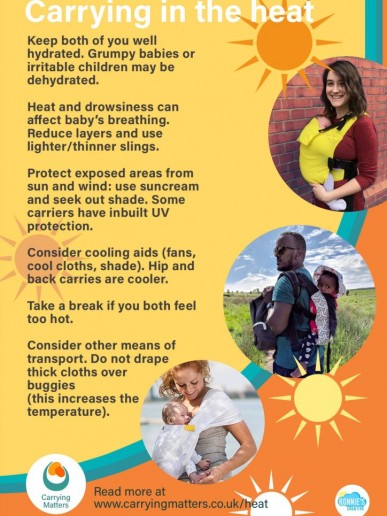
Click on the image to download a PDF, or order a pack of posters using the button below.
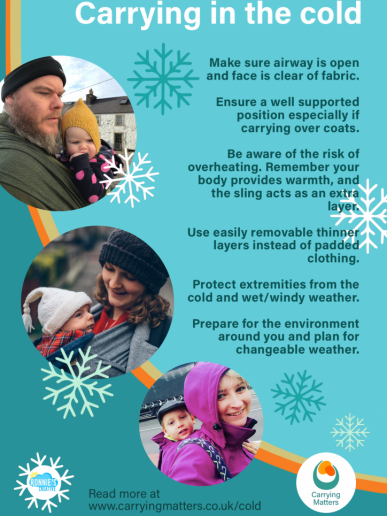
Read Rosie’s well loved Why Babywearing Matters book here, published by Pinter and Martin.
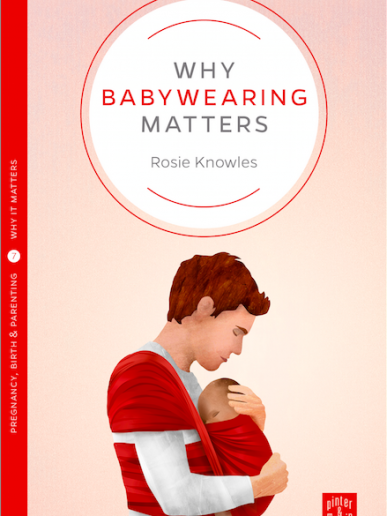
Read Rosie’s well loved Why Babywearing Matters book here, translated into Polish by Lenny Lamb.

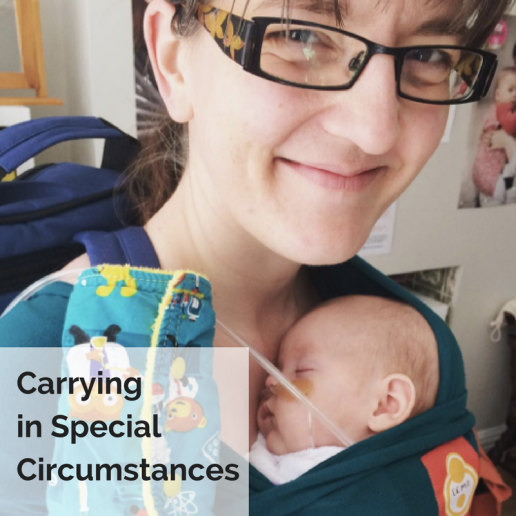
Carrying in Special Circumstances
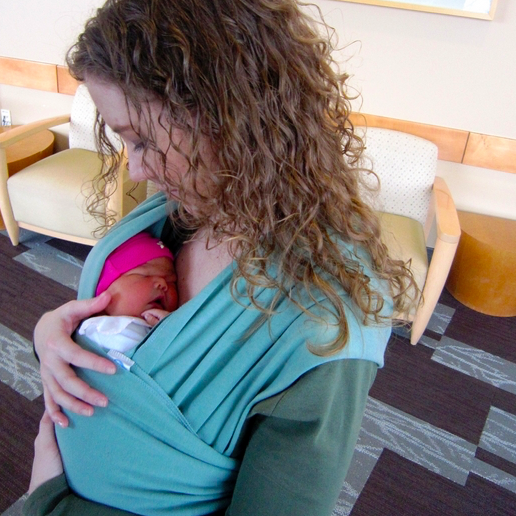
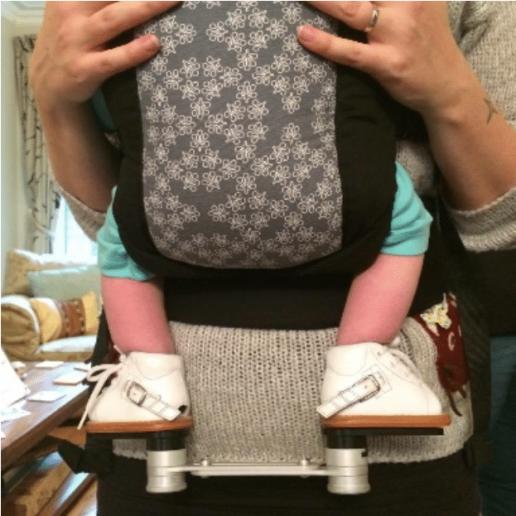
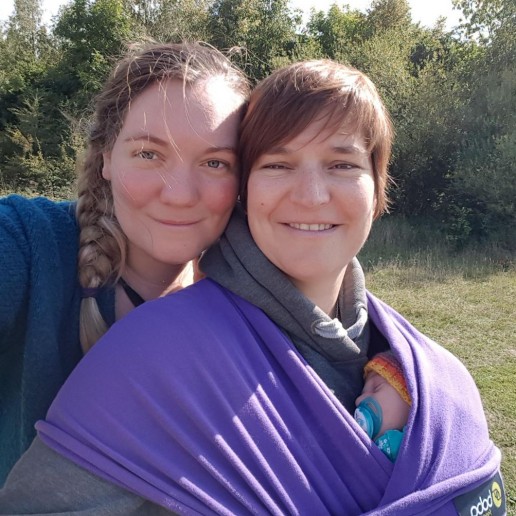
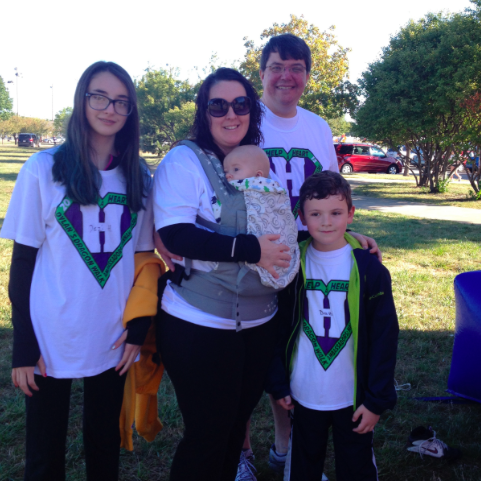
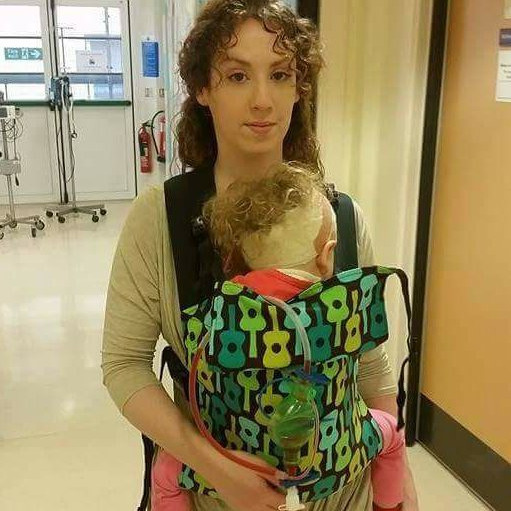
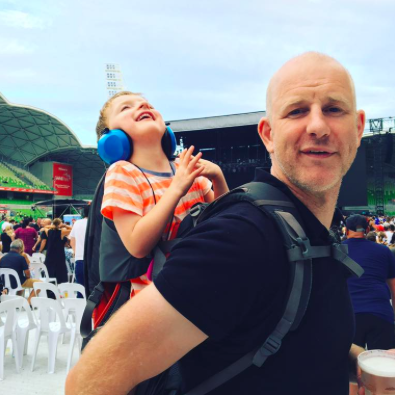
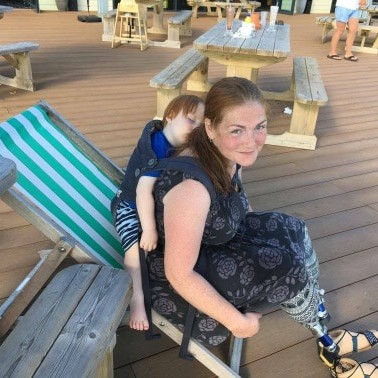
Sometimes there is a need for extra support with using slings; don’t be discouraged if you or your child have extra needs, there are always ways to keep carrying in special circumstances.
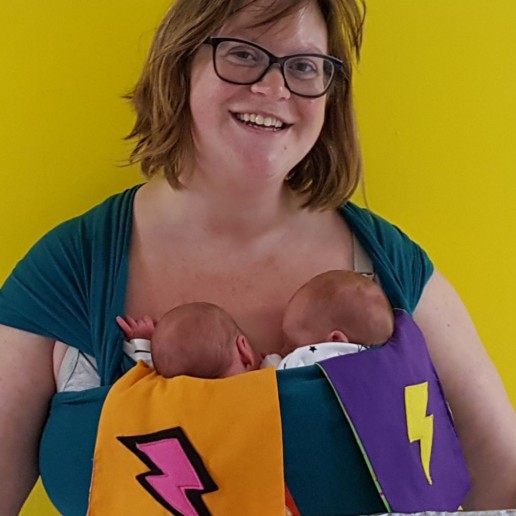
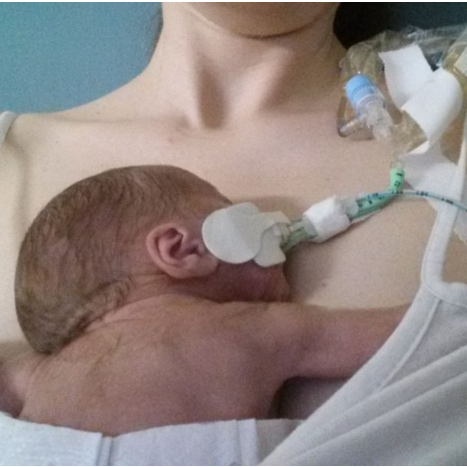
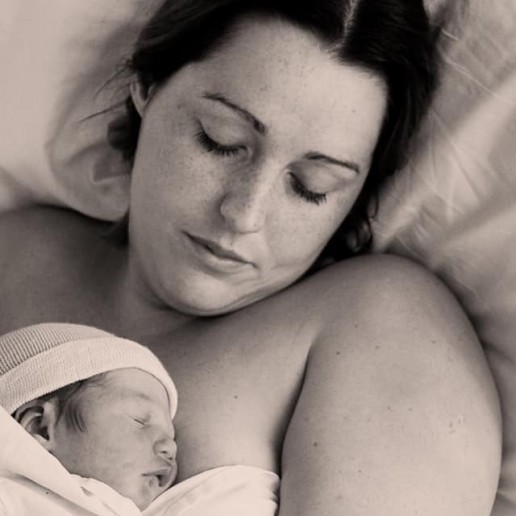
If your child can be held and carried in arms, there is likely to be a way to carry them safely in a sling. Twins can be carried in slings, as can a baby and a toddler at the same time (tandem carrying). There are ways to carry safely in pregnancy, to carry after birth, to carry premature babies. We will help you to carry your child if you have a disability, or if your child has special needs or physical health concerns. We are here to help you find a way to keep them close.
This page links to some useful information; personal stories about carrying in special circumstances, professional advice and useful links. Please see our Common Queries page for simpler situations.
If you have a special story, please get in touch to share them with me for the wider community!
I also recommend the Tania Talks blog posts on babywearing (she is a wheelchair user)
https://www.whentaniatalks.com/the-realities-of-back-carrying-as-a-wheelchair-user/
https://www.whentaniatalks.com/back-carrying-as-a-wheelchair-user/

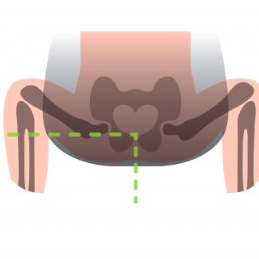
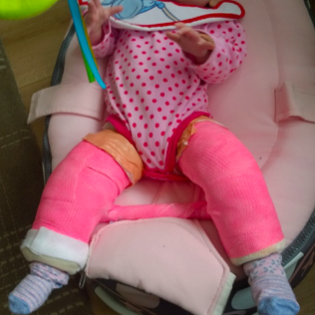






Here is an excellent downloadable article on Potential Therapeutic Benefits of Babywearing by Robyn Reynolds-Miller.
You can find more educational resources here for downloading (such as infographics and leaflets and images)
If you need more specialised support or have a query not covered here, please do get in touch with me or find your local sling library at Sling Pages.
Blog
The Carrying Matters blog page.. enjoy reading! If you have any topics you'd like to see covered, get in touch! I enjoy writing and am always keen to hear of new ideas, and to host guest blog posts too!
Nothing found.

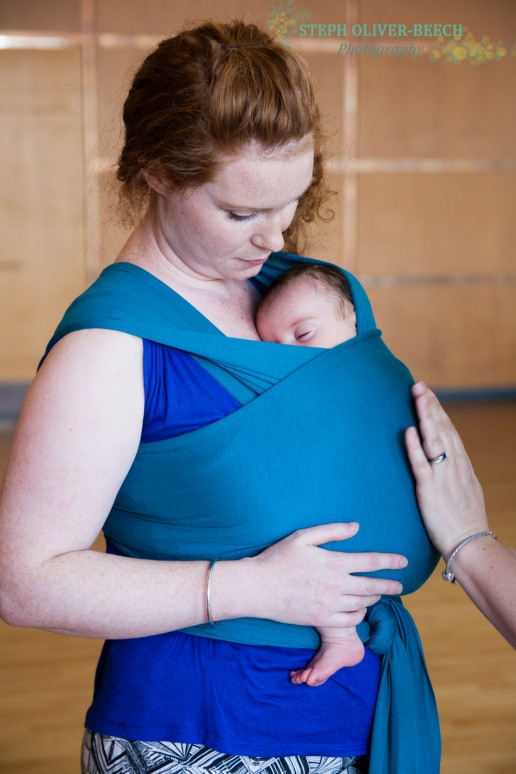
Guide to Slings
A guide to slings: choosing to carry your child is just the start of an adventure you can share together and both derive a great deal of enjoyment from! It can often feel overwhelming, trying to decide what to try first when there are so many options and everyone has their own favourites. Our guide to slings is designed to help you understand the basics of safe sling use and to know more about the major types of sling.
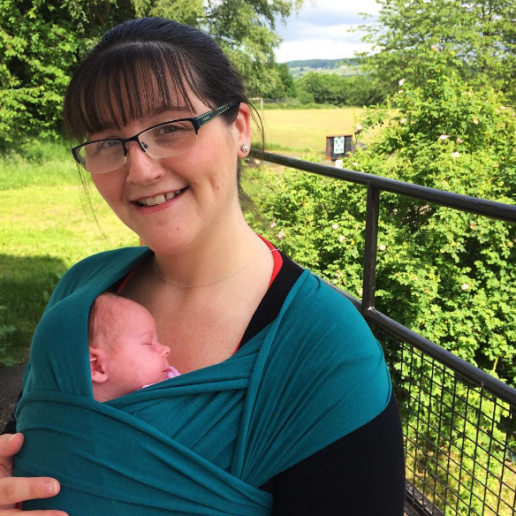
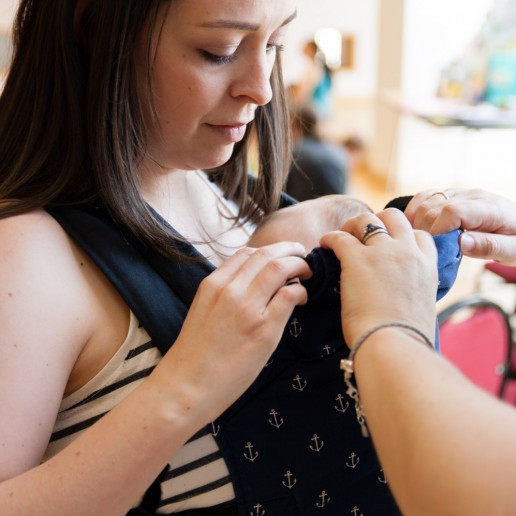
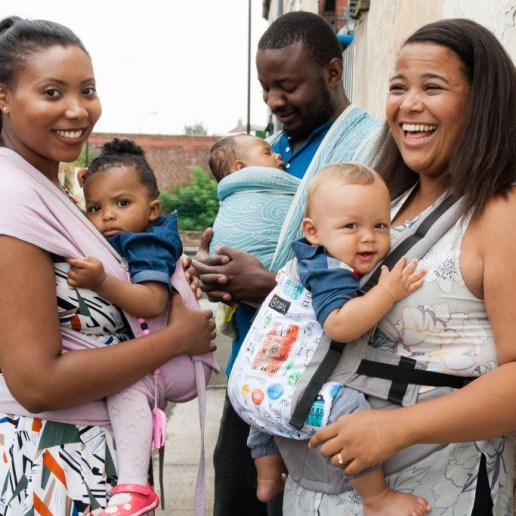

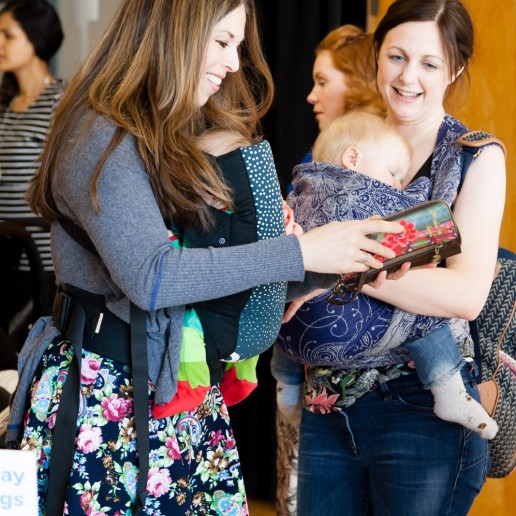
Useful videos can be found here and the photo tutorials here.
Read more about Common Queries here (such as facing out, carrying in the post-natal period, healthy hip positioning)
Read more about Carrying in Special Circumstances here (such as carrying while pregnant, carrying older children, carrying premature babies)
Do get in touch if you need some help.
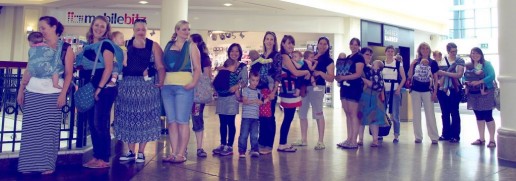
How to Choose a Sling
I have met thousands of parents over the years, wanting help with choosing a sling. It’s fantastic to support them in their desire to carry their child close, with all the great things this will bring the whole family. For many, they can feel utterly overwhelmed by the huge range of options on offer (see here for a quick introduction to carrying, and here for a quick overview of the major types of sling).
Very often, they will ask me what I would recommend.. and this is a very hard question to answer, one that I usually respond to with more questions! Everyone’s choice of carrier is unique for themselves; and their initial choice will often change as they try things out.
Initially, when it comes to choosing a sling,
many people will look for a carrier that isn’t especially expensive, to see “if they get on with carrying.” Others will pick something that has been marketed by a mass-manufacturer in mainstream stores or at trade shows as being the best option available or will have picked something recommended on social media (please be aware of the fact that many of these influencers have no idea how to use a carrier well or safely), or will choose something for the specific features listed, such as the ability to carry a baby in multiple positions, or being described as “the best”. Some may have been given carriers by their friends from several years ago (often hardly used “as it just didn’t work for us”), or bagged some ultra-cheap ones on Ebay/Vinted.
This can sometimes lead to problems, as such carriers may not have been specifically designed to work with parent and child anatomy and can thus often be uncomfortable after only a short time. They may be worn too loose or baby may be too low, causing back pain from the strain of the carrying or the hunching that can ensue (as well as potentially posing an airway risk – also see here for more about carriers being too big). This can lead to a belief that that baby is too heavy or that the parent isn’t strong enough (neither is usually true!) and carrying journeys come to a premature end. At this point, those who want to make carrying work for them will often look for support from someone like me to find something that works. Of course, some parents will come straight to us right at the start!
A good carrier should be comfortable for both baby and parent. It should support baby safely, protecting their airway and allowing easy breathing, in just the same way as when you hold them upright on your chest in your arms.
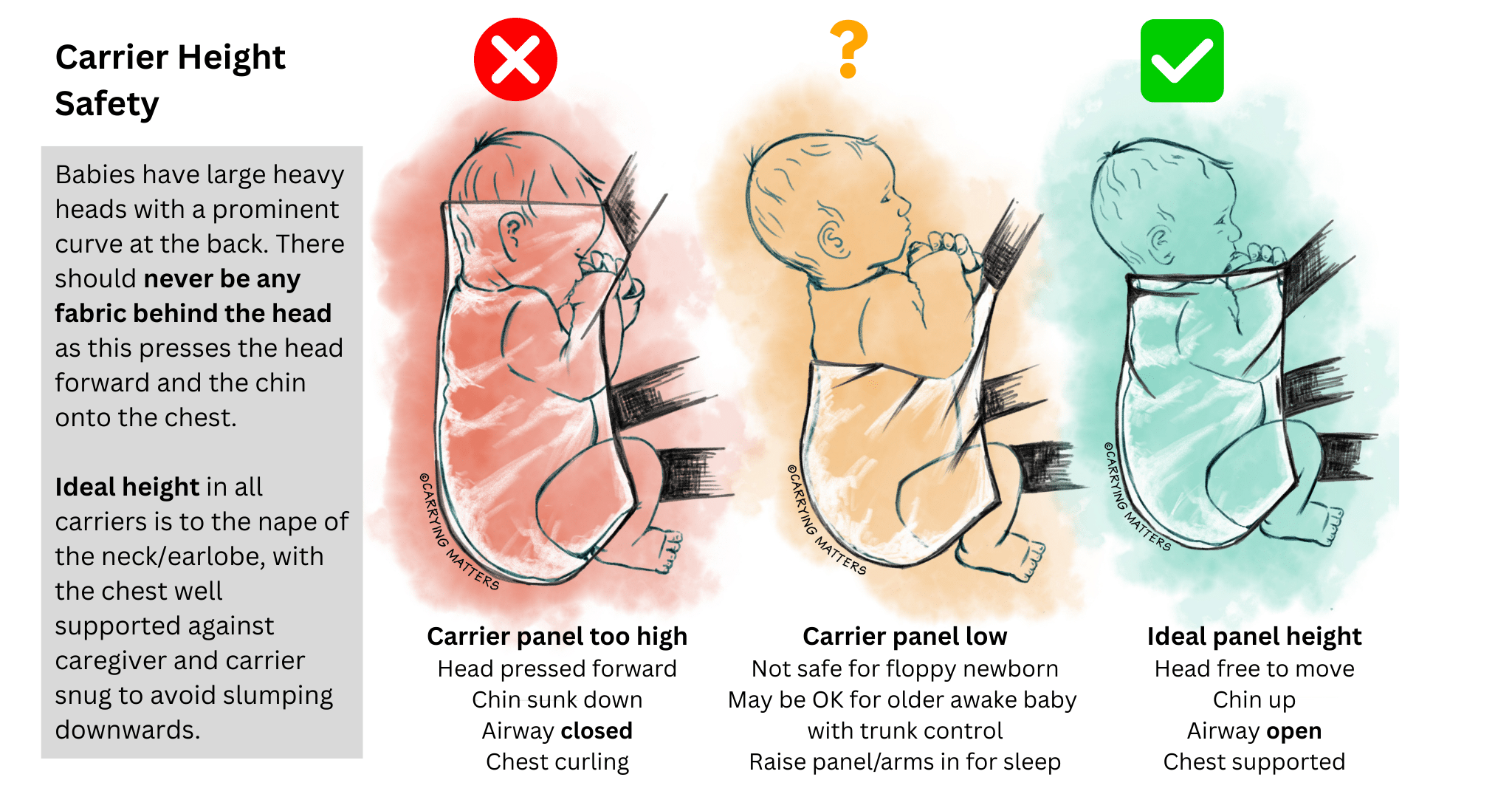
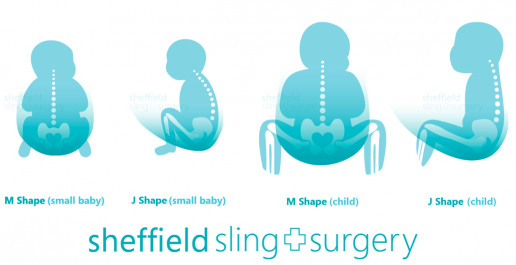
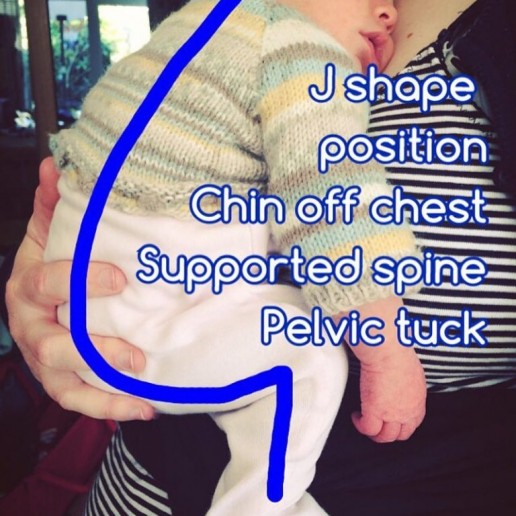
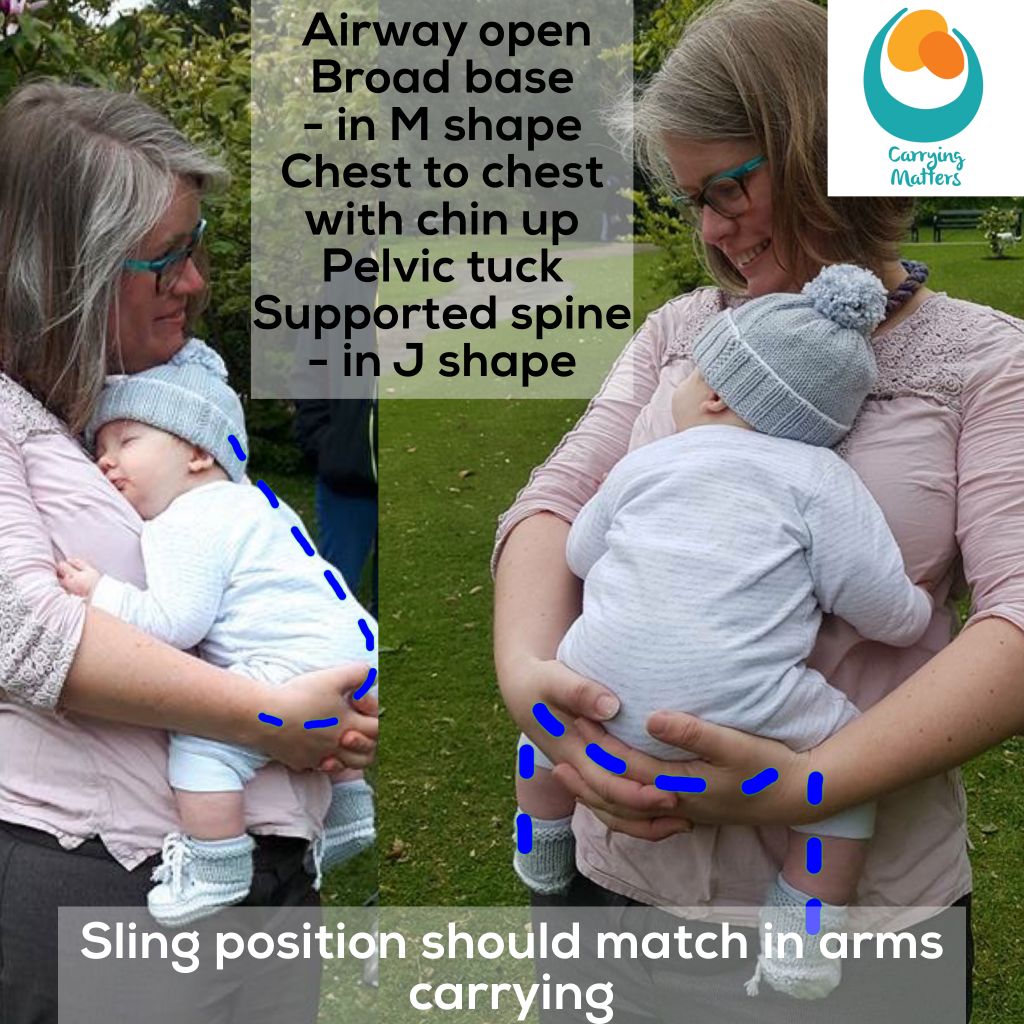
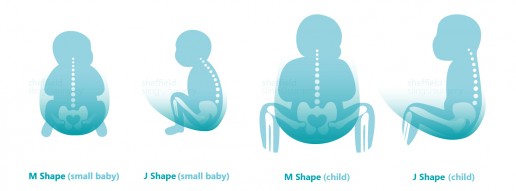
A good carrier should hold baby in the anatomically appropriate spread-squat position that respects infant and child spine physiology, and it should be snug against parent/caregivers chest for weight distribution. Carrying in this fashion is safe, and is usually much more comfortable and allows longer duration of sling use than in-arms or in a poorly fitting carrier. (Do remember to build up your carrying muscles day by day. It is exercise and gets easier with repetition, just like training for a race.)
People end up choosing their main carrier for many different reasons – and each individual will have different priorities, which will lead to their own personal choice. When I am asked what I would recommend myself, I often describe a bar chart like the one below, which shows just how variable things can be, and what suits me won’t suit them. Some people will prioritise comfort and longevity over pricing and simplicity; some value customisability and appearance more than pricing or resale value, everyone is different. People may end up choosing alternative carriers that they had originally envisaged, based on their “list of requirements”, due to how the sling feels for baby and parent when it is fitted.
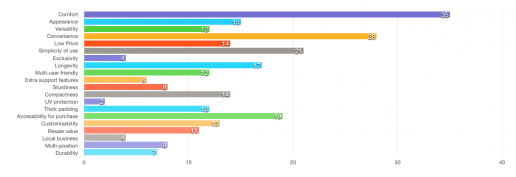
This is why one “size does not fit all” and why many of us in the sling world use an analogy of shoe fitting, jeans or wedding dresses when it comes to trying a carrier. Everyone ends up with something difference. Cheap shoes bought over the internet often don’t fit your feet and can cause blisters. Jimmy Choos, Louboutins or Doc Martens really do not work for everyone, however desirable or pretty or cool they may be. What works for your friend, or for a large number of enthusiastic sling owners on the internet, or an experienced sling professional may not work for you. Current trends or famous brands don’t equate to an instant “perfect fit” and no one carrier can claim to be “the ultimate” or “the best.”
Trying a few things out before you commit yourself to a purchase that can feel expensive is very useful, and it is often worth spending more on a good quality carrier that fits you well, to ensure you and your baby are both comfortable and that it will last for some time. Many people find, however, once they have the right sling, it gets used daily, and the cost per use per day comes down to pence. Don’t be tempted to buy an extremely cheap carrier that may well be a fake (Ergobaby is the best known carrier to have been counterfeited) – always ask for proof of purchase from an authorised retailer when buying second hand. Your child’s safety isn’t worth the risk. Buyer beware!
Once you’ve recognised the benefits of carrying as comfortably as possible, how do you begin to choose?
I highly recommend visiting your local sling library to try out several options; there will be someone there with training and experience to help you navigate the choices. Some people will have a “shopping list” of requirements for their ideal carrier, based on what they have read online or been advocated by a friend or an internet group. Of course, such recommendations can be helpful, but a one-size-fits-all approach rarely works in practice. Every baby-parent dyad is unique, with their own personal stories that influence how they stand, how they carry, how they prefer to be held, for example, and particular features that seemed desirable on paper may not feel quite right in person. If you think your other half is likely to carry too, do bring them along to try things themselves; it is very hard to guess what will work.
For example, some people will love the feel of thicker, more padded waistbands, while others will find them bulky and restrictive. Some will prefer straps that cross over, others find this can ride up to the neck. Some find rucksack style straps hard to do up. Some inserts are simple to use, others more complex, many don’t like inserts at all. Some people find meh dais and woven wraps more comfortable than carriers. It is generally a good idea to have an open mind; you may be surprised to find some things work much better than you had imagined, while others just don’t feel quite right.
Bulky carriers may not necessarily equal greater support or comfort for everyone, and too much bulk can be unhelpful for some. Knowing how to achieve good positioning and how high and tight to have a carrier are very effective tools for successfully distributing weight comfortably.
A good sling librarian or peer supporter will be able to show you how to position your child, as well as tips and tricks that can make things much easier (such as how to put on fiddly straps, or how to make sure your stretchy wrap is tight enough, or how to ensure your ring sling feels secure). Sling libraries are fantastic resources.
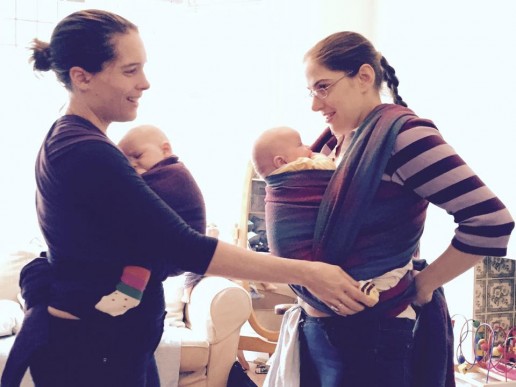
It is worth being aware that knowledge about sling safety and best practice positioning is improving all the time. Older carriers and older brands may have instructions that are no longer part of current safety guidelines; social media is often marketing focused and wildly inaccurate, feeding and sleeping positions in slings are often out of date. Do check with your local sling professional if you have any concerns at all, they will be only too pleased to support you and your child.
Your sling should bring you and your child great enjoyment and should not cause you pain or be uncomfortable. Furthermore, as a family’s familiarity with slings grows and as their baby gets bigger, their choices can change. They may move from things that are especially designed for small babies, or carriers that are as simple as can be, on to things that they find increasingly versatile and comfortable. Babies may wish to change how they are carried, desiring greater visibility, for example. Each parent may have different shapes too, and families may decide to have different carriers for different situations (eg a simple buckled carrier for use on a school run or on a muddy day, or a woven wrap for a long sleep-inducing walk, for example). There are no “perfect” answers, but options that end up being the best choice for the circumstances.
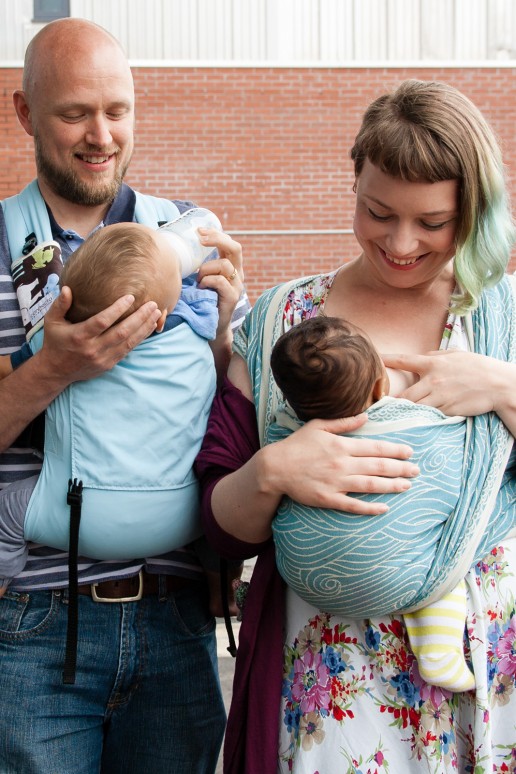
Breast and Bottle Feeding Safely in a Sling
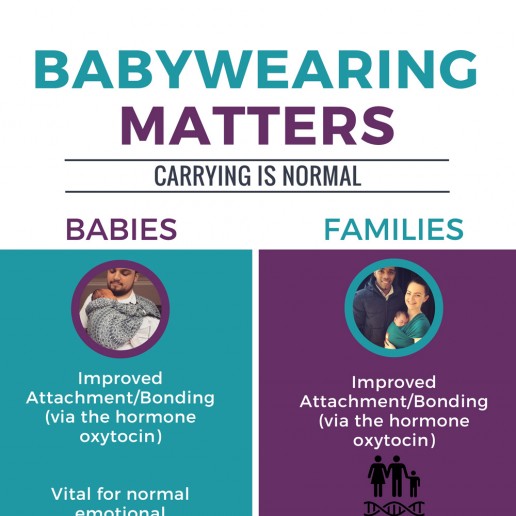
Carrying babies is a wonderful way to encourage successful and more long-lasting breastfeeding, as the frequent skin to skin contact and the building of loving relationships help to stimulate oxytocin release.
Oxytocin release (which stimulates let-down) becomes conditioned to the mother’s experience and emotions; the touch, sight, smell or cry of her baby, as well as thoughts of her baby and the natural rhythm and expectation that baby will be hungry soon.
A sling that allows ease of access to the breast encourages responsive feeding, helping the harmonious nurturing relationship to flourish.
Mothers can go about their daily tasks or care for older children while their child’s need for nurture and nourishment can continue uninterrupted. This is normal human behaviour.
If the mother is in distress, unwell, or struggling with postnatal depression or anxiety, her feelings will inhibit oxytocin release and have an impact on breastfeeding. Close physical contact with her child as well as effective emotional support can help a feeding relationship to recover.
A comfortable baby carrier can thus be an excellent solution for a breastfeeding mother and baby who have had a complex start. This can be especially valuable after a difficult labour and birth or a prolonged separation for medical reasons.
The carrier can help create a safe space for the dyad, keeping them close together, allowing them to heal each other, encouraging the hormones of love and bonding to flow. This has a positive impact on breastfeeding.
If breastfeeding comes to an end, the baby carrier can preserve the growing relationship by keeping mother and baby in close contact and help it to continue to blossom.
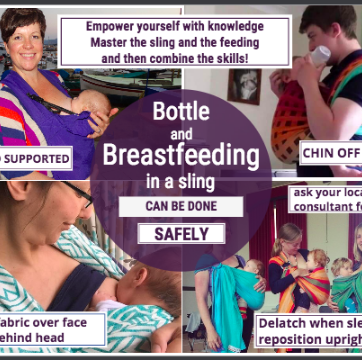
There is always more of a risk to safety when combining breastfeeding with babywearing and it must be done well. Here’s my guide to safe breast and bottle feeding in a sling!
I meet a lot of pregnant ladies in the course of my varied roles, and many new mums, and one of the questions I am most frequently asked is “Will I be able to feed my baby in a sling?”
It’s an important question to deal with, as it crops up so regularly, and for some, is one of the criteria for choosing the right sling for their needs. The simplest answer is that, “Yes, many parents are able to feed their babies in slings, from the breast or from the bottle.”
But this then leads to other vital questions…
1. “Why might you want to be able to feed in a sling?”
2. “How can you keep your baby safe while feeding?”
3. “How can you make feeding in a sling as easy as possible?”
4. “What slings can be helpful for feeding?”
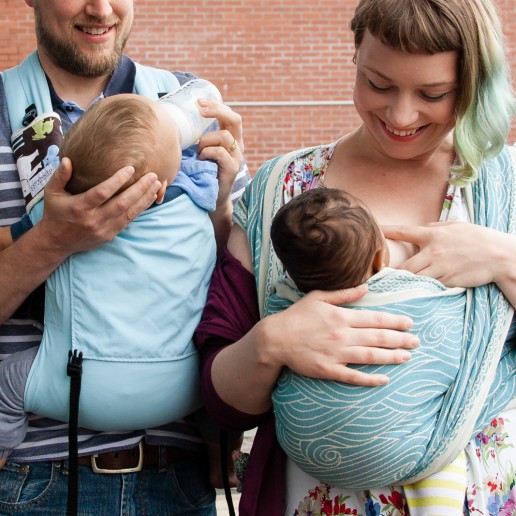
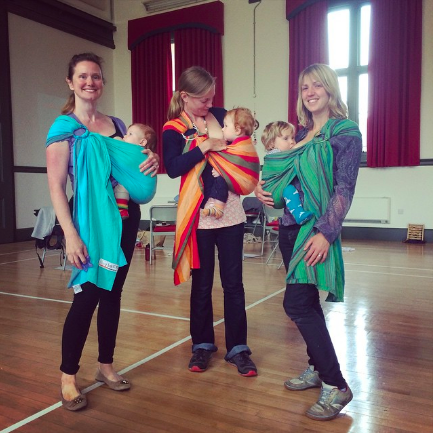
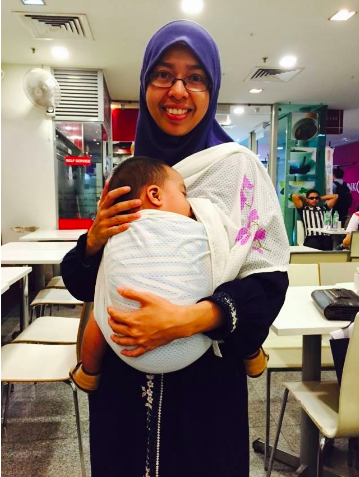
1) Why might you want to feed in a sling?
Most commonly, mums of more than one child find being able to feed the baby on the go very useful. This is especially so if they are feeding responsively, as recommended by the WHO, and have an older child who needs their parent just as much. Quite often, they will have had some experience of breast or bottle feeding already, and may be very familiar with their sling, and will be “old hands” at combining the two skills.
Mums of older children who can feed quickly in a sitting upright position may also find a sling an invaluable and very convenient tool for getting on with daily life.
For mums of small babies, it may be that the sling will be useful to carry their child to a place where they can be taken out to feed in peace and comfort. For others, being able to have baby partly supported with the sling and with one arm may allow a “third hand” to work on achieving latch, and can prove very useful for facilitating feeding. For others and once feeding is established, it can allow some simple multi-tasking rather than being pinned to the sofa.
On the whole, it may help to consider each element as a separate skill to master – how to feed, and how to use the sling, and learn how to combine them safely, however, for some, the sling can actually be an aid to achieving latch. Practice will, of course, be needed, like with every new accomplishment!
2) How can you keep your baby safe while feeding?
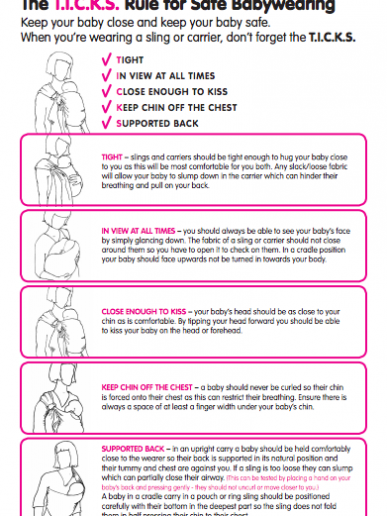
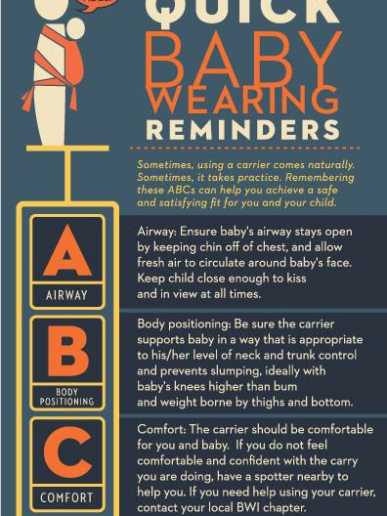
All the basic rules of sling safety apply when carrying a baby. The TICKS guidelines and the ABC reminders are below. However, there are different considerations needed with feeding in slings (as baby may not be close enough to kiss, for example). As always, protecting the airway and ensuring breathing is unobstructed is of paramount importance.
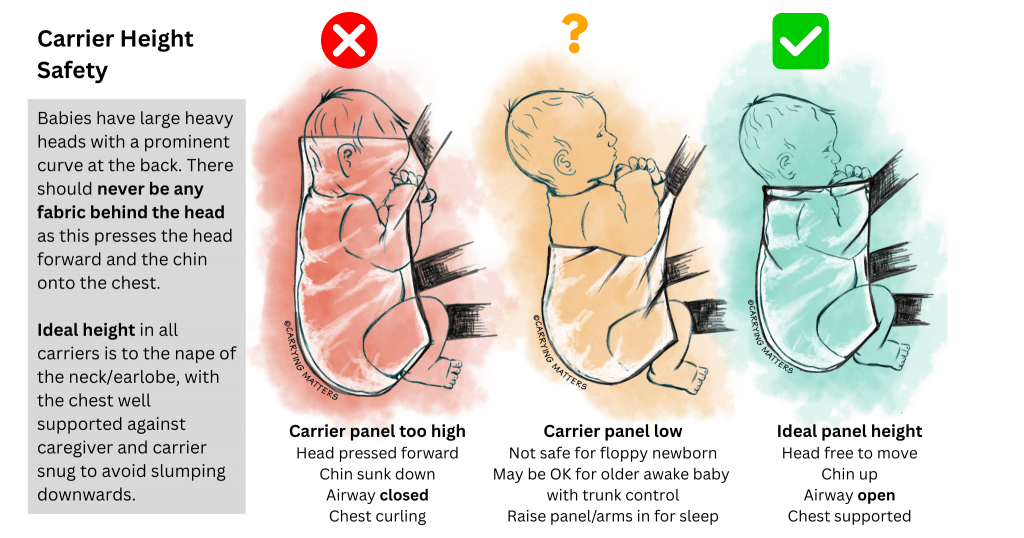
Babies are not mini-adults and are not able to breathe easily through their mouths for the first few months of their lives. They breathe mostly through their noses (allowing them to breathe while feeding), so unobstructed nasal airways are really important. This is why babies may struggle more than older children with mild respiratory infections affecting the small nasal passages, and explains why simple colds and respiratory viruses (eg RSV) can have serious impacts on newborns, as can any sinking of the chin onto the chest, closing the airway. Increased vigilance is needed during sleep, as muscle tone relaxes further. Feeding of any type in the carrier must be done with great caution as babies can slip into sleep as they finish their feed and airway can become obstructed. This is why we are always so careful to mention no fabric behind the head at any time, a fact often missed by carrier companies who focus on “head and neck support”.
Therefore, while a baby’s mouth is engaged with the process of sucking and swallowing, his only patent airway is his nose. It is important for the carer to be consciously aware of any potential obstruction, either external (from sling fabric, or breast tissue, or clothing ) or internal (neck bent over too far) and able to rectify it rapidly when required.
Large occiput can compress and obstruct airway if fabric behind head
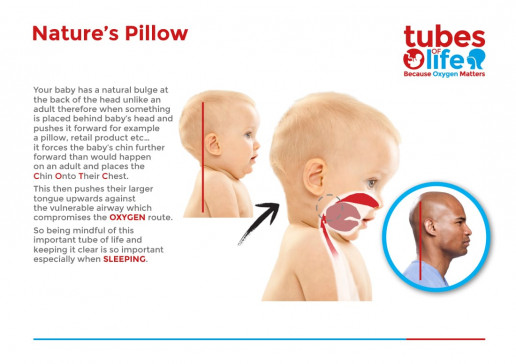
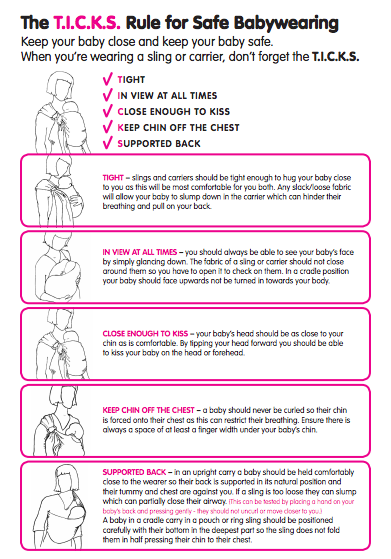
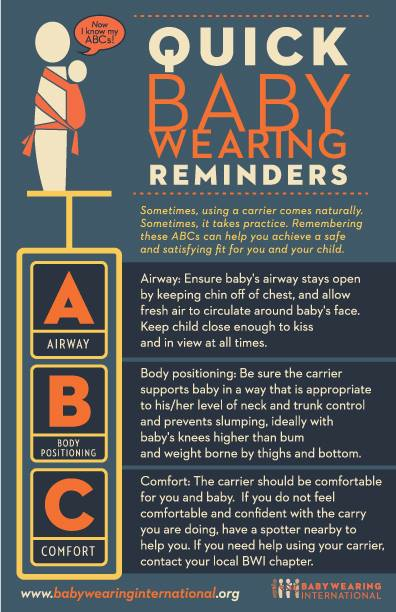
Whether feeding upright, or slightly reclined, the safest positions are…
-
those in which the parent is actively engaged and frequently checking on their child, and able to recognise any changes
-
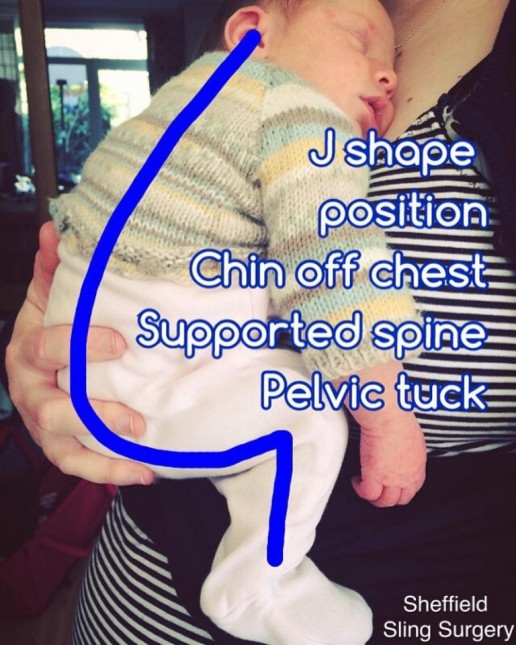
those that ensure a good air supply at all times with no fabric over the head and chin off the chest (check you can fit two fingers underneath if you are unsure)
-
those in which baby’s head is aligned with their spine and only turned slightly to one side if needed
-
those in which baby’s back and occiput (lower part of the back of the head) are appropriately supported
-
those in which baby’s knees are above the bottom and hips are flexed (bent upwards)
-
those that ensure that a baby who has finished feeding or has fallen asleep is returned to the most optimal upright position to keep airway supported and open.
The choice of best position will vary from person to person, depending on the individual circumstances, however, the majority of successful “on-the-go” feeding is done in the upright position.
In my opinion, the greatest risk comes from breastfeeding in positions where baby is held face inwards towards the breast, with sling fabric pulled up over the back of the head, so the face is pressed firmly into breast tissue or the child is curled over into a ball.
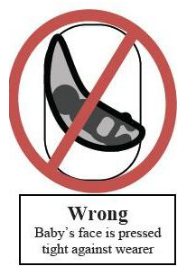
Please note this dangerous position is not the same typical gentle reclining in-arms “cradle” positions where the head is well supported in the crook of the elbow and the chin is not on the chest. This is the most common breastfeeding position, with a sling adding a little support, almost like a cushion or a hammock, to take some of the weight off the supporting arm and give you one hand free.
What should a feeding carry look like?
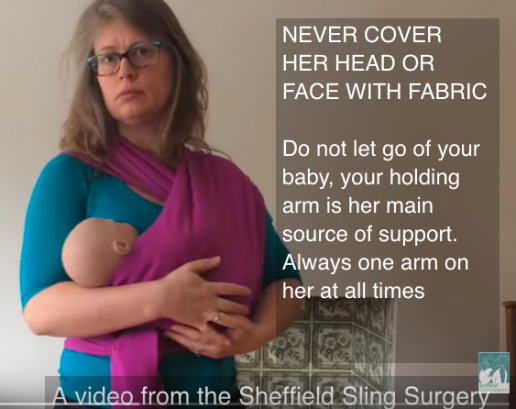
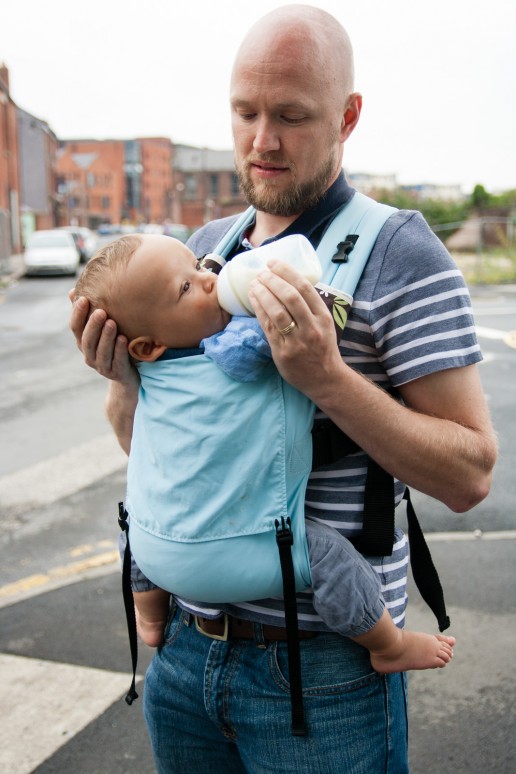
Baby’s head should be completely free of fabric, being supported by the sling up to the nape of the neck, able to latch and delatch as needed. Their lower body should be well supported from knee to knee, either by wrap fabric well and snugly tucked up between your bodies, or a well tied/securely buckled waistband. Both of baby’s arms should be positioned around the feeding breast or bottle, just as if in arms, and the head should not be at an awkward angle. Feet should be free of fabric and baby should be comfortable and easily able to reach the nipple. If baby is able to achieve a good latch from this position, he/she should be able to feed if ready. Some practice may be needed for both of you!
Feeding in slings is more risky if you have a snuffly baby who is needing to delatch frequently for some mouth breathing, and finds herself unable to do so as her head is not free to pull backwards for a little extra air.
Babies should never be left to sleep in feeding positions as their disproportionally heavy heads can too easily droop or be folded over, with subsequent obstruction of their airways.
**Please remember that loosened slings with longer tails can present a trip hazard if you are feeding on the move.**
In general, it can help to think of the sling as a third hand to help support baby in position while you work on achieving a latch. Many people manage to feed happily and safely in slings, once they are armed with good information, and know what to watch out for. It usually works best with older children, too. If you feel unsure about feeding your child in your carrier, do get in touch with a professional who can give you some one-to-one help and advice.
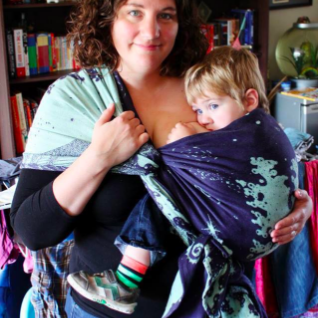
A hip carry may work well (with a wrap/ring sling/cross strap buckle carrier/meh dai).
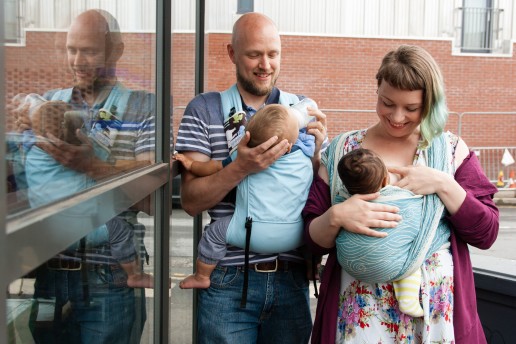
3) How can you make feeding in a sling as easy as possible?
For breastfeeding, think about ensuring easy access for your baby. Your choice of clothes can make things a lot easier. Loose fronted tops that can be easily moved out of the way, pulled down or lifted up, or those that open and close with zips or poppers, rather than buttons can help. Many mums swear by a combination of a loose shirt that can be lifted up/pulled down with a stretchy camisole or vest underneath that can be lifted up/pulled down. Such layering often provides good cover, if required. Bras that are easy to undo one handed (while your other hand supports baby”s head) are also helpful. Some mums find latching on more successful if they lean forwards slightly to bring the breast up to baby’s mouth, and many need to hold their breast up with one hand for the duration of the feed. Hoods can help with providing some discreet coverage, but remember that temperatures inside slings rise quickly if air cannot circulate freely, and carbon dioxide levels in rebreathed air are raised.
4) What kind of slings are good for breastfeeding in?
It is usually possible to feed a baby in most slings, with a bit of care. I don’t think there is really any such thing as hands-free feeding, as one hand or arm should always be on your baby to provide support, especially before they have excellent head control. But one hand free is better than none! Breast size, shape, flexibiliity and nipple position varies from woman to woman, and from stage to stage in the breastfeeding journey, so each dyad will need practice to work out which height works best for them. Larger breasts may prove more tricky for some.
Please remember that baby’s back and occiput should be well supported with no curling over and his chin should not be resting on his own chest, and once finished feeding, baby will need to be returned to his previous snug, upright and close position, by adjusting the sling appropriately.
Feeding in Stretchy Wraps
There are many different ways to feed in a stretchy wrap. Some methods are safer than others. On the whole, stretchy wraps are mostly used with small babies in the classic upright “hug hold” also known as the “pocket wrap cross carry”. It is these young babies from birth to four months who have the greatest risk of airway obstruction, so it is worth visiting your local babywearing consultant to get some advice and support if you can. I can’t stress enough how important it is to ensure your baby’s back and head is well supported, but still able to move freely to create an effective latch (and delatch), and that baby’s face is visible, not covered with fabric and their nose is clear. Once the feed is over, baby MUST be returned to the previous snug, close, upright seated squat position. There should NEVER be any fabric behind the back of baby’s head.
The video shows how to use a stretchy as a breastfeeding aid. You can see how baby is in the classic tummy to mummy position as the fabric is removed.
I usually advise parents to see their stretchy wrap as a breastfeeding aid. It can add a layer of extra support and spread some of the weight to the non cradling shoulder, and allow a short period of moving around while their child is feeding. It is not hands-free.
Feeding in ring slings
Ring Slings and upright feeding
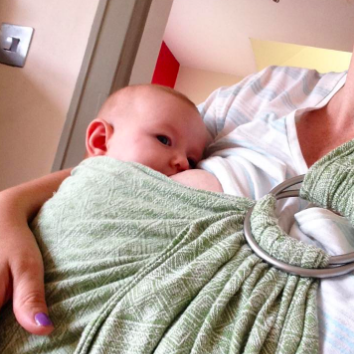
From a good seated squat position, the pouch can be gently and slowly loosened by lifting the uppermost ring up carefully, so that baby is lowered slightly down your body. Ensure that the loosening is equal across the width of the sling so that baby’s upright seated squat position is maintained. Bring your child to the breast up so he is able to latch on without twisting his neck.
- Bottle feeders may not need to lower their baby as much, but some loosening will help to ensure baby does not have to twist his head to the side too much for teat access.
.
Ring Slings and slightly reclined feeding
From the snug seated squat position, loosen the fabric slowly and carefully to lower baby just a little. Lean forwards slightly and support baby’s upper body with one hand. Gently recline your baby into the waiting crook of your arm as you bring his far leg around to your front so both legs are together. Ensure the pouch of fabric is well tucked up between your baby’s side and your tummy so he is resting as if in a hammock, slightly turned towards you, bent knees above bottom, feet outside the carrier, with his head and neck resting on your arm. Adjust his location in this position so his mouth is able to reach your nipple – it should look and feel just as if you were holding him in your arms to feed. Keep the top rail of fabric under baby’s neck, do not pull it over his head.
- Bottle feeding is similar, but baby’s head will be facing the ceiling.
Feeding in Woven Wraps
Woven wraps and upright feeding
Carries such as the Front Wrap Cross Carry and its variants can be easily adjusted for feeding. The knot at the back (or side) can be loosened just a little, with the resulting small amount of slack worked equally and evenly back along the fabric so baby is sitting in a lower pouch with mouth above nipple, but still snug and supported, and in the spread squat position. The whole carry can be moved slightly across to one side or the other, and the baby can then be brought to to the breast. It is easy to switch sides.
Hip carries (especially those with slip knots) are easy to feed from one side.
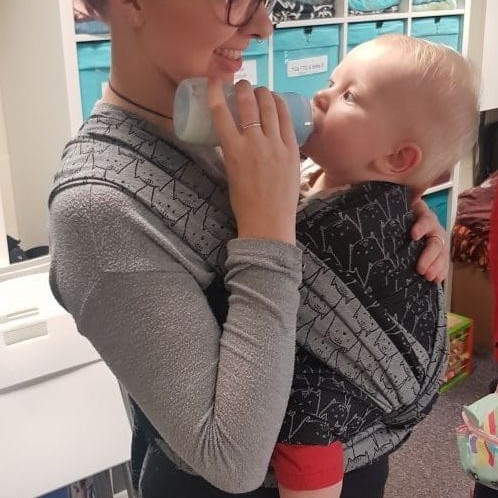
Bottle feeding is similar, but baby may not need to be lowered quite as much, and may need a little more space at the top edge for the bottle to be accessible without baby’s head having to turn too far.
Woven Wraps and slightly reclined feeding
This works best with carries that do not have cross passes under baby’s legs, so baby can be gently tilted to one side to rest on your feeding arm. The FWCC can be partially untied so the long tails are hanging down over the shoulders and baby is sitting just in the horizontal pass. He can then be carefully gathered to one side with his far leg brought round to the front, his body turned to face the parent, bent knees above bottom, feet out and head and neck resting on your arm. Adjust his location in this position so his mouth is able to reach your nipple – it should look and feel just as if you were holding him in your arms to feed. Keep the top rail of fabric under baby’s neck, do not pull it over his head. The long tails are usually best left loose as retying them will mean you are not in control of baby’s head during the process.
- Bottle feeding is similar, but baby’s head will be facing the ceiling.
Feeding in soft structured carriers
Soft structured carriers (mei tais, half buckles, full buckles) and upright feeding
This can work well for bigger babies who have some head control. Baby should be in the carrier at the height she would normally be carried, with back and legs comfy in the seated squat position. To feed, slightly loosen the waistband gently and lower it a couple of inches and retighten, then loosen the side buckles or ties one by one to lower baby to the required position. One side may need to be loosened more than the other as baby feeds from that side. The breast can then be brought to the mouth. It is usually easy to switch sides with the straps being adjusted each time to allow baby to move. Baby’s back and occiput should be well supported with no curling over and his chin should not be resting on his own chest.
- Bottle feeding is similar, but baby may not need to be lowered quite as much, and may need a little more space at the top edge for the bottle to be accessible without baby’s head having to turn too far.
Once finished feeding, baby will need to be returned to the previous snug, upright and close position, by adjusting the sling appropriately.
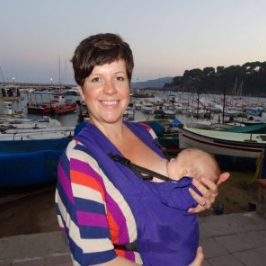
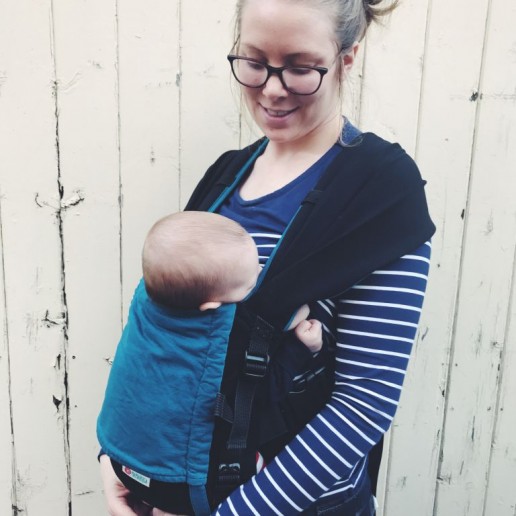
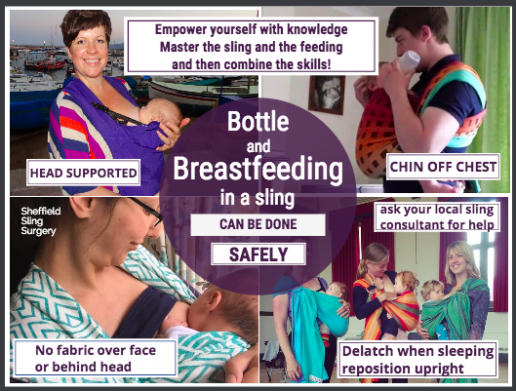
So in summary.. “Can I feed my child in my sling?” The answer is a resounding YES YOU CAN, from newborn to toddler, in lots of positions, from breast and from bottle. The key to doing it well is to ask questions about how to do it safely and empower yourself with knowledge to make a choice about how you wish to feed and then practice. It’s all about the AIRWAY! Do ask your local sling professional for some support…. – and enjoy!
Some further reading;
Seven Reasons Why Carrying is Great for Breastfeeding Mothers (Jess Hippey for Oscha Slings)
The Fuss about Facing Out
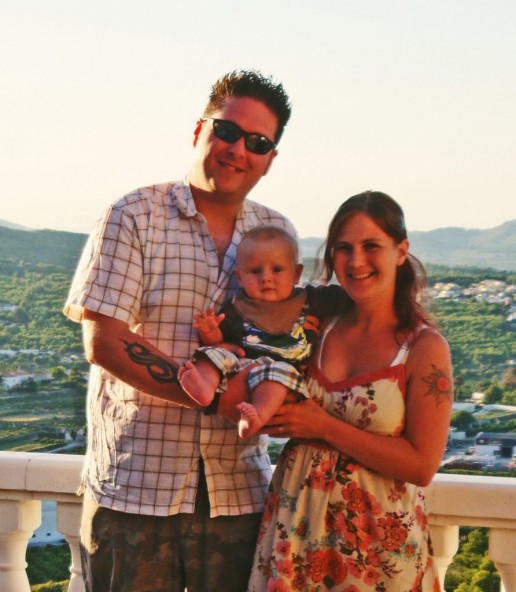
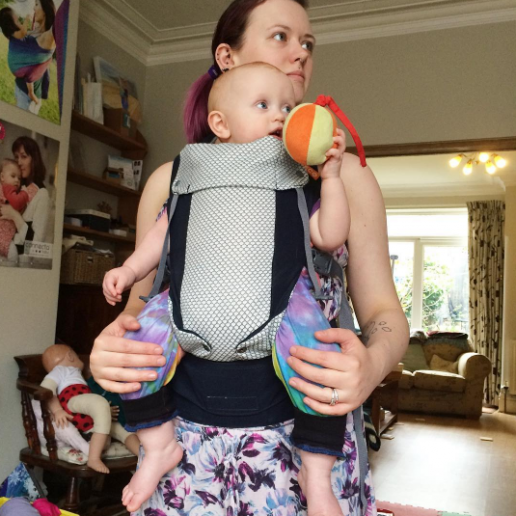
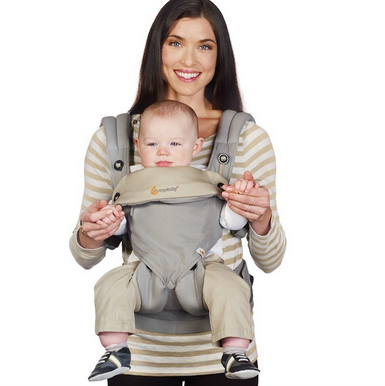
 One of the most common “controversies” in the babywearing world is the “fuss about facing out” that is, the issue of babies being carried in facing out positions. This means babies being held with their backs to their carer, facing the world, rather than facing the person who is carrying them. Opinions vary widely among manufacturers and parents and even among professionals. Many babies do very much enjoy being held in positions where they can see the world, so why all the fuss? Is there any need for a fuss at all?
What are the advantages of world-facing?
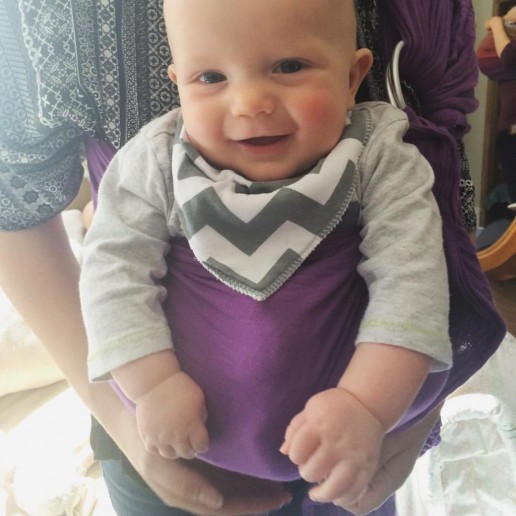
Babies do enjoy seeing the world, especially once they are a little older and have mastered head control and wish to be more involved with their environment, rather than sleeping or snuggling in as they did when they were very little. Curiosity often coincides with increased motor co-ordination and greater periods of awake and interaction time. This is often the point at which families begin holding their babies in positions that give them greater visibility. Instinctively, they tend to support their little ones in very gentle positions that still ensure good hip and spine support; cradled in arms with chin off chest, or held in semi-seated positions with back curved against parent but hips held in flexion, as if sitting in a bowl.
These positions protect the natural anatomical curve of the immature spine and do not straighten it uncomfortably.
As babies grow, their muscle strength increases and fatiguability decreases, alongside greater coordination and gross motor skills. This allows slowly improving head and neck and upper back control (with less drooping or wild flailing) as their spines gradually begin to uncurl. Furthermore, as their focal length improves and visual acuity rises, the world becomes very interesting! There are stages in baby development when babies seem to arch away in arms a lot; this may be related to a desire to see more, but may also simply be attempts to hone upper back strength, in preparation for turning skills and rolling over. This is very common around ten to twelve weeks. Babies may also arch when they are tired, if they have reflux, if they are frustrated.
In-arms holding is responsive, which is the key issue; if baby makes a protesting movement or noise, the carer responds and moves the baby to help it to become calm again. Also, parental arms get tired and baby is easily moved to another position, this may often be on the shoulder facing parent again for a while. Such reactive carrying in-arms, with changing facing-in and facing-out positions, is of great benefit for honing development and also to encourage learning about the world from a safe and comfortable position.
This all sounds great, so what’s the problem with using a sling for this?
What are the hazards of facing out?
It is important to remember that young babies are not ready for prolonged and intense interaction with a very sensory-overloading environment; they have not yet learned how to process the bombardment of information their brains are receiving. They have not yet discovered how to “filter out” the irrelevant for a more focused look at the world, (a skill that we take for granted) so this can be very tiring. Being able to turn away from the noise and bustle and fall asleep (to process information) is important. Babies should NOT sleep facing out.
A facing-out carrier holds a baby in a fixed position for a prolonged period of time. The duration of this time is entirely dependent on the parent; they are unable to see their baby’s face to pick up early cues of tiredness or distress or breathing difficulties, and they are less able to feel subtle shifts in baby’s body signalling discomfort or a need to change positions. Babies can easily be left in carriers for much longer than they would be held in arms.
Babies are intensely social creatures and learn to regulate and control their emotions from interaction with their parents and watching their faces. Social referencing (also known as triangulation) is very important in the first year and well into the second. A child will often decide how to react to a new experience after it has looked to its carer; it will be less likely to touch something dangerous if the carer reacts in an upset way. Potentially scary experiences can defused by turning the head to see a parent remaining calm, or to receive comfort and reassurance, and vice versa. In a structured carrier worn facing out, it isn’t as easy for a baby to twist around to see the parent’s face for reassurance or to be able to seek comfort.
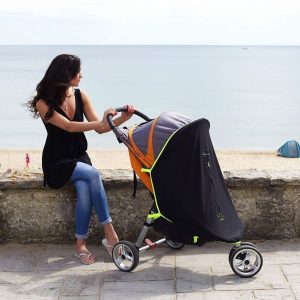 Many pushchair makers now include parent-facing positions as standard, as this is believed to encourage and improve language skills and bonding. (It is worth noting that there is no formal evidence to suggest that our children are any slower at language acquisition than previous generations who did not use facing-out means of transport, however, anything that promotes bonding and communication is to be encouraged.)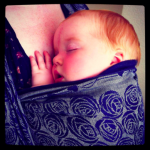
Furthermore, the world-facing positions do not provide any safe sleeping positions (all respected manufacturers say babies must be turned around to sleep; this is often missed in the small print) as there is no head support in this carry. A heavy head that is unsupported by a parent’s chest will droop forwards, putting baby’s chest under slight compression and pressing the chin downwards, potentially compromising the airway.
This is why the majority of respected sling manufacturers suggest that babies under 4months should not be carried facing out. Before this, babies simply are not developmentally ready. Beyond this age, they should not be held in carriers facing the world for longer than twenty minutes to half an hour or so. (Some manufacturers say facing out from 3 months up, some say from 5months up). I think it depends on the child’s personal developmental stage and there should really be no rush.)
There is also the issue of hip and spine positioning in facing out positions. Most facing out in slings is done with “narrow-based” carriers, as very few high street options offer wider, more ergonomic seats that protect the gentle curve of the spine and promote healthy hip development in the world facing position. Most babies find their backs are held in straighter positions than ideal, with their legs hanging straight down from their hip sockets in this narrow shaping. While there is no formal evidence that choosing a narrow-based carrier will cause any harm to a baby who has healthy hips with normal sockets, there is a small percentage of babies who do have developmental hip dysplasia that are missed at their routine checks. These babies will benefit enormously from the ergonomic seated M shape position that allows their joints to be held in the optimum angles for healthy blood vessel growth and nutrient provision, and often this positioning is all that is needed to correct mild cases of hip dysplasia. It is worth weighing up the risks and may be better to choose a carrier that holds a baby more optimally if you decide to face baby out. Additionally, it is more comfortable for a person to be seated on a broad based hammock shaped chair rather than perched astride a narrow padded beam, and babies are no different.

Carrying a baby who is sitting high up against the carer’s body with the centres of gravity closely aligned is much more comfortable than carrying one who is low down, far away, and suspended from the carer’s shoulders. The parent’s body does not form part of the support structure of the carry when facing out, so much of the work of carrying has to be done by the upper body, rather than the core postural muscles. Centres of gravity diverge further when held facing out in narrow based carriers. Put simply, carrying facing out in this style of carrier is often uncomfortable.
Ok, so what can I use to carry my curious child optimally?
It is common among parents who are considering using a sling to look for options that offer world-facing positions. This position is what is often seen in the media and is widely advertised; it may be more pleasing to see happy babies looking directly at the camera rather than away from it, which can be better for marketing purposes. As it is so visible, it becomes the “norm” and carriers that offer this option are often perceived as “better.”
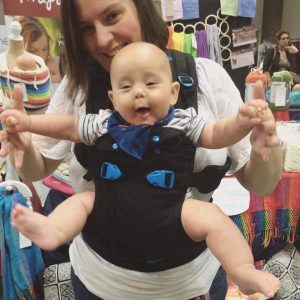
Many parents believe that babies need to be given the opportunity to face the world as much as possible for the stimulation, rather than looking at their parent all the time. Sometimes this belief can be be a marker for low self-esteem in a parent; that they just aren’t interesting enough, when in fact, for many well-attached babies, their parent is their most beloved sight. This is especially true if parent and baby are attuned and the parent is responsive and communicative and able to engage happily in play with their baby. Babies are often able to pick up on unhappy or uneasy feelings in parents and can be reflexively resistant to close contact, creating a negative spiral. Lots of in-arms carrying, skin to skin, and just time spent together can be very helpful with this.
Sometimes babies may begin to resist being carried in their parent-facing positions – they may have come to associate the sling with sleeping which they don’t want to do, and they may want to be able to see more.
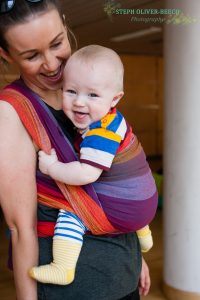
To achieve a good view while the child remains parent-facing, and ensure access to the world, try carriers with broadly angled straps that don’t get too close to the face can be very useful, or ones that can be tied carefully for good visibility. As children grow in co-ordination, they need less head support and often enjoy having their arms out of carriers (with the panel reaching up to the armpits for safety and support.) It is surprising how far a child can turn round to see when they can move their shoulders! 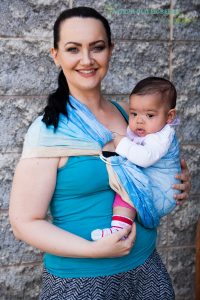 Hip carriers and ring slings will hold a child “off-centre” or laterally on the hip, for a great vantage point, and they will still be able to turn towards their parent for conversation or rest. Back carrying can be another very useful way for a curious child to see the world coming towards them. Most structured carrier makers will suggest sitting-up age to be the most appropriate time to begin to think of this option, and it is not hard to do on your own. Your local sling library or consultant (www.slingpages.co.uk) will be able to help you learn.
If you have a baby who is developmentally ready for facing out in a carrier and has stable hips, then I think it is just fine to give it a go! Your local sling library will be able to show you some options and talk you through which may be the most comfortable for you. Trying the carrier out first for a period of time at home is very useful to see if it really does work for you before you buy; advice from the internet is no substitute for real life trials.This period of “fussiness” doesn’t usually last long, as babies grow in co-ordination they are happier and many babies who once resisted facing in are very content a few months later in a carrier that is more comfortable with greater longevity.
In summary, facing out can be a great deal of fun for parent and child, if done sensitively and thoughtfully, with consideration to the child’s anatomical development and comfort; look for those carriers that take your baby’s comfort as seriously as yours. Try to pick a carrier that will hold baby optimally for most of the time, some come with specially designed bucket seats and others will widen for facing in and back carrying.
Age-appropriate facing out for those who enjoy it is great, when done safely! Your local sling library can be found at www.slingpages.co.uk.
Slings and Prams and Guilt
“I have a confession to make. I like my pram; sometimes I choose it over my sling. Does that mean I’m not a real babywearer?”
“I feel guilty if I pick the pram for days out when I know the sling is so beneficial.”
“I feel selfish if I use the buggy, but sometimes my body needs a break.”
Slings and prams and guilt often seem to go hand in hand; as if there wasn’t enough guilt involved in being a parent in the first place.
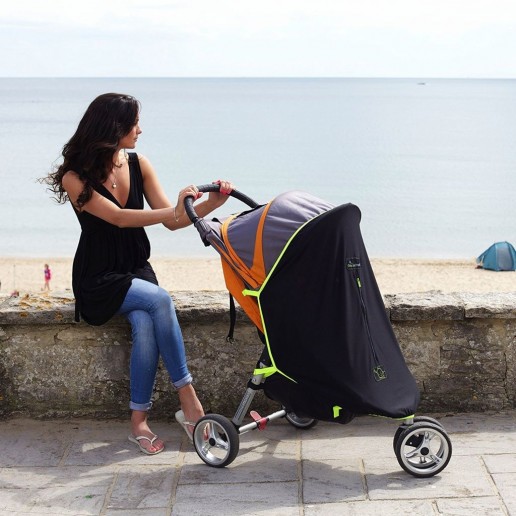
I hear phrases like these from time to time, and while I am delighted that these families have discovered the good things that come from using a carrier, I feel sad that guilt has started to creep in, and that divisions are developing. There is more than enough guilt in the world for parents; how they choose to feed, how they choose to dress their children, and now it seems, how they choose (or don’t choose) to carry. I am really keen to prevent any “mommy wars” regarding carrying from springing into life, so here are my answers to this sort of situation.
Carrying DOES matter. Carrying your child is an important and necessary part of the “fourth trimester” early months of life, it is part of the essential bonding (imprinting) process whereby attachment is created. Secure attachments with a loving caregiver are the bedrock of future positive mental health and the springboard into healthy emotional relationships in later life. For young babies, loving touch and holding are one of the major means of providing this sense of being loved and being secure. Few of us are able to resist the urge to hold our crying children, to provide them with relief and to be their safe space, it is instinctive in us. We should all spend a lot of time holding and loving our babies and allowing them to learn to love us back.
However, modern life is demanding and society encourages us to think that early independence is desirable; that children should not “hold us back.” It is important to care for all members of the family; baby, siblings and parents equally; and this is where using a sling can help. A baby needs to be carried; a sling will allow this to happen while life can continue around them. A sling can mean the childcare can be shared with other adults, a sling will allow a parent to get out and around without the need for lots of equipment.

That said, there are many ways to keep a child close without the need to use a sling 24 hours a day. In-arms carrying, cuddly play, breastfeeding, bedsharing, piggybacks, reading stories with baby on your knee and so on are all ways to be in close contact. It is indeed vital to keep up with regular close contact well into the 2nd year and beyond as our children’s brains are still learning about love and attachment – it’s an investment in their future mental health. However, once babies begin to take control of their own bodies and learn how to move they need the freedom to do so.
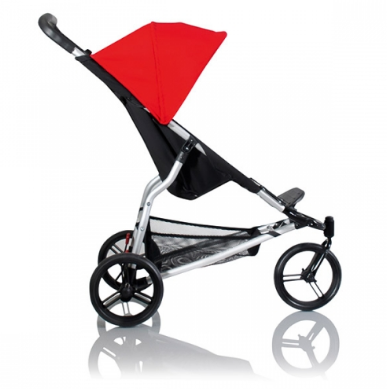
Prams and buggies are a perfectly valid, convenient and useful way of transporting your child around and there is no reason to feel you are disadvantaging your child by using one instead of the sling today, or depriving her of something, especially if she can see you and remain in communication. You can meet her needs for closeness some other way later in the day. There is no reason to “ditch” the pram if you find it helps you in your parenting. A pram is (like the sling) a tool for getting around and carrying things, and may be easier in many circumstances, just as a sling can be easier in others (eg public transport, busy shops, off-road exploring). There are many ways to carry other things when your baby wants to be up; special bags that fit around the sling.. or a buggy!! Many families use and love both types of transportation, choosing what will suit the situation best.
Some children may just prefer the space of the pram; this is not a rejection of you, but may just be an expression of their personalities or their wish to explore what they can do with their limbs. It may be that your little boy feels too hot in the carrier that you have, or just fancies a change! Your toddler may also enjoy being able to see the world from a different perspective. If your baby loves the pram and doesn’t want to go in the sling today (assuming of course it is a comfortable and well fitting one – see here if your baby seems to hate the sling), that’s just fine. You are being responsive to your child; there is nothing to feel guilty about.
Sometimes YOU may just prefer the pram over the sling, especially if you are feeling a little claustrophobic or touched out, or just tired. Maybe you have two children, or more, and the buggies are the best option!
We don’t live in the same supportive communities these days and it can be hard for one (or two) people to shoulder the load of responsive parenting alone 24hours a day, we all need a break sometimes. “Villages” of old would share the carrying/ feeding/ entertainment more widely, which provided a much better balance of life than many of us are able to find today. If you want to use your buggy, use it and enjoy it, you can cuddle your baby later (or you may have already used the sling today.) Do not feel guilty that you are not being the best parent that you could be.
Do not feel guilty if you feel you just can’t carry today. There is no such thing as a perfect parent and social media sharing doesn’t present a true picture of people’s lives; it can look like others are using their carriers hour in hour out, day after day from their photos, but these don’t show the in between hours or days where the sling is not in use (and the pram is!) Sometimes prams are an expression of our personalities too, just as the carriers we choose can be…
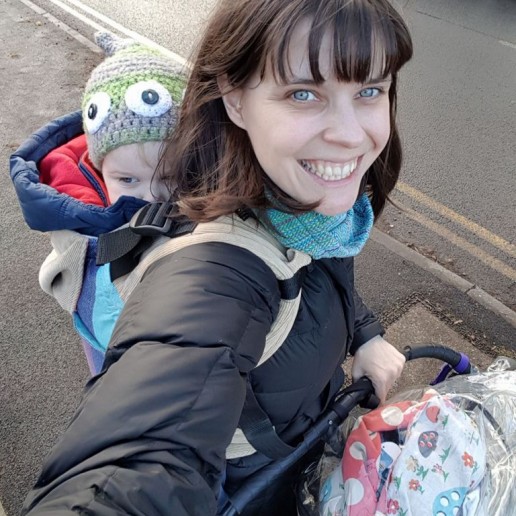
All safe and responsive carrying is good
; the sling you choose to use is not important, as long as it is safe and comfortable. A buckle carrier is as valuable as a mei tai or a woven wrap or stretchy or a ring sling. Even brands of buckle or wrap is irrelevant; what matters is that you and your child are together, in close contact, safe, and enjoying each other’s company, or sleeping in contentment.
If you are a sling user, this is a great opportunity to avoid creating a culture of guilt and judgement. The parents you see using a pram to quieten a crying baby may well have found this works better for sleeping than their sling. The mum you see pushing a pram in crowds may feel her baby is safer inside the pram than being bashed by passers by in a sling. A parent carrying a heavy toddler in their arms after a melt-down may well have chosen not to use their sling today. iIt is important to be kind and recognise that one moment is not a whole life, and we do each other a dis-service if we unintentionally spread the message that either prams or slings are superior, or if we stare and make comments about others that could be overheard. All safe slings are of great value, and we should be cautious about what message we send to the new parents around us.
I’ll finish by reiterating that carrying IS important. We should all carry our babies and spend as much time in close contact with them as we can, be that in a sling, in arms, hand holding and so on. We should try to carry our children as much as possible, as there are many good reasons to do so. That does not mean that we should feel guilty if we choose to use prams or buggies as well, or if we choose to use one kind of sling over the other.
Oh, and of course it is fine to come to a sling meet/sling library session with your pram! And no, you definitely don’t need to feel embarrassed if you see me out and about and you are using your buggy!

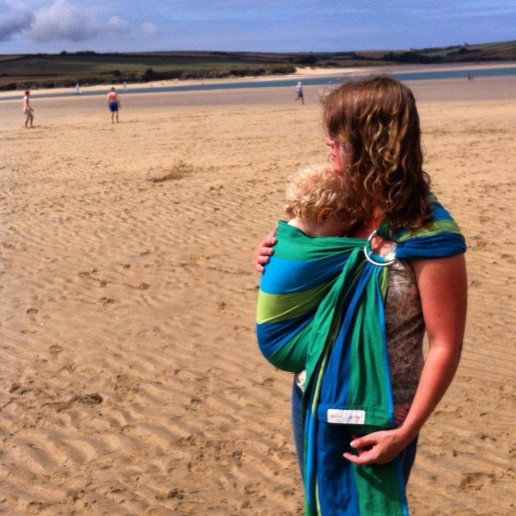
Do Slings Create Clingy Children?
Do slings create clingy children?
Many parents worry that by carrying their baby in a sling, that they are going to create a “clingy child” who won’t be put down. There is a lot of pressure from society to "put your baby down", a fear that responding to the cries of a child will somehow spoil them. Many people believe that children need to be trained into early "independence" and that too much love holds a child back. This is very, very incorrect.
It is disconcerting for a babywearing mother who has carried her child frequently from birth to find that he wants to be held much more than his contemporaries, and when the time comes (if it does) for childcare from other individuals, her baby may protest very vigorously and will not allow another adult to look after him.
All too often, at this point, the words “rod for your own back” surface and the use of the sling is blamed for the child’s behaviour, labelled as “clinginess”. People can use this as a reason to reinforce fears that a child has been "ruined" by the cuddles. For a new parent, doubt can creep in; a fear that somehow, somewhere, a wrong choice has been made and a child’s independence has been stunted by keeping them too close.
Watching parents and children struggle to separate can have an influence on bystanders; encouraging them to think that sling use is more trouble than it is worth. They are wrong.
 Secure Attachment Matters
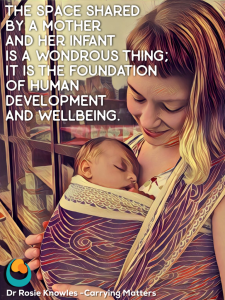 Secure Attachment Matters
It would be worth at this point, to briefly recap the value of close bonding and secure attachment. Close contact that began at birth and has continued uninterrupted will have initiated, facilitated and consolidated a positive bonding process (mediated by oxytocin).
Such children are likely to have secure, positive attachments to their primary caregivers, which is essential to their physical and psychological health. This is how to build a happy brain; responsive parenting. Children who know their own value and have a rock-solid foundational experience of having their basic needs met, will have trust and confidence in the loving adult relationships around them. This builds resilience, a vital tool to help children thrive despite adversity.
When it is biologically appropriate, they will be more able to turn to independent play as they know and trust their mother is there, even if out of sight; she will not abandon them, she has consistently always come back. As they grow older (towards their first birthday), and begin to develop more co-ordination and independence in movement under their own steam, they will have the underlying security to roam further and further freely. This takes time to develop, and individual personalities play an important part in this.

With this natural, biological change and development in their bodies, they will also demand less frequent contact, less frequent feeding, and begin to expand their horizons. This is often the point at which carried babies begin to want to be carried less; to reach for the floor where they can explore, and investigate the world around them. They may even begin to refuse the sling from time to time, often to the carrying parent’s chagrin!
Modern society expects children to become independent individuals extremely young, praising and rewarding those first shuffles forwards, first crawls and first steps, and being quick to criticise or discourage behaviour that demonstrates need. However, it is normal for babies to express their needs, such biologically appropriate behaviour should not be “trained out of them”.
If a child has been carried in arms or a sling from birth and has strong, secure bonds with his caregivers, it is entirely normal for him to expect support from these caregivers in the way he has always experienced it, whenever he asks for it. The neural connections in his growing brain have been solidly reinforced over and over again. It is also normal for him to protest when he is removed from his trusted habitat and asked to accept different caregivers he may not know. This child is not “clingy” in the sense our society means it; it simply means he is habituated to the close contact he has enjoyed all his life, just as his ancestors were; and such close contact is normal for human babies.
With the natural progression of his emotional and psychological development, as well as the growth of his physical skills and strength, his needs will change. Until that stage is reached, a child will expect continuity of care and for things to remain unchanged. The eight month to twelve month period is often when children experience separation anxiety and often coincides with things like parental return to work, introduction of new spaces and places, and of course the sling will play a part in providing reassurance, until a child is ready to move on. It is a safe space, rather than being the root of any “clinginess”.
In our society, babies are carried much less and put down a lot more than they used to be. Some fairly recent British data in 2000 (Baildam et al 2000) suggests that mothers spent an average of just 61 minutes in 24 hours simply holding their sleeping or crying six week old child. This figure was only 17 minutes when the child reached one year old.

When feeding contact was added to the data, 6 week old infants spent an average of 3hrs 27minutes out of 24hrs in contact with their mothers, and 2hrs 23minutes at one year old. Given the trends in current mainstream society, this is likely to have declined further.
For many babies, their parent’s body has never been their primary habitat, their early communication attempts were never met positively, and for some, their bonding may be less secure and demonstrate more insecure or ambivalent patterns. Earlier “separation” may have been gained, but at some cost to future mental health.
Don't be afraid to hold your unhappy baby or to use a sling if they want to be close to you (it means you can be hands-free while you meet their needs). It is always worth building secure attachment relationships. Your baby's babyhood does not last; soon they will no longer need you in the same way, build that solid foundation while you can!
Normal Independence
So, when does normal, biological independence for the human child develop fully when allowed to proceed at its own pace? Well, personality plays a part in this; a single family may have very different children who have been parented the same way and yet have different needs and develop confident independence at different times. Generally, however, anthropological studies would suggest that full independence would occur when a child has completely self-weaned from breastfeeding and bed-sharing, no longer requests frequent in-arms carrying, being able to reliably move from place to place unaided, and able to verbally communicate effectively; usually around age three for carrying (even only occasionally, in piggy back form). Breastfeeding and bed-sharing often continues much longer in more traditional societies.
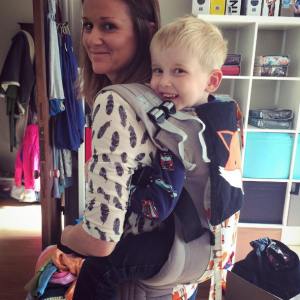
This is much, much later than the socioeconomic model many of us live in. Children are incredibly adaptive, and as there is so much technology available and so much societal pressure to encourage this early separation, this often means that babies can and do learn to need their parent less than they normally would at their current age.
They can learn to not to raise their arms or cry for contact, they can learn to stop asking for breastmilk, and they can learn to sleep alone, however they may be missing out on much of the opportunity for emotional and psychological growth in these crucial formative years. This is the current societal norm; to put babies down rather than hold them close.
So it is no surprise when a parent chooses a more instinctive and natural means of rearing their child, that clashes develop with other parents and older generations who have simply done what the culture around them does and did before them. Why change things?
Grandparents may feel rejected if they feel their own child has chosen to parent differently from them; gentle discussion about current research and new understanding of child development and tactful understanding can go a long way in resolving such conflicts.
Many families will feel they have little chance to spend as much time with their children as they would wish due to work pressures; regret or resentment about this may manifest itself as criticism of others who are able to care for their children in a different way. They may not know there are comfy slings for older children; would it be worth visiting the local sling library?
Sleeping in Slings
People often worry that their babies will only ever sleep in a sling or resting on them. This is the natural, normal place for a child to sleep, in the haven of his parent’s secure provision. A baby falls asleep when he feels warm, safe and loved; it is no surprise that babies love to sleep in their parents’ arms; and as we have discussed, as they grow, their need for this will gradually decline.

If you have the kind of life that cannot allow a child’s sleep physiology (or accepting non-parental child-care etc) to mature at its natural pace, then it would be wise to ensure that your baby is well used to happily and easily and trustingly settling to sleep in different locations; or well used to care from other trusted adults and this will be easier if he has the underlying attachment foundations and parents who respond to his need as it arises; he will trust them that the places they lay him to sleep are secure, once he is a little older with the psychological maturity to accept this.
Summary
In summary; slings will not make clingy children; your child is demonstrating normal human infant behaviour, and has had a very positive start to life with a securely attached foundation to build on. All children eventually learn to feed themselves, settle themselves to sleep, walk unaided and accept care from other adults; some learn it sooner than others, but they do all learn it, and as parents, it is our responsibility to choose a method of childrearing that feels right to us and is going to give our children the best start in life possible in the circumstances we live in.
References
Baildam, E. M., Hillier, V. F., Menon, S., Bannister, R. P., Bamford, F. N., Moore, W. M. O., and Ward, B. S. (2000). Attention to infants in the first year. Child: Care, Health and Development, 26:199–216.