

Congratulations
You've been carrying your baby for one whole year!
The close contact has connected you to each other and helped your baby's brain to grow. Hopefully it has brought you many happy adventures together and been useful in many ways: sleeping, feeding, travelling...

There is a lot of evidence to show that babies need to be close to their primary caregivers in the early months and years of their lives. This shared space creates an intimate connection between the two individuals that builds lasting bonds; and these bonds can shape your child's future. It may well have helped you too, to survive the challenges of parenthood.
Choosing to carry your baby has been one of the most important things you could have done for your family unit. I congratulate you for that and encourage you to keep going!
If you'd like to download this for yourself or to give to a friend or someone you know, here is the link to the PDF.

Sling Fitness/Dance and Babywearing
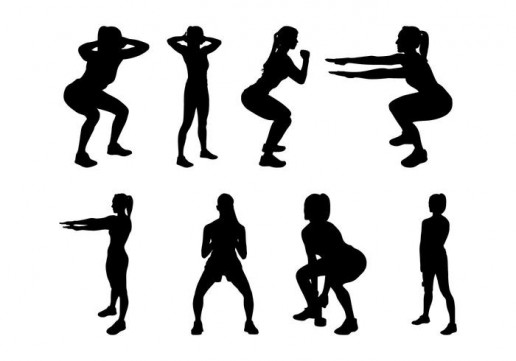
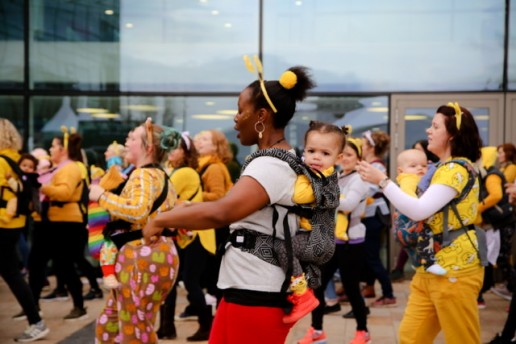
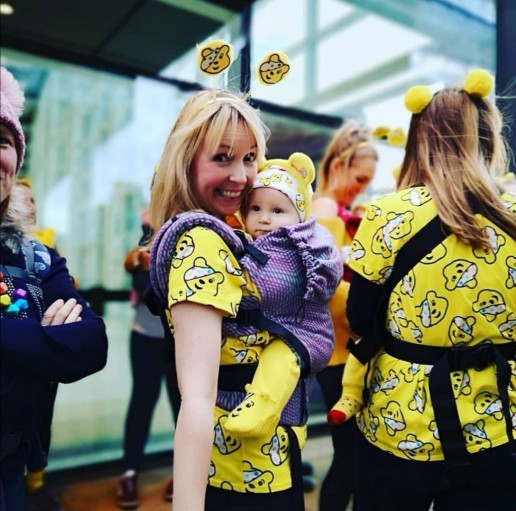
There are many fitness or dance classes focused on maternal wellbeing and bonding with baby while babywearing, which can be a great thing to participate in, like Barre and Baby, Dance Like a Mother, Joiemove and Sling Swing, to name just some.
We all know babies thrive when close to their mothers, and baby carriers can help with this rather than putting babies down all the time. Movement and activity are known to lift the mood, and friendly, welcoming social activity is an important part of helping new parents find a supportive community so they feel less alone. So keeping babies close during a fitness or dance class may seem to be a match made in heaven… or is it?
Some classes market themselves by suggesting that new mothers should be trying to “get their body back” shortly after birth, so they feel good about themselves. I dislike this phrase; after all, why would you want to encourage a butterfly to revert to a caterpillar? Motherhood and the changes that come with it are to be celebrated. Many women would like to work on the strength and health of their bodies, but this should be a positive choice, not one made out of shame or embarrassment.
Baby safety at all times, and the health and wellbeing of new mothers are both of vital importance. It is my firmly held belief that anyone who is suggesting or recommending the use of a carrier during a class should be competent and confident in their use. This can only come with adequate training.
Furthermore, I believe that the long term health and fitness of women after birth and pregnancy takes precedence over quick-fixes. The pressure to “get your body back” and the media focus on celebrity bodies is not helpful for women. Good mental health and a supportive community are cornerstones of adapting successfully to life as a mother, and for many being active is part of that. However, there is often a significant lack of knowledge about the effects of many activities of daily life, let alone exercises or running etc on the pelvic floor, and loading it further with a baby carrier (especially one that is poorly fitting and uncomfortable) is detrimental in the early weeks to months.
It may take six months to a year for the body to recover completely, (according to research at Salford University). Of course this is very individual, depending on previous levels of health and fitness, how pregnancy and birth went, etc. Some women will be much more ready to return to their previous levels of activity than others. The “six week check” by the GP is often used as a benchmark to “sign off” as fit for exercise or dance classes. However, this is not what the six week check is for and this is not an appropriate way to establish if women are ready to return to increased levels of activity.
You can read more about my thoughts on slings and exercise here.
I believe that in order to be able to offer dance or exercise classes safely and beneficially, all instructors should be focused and committed to the health and wellbeing of both the mother and the baby as their top priority.
Instructors should all
- Have formal, high quality and officially recognised postnatal training qualifications (requiring assessment, and willing to provide these credentials to parents who ask.)
- Have a significant depth of knowledge on the pelvic floor after birth and the effects of certain movements and activity on this recovering organ. This is often lacking. I recommend the courses for fitness professionals run by Louise Field of Adore your Pelvic Floor.
- Offer proper assessment of a mother’s functional strength (beyond the “six week check”) and a willingness to adapt movements to reflect this.
- Demonstrate the ability and commitment to put the client and baby’s needs first, even if it means saying that the class isn’t suitable. Babies are not an accessory to be used for fitness.
plus
- High quality, in depth babywearing peer supporter training to ensure mothers and babies are carrying safely at all times, without any compromises. Instructors should have a particular interest in babywearing for its own sake, as opposed to something to add onto existing classes. Ideally they will already be familiar with slings. They should demonstrate a keen desire to be practising optimally and in line with current best practice. Baby and maternal safety is always paramount.
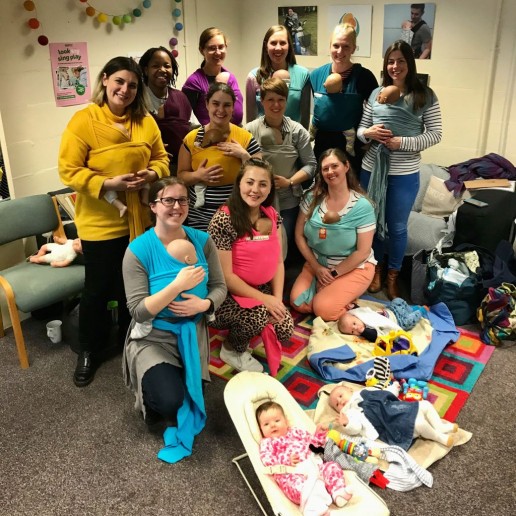
If you would like to explore the option of peer supporter training, please contact me to discuss. I reserve the right to decline training.
Please note that training with me is NOT an endorsement of any class, and Carrying Matters is NOT and never has been affiliated in any way with any fitness or dance classes.
I am no longer able to offer half day “safety awareness training” courses to those who are running postnatal fitness/dance classes. After a while running these courses, I feel this insufficient time to cover all the issues in enough depth to ensure the safety of babies and their mothers. This is especially as babywearing is not usually the main focus of the class and many class instructors have hardly any personal experience with babywearing themselves. Anyone who sees babywearing as an integral part of their class will be willing to invest in in-depth training with assessment.
Please note that I have attended a full day of training in pelvic floor awareness for fitness professionals myself.
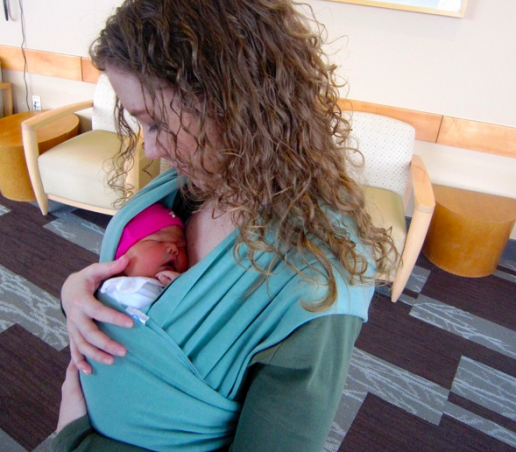
Slings and Adoptive and Foster Families
We all know how vitally important it is for children to build secure attachments with their primary caregivers, both for a sense of security and belonging now and in the future. It is much harder for this supportive relationship to develop when the primary caregiver has difficulties of their own, and when children need to be taken into care. The adverse experiences being endured by children in these circumstances have been shown to have a long term effect on future mental and physical health
This page collects some of the most useful writing on the topic of sling use among adoptive and foster families.
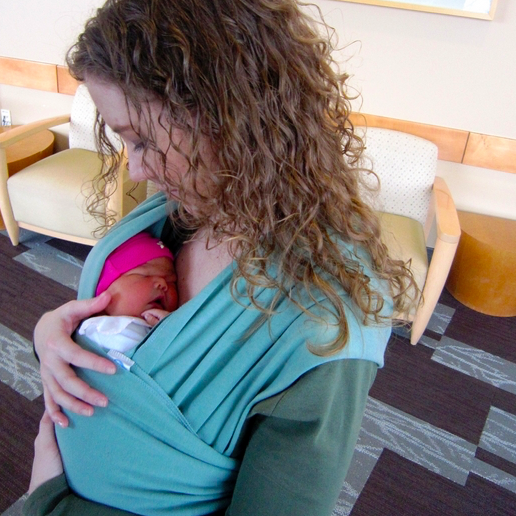
Adoptive and foster parents will know that their children need all the love they can give; and a sling can play an useful part in building these bridges amidst the turmoil. The biochemistry of creating a secure attachment is not a conscious process, or one that depends on ancestry; the release of oxytocin and the down-regulation of the stress response that happens with consistent, close and loving contact happens in the background.
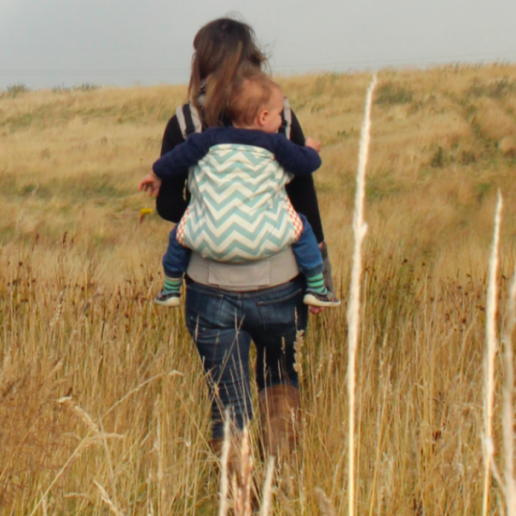
There are many other benefits in terms of language acquisition, socialisation, and also helping children to learn which of the adults around them are their primary caregivers.
Sue, a foster parent in the South, is a strong advocate of using slings as part of her care.
“Many of the babies who we care for have been exposed to either drugs, alcohol or domestic violence whilst in the womb. Carrying them has, without doubt, enabled them to develop into calm, sociable, happy, securely attached babies who meet (and often exceed) their developmental milestones.
Babies who have been neglected for the first few months of life can be very wary of people and situations. By carrying them they learn more about the world from a position of safety. They take cues from watching our faces and learn to trust people and situations more more quickly.
Using carriers when introducing babies to their adoptive parents show the babies that this is someone to be trusted. Only I carry the baby in a sling whilst they stay with me although many other people hold them. However from the first day of introductions the adoptive mother wears the baby in my (the baby’s) sling. I believe this shows the baby that Mummy (or Daddy) is a special person which enables the attachment to switch between us. “
“Children with disrupted attachments are often indiscriminate in who they seek to have their needs met by. Children should always be guided back to their parents by family and friends if they are approached by the child particularly for food and nurture. This process is called funnelling and is extremely important in giving a clear message to the child about who their primary caregivers are. A sling or carrier could be helpful in this process, reducing indiscriminate attachment seeking behaviour and discouraging over-enthusiastic family and friends from picking up and nurturing the child.” Carrying the Connection
This blog post from Slings and More (based in the North East) assesses the science behind how slings can help adoptive and foster parents to build secure attachments.
“Foster and adoptive families have an immense role in helping to form strong attachment bonds with the children they look after and to help those children who do not have strong attachment bonds to begin to form them.”
This is a personal account of a mother’s experience of using slings as she adopted a little girl.
Her father told her: “You two should have some time alone. She needs to learn your smell and the sound of her mama’s heart.”
Perinatal mental health challenges can be very real for adoptive parents too, and slings can be enormously helpful for all shapes and structures of family unit.
Snowsuits, Scarves, Slings and Safety - Carrying in the Cold
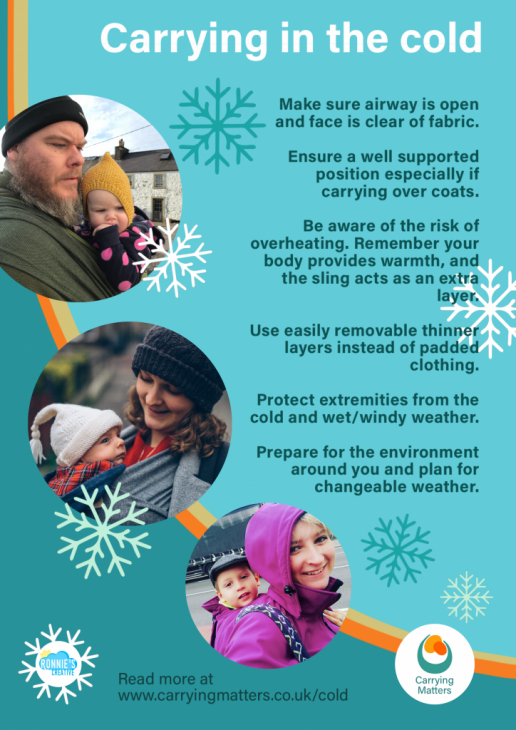
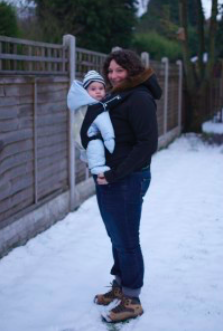
Autumn and winter can be a wonderful time of year, with frosty mornings and chilly walks, the first snowfall, and a little child nestled cosily up to you. Fresh air is good for the soul, and exercise and changes of scenery can make a big difference to family life. You don't need to be afraid of wintry weather, in fact, a baby carrier can help you go places!
It is important to consider safety in all things, and dressing warmly for winter while using a sling/carrier is no exception. Snowsuits may be cute and warm but they need to be used carefully.
When the weather turns chilly, or even icy, every caring parent’s mind turns to how to keep their baby warm in the cold air. Out come the snuggly snowsuits and the hooded jackets, out come the warm cosy scarves and thick cardigans, all aimed to keep you and baby toasty warm. At sling library sessions I can often be found encouraging parents to undress their babies, and often themselves! But why? Surely warmth is important?
Indeed it is, and it is good to be aware of your child’s needs. But there is often still a question about the best way to keep warm when you are using a sling… are the snuggly snowsuits really the best option? Are they safe to use, especially with the current advice about avoiding thick coats in car seats? (see the link at the bottom).

I see a lot of parents with small babies (under four months) in snowsuits or thick jackets who are then settled into a carrier, be it a stretchy or woven wrap or a meh dai or a buckle carrier. Problems can arise at this point; baby is often too warm, and may be rather sleepy as a result, or irritable, and the parent may be finding the carrier uncomfortable. Babies under 4 months are at greatest risk of difficulties due to their relative smallness weakness; they do not have strong and sustained head, back and torso control, so are more likely to run into problems. Older babies and toddlers are very different!
Let’s look at some of the major factors to consider when using a carrier in the cold.
1) Be aware of OVERHEATING
Too many thick snuggly layers can be a risk of overheating. Babies are by nature warm little creatures (carrying them can feel like having a delightful wriggly hot water bottle on your front) and it is their extremities and their heads that need protecting much more than their middles. They are not yet able to regulate their own temperatures in the way that adults can (which is why skin to skin contact from an adult for a feverish or cold child can be so very useful) so being close to your body will rapidly warm a child up anyway. As you walk you will warm up, and your extra heat will warm up the child on your front even more.
Being too hot is not good for babies; it makes them sleepy and overbundling a sleeping baby is a risk for SIDS (sudden infant death syndrome). It makes sense to avoid this overheating in slings just as much when baby is sleeping in a bed or a car seat. Furthermore, being too bundled up reduces their ability to sweat (the drops of sweat need to be able to evaporate to carry heat away) which means even older children who can regulate their temperature better will also struggle with being too hot. Hot babies are at significant risk; it is relatively easy to add extra layers for warmth if you misjudge slightly and to remove them when you come in out of the cold.
.
2) Be aware of AIRWAY
Sometimes the weight of baby inside the snowsuit can mean they sink down inside it, due to gravity, and end up with their faces buried inside the body of the snowsuit. This may pose a risk to airway and breathing; the same goes for hooded jackets or thick cardigans that can “ride up” the back of the carrier.
Too much fabric around the chest and upper body will also make it hard to achieve a fully supported back and a tight carry. This may increase the risk of too much space between baby’s head and your chest, allowing his chest to curl and compress and his heavy head to slump forwards, potentially compressing his airway, or burying his face into fluffy fabric, reducing airflow. Thick snowsuits really can be a significant risk.
Always ensure good airflow. Be aware of your own clothing too; a cowl or a scarf may prove problematic if your baby snuggles his face into the fabric, reducing free airflow. This is more of a risk with smaller babies than in those who have head control and are able to move themselves independently.
Make sure your baby’s face is not obscured by scarves or fabric that could be problematic if they fall asleep.
This little boy is too small for his snowsuit; if he was placed inside a sling his face would disappear into the fluffiness.
3) Be aware of POSITION
Increased bulk can affect positioning considerably. It is hard for joints to bend easily in thick, stiff trousers or multiple layers of clothing, so the M shape with bent knees higher than bottom that encourages healthy hips and protects the natural curve of the spine into a J shape can be hard to achieve. Baby may end up being “starfished” into a carrier with a hyperextended posture, rather than being comfortably seated.
 This will affect how his pelvis and spine are positioned and may mean that his neck is not naturally supported by the J shaping that is achieved by ergonomic carriers. (This is why many narrow-based high-street carriers need prominent neck support or headrests, as baby is held straight and the head can more easily fall back).
Baby will feel heavier as he is not resting against the parent/carer’s body in the same way, and the weight distribution will change.
Too much bulk around the top may also affect the support to baby’s upper body, meaning that baby’s weight is pulling back away from your shoulders, rather than resting on your chest, and may be more uncomfortable.
Too much padding around the nappy region (especially in those babies wearing cloth nappies) could cause a reduction of blood flow to the lower limbs.
Baby above, has been straightened into a starfishing shape as the snowsuit is preventing his hips and knees from bending. however baby below is in the M shape.
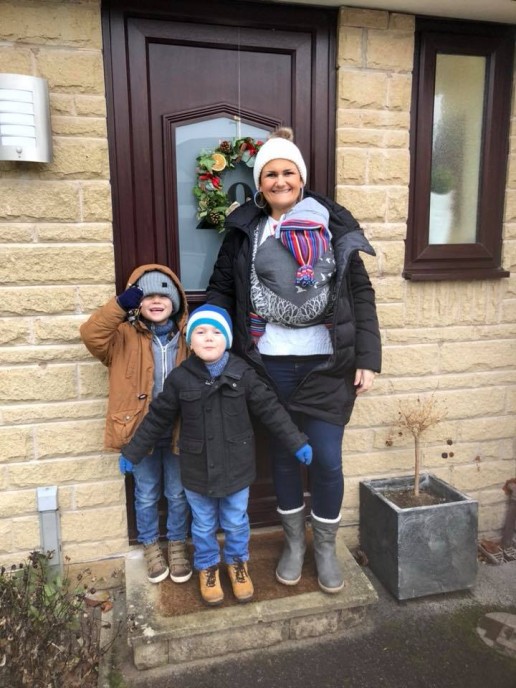
OK, so this is good to know. But it’s cold out there! My baby needs to be warm, what can I do?!
Here are some suggestions how to ensure your chilly weather carrying is safe and still snuggly warm.
If you need to go out in windy and cold conditions, or snow storms, your small baby will be warmest and best protected close to you on your front, here you can shield them from the wind and horizontal snow flurries easily.
Back carries for older children may be easier for you to see your feet as you go but be alert to their experience and ensure they are well protected. Carriers that keep children close to your body will be warmer and less likely to make you feel off balance as you walk, compared to framed backpack carriers worn high on the back; these will also be very cold for children as they are held away from body heat and more exposed to wind chill.
1) LAYER LAYER LAYER – carrying under coats
This is key to virtually all carrying, as the sling is in itself a layer of clothing, and sometimes more than one, depending on its type. A stretchy wrap is three layers, and some are thicker than others. Some buckle carriers are double layer panels, some are three. Every parent/child combination have their own micro-climate too, so what feels right for one family may be different for another.
In hot weather, you need as few as you can manage safely, whereas in cold weather you need more layers. Layers trap air in between them, so can often be more effective at providing warmth than one or two thick items of clothing, while still allowing flexibility.
Thin light all-in-one fleece suits are warm, while still being breathable and allowing good joint movement for positioning. It may be worth considering a size up to protect little toes with the riding up you get with a sling, however, too large a fleece could mean too much fabric around the face and neck. Layer up with vests and onesies and cardigans and leggings and so on, rather than using a very padded or furry inflexible snowsuit, you will be surprised how warm babies can get!
It is best, if possible, to keep baby as close to you as you can, and add layers on over the top. These layers can be undone/removed easily if baby is getting too hot (flushed, very warm chest skin, sweating, unexpectedly sleeping, for example), or if you go inside into a warm shop from a cold outside.
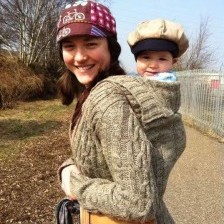
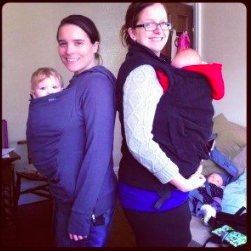
Wearing a large (maternity or oversized) coat which you can then wrap around your baby on the front will add warmth, as will a mac in rainy weather.
If you are creative, you could knit yourself a panel insert which would button onto your favourite button coat, making it wider to fit your baby and the sling inside. You can do the same with a zip insert (check before you buy that the zip insert fits onto your own zip). If you are innovative, you can use a large oversize hoodie or cardigan with a very big neck or a zip that can be undone to go over both of you, or wear an oversized coat backwards if you can get someone else to do up the zip. Others may use a large shawl to wrap around themselves, or a home-made fleece poncho.
There are many babywearing coats or ponchos or vests and other items of clothing on the market which have been specifically designed for this, such as the Mamalila, Lenny Lamb, Zoli, Wombat, Momawo, Liliputi coat ranges (among many others), Boba/Lenny Lamb/Angelwings hoodies/fleece vests, to name just a few, and many are suitable for back carrying.
Some can be expensive; for many they are invaluable especially if they are used frequently for back carrying (many maternity coats or extender panels do not allow back carrying) and some are stylish enough to be worn as normal coats to make them worth the outlay. Some will have hoods for both parent and baby, some won’t – it is worth doing your homework and trying a few before you splash out.
There are also some babywearing covers, similar to pushchair covers, that can just go over baby and sling but not parent, which may be useful if the parent prefers less warmth (such as Bundle Bean or Isara).
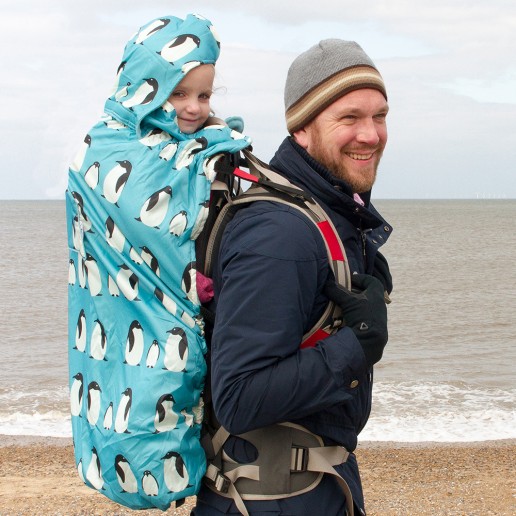
In rainy weather, some will use large anoraks over both baby and parent. There are several waterproof ponchos or covers on the market which can go over the sling on the top and umbrellas are very useful. Some creative folks have even threaded the arms of cross strap buckle carriers through a child’s waterproof anorak to cover over the panel!

2) PROTECT EXTREMITIES
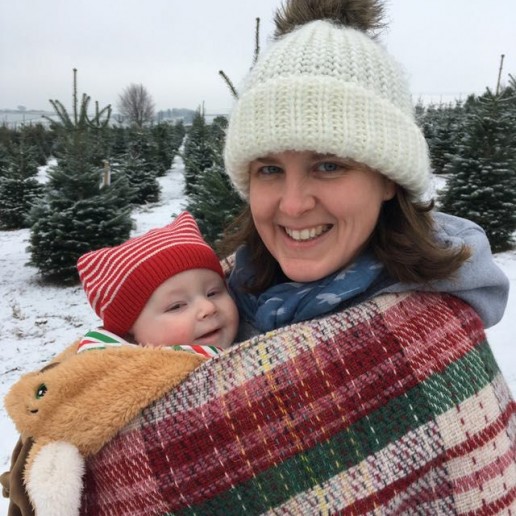
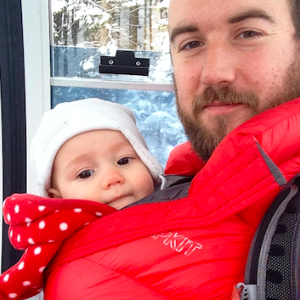
So if your baby’s body is nice and warm, heads and limbs need to be kept warm too.
This is where things like baby leggings, tights and socks can be very useful indeed, layering up over the feet. Some people find boots helpful as well, such as Stonz or Thinsulate boots (varying price ranges) or wooly booties that can be tied gently on to avoid falling off. Some fleece onesies have feet that can be folded over to make a closed foot. Feet can get much colder than hands as they are harder to tuck in near the warm central core.
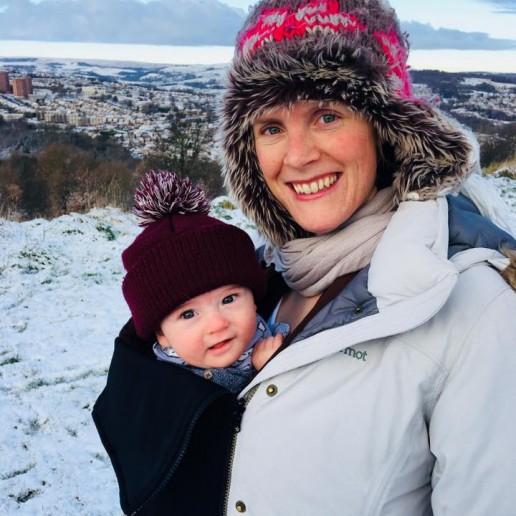
Heads can be kept warm with hats…(of which there are many gorgeous options). Some opt for balaclavas with neck covers and various hoods to keep necks warm and prevent removal!
Hands can be kept warm with gloves with ribbons sewn in to stop them from falling off, or socks worn on the hands. Many fleece onesies have sleeves that can be folded over hands.
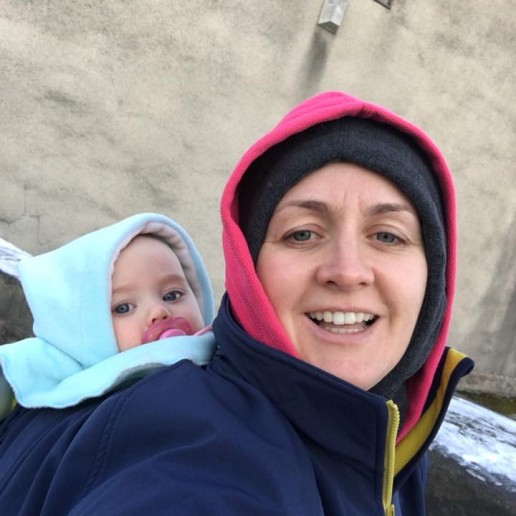
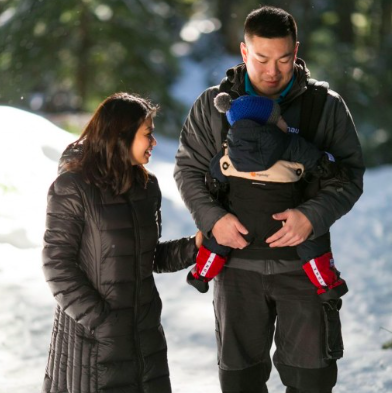
3) MANAGING CARRYING OVER COATS
This tends to work better for older babies or toddlers who want to be up and down all the time, and can work well in some circumstances, depending on the coat, the carrier and if you have anyone to help you. It can be hard to get a sling snug over the top of a bulky or slippery coat, and hard to get a snug fit on the back without help, but for many this works well.
Taking some care when planning the coat you use will make a big difference, (one that is thin and grippy, for example may be easier to work with, and hoods may get in the way of unobstructed breathing). Selecting the sling you use matters too; what you choose for normal use for maximum comfort may prove too complex over a coat. Pick one that is easily adjustable, and easy to get on and off.
This style of carrying over coats on the back may be much more convenient for toddlers who prefer to be able to get up and down again in quick succession. They are more likely to get cold on your back as they cannot snuggle into your body heat in the same way, so will need to be much more warmly dressed than a smaller baby on the front. This is especially true for framed carriers that hold children high up and separate. These children are not at the same risk of slumping over inside over-large suits and ending up with an obstructed airway, and as they are outside your coat, they will get cold. Snowsuits (that fit and are still flexible) can be an excellent solution here, as can waterproofs over coats and snuggly trousers.
Hands and feet will get a lot colder with this type of carrying, so make sure you are prepared.
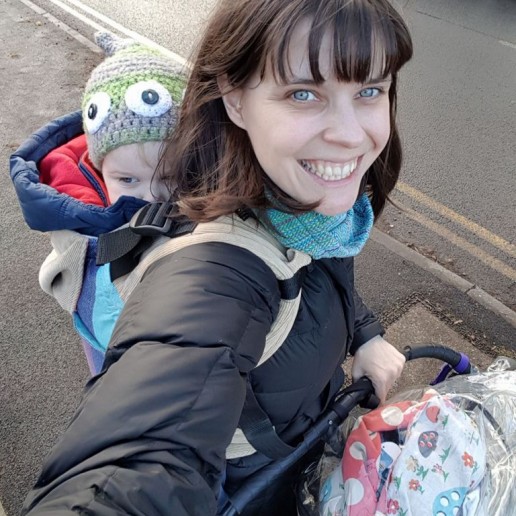
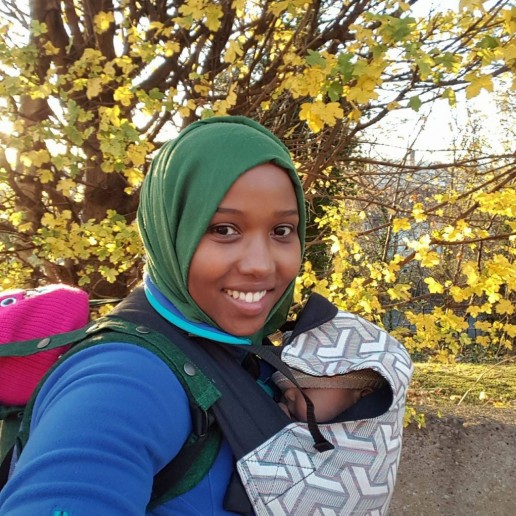
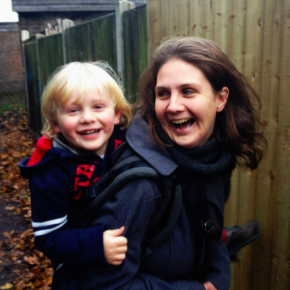
CARRYING IN SLIPPERY WEATHER
It is fantastic to be able to explore in freedom with your child in all weathers. But what about, even if you have the choice of sling and clothing right, the ground is icy and slippery?
CHOOSE SENSIBLE FOOTWEAR!
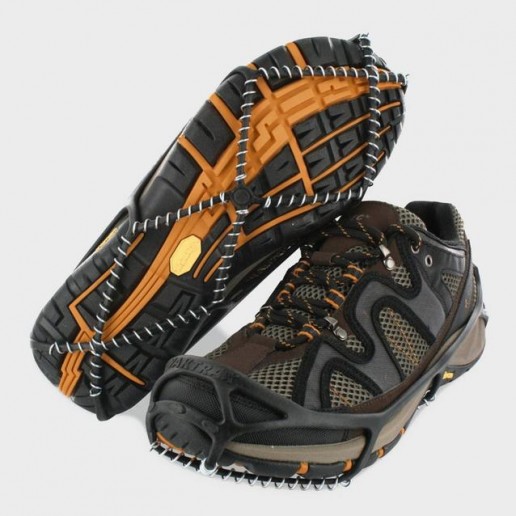
If carrying in the snow and ice, slip-on ice gripping covers (eg Yaktrax or other brands) that can go over shoes and boots can be enormously useful to prevent slipping… and if you do slip, your baby will be much safer in the sling than she would be loose in arms. Some metal grippers may not work well on mixed ground, as they may slide on smooth surfaces and can be hard to remove quickly, so have a good look at a few types and where you will need to use them before you pick one. It can be hard to remove them with a baby on your front, so plan ahead!
Good boots with grippy soles designed for all terrains may be worth investing in. Some families have used very large knitted socks over their shoes for grippiness over snow and ice when they know there are also stone stairs etc on the school run and they don’t want to go flying.
Some people recommend front carrying more in slippery weather, as if you do fall, you can use your hands to break your fall and protect your child more easily than if you fall backwards. Some people prefer not to carry at all and to use a buggy! Use whatever tool works best for your circumstances.
Here is some more information about cold weather carrying from other sources
http://southlondonslings.co.uk/2013/11/12/carrying-in-the-cold/ and
http://stroudslingmeet.wordpress.com/2014/09/20/slinging-in-the-rain-and-cold-and-wind-and-snow/
Here is the link discussing winter coats and car seats..
Blog post originally written 2014, updated Dec 2017
Secure Attachment and the "Fourth Trimester"
Secure attachment is the deep and enduring emotional bond that connects one person to another across time and space; a "lasting psychological connectedness between human beings" (Bowlby/Ainsworth).
 Secure attachment to other people is vital to human health and wellness; we thrive on relationship, on belonging. Such healthy attachments are the bedrock to future positive mental health and enjoyable relationships. However, Sutton Trust research shows that 40% of children lack secure attachments; instead they display insecure-ambivalent, insecure-avoidant or disorganized/disoriented attachment, and are significantly disadvantaged, especially those growing up in poverty.
Research shows that one of the strongest predictors for insecure attachments in children is to have a parent who lacks secure attachment themselves.
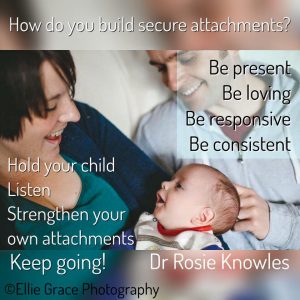
So, how do you build a secure attachment relationship with your child?
Secure attachment is created by loving responsiveness to your child's needs. It is not about your parenting style. Your baby may sleep in a crib or your bed, be fed from a breast or a bottle, be held in arms or a sling, be weaned in any style, be brought up by any combination of carer and still have secure attachments. It is not about subscribing to a particular parenting philosophy. You do not have to sacrifice everything - your identity, your sanity, your relationship, your job, your money or anything else at the "altar of childhood".
Building secure attachment is about having respect for a child's personhood, building their sense of self-worth within a consistent, loving and responsible relationship, regardless of their age or understanding.
Your child's humanity is as valuable as your own; neither more nor less. You are your child's advocate in the world and their greatest defender. You can provide for their every need, and they depend entirely on you and your surrounding network. They will learn whether or not they matter from how they are treated and how their requests for support are met. Securely attached children are confident that they will be cared for, and that any distress will be met by love. They are easily soothed by their caregiver when upset, are more able to be self-reliant, form positive relationships and generally have smoother paths through life.
However, their needs need to be balanced with that of the family, as a crumbling family dynamic will ultimately not be in anyone's best interests.
The "fourth trimester" is where attachments begin to form.
What is the Fourth Trimester?
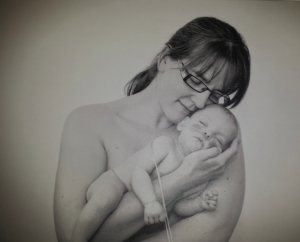 Theories regarding the size of the infant cranium, the shape of the upright human maternal pelvis, and the limits of the mother's metabolic energy provision for growth all discuss why human babies are born at a stage where they are still very vulnerable. This is in contrast to many other species where a young animal will be able to walk after its mother within hours of birth, or sleep in a hidden nest. To survive, a human baby needs to be held and carried around by his carers, fed and kept warm or he will die. To thrive, a baby also needs love and secure attachment.
The ‘fourth trimester" is the period immediately after birth, a few more months of intense nurturing to allow a baby to continue with their essential development from a place of security and safety.
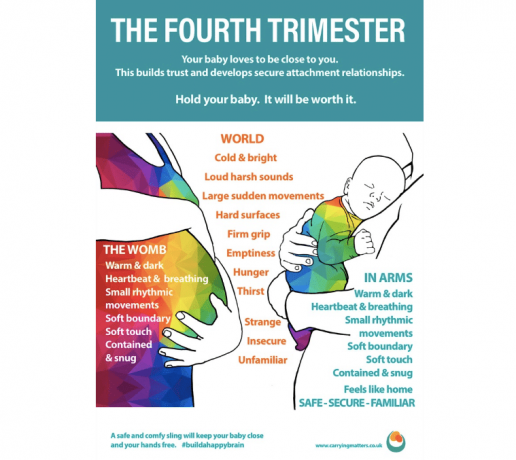
A baby who has spent all their life growing peacefully in the womb, gently compressed by uterine walls at the end of the third trimester, will find the sensation being born, followed by freedom and open space in the outside world enormously different. Limbs that have been limited are suddenly free to stretch wide, darkness has turned to light, the muffled gentle rhythmic sounds of the mother's body have been replaced by loud, unfamiliar noises or deep silence. Constant gentle motion has turned into complete stillness or sudden movements. No wonder that when babies are held close, rocked and soothed, contained in soft boundaries once more, that they settle; this feels right and familiar.
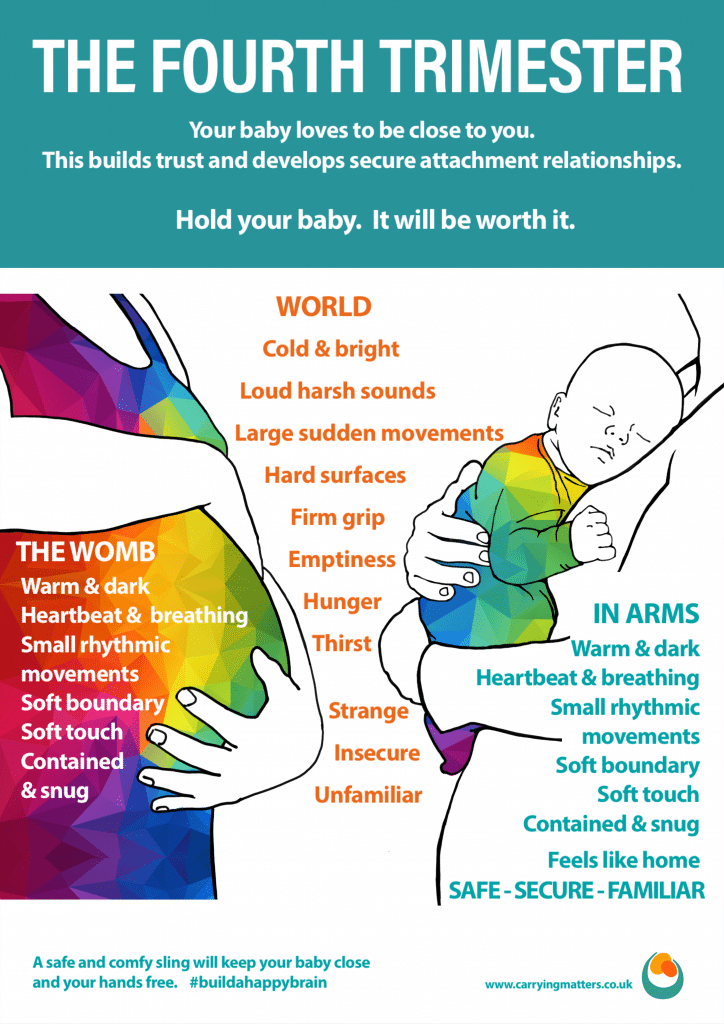
The "fourth trimester” is all about gentle transitioning from the peace and stability of the womb towards active involvement in a new world.
A newborn needs to be supported to gain skills and strength at a steady, individual pace from the security of an unshakeable foundation and place of comfort and familiarity. Being held, close to familiar noises and scents is essential to development and positive learning; the infant brain is growing rapidly and forming new connections all the time. Connections that are reinforced frequently will persist into later life, whereas those that are rarely used will wither away. It is worth taking the time to ensure that these unconsciously forming connections are positive ones. Young infants do not have the cognitive development to behave in "manipulative" ways; but they do learn to trust someone who proves reliable time and again as these pathways are reinforced. They will be startled and upset when this love is withdrawn.
The importance of responsiveness
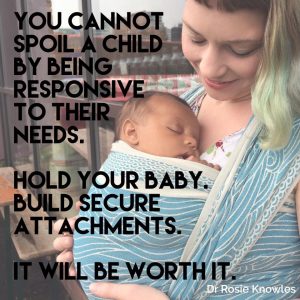
If you are sensitive and responsive to your baby as they begin to communicate their needs with you (by crying, wriggling, yawning etc) they will learn that they matter to someone. If they are uncomfortable, the people they are learning to trust will soothe them. When they are hungry, they will be fed, when they are tired, they will feel secure enough to sink into sleep. They will not be frequently left alone unattended for long periods of time, and will not be left to exhaust themselves in calling for someone who never comes. When they cry, loving arms will be there to comfort and keep them safe. These same arms will show them the world and provide a safe place that facilitates learning. Carrying matters; babies need it. It does not make them clingy, rather, the solid foundation of secure attachment relationships will be the springboard to confident independence later in life.
How does babywearing help?
One tool that can help you meet your child's need for loving contact in these early months is a soft carrier that holds them in a comfortable, safe and anatomically respectful position. Such carriers will help you to meet their needs to be close to you while allowing you to be hands-free for daily life. There are many other positive reasons to carry a child; such as reduced crying, reduced plagiocephaly and more. Parents benefit too, for example carrying can be helpful for those with postnatal depression, and increase overall activity levels. This idea is not new; most of the world’s families across history and cultures have used some form of sling to make life work.

You can find out more from your local sling library or consultant; there are hundreds across the UK. They will help you to find the right type of carrier for your needs.
What about my older child?
Attachment relationships continue to form beyond the early months and children's brains are very "plastic". Warm, responsive, emotionally available parenting will help to build a child's sense of self-worth at any age. There is evidence that "mind-minded" parents (ie those who treat their children as intelligent, relational individuals with feelings, and speaking to them in such a way) seem to have children with more secure attachments. Active play and laughter, as well as consistent loving boundaries help to reinforce neural connections that the primary caregivers are a reliable source of security; forming strong foundations for the future. Read more about how carrying can help the learning brain.

References
Bowlby J. (1969). Attachment. Attachment and loss: Vol. 1. Loss. New York: Basic Books
Ainsworth, M. D. S. (1973). The development of infant-mother attachment. In B. Cardwell & H. Ricciuti (Eds.), Review of child development research (Vol. 3, pp. 1-94) Chicago: University of Chicago Press.
Ainsworth, M. D. S., Blehar, M. C., Waters, E., & Wall, S. (1978). Patterns of attachment: A psychological study of the strange situation. Hillsdale, NJ: Erlbaum.
Sutton Trust; Baby Bonds Parenting, attachment and a secure base for children. March 2014 Research by Sophie Moullin, Jane Waldfogel and Elizabeth Washbrook
http://www.parentingscience.com/attachment-parenting.html
Rethinking Maternal Sensitivity: Mothers’ Comments on Infants’ Mental Processes Predict Security of Attachment at 12 Months; J. Child Psychol. Psychiat. Vol. 42, No. 5, pp. 637–648, 2001
Carrying in Special Circumstances
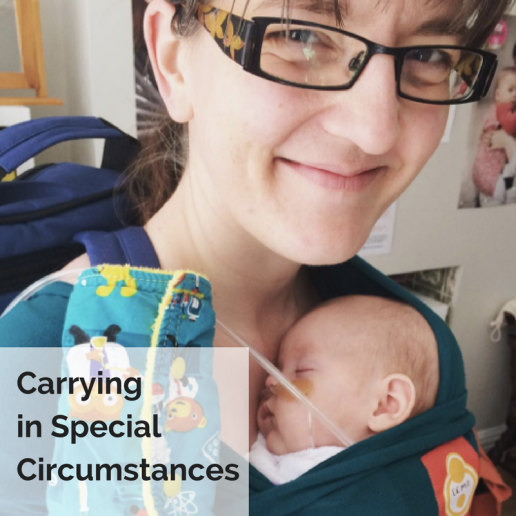
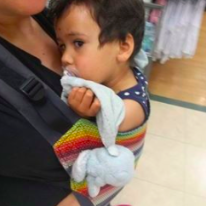
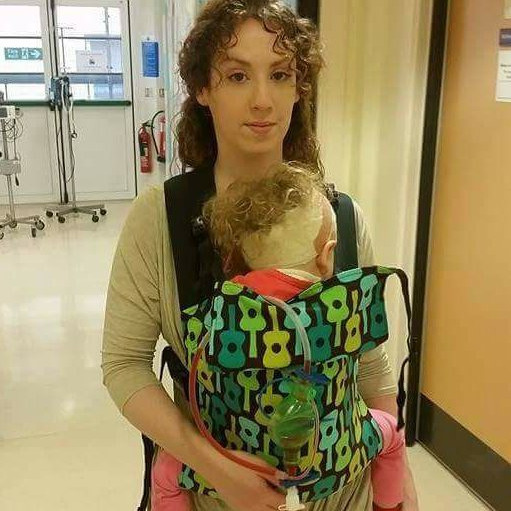
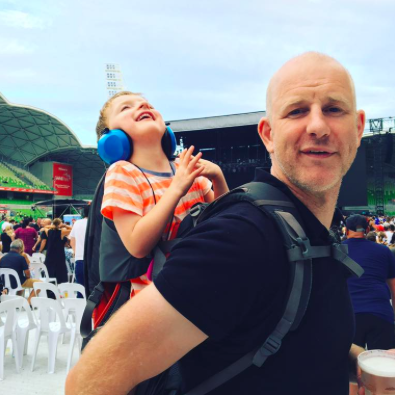
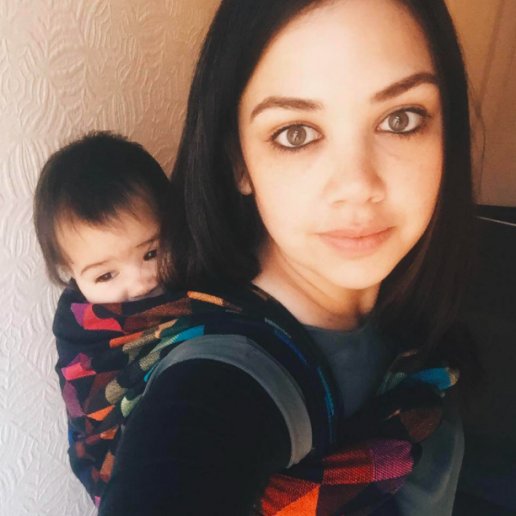
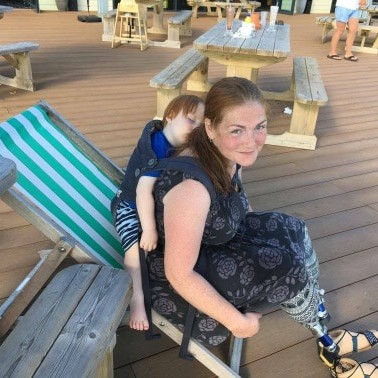
Sometimes there is a need for extra support with using slings; don’t be discouraged if you or your child have extra needs, there are always ways to keep carrying in special circumstances.
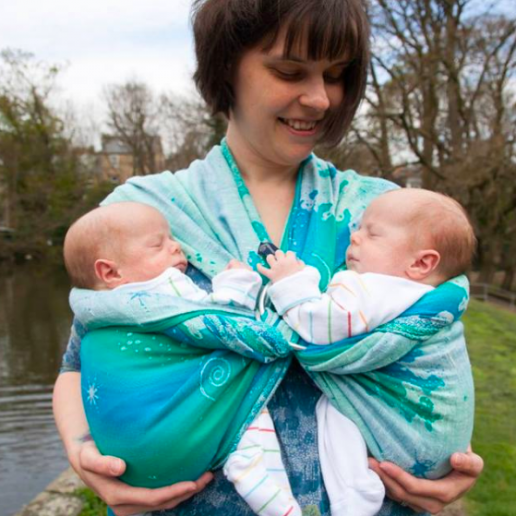
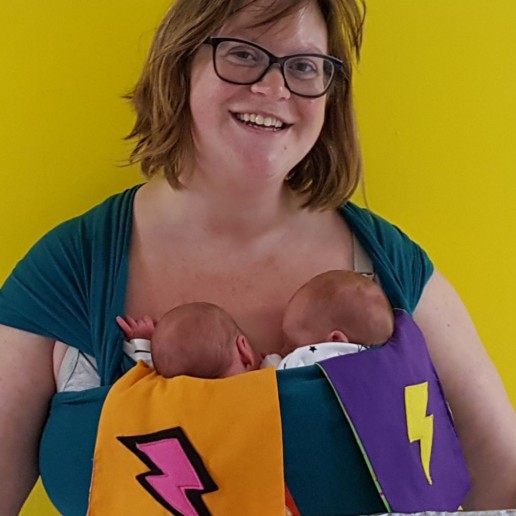
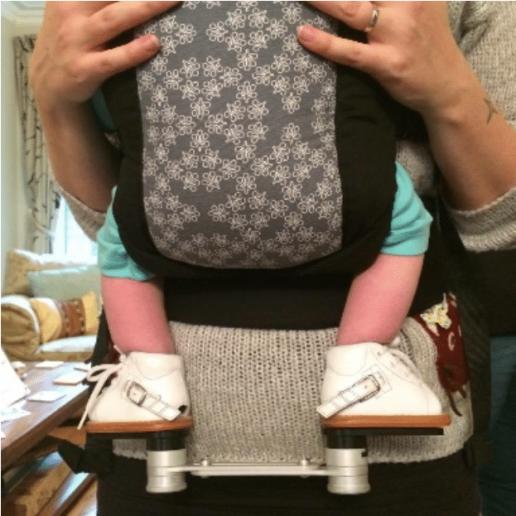
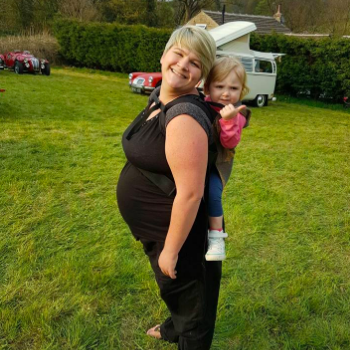
If your child can be held and carried in arms, there is likely to be a way to carry them safely in a sling. Twins can be carried in slings, as can a baby and a toddler at the same time (tandem carrying). There are ways to carry safely in pregnancy, to carry after birth, to carry premature babies. We will help you to carry your child if you have a disability, or if your child has special needs or physical health concerns. We are here to help you find a way to keep them close.
This page links to some useful information; personal stories about carrying in special circumstances, professional advice and useful links. Please see our Common Queries page for simpler situations.
If you have a special story, please get in touch to share them with me for the wider community!
I also recommend the Tania Talks blog posts on babywearing (she is a wheelchair user)
https://www.whentaniatalks.com/the-realities-of-back-carrying-as-a-wheelchair-user/
https://www.whentaniatalks.com/back-carrying-as-a-wheelchair-user/
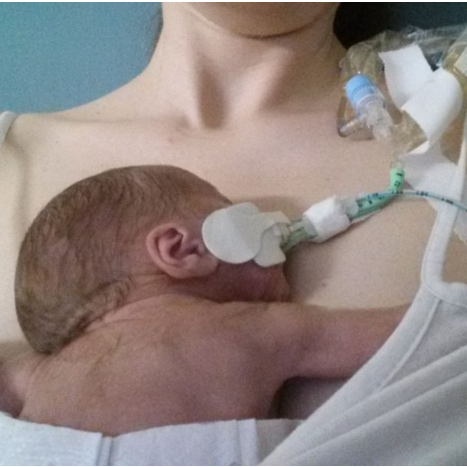
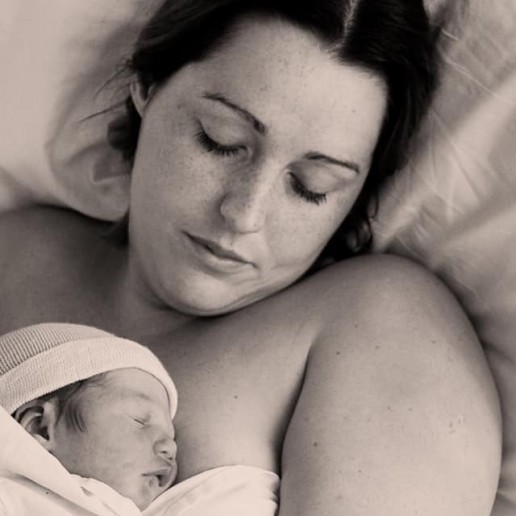

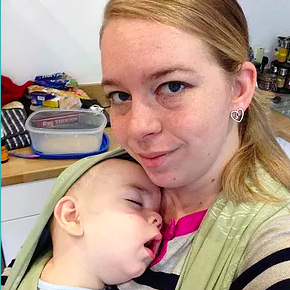


Here is an excellent downloadable article on Potential Therapeutic Benefits of Babywearing by Robyn Reynolds-Miller.
You can find more educational resources here for downloading (such as infographics and leaflets and images)
If you need more specialised support or have a query not covered here, please do get in touch with me or find your local sling library at Sling Pages.
Common Queries
Families often have a lot of questions about using carriers, such as “what is a healthy hip position”, or “is it OK to face my baby out in a carrier?” “Will using a sling make my child clingy?” “What do I do in different weather conditions?”
This page links to many of the common queries around slings; information sharing to allow people to make informed choices that work for themselves and their families.
Here is a quick link to the most common FAQs too!

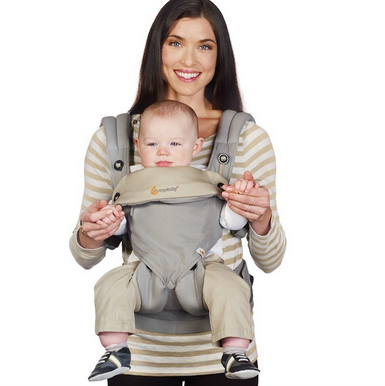

Don’t forget the sling safety guide is here.
If you need more specialised support or have a query not covered here, please do get in touch with me!
You can find more educational resources here for downloading (such as infographics and leaflets and images) and you can read about carrying in some special circumstances here.
The Importance of Carrying
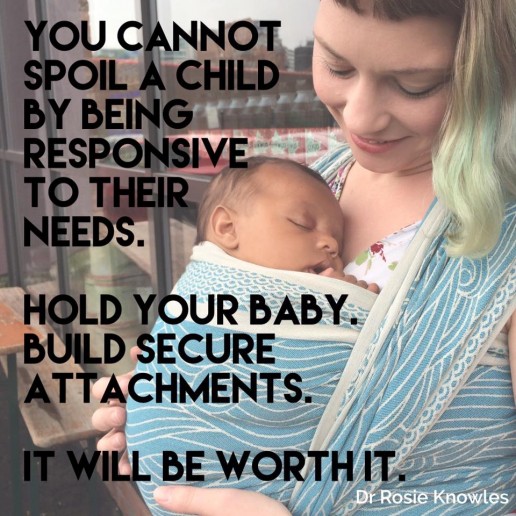
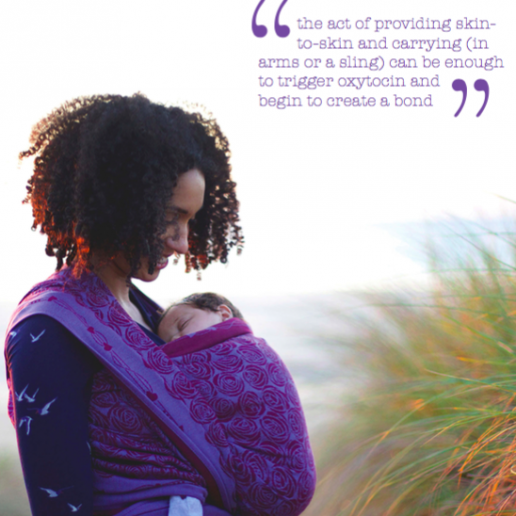

Positive Effects of Carrying for Society
The positive effects of carrying for society are many; making a change at an individual level can have a significant impact when lots of people do it! In-arms carrying and using slings is one way that we can change the future that we all have to live in.
Possibly one of the most important positive outcomes for carrying for a parent and the society we live in is the effect it can have on mental health, which is a society-wide issue.
Western society is increasingly fractured and isolated, with a decreased sense of local community and shared care. The burden of mental unwellness in our society is growing, and becoming a parent with this background can be very tough indeed.
The birth of a baby is often an overwhelming time for both parents, especially when also faced with the expectations and demands of a fast-paced culture that often judges people by their apparent productivity and appearance. It is no wonder that postnatal depression is on the rise – affecting at least 10-15% of new mothers. This is likely an underestimate as parents feel ashamed to admit their feelings, with the effects of hiding their struggle having significant knock-ons for the whole family.
Fathers are often unrecognised to have the condition themselves, and this all adds to an increased risk of children coming to harm. This is a terrible indictment on our culture and its lack of care for some of the most vulnerable individuals in our communities.
The way we live now isn’t going to change overnight; funding for parental leave or greater support for mental health isn’t going to become suddenly available, and the media bombardment of products for parenting won’t vanish. But neither are the emotional needs of young children going to go away, especially if we want them to grow up well and be happy, confident mature individuals who are well integrated into society.
We need to find ways to nurture our children while still functioning as our culture expects us to, and this is where carrying children (often using a sling) can help. Carrying children encourages and protecting parent’s precious closeness with small children while helping to build the bonds that will be the foundations for a positive future. Giving children a secure and confident start in life pays dividends later for the whole of society.
- Families who enjoy secure attachments and strong bonds are more likely to weather the early years of parenting safely and build resilient children with a secure self-esteem. This will help to counteract the growing burden of mental "un-health" especially as funding for mental health services continues to decrease. Carrying (and using slings), via oxytocin release, helps to build these bonds; and can improve resilience to the Adverse Childhood Experiences that so many children experience. Read more about ACE's here.
- Anything that improves mental health and assists families struggling with PND is worth investing in, especially something as accessible and low cost as a carrier.
- A very sobering review of international attachment studies done by the Sutton Trust found that infants under three years who do not form strong bonds with a parent “are more likely to suffer from aggression, defiance and hyperactivity when they get older.” They found that up to 40% of children lack this secure bond with their parents, and this is likely to lead to their own children also suffering from insecure attachment; a vicious, repeating cycle. “Parents who are insecurely attached themselves, are living in poverty or with poor mental health find it hardest to provide sensitive parenting and bond with their babies.”
- They also found that children with weak attachment were more likely to be obese later in childhood (with subsequent effects on their long term adult health).
- Communities are the normal social structures of the human species; finding common ground and sharing the strains of life together keeps us going. Many families find community among like-minded parents; most sling users make strong supportive friendships within the sling community.
- Carrying keeps us active; movement is essential for health and fitness. Dynamic carrying in arms (if possible) helps children to hone their growing neuromotor skills, and carrying young children (or those with tired legs) is good for adults too; bone remodelling, muscle health and posture.
- As the rates of breastfeeding are higher in carried babies, the health benefits of breastfeeding will be more marked in societies who carry a lot (reduced breast cancer risk, reduced osteoporosis, increased transfer of antibodies, to name just some.)
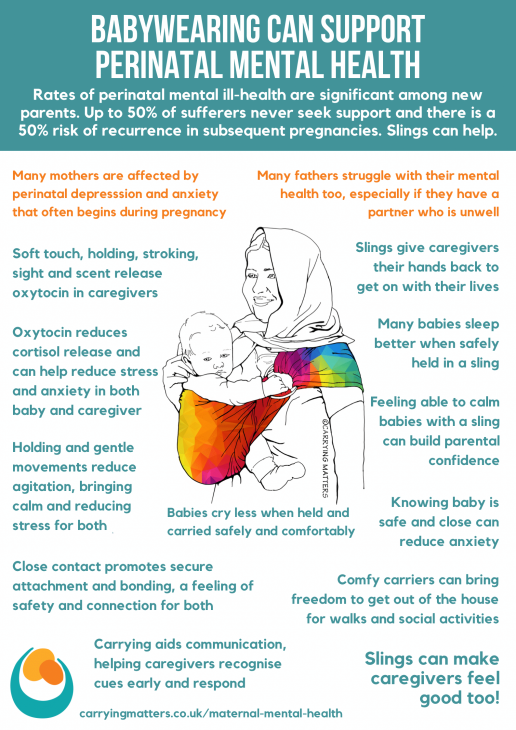
- Babies who are carried are more content and cry less. Crying is very stressful; and successful calming of a distressed baby will build a parent’s confidence in their ability to care for their child and also reduce the feelings of tension in social gatherings or in large public open spaces.
- Carried babies may have had less ear infections, less corrective treatment for plagiocephaly, and thus have been less in need of the NHS budget.
I believe that health care professionals should therefore promote frequent carrying of infants to achieve the best possible outcomes for families, and for the long term benefit of the societies they live in. It is a low cost intervention that can have far-reaching effects.
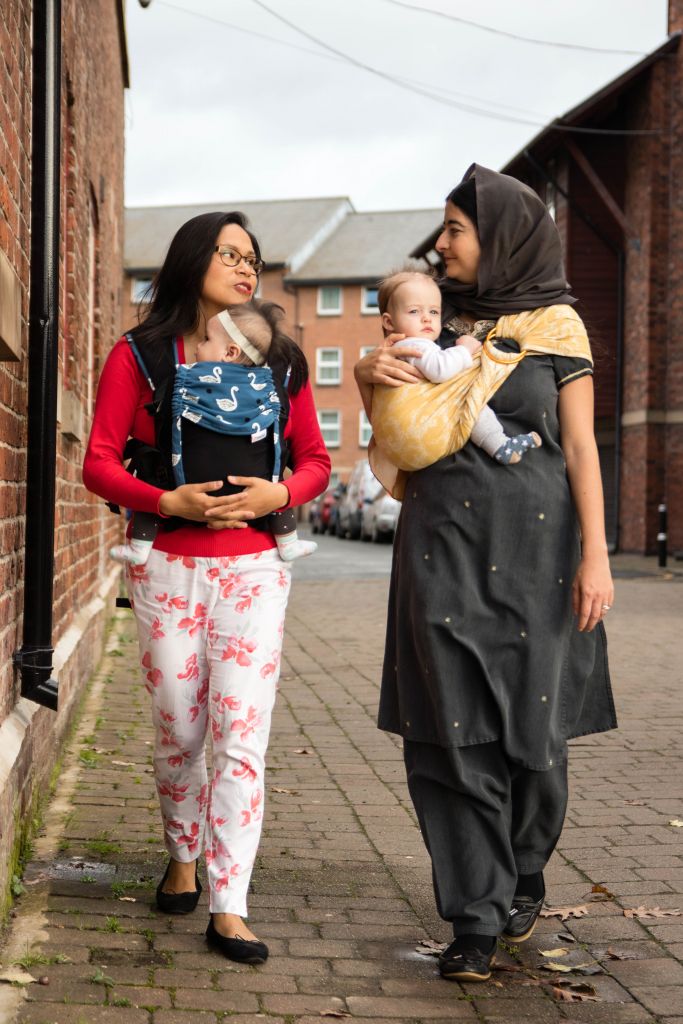

Positive Effects of Carrying for Parents and Carers
In-arms carrying and using slings doesn’t just bring good things to babies – they can make a real difference to parents and other caregivers too. Read more about the benefits of babywearing for adults here.
- It encourages bonding and deepening of a loving relationship via the release of the hormone oxytocin; having baby close heightens the parent’s awareness and can increase their responsiveness to their baby’s needs. You can read more about the effects of oxytocin here.
- It can increase parental confidence. The parent may be more “in tune” with their baby, as the carried child is part of the parent’s personal space, and the parent will be more aware of changes in a child’s mood, and thus be more able to respond to the child’s facial expressions, gestures and vocalised needs sooner. This will build mutual trust and contentment.
- There is evidence to suggest that sling use can help with perinatal mood disorders such as postnatal depression, in part due to oxytocin release and in part due to increased bonding.
- Fathers and other care-givers will be able to use a sling as well, increasing family connections and helping baby recognise more people by their voices and scent. Sling use can be very valuable in giving family members “cuddle time” and can be an useful tool for childminders as well.
- Slings can provide “hands-free” parenting, which can be very useful, such as making a quick snack, interacting with an older child, doing the housework or other chores. A “fussy” baby may calm and settle in a sling, allowing the parent more choice about how to use their time.
- Slings can provide opportunities for physical exercise and mental stimulation; a new skill to learn and a new social circle (social sling meets, for example!) Many people find that carrying their children on walks helps to lose weight and tone muscles. Dynamic (in arms carrying) is also a good workout!
- Slings can provide greater access to the world – in a good sling the only limitations are where your feet can take you. Onto the beach, off the beaten path, up a tower, onto crowded public transport, around busy airports, the world is your oyster!
- Slings can provide comfort and nurturing for older children as well.

Slings and Exercise
 Movement is good for you!
 Movement is good for you!
Many people wonder about slings and exercise; can they be done safely together?
Movement and being gently active in the early months after your baby is born is good for your mental health and can help with low mood. Being able to get out of the house and enjoy some fresh air and activity with your child can be great, especially if they are at your height and you can interact and chat and share the experience of the world happening around you together. A sling can be a great way to help this to happen - keeping your child safe while you get on the move. Walking with your baby held close and comfortably, building up your tolerance as your body recovers from birth is all you need. It can be a great way to spend time with other people; the endorphins from activity and fresh air can help with the low mood so many  parents can experience postnatally. (Read more about carrying in the postnatal period here).
Take your time!
However, doing too much too soon can be unhelpful in the long run, for your body's recovery from birth. Every mother's body is different, and your level of fitness before and during pregnancy will also play a part. Pushing yourself too far too fast can play havoc with wound healing, with slower cessation of bleeding, with prolonged problems with pelvic floor issues, for example. Take your time. There is no need to spring straight back into your pre-birth activities.
Don't fall into the trap of believing that you need to "get your body back as soon as possible." For a mother, the act of bringing life into the world is transformative: your body will never be the same again, and that is a great thing, one to be proud of!
It is good to be fit and healthy, but there is a time for nurturing the new life you have brought into the world, resting and growing together, and a time for weight loss and organised fitness. Simple walking with your baby in a comfy well-fitting carrier and spending time with friends may be all you need for the first few months, for mood lifting and gentle exercise. Does your local sling library organise babywearing walks, or why not start your own?
Points to Consider
If you decide you would like to join fitness or dance or any other classes that have a sling component as it seems a good option for your needs, here are some useful points to consider.
Is your body ready?
- This is very important. Pregnancy and birth have an impact on the core postural and abdominal muscles and the pelvic floor; it takes time for these to recover. Floors may be weak, but they can also be over-tight, both cause problems.
- Overloading still-recovering tissues with certain stretching or weight-bearing activities with the extra weight of a child in a sling (especially if it is poorly fitting or worn low and loose) is not wise, and may end up delaying recovery and causing more long term damage. Wide and deep squats (as opposed to narrow based with vertical shins), side lunges and jumps/bounces, for example, are all inappropriate until pelvic floor function is restored.
- Good posture (with aligned shoulders, pelvis/hips, knees and ankles) matters; many mothers walk with a sway back shape, out of habit or to balance weight of baby, or stand with one hip jutting out. This strains the floor and the core and needs to be addressed.
- Walking with a baby in the sling, ensuring good alignment and posture, gradually increasing the speed and duration, is usually enough exercise for most women in the early months.
- Please do not rush; pelvic floor dysfunction is very, very common (14 million women in the UK are known to have an issue, and many many more never seek help and remain undiagnosed).
- Leaking is NOT normal or to be expected, if you leak with a baby in a sling, on coughing or laughing, you have pelvic floor dysfunction. If you are unsure if your pelvic floor is recovering normally, please see your GP.
Do you have a good carrier to keep your child safe and keep you comfortable?
- As with all things: your sling is never a substitute for alert responsiveness and your focus should always be on your child and their needs. A sling should hold them comfortably and safely with airway protection and neck support (ideally by appropriate seated positioning that meets the TICKS guidelines). Movements should never allow a baby to be shaken, and should always be done with their head and neck position in mind.
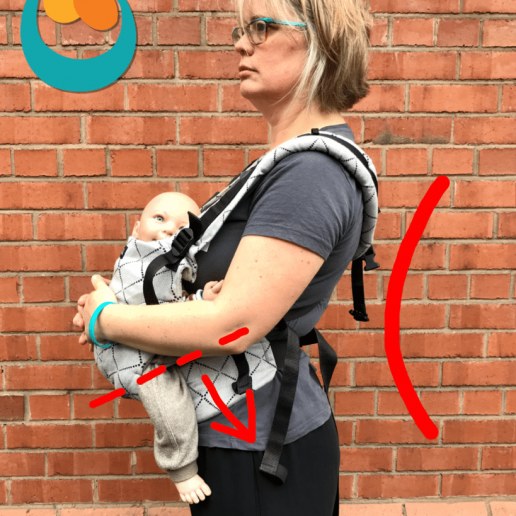
- Forward facing out carriers, especially narrow based ones, tend to encourage the baby to lean away from parent, which has an impact on parent's posture, overcompensating for the weight by leaning back. Poor posture can lead to significant health problems.
- It is worth noting that many manufacturer instructions do not recommend exercising with their product; using your carrier for this purpose may invalidate any warranties. Additionally, it is unfortunate that a number of baby carriers are not as well designed as they should be, and their instruction manuals are less than ideal.
Is your baby developmentally ready for this kind of activity?
- Parental activity should never lead to any kind of shaking for children, particularly with young babies whose heads are disproportionally heavy and whose neck muscles are still not fully developed (babies tire very easily as their muscles fatigue).
- Babies should not slump over in the sling during the class and should not fall asleep facing out.
- A good class should respect your baby's development and not include any kind of vigorous repetitive jumping, spinning or shaking movements; your child's safety is the main priority here.
Does the instructor fill you with confidence?
- Does the instructor have appropriate recognised sling training to ensure your baby is kept safe in the sling at all times? It is worth checking, as it shows a good level of preparation and thought.
- Do they know enough about baby anatomy and development and muscle fatigue with certain positions?
- Will they recognise if your child has moved to a position where their airway could be compromised?
- Will they be able to help you correct this (especially if you are not an experienced sling user)?
A good analogy might be a canoe class. If I wanted to attend a class and was required to bring my own life jacket, I might not know which was a reliable brand that would be the most likely to keep me safe. I might ask the advice of a local lifejacket expert, but equally I might buy a cheap one off the internet which has poor instructions that didn't really show me how to keep myself safe or recognise when it wasn't on properly. At the canoe class I would expect that my instructor would be able to give me the once over and check my lifejacket was fit for purpose and on correctly, and would indeed keep me safe, right there and then. I would expect that if my lifejacket began to slip or wasn't in fact on properly during the class, the instructor would be able to identify that and take appropriate measures to remedy this, to keep me safe. I would expect that my instructor would be fully qualified in all aspects of the class - after all I am entrusting my safety to them. Their position of authority means I am more likely to assume that they know what they are talking about, and as a newcomer to canoe classes I will take any advice they offer about the equipment used in the class as expert (even if it isn't).
- Does your instructor have appropriate qualifications to ensure your postnatal body will not be inappropriately overloaded by the extra weight of baby with the movements in the class? If they have recognised post-natal training they will be happy to share this.
- Do they enquire about your overall fitness and pelvic floor health and adapt the routines for your needs? The "six week check" at the GP is not sufficient "sign off" (very few GP's have the time to discuss exercising at the postnatal check, if there is one at all!)
- Do they come across as truly well researched and acting in your best interests?
- Are they taking your and your child's wellbeing as seriously as you do?
- Are they being responsible?
I feel strongly that there are many risks involved in taking part in organised classes for fitness/dance with slings. I would urge all my readers to think very carefully before getting involved with anything that has any kind of vigorous movements such as jumping, bouncing, spinning, and so on. Babies need our loving focus, care and attention; their safety must remain the first priority at all times. Your body's recovery matters too; take your time!
Do speak to your local sling librarian/consultant (Sling Pages has a list) about any classes you are considering before you go - they will be able to advise you on its suitability and help you find a sling that will work well if they feel the class is safe. There are some well-set up and well trained franchises or individual providers who do take their responsibilities towards you and your baby seriously.

Further Reading
This post on Babywearing Exercise is extremely helpful for further reading and should be read by anyone investigating such classes. Thanks to Emma at SlingSure & Fife Sling Library for this.